
13 high protein oatmeal ideas can turn a simple bowl of oats into a more filling breakfast by adding protein-rich ingredients like Greek yogurt, cottage cheese, eggs, milk, soy milk, seeds, nut butter, or protein powder. Plain oatmeal is nutritious, but it is not usually high in protein by itself.
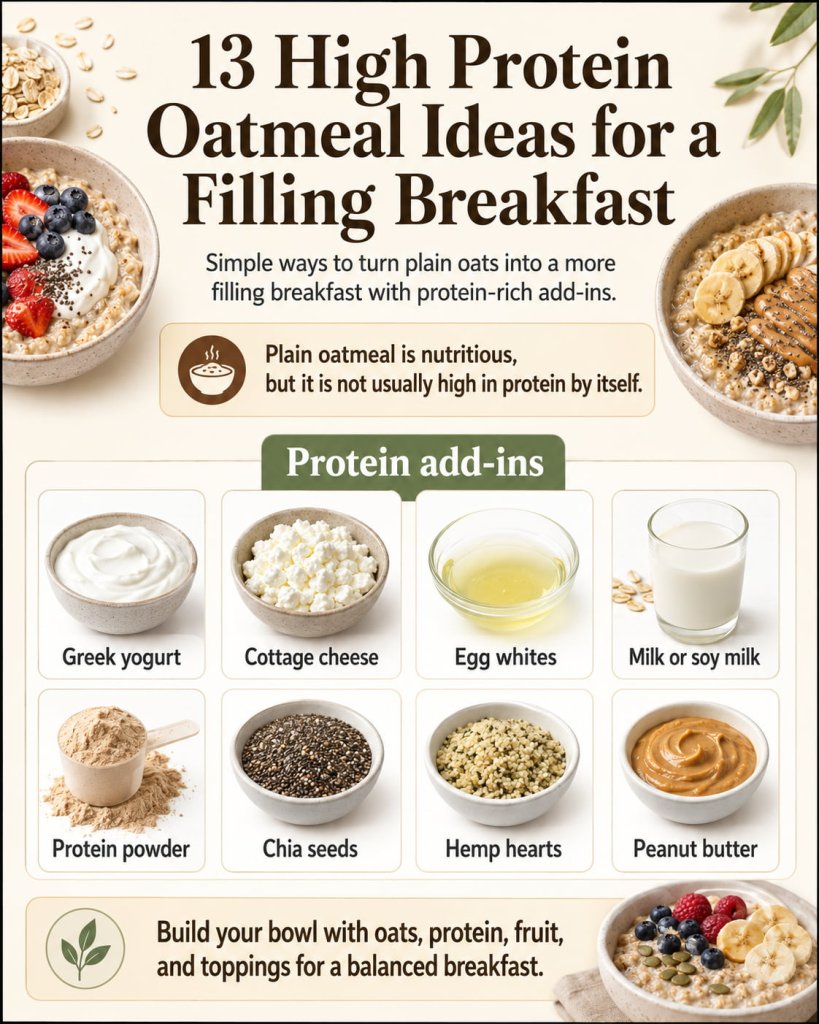
That is why the best high protein oatmeal recipes start with oats, then add a clear protein source. This helps your breakfast feel more balanced, more satisfying, and easier to customize for busy mornings.
According to the FDA, 20% Daily Value or more of a nutrient per serving is considered “high.” Since the Daily Value for protein is 50 grams, a food with about 10 grams of protein per serving reaches that “high” level. For breakfast, many people prefer a bowl closer to 20–30 grams of protein, depending on their body size, activity level, and overall diet.
What Makes Oatmeal High Protein?
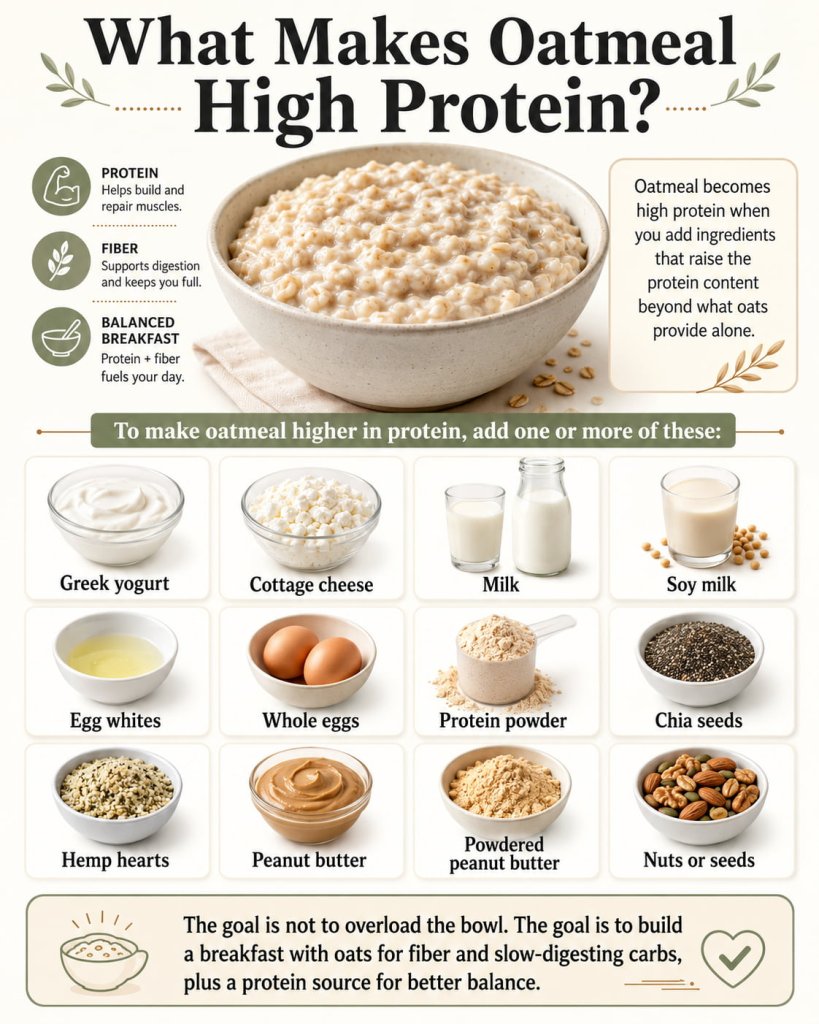
Oatmeal becomes high protein when you add ingredients that raise the protein content beyond what oats provide alone.
Oats are a whole grain. They contain fiber, carbohydrates, some plant protein, and minerals. But a basic bowl made with water may not provide enough protein to keep everyone full until lunch.
To make oatmeal higher in protein, add one or more of these:
- Greek yogurt
- Cottage cheese
- Milk
- Soy milk
- Egg whites
- Whole eggs
- Protein powder
- Chia seeds
- Hemp hearts
- Peanut butter
- Powdered peanut butter
- Nuts or seeds
The goal is not to overload the bowl. The goal is to build a breakfast with oats for fiber and slow-digesting carbs, plus a protein source for better balance.
How to Estimate Protein in Your Oatmeal
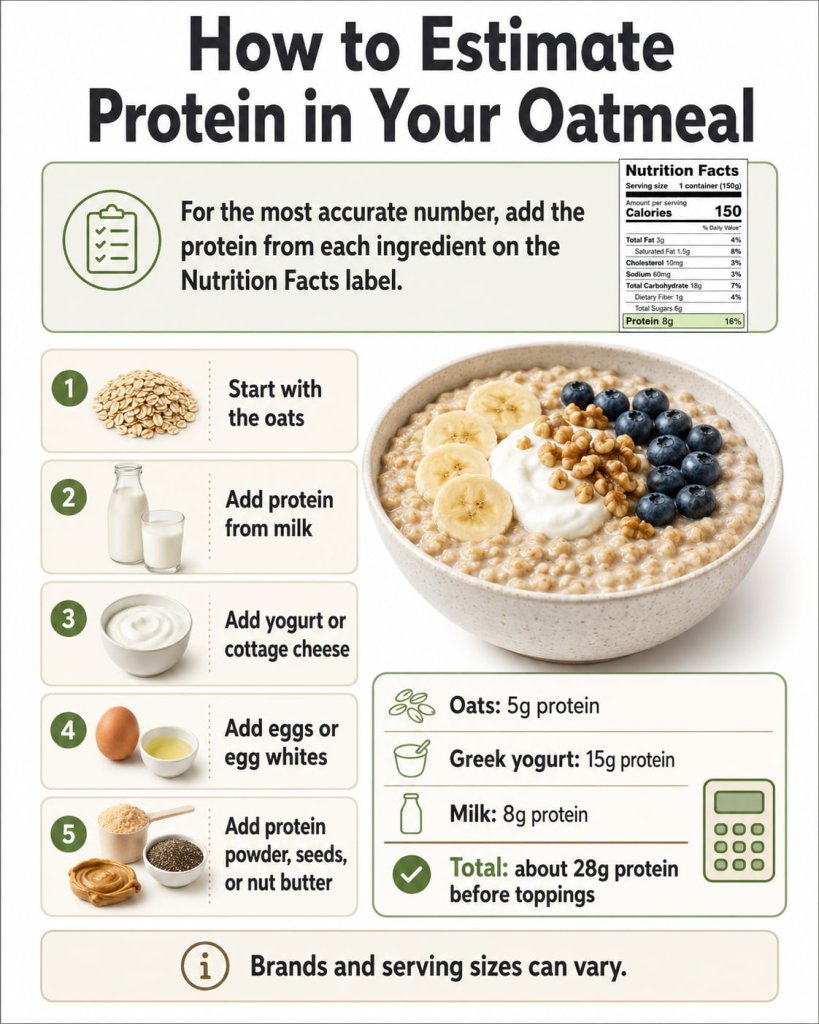
For the most accurate number, add the protein from each ingredient on the Nutrition Facts label. Start with the oats, then add the protein from milk, yogurt, cottage cheese, eggs, protein powder, seeds, or nut butter.
For example, if your oats provide about 5 grams of protein, your Greek yogurt adds 15 grams, and your milk adds 8 grams, your bowl has about 28 grams of protein before toppings. This is more accurate than relying on a recipe estimate because brands and serving sizes can vary.
Quick Nutrition Facts About Oats
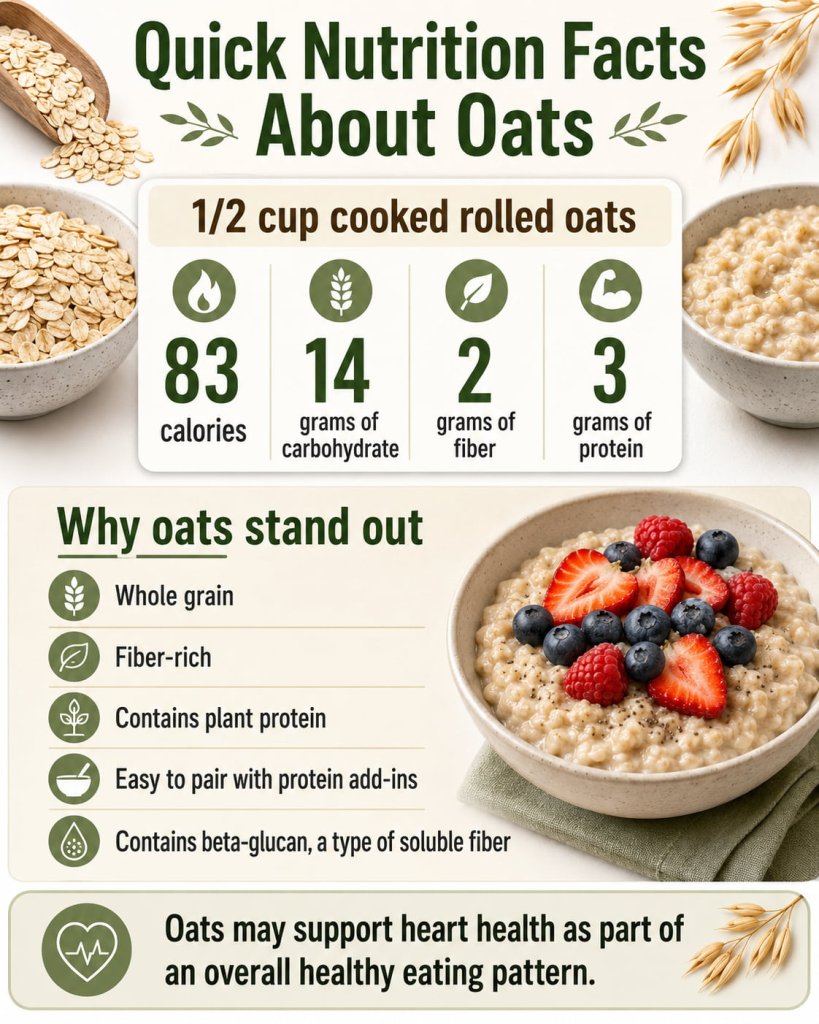
A 1/2 cup serving of cooked rolled oats has about 83 calories, 14 grams of carbohydrate, 2 grams of fiber, and 3 grams of protein, according to a USDA Foods nutrition sheet using USDA FoodData Central data.
If you start with 1/2 cup dry oats, your finished bowl will usually provide more than that after cooking because dry oats expand with liquid. Still, oats alone are not as protein-rich as foods like Greek yogurt, eggs, cottage cheese, or soy milk.
Oats are also valued for beta-glucan, a type of soluble fiber. Federal food-labeling rules in 21 CFR 101.81 allow certain heart-health claims for diets low in saturated fat and cholesterol that include enough beta-glucan soluble fiber from whole oats or barley. Keep the wording realistic: oats may support heart health as part of an overall healthy eating pattern.
13 High Protein Oatmeal Ideas
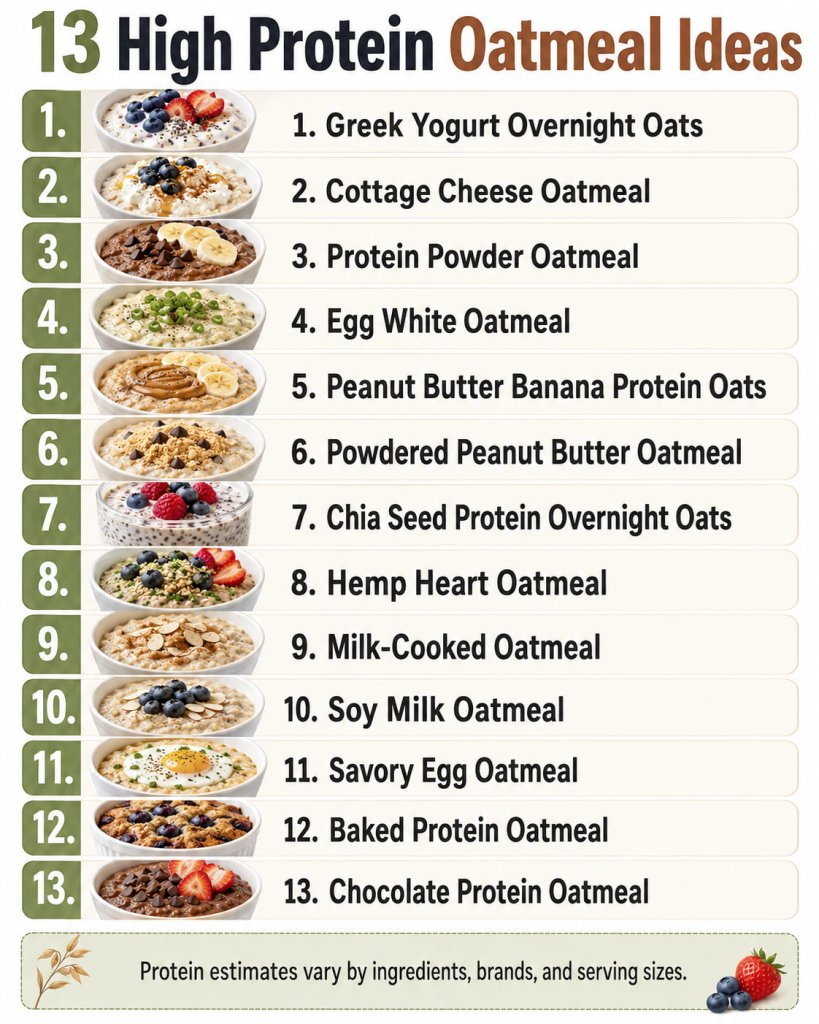
Protein estimates below are approximate. The final number depends on your oat serving, dairy choice, protein powder brand, and toppings.
1. Greek Yogurt Overnight Oats
Greek yogurt overnight oats are one of the easiest high protein oatmeal ideas for meal prep.
Mix oats with Greek yogurt, milk, fruit, and a small amount of chia seeds. Let it sit overnight in the fridge. By morning, the oats soften and the yogurt gives the bowl a thick, creamy texture.
Simple combo:
- 1/2 cup rolled oats
- 1/2 cup plain Greek yogurt
- 1/2 cup milk
- 1 tablespoon chia seeds
- Berries
- Cinnamon or vanilla
Approximate protein: 20–30 grams per serving
Choose plain Greek yogurt instead of heavily sweetened yogurt. Add sweetness with berries, banana slices, or a small drizzle of honey if needed.
2. Cottage Cheese Oatmeal
Cottage cheese oatmeal is creamy, filling, and surprisingly mild when blended or stirred in after cooking.
Cook your oats first, then stir in cottage cheese at the end. If you want a smoother texture, blend the cottage cheese before adding it. This gives the oatmeal a cheesecake-like creaminess without needing a lot of added sugar.
Simple combo:
- 1/2 cup oats
- 1/2 cup cottage cheese
- 1/2 cup milk or water
- Blueberries
- Cinnamon
- Crushed walnuts, optional
Approximate protein: 22–30 grams per serving
This works well with berries, peaches, banana, cocoa powder, or a small spoon of nut butter.
3. Protein Powder Oatmeal
Protein powder oatmeal is one of the highest-protein options, but it needs the right technique.
Cook the oats first. Then remove them from heat and stir in protein powder with a splash of milk. This helps prevent clumps and keeps the texture smoother.
Simple combo:
- 1/2 cup oats
- 1 scoop protein powder
- 3/4 to 1 cup milk or water
- Banana slices
- Cinnamon
Approximate protein: 25–40 grams per serving
Whey, casein, pea, soy, or blended plant protein can work. Use a product that fits your dietary needs and check the label for added sugar, allergens, and serving size.
If you use protein powder regularly, choose a reputable brand and check whether it has third-party testing, especially if you are an athlete or need to avoid banned substances. Protein powders are dietary supplements, so quality, ingredients, and serving sizes can vary widely between products.
4. Egg White Oatmeal
Egg white oatmeal makes oats fluffy and higher in protein without changing the flavor much.
Cook oats until almost done. Lower the heat, then slowly stir in egg whites. Keep stirring until the mixture looks creamy and fully cooked. Do not pour egg whites into very hot oats without stirring, or they may scramble.
Simple combo:
- 1/2 cup oats
- 1/2 cup liquid egg whites
- 1/2 cup milk or water
- Cinnamon
- Berries or banana
Approximate protein: 20–28 grams per serving
This is a good choice if you want more protein without using protein powder.
5. Peanut Butter Banana Protein Oats
Peanut butter banana oatmeal is classic, satisfying, and easy to make higher in protein.
Peanut butter adds flavor, healthy fats, and some protein, but it is calorie-dense. For a better protein balance, pair it with Greek yogurt, milk, or protein powder instead of relying on peanut butter alone.
Simple combo:
- 1/2 cup oats
- 1 cup milk
- 1 tablespoon peanut butter
- 1/2 banana
- 1/2 scoop vanilla protein powder or 1/2 cup Greek yogurt
Approximate protein: 22–35 grams per serving
Use natural peanut butter if you prefer fewer added ingredients. For extra crunch, add chopped peanuts on top.
6. Powdered Peanut Butter Oatmeal
Powdered peanut butter gives oatmeal peanut flavor with more protein and less fat than regular peanut butter.
It mixes easily into hot oatmeal or overnight oats. You can also combine it with cocoa powder for a chocolate-peanut flavor.
Simple combo:
- 1/2 cup oats
- 1 cup milk
- 2 tablespoons powdered peanut butter
- Sliced banana
- Cinnamon
- Optional Greek yogurt for more protein
Approximate protein: 16–28 grams per serving
This is a smart option if you want peanut flavor but do not want a heavy bowl.
7. Chia Seed Protein Overnight Oats
Chia seeds add texture, fiber, and some plant protein. They also absorb liquid, which makes overnight oats thicker.
Chia seeds alone will not turn oats into a very high-protein meal, so pair them with Greek yogurt, soy milk, dairy milk, or protein powder.
Simple combo:
- 1/2 cup oats
- 1 tablespoon chia seeds
- 1/2 cup Greek yogurt
- 1/2 cup milk
- Strawberries
- Vanilla
Approximate protein: 22–30 grams per serving
Let the mixture chill for at least 4 hours. Overnight is better.
8. Hemp Heart Oatmeal
Hemp hearts are soft, nutty seeds that work well in warm oatmeal and overnight oats.
They provide plant protein and healthy fats, making the bowl more satisfying. Sprinkle them on top after cooking, or stir them in before serving.
Simple combo:
- 1/2 cup oats
- 1 cup milk or soy milk
- 2 tablespoons hemp hearts
- Blueberries
- Cinnamon
- Optional Greek yogurt
Approximate protein: 17–28 grams per serving
This is a good plant-forward option, especially when paired with soy milk.
9. Milk-Cooked Oatmeal
Cooking oatmeal with milk instead of water is one of the easiest ways to increase protein.
MedlinePlus suggests adding milk instead of water to hot cereals as a way to increase protein intake, and MedlinePlus also notes that protein needs vary based on overall calorie needs, age, health, and activity level.
Simple combo:
- 1/2 cup oats
- 1 cup dairy milk
- Berries
- Cinnamon
- 1 tablespoon nut butter or seeds
Approximate protein: 13–22 grams per serving
For a higher-protein version, stir in Greek yogurt after cooking or add a half scoop of protein powder once the oats cool slightly.
10. Soy Milk Oatmeal
Soy milk oatmeal is one of the best dairy-free high protein oatmeal options.
Many plant milks are low in protein, especially almond, rice, and oat milk. Soy milk usually provides more protein and works well in oatmeal.
Simple combo:
- 1/2 cup oats
- 1 cup unsweetened soy milk
- 1 tablespoon chia seeds
- Berries
- Cinnamon
- Optional hemp hearts
Approximate protein: 14–24 grams per serving
Choose unsweetened fortified soy milk if you want to keep added sugar lower while adding calcium and vitamin D.
11. Savory Egg Oatmeal
Savory egg oatmeal is a great choice if you do not want a sweet breakfast.
Cook oats with water or broth, then top with an egg, vegetables, herbs, and a little cheese if desired. You can use a whole egg, egg whites, or both.
Simple combo:
- 1/2 cup oats
- 1 cup water or low-sodium broth
- 1 egg plus extra egg whites
- Spinach
- Black pepper
- Green onions
- Optional shredded cheese
Approximate protein: 18–30 grams per serving
This version works well with mushrooms, tomatoes, avocado, salsa, or leftover vegetables.
12. Baked Protein Oatmeal
Baked protein oatmeal is ideal for batch cooking.
Mix oats with eggs, Greek yogurt or milk, fruit, and protein powder if you want a bigger protein boost. Bake it in a dish, cut into squares, and reheat during the week.
Simple combo:
- 2 cups oats
- 2 eggs
- 1 cup Greek yogurt
- 1 cup milk
- 1 scoop protein powder, optional
- Berries or chopped apples
- Cinnamon
Approximate protein: 18–30 grams per serving, depending on portion size
This is one of the best options for busy mornings because you can make several servings at once.
Meal Prep Storage Tip
For overnight oats, store each serving in a covered container in the refrigerator and use it within a few days for the best texture and freshness. For baked protein oatmeal, let it cool before refrigerating, then reheat individual portions as needed.
If your recipe contains dairy, eggs, or protein powder, do not leave it sitting at room temperature for long periods. Keep it chilled until you are ready to eat.
13. Chocolate Protein Oatmeal
Chocolate protein oatmeal tastes like dessert but can still be balanced.
Use unsweetened cocoa powder for chocolate flavor, then add protein with Greek yogurt, milk, soy milk, or protein powder. Top with berries or banana instead of candy-like toppings.
Simple combo:
- 1/2 cup oats
- 1 scoop chocolate protein powder
- 1 cup milk or soy milk
- 1 teaspoon unsweetened cocoa powder
- Strawberries or banana
- Optional peanut butter powder
Approximate protein: 25–40 grams per serving
For a smoother texture, add protein powder after cooking and stir with a splash of milk.
Best Protein Add-Ins for Oatmeal
Here are the easiest ways to add protein to oatmeal.
| Protein Add-In | Best For | Simple Tip |
|---|---|---|
| Greek yogurt | Creamy overnight oats | Use plain yogurt to reduce added sugar |
| Cottage cheese | Thick, creamy oats | Blend first for a smoother texture |
| Protein powder | Highest protein boost | Stir in after cooking |
| Egg whites | Fluffy hot oatmeal | Add slowly and stir constantly |
| Whole eggs | Savory oatmeal | Pair with vegetables |
| Dairy milk | Easy everyday boost | Use instead of water |
| Soy milk | Dairy-free protein | Choose unsweetened fortified soy milk |
| Chia seeds | Fiber and texture | Let them soak |
| Hemp hearts | Plant protein and healthy fats | Sprinkle on top |
| Nut butter | Flavor and satisfaction | Keep portions moderate |
| Powdered peanut butter | Peanut flavor with less fat | Mix into hot or cold oats |
Best High Protein Oatmeal Options by Goal
| Goal | Best Option |
|---|---|
| Highest protein | Protein powder oatmeal or Greek yogurt overnight oats |
| No protein powder | Cottage cheese oatmeal, egg white oatmeal, or milk-cooked oats |
| Dairy-free | Soy milk oatmeal with chia seeds, hemp hearts, or plant protein |
| Best for meal prep | Overnight oats or baked protein oatmeal |
| Best for a sweet breakfast | Chocolate protein oatmeal or peanut butter banana oats |
| Best for a savory breakfast | Egg oatmeal with spinach, herbs, and vegetables |
| Lower added sugar | Plain oats with Greek yogurt, berries, cinnamon, and unsweetened milk |
How to Build a Balanced High Protein Oatmeal Bowl
A balanced bowl should include protein, fiber-rich carbs, flavor, and enough healthy fat to feel satisfying.
Use this simple formula:
1. Start with oats
Rolled oats, quick oats, or steel-cut oats can all work. Rolled oats are easiest for overnight oats and quick stovetop oatmeal. Steel-cut oats take longer but have a chewier texture.
2. Add a main protein source
Choose Greek yogurt, cottage cheese, milk, soy milk, egg whites, eggs, or protein powder.
3. Add fruit
Berries, bananas, apples, peaches, and cherries add natural sweetness.
4. Add flavor without too much added sugar
Try cinnamon, vanilla, cocoa powder, pumpkin pie spice, nutmeg, or a small amount of maple syrup.
5. Add a topping for texture
Use chia seeds, hemp hearts, walnuts, almonds, peanuts, or pumpkin seeds.
The Dietary Guidelines for Americans encourage whole, nutrient-dense foods and limiting highly processed foods, added sugars, and refined carbohydrates. For oatmeal, that means choosing plain oats and building flavor with fruit, spices, and protein-rich toppings instead of relying on sugary instant packets.
Are High Protein Oats Good for Weight Loss?
High protein oatmeal can fit into a weight-loss plan, but it does not cause weight loss by itself.
It may help because protein and fiber can make breakfast more filling. That can make it easier to stay satisfied and avoid grazing soon after breakfast. But total daily food intake, activity level, sleep, stress, and overall consistency still matter.
A good weight-loss-friendly bowl usually includes:
- Oats for fiber-rich carbohydrates
- A clear protein source
- Fruit for volume and sweetness
- A measured portion of nut butter, seeds, or nuts
- Minimal added sugar
For example, Greek yogurt overnight oats with berries may be more filling than plain oats made with water and brown sugar.
Who Should Be Careful With High Protein Oatmeal?
High protein oatmeal is safe for many healthy adults, but some people should be more careful.
People with kidney disease
People with chronic kidney disease may need individualized protein targets. The NIDDK explains that some people with CKD may need moderate protein intake so waste does not build up in the blood, while too little protein can also be harmful. If you have kidney disease, follow your clinician’s or dietitian’s guidance before increasing protein.
People with celiac disease or gluten sensitivity
Oats do not naturally contain wheat gluten, but they can be cross-contacted with wheat, barley, or rye during growing, transport, or processing. The FDA says foods labeled gluten-free must meet the federal gluten-free standard of less than 20 parts per million gluten.
If you have celiac disease, choose oats clearly labeled gluten-free. Some people with celiac disease may still react to oats, so individual guidance matters.
People with food allergies
High protein oatmeal often includes common allergens such as milk, eggs, peanuts, tree nuts, soy, wheat, or sesame. The FDA lists sesame as the ninth major food allergen, joining milk, eggs, fish, crustacean shellfish, tree nuts, wheat, peanuts, and soybeans.
Always check labels and use safe substitutions if you have allergies.
People managing blood sugar
Oatmeal contains carbohydrates. Pairing oats with protein, fiber, and healthy fats may make the meal more balanced, but people with diabetes or blood sugar concerns should follow their individualized nutrition plan.
People Not Used to High-Fiber Meals
Oats, chia seeds, hemp hearts, fruit, nuts, and seeds can make oatmeal higher in fiber. That is usually a good thing, but increasing fiber too quickly may cause bloating, gas, or stomach discomfort for some people.
If you are not used to eating much fiber, start with smaller portions, drink enough water, and increase fiber gradually. This is especially helpful when adding chia seeds, flaxseed, or large amounts of fruit to your oatmeal.
Easy High Protein Oatmeal Combinations
Here are quick combinations you can use without a complicated recipe.
| Flavor | Add-Ins |
|---|---|
| Blueberry Cheesecake | Cottage cheese, blueberries, vanilla, cinnamon |
| Chocolate Peanut Butter | Chocolate protein powder, powdered peanut butter, banana |
| Strawberries and Cream | Greek yogurt, strawberries, milk, chia seeds |
| Apple Cinnamon | Greek yogurt, chopped apple, cinnamon, walnuts |
| Banana Nut | Milk, banana, peanut butter, hemp hearts |
| Savory Egg Bowl | Egg, spinach, green onion, black pepper |
| Mocha Oats | Chocolate protein powder, coffee, milk, cocoa powder |
| Plant-Based Protein | Soy milk, chia seeds, hemp hearts, berries |
Common Mistakes to Avoid
Adding protein powder too early
Protein powder can clump or turn grainy if you boil it with oats. Cook the oats first, then stir in the powder with extra liquid.
Relying only on peanut butter
Peanut butter is delicious, but it is not as protein-dense as Greek yogurt, cottage cheese, eggs, or protein powder. Use it for flavor and satisfaction, not as the only protein source.
Choosing sweetened instant oatmeal every day
Flavored instant packets can be convenient, but some are high in added sugar. Plain oats give you more control over protein, sweetness, and toppings.
Forgetting portion size
High protein oatmeal can still become very calorie-dense if you add large portions of nut butter, nuts, seeds, honey, chocolate chips, and dried fruit. Use toppings intentionally.
FAQs About 13 High Protein Oatmeal
Is oatmeal high in protein?
Plain oatmeal contains some protein, but it is not usually high protein by itself. To make oatmeal high protein, add Greek yogurt, cottage cheese, milk, soy milk, eggs, egg whites, protein powder, seeds, or nut butter.
How much protein should high protein oatmeal have?
A practical high protein oatmeal bowl often has about 20–30 grams of protein. Some bowls with protein powder can reach 35–40 grams. Your ideal amount depends on your total daily protein needs.
Can I put protein powder in oatmeal?
Yes. Cook the oatmeal first, remove it from heat, then stir in protein powder with a splash of milk or water. This helps prevent clumps.
Can I make high protein oatmeal without protein powder?
Yes. Use Greek yogurt, cottage cheese, egg whites, whole eggs, milk, soy milk, chia seeds, hemp hearts, or powdered peanut butter.
What is the best high protein oatmeal for meal prep?
Greek yogurt overnight oats, chia seed overnight oats, and baked protein oatmeal are the easiest options for meal prep.
Is high protein oatmeal good before a workout?
It can be, especially if you eat it early enough to digest. Oats provide carbohydrates, while protein helps make the meal more balanced. If you train soon after eating, choose a smaller portion and avoid too many heavy toppings.
Can I make high protein oatmeal dairy-free?
Yes. Use soy milk, plant-based protein powder, chia seeds, hemp hearts, powdered peanut butter, nuts, or seeds. Soy milk is usually a higher-protein plant milk than almond, rice, or oat milk.
Conclusion
High protein oatmeal is one of the easiest ways to make breakfast more filling without making it complicated. Start with plain oats, then add a strong protein source such as Greek yogurt, cottage cheese, egg whites, milk, soy milk, or protein powder.
For the best results, keep the bowl balanced. Add fruit for natural sweetness, seeds or nuts for texture, and spices like cinnamon or cocoa for flavor. Try one of these 13 high protein oatmeal ideas this week and adjust the ingredients to fit your taste, schedule, and nutrition needs.
This content is for informational purposes only and not medical advice. If you have kidney disease, diabetes, celiac disease, food allergies, or another medical condition, ask a qualified healthcare professional or registered dietitian for personalized guidance.
References
- FDA — Daily Value on the Nutrition and Supplement Facts Labels
- MedlinePlus — Ways to Add Calories and Protein
- USDA FNS — Dietary Guidelines for Americans
- eCFR — 21 CFR 101.81 Soluble Fiber From Certain Foods and Risk of Coronary Heart Disease
- FDA — Gluten-Free Food Labeling Final Rule Questions and Answers
- NIDDK — Healthy Eating for Adults With Chronic Kidney Disease