
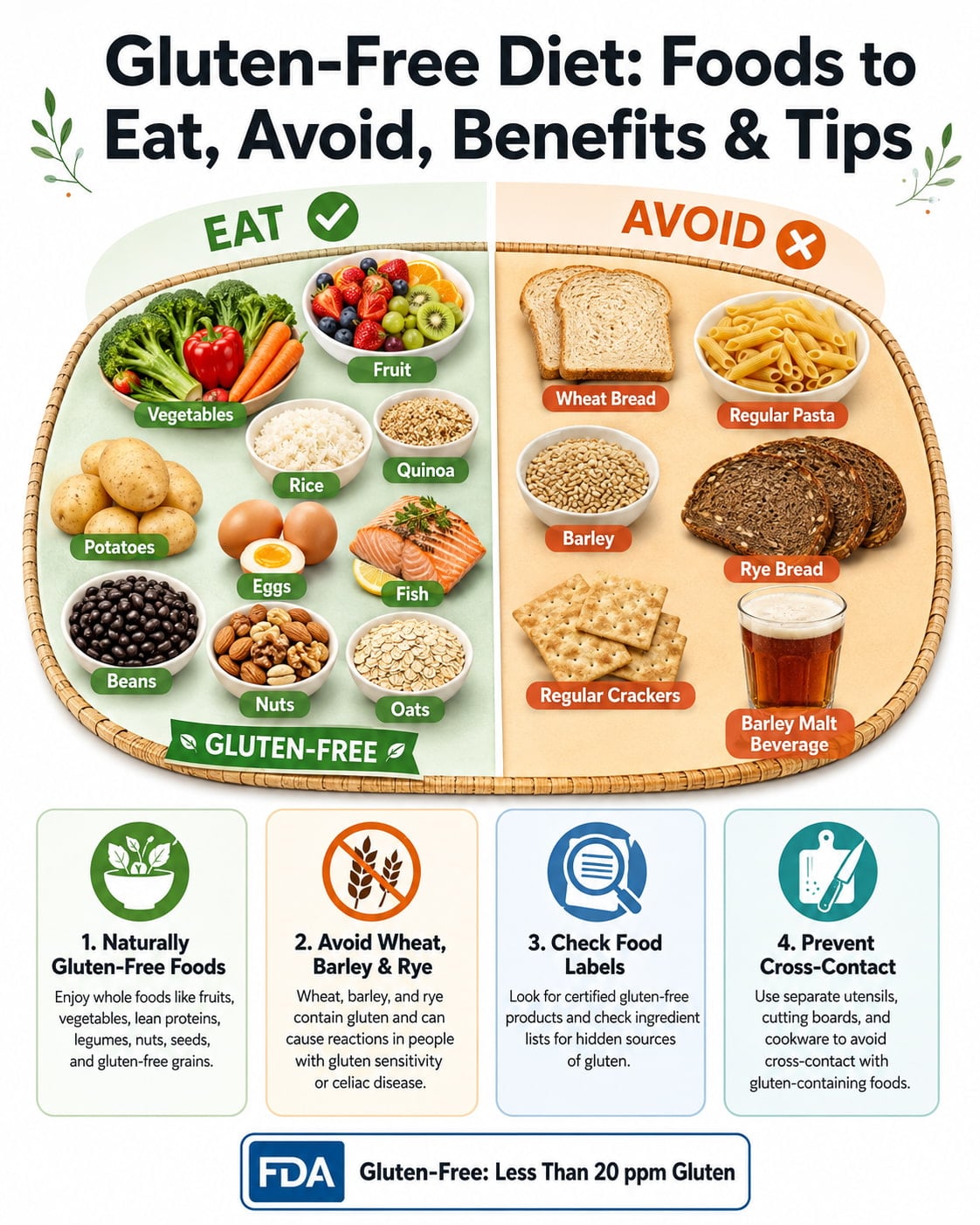
A gluten-free diet removes foods and ingredients made from wheat, barley, rye, and related grains such as triticale. It is essential for people with celiac disease and may be appropriate for certain diagnosed wheat- or gluten-related conditions, but it is not automatically healthier or a proven weight-loss diet for everyone.
Following the diet safely involves more than replacing regular bread with gluten-free bread. You also need to understand food labels, hidden sources of gluten, balanced meal planning, and cross-contact. Most importantly, speak with a healthcare professional before eliminating gluten if you have unexplained digestive or other symptoms because starting the diet too early can interfere with celiac disease testing.
What Is a Gluten-Free Diet?
Gluten is a group of proteins naturally present in:
- Wheat
- Barley
- Rye
- Triticale, a wheat–rye hybrid
A gluten-free diet avoids these grains and foods made with them. That includes obvious sources such as wheat bread and pasta, as well as less obvious ingredients such as barley malt, wheat-based thickeners, breadcrumbs, and some seasoning blends.
Wheat varieties and wheat products that contain gluten include:
- Bulgur
- Couscous
- Durum
- Einkorn
- Emmer
- Farina
- Farro
- Graham flour
- Khorasan wheat
- Semolina
- Spelt
- Wheat berries
However, a gluten-free diet does not eliminate all grains or carbohydrates. Rice, corn, quinoa, buckwheat, millet, sorghum, and several other grains and starches are naturally gluten-free. The NIDDK’s celiac nutrition guidance recommends building the diet around naturally gluten-free foods while checking processed products for added ingredients and possible cross-contact.
Who Should Follow a Gluten-Free Diet?
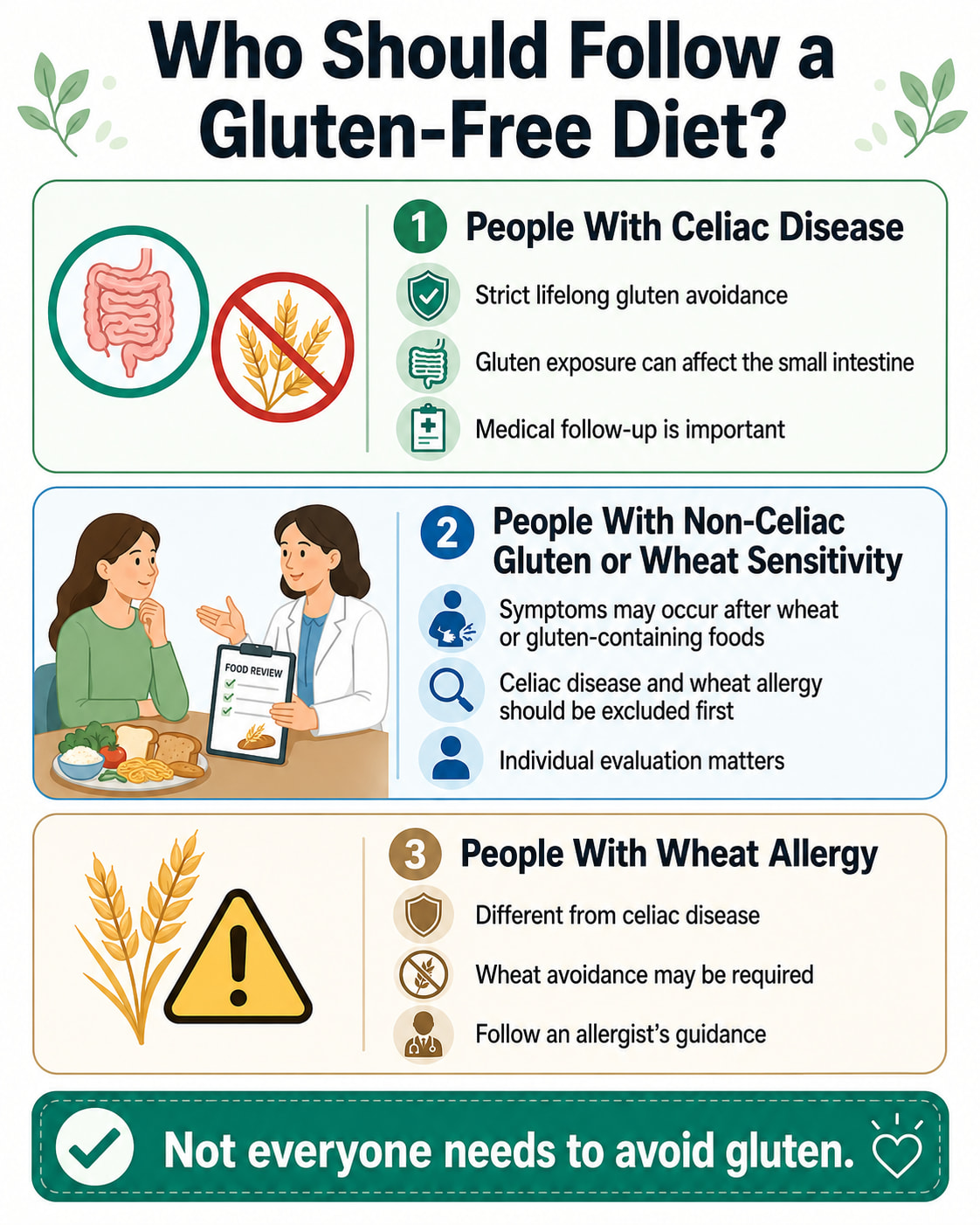
Not everyone needs to avoid gluten. The medical reason for following the diet determines how strict it needs to be and whether other foods must also be avoided.
People With Celiac Disease
Celiac disease is a chronic immune disorder in which gluten exposure damages the lining of the small intestine. That damage can interfere with the absorption of iron, calcium, vitamins, and other nutrients.
People with celiac disease need a strict, lifelong gluten-free diet. Even small amounts of gluten may continue the immune response, whether or not obvious symptoms occur. Following the diet can support intestinal recovery, improve symptoms, and reduce continued gluten-related damage.
People With Non-Celiac Gluten or Wheat Sensitivity
Some people experience bloating, abdominal discomfort, bowel changes, fatigue, or other symptoms after eating wheat or gluten even though testing does not show celiac disease or wheat allergy. This may be described as non-celiac gluten sensitivity or non-celiac wheat sensitivity.
There is no single blood or tissue test that confirms this condition. Celiac disease and wheat allergy should be excluded first. In some cases, another component of wheat—rather than gluten itself—may be contributing to symptoms.
The American College of Gastroenterology’s gluten sensitivity overview explains why medical evaluation should come before self-diagnosis or long-term food restriction.
People With Wheat Allergy
Wheat allergy is different from celiac disease. It is an allergic reaction to one or more wheat proteins and may cause symptoms such as hives, swelling, wheezing, digestive problems, or a severe allergic reaction.
Someone with wheat allergy may need to avoid wheat but may not need to avoid barley or rye unless another condition is present. Conversely, a food that meets the FDA gluten-free standard could contain a specially processed wheat-derived ingredient. People with wheat allergy should therefore follow an allergist’s instructions rather than relying only on a gluten-free label.
Get Tested Before Starting a Gluten-Free Diet
Do not remove gluten before celiac disease testing unless your healthcare professional specifically tells you to do so.
Celiac blood tests look for antibodies produced while the body is reacting to gluten. Avoiding gluten can cause those antibody levels to fall and may allow the small intestine to begin recovering. This can make blood tests or biopsies less accurate.
Doctors commonly use blood testing and, in many adults, a small-intestinal biopsy to diagnose or rule out celiac disease. Testing requirements can differ for children and adults.
Follow the NIDDK’s celiac diagnosis guidance rather than attempting a gluten challenge without professional supervision.
Gluten-Free Diet Foods to Eat
The most nutritious gluten-free diet is based primarily on naturally gluten-free foods rather than highly processed substitutes.
| Food category | Naturally gluten-free examples | What to check |
|---|---|---|
| Vegetables | Leafy greens, broccoli, carrots, peppers, tomatoes, potatoes, sweet potatoes | Check sauces, seasonings, breading, and frozen preparations |
| Fruit | Apples, berries, bananas, oranges, grapes, melons | Check canned fruit, dried fruit, syrups, and packaged fruit mixtures |
| Protein foods | Eggs, fish, seafood, plain meat, poultry, beans, lentils, tofu | Avoid breading; check marinades, sauces, seasoning blends, and processed products |
| Dairy | Plain milk, plain yogurt, many natural cheeses | Check flavored yogurt, cheese sauces, processed cheese, and desserts |
| Nuts and seeds | Almonds, peanuts, walnuts, chia, flax, pumpkin seeds | Check flavorings, coatings, and shared processing warnings |
| Grains and seeds | Rice, quinoa, corn, buckwheat, millet, sorghum, teff, amaranth | Choose gluten-free-labeled products when cross-contact is a concern |
| Starches | Potatoes, cassava, tapioca, arrowroot, cornstarch | Check packaged mixes and flavored products |
| Fats | Olive oil, avocado, butter | Check spreads, cooking sprays, sauces, and flavored oils |
Fresh, plain versions of these foods are generally the easiest choices. A naturally gluten-free ingredient can become unsuitable when it is breaded, seasoned, marinated, mixed with a sauce, or processed on shared equipment.
Healthy Gluten-Free Grains and Starches
Instead of relying mainly on white rice flour, tapioca starch, or packaged gluten-free bread, include a variety of higher-fiber options:
- Brown rice
- Quinoa
- Buckwheat
- Amaranth
- Millet
- Sorghum
- Teff
- Corn
- Beans and lentils
- Potatoes with the skin
- Certified or labeled gluten-free oats
These foods can help provide fiber, vitamins, minerals, and satisfying carbohydrates.
Are Oats Gluten-Free?
Oats are not classified as a gluten-containing grain under the FDA rule. However, oats are frequently exposed to wheat, barley, or rye during farming, transportation, milling, or manufacturing.
People with celiac disease should choose oats specifically labeled gluten-free. Most people with celiac disease can tolerate moderate amounts of uncontaminated oats, but individual tolerance varies. Discuss oats with a gastroenterologist or registered dietitian if you are newly diagnosed or continue to have symptoms.
Foods to Avoid on a Gluten-Free Diet
People who require strict gluten avoidance should not eat foods containing wheat, barley, rye, triticale, or ingredients made from these grains unless the product meets applicable gluten-free requirements.
Gluten-Containing Grains and Ingredients
Avoid the following unless a specific ingredient has been processed appropriately and the finished product is labeled gluten-free:
- Wheat
- Barley
- Rye
- Triticale
- Bulgur
- Couscous
- Durum
- Einkorn
- Emmer
- Farina
- Farro
- Graham flour
- Khorasan wheat
- Semolina
- Spelt
- Wheat bran
- Wheat germ
- Wheat flour
- Barley malt
- Malt extract
- Malt flavoring
- Malt syrup
- Malt vinegar
- Brewer’s yeast
“Malt” usually refers to barley unless another gluten-free source is clearly identified.
Common Foods That Contain Gluten
Unless specifically made and labeled gluten-free, the following foods commonly contain gluten:
- Bread, rolls, bagels, naan, pita, and flour tortillas
- Regular pasta, noodles, ramen, and dumplings
- Cakes, cookies, muffins, doughnuts, and pastries
- Crackers, pretzels, breadcrumbs, stuffing, and croutons
- Pancakes, waffles, biscuits, and many baking mixes
- Regular breakfast cereals and granola
- Breaded meat, poultry, fish, cheese, or vegetables
- Regular beer, ale, lager, and malt beverages
- Conventional soy sauce
- Gravies, roux, and flour-thickened sauces
- Soups containing noodles, barley, or wheat-based thickeners
- Seitan and many wheat-based meat substitutes
Ordinary sourdough bread made with wheat, rye, or barley is not gluten-free. Fermentation does not make regular wheat sourdough suitable for someone who must strictly avoid gluten.
Foods That May Contain Hidden Gluten
Not every product in the following categories contains gluten, but each one requires label checking:
- Bouillon and soup bases
- Salad dressings
- Marinades
- Seasoning packets
- Gravy mixes
- Sausages and processed meat
- Plant-based meat alternatives
- Flavored rice and potato mixes
- Candy and chocolate products
- Flavored chips and snack mixes
- Ice cream and frozen desserts
- Energy and protein bars
- Sauces and condiments
- Vitamin and mineral supplements
- Certain medicines
Do not automatically avoid an entire food category. Check the exact product because ingredients and manufacturing practices vary between brands and may change over time.
How to Read Gluten-Free Food Labels
Reading labels becomes easier when you follow the same process each time.
1. Look for a Gluten-Free Claim
Under current U.S. rules, a food labeled with any of the following terms must meet the FDA gluten-free standard:
- Gluten-free
- No gluten
- Free of gluten
- Without gluten
The claim is voluntary. A food can be naturally gluten-free even when the package does not use one of these terms.
2. Understand the FDA’s 20-PPM Rule
The FDA requires any unavoidable gluten in a product bearing a gluten-free claim to be below 20 parts per million, or below 20 milligrams per kilogram of food.
The rule also restricts the use of unprocessed gluten-containing grains and ingredients derived from those grains. Manufacturers are responsible for ensuring that products using the claim comply, although federal regulations do not require every manufacturer to use one particular testing method for every finished product.
The FDA’s gluten-free labeling requirements apply to FDA-regulated foods, including relevant fermented and hydrolyzed products.
3. Do Not Confuse “Wheat-Free” With “Gluten-Free”
A wheat-free product could still contain:
- Barley
- Rye
- Barley malt
- Brewer’s yeast
- Triticale
Wheat is a major allergen under U.S. labeling law, but barley and rye are not included in the major-allergen “Contains” statement. Therefore, checking only for “Contains: Wheat” is not enough for someone with celiac disease.
Read the full ingredient list and look for barley, rye, malt, and other gluten-containing ingredients.
4. Check the Label Every Time
Do not assume a familiar product remains gluten-free. Manufacturers may change ingredients, suppliers, production lines, or labels.
For frequently purchased foods, recheck:
- The gluten-free claim
- Ingredient list
- Allergen statement
- Preparation directions
- Any new flavor or variety
Latest FDA Gluten-Labeling Development
On January, 2026, the FDA issued a Request for Information seeking public input about clearer disclosure of rye, barley, and oats affected by cross-contact. The comment period closed on April, 2026.
This was an information-gathering step, not a replacement for the existing gluten-free regulation. As of August, 2026, the federal standard under 21 CFR 101.91 continues to require less than 20 ppm of unavoidable gluten in foods carrying a gluten-free claim.
The FDA’s January 2026 request for information may eventually inform future labeling or cross-contact policies, but shoppers should continue following the current label-reading rules unless a final regulatory change is announced.
Potential Benefits of a Gluten-Free Diet
The benefits depend on why the diet is being followed.
Supports Celiac Disease Management
For someone with celiac disease, strict gluten avoidance can:
- Reduce digestive and non-digestive symptoms
- Allow the small-intestinal lining to recover
- Improve nutrient absorption
- Reduce continued immune-related intestinal damage
- Lower the likelihood of some long-term complications
Improvement may take time, and symptom relief does not prove that celiac disease is present. People with a confirmed diagnosis also need medical follow-up even when they feel better.
May Help Certain People With Gluten or Wheat Sensitivity
However, symptom improvement does not necessarily mean gluten was the cause. Wheat contains several substances that may affect digestion, and highly restrictive diets can produce nutritional or social challenges. A structured assessment with a clinician or dietitian can help identify which foods actually need to be limited.
May Improve Food Quality When Planned Well
A gluten-free diet may improve overall food quality when it encourages someone to eat more:
- Vegetables
- Fruit
- Beans and lentils
- Nuts and seeds
- Plain protein foods
- Minimally processed gluten-free grains
This benefit comes from choosing nutrient-dense foods, not from removing gluten itself.
Does a Gluten-Free Diet Help With Weight Loss?
Some people lose weight after removing cookies, pizza, pastries, beer, and other calorie-dense foods. Others gain weight because packaged gluten-free baked foods may contain similar or greater amounts of calories, refined starch, fat, or sugar.
Body-weight changes depend mainly on overall calorie intake, food quality, activity, health, and other individual factors—not on whether a product contains gluten.
Risks and Disadvantages of a Gluten-Free Diet
A gluten-free diet can be healthy, but simply buying products marked “gluten-free” does not guarantee a balanced eating pattern.
Possible concerns include:
- Low fiber intake
- Inadequate iron or calcium
- Lower intake of certain vitamins and minerals
- Heavy reliance on refined starches
- Higher sugar or fat intake from packaged substitutes
- Difficulty eating at restaurants or social events
- Increased food costs
- Unnecessary restriction when no medical reason is present
Packaged gluten-free bread, snacks, and desserts are not automatically more nutritious than their conventional equivalents. Compare serving sizes, fiber, protein, added sugar, saturated fat, and sodium rather than judging the product only by its gluten-free claim.
NIDDK advises people with celiac disease to work with a doctor and registered dietitian to ensure the diet provides adequate nutrients. Supplements should be based on an identified need and professional advice rather than taken automatically.
How to Start a Healthy Gluten-Free Diet
1. Confirm Why You Need the Diet
Get evaluated before eliminating gluten when celiac disease is possible. Once you know whether the issue is celiac disease, wheat allergy, non-celiac sensitivity, or another digestive condition, you can follow the correct level of restriction.
2. Start With Naturally Gluten-Free Foods
Build most meals from foods that do not need a specialty label:
- Vegetables and fruit
- Eggs
- Plain fish, meat, or poultry
- Beans and lentils
- Plain dairy foods
- Nuts and seeds
- Rice, quinoa, corn, or potatoes
This approach is usually simpler, more nutritious, and more affordable than replacing every wheat-based product with a packaged alternative.
3. Replace Nutrients, Not Just Foods
Removing fortified wheat bread and cereal may reduce fiber, iron, and B-vitamin intake. Replace them thoughtfully with options such as:
- Beans and lentils
- Gluten-free whole grains
- Leafy vegetables
- Nuts and seeds
- Gluten-free fortified cereals
- Meat, seafood, eggs, or other appropriate iron sources
4. Use a Simple Meal Framework
A balanced gluten-free meal can include:
- Half the plate: Vegetables, with fruit as desired
- One-quarter: Fish, poultry, eggs, tofu, beans, or another protein
- One-quarter: Rice, quinoa, corn, potatoes, or another gluten-free carbohydrate
- A moderate amount: Healthy fat, sauce, dressing, cheese, nuts, or seeds
5. Check Sauces, Seasonings, and Convenience Foods
Plain chicken and rice may be gluten-free, but a marinade, gravy, bouillon cube, seasoning packet, or soy sauce can change that. Check every component of the meal.
6. Keep Convenient Foods Available
Useful options include:
- Fresh fruit
- Plain yogurt
- Cheese
- Hard-boiled eggs
- Nuts
- Hummus and vegetables
- Gluten-free-labeled crackers
- Tuna packets
- Gluten-free oatmeal cups
- Leftover rice or quinoa bowls
Having safe options available can reduce reliance on expensive specialty snacks.
7. Compare Gluten-Free Products
When choosing bread, pasta, cereal, or crackers, compare products for:
- Fiber
- Protein
- Added sugar
- Sodium
- Saturated fat
- Serving size
- Fortified vitamins and minerals
Choose products that support the quality of your overall diet rather than simply copying the texture of the food being replaced.
8. Review Your Diet With a Registered Dietitian
A dietitian familiar with celiac disease or food allergies can help with:
- Nutrient intake
- Label reading
- Meal planning
- Oat introduction
- Restaurant strategies
- Cross-contact prevention
- Children’s growth and school meals
- Vegetarian or vegan gluten-free diets
How to Prevent Gluten Cross-Contact
For people with celiac disease, possible sources include:
- Crumbs in a shared toaster
- Regular flour on counters or baking tools
- Shared butter, jam, or peanut butter containers
- Cutting boards or utensils with remaining food particles
- Shared pasta water
- Shared colanders
- Shared restaurant fryers
- Pizza cooked beside wheat dough
- Bulk bins with shared scoops
- Naturally gluten-free grains processed with wheat, barley, or rye
Practical precautions include:
- Clean counters, utensils, and cookware thoroughly.
- Use a separate toaster or reusable toaster bag.
- Use separate condiment containers or squeeze bottles.
- Store gluten-free foods above gluten-containing flour and bread.
- Keep gluten-free flour in sealed containers.
- Use dedicated equipment when an item is difficult to clean properly.
- Wash hands before handling gluten-free food.
- Choose oats and higher-risk grain products labeled gluten-free.
Cross-contact precautions should be practical and appropriate for the person’s diagnosis. They are especially important for celiac disease, where gluten exposure may matter even without immediate symptoms.
Tips for Eating Out Gluten-Free
Restaurant food can contain gluten through ingredients, preparation methods, or shared equipment.
Before ordering:
- Review the menu online or call ahead.
- Explain that you need a gluten-free meal for a medical reason when applicable.
- Ask whether sauces, marinades, dressings, and seasonings contain wheat, barley, rye, or malt.
- Ask whether fried food uses a shared fryer.
- Ask whether pasta water, grills, utensils, or preparation surfaces are shared.
- Choose simple dishes with fewer ingredients when procedures are unclear.
- Bring a safe snack when suitable food may not be available.
A menu item marked “gluten-friendly” may not provide the same assurance as a food represented as gluten-free. Ask the restaurant what the term means and how the meal is prepared.
Example One-Day Gluten-Free Menu
This example uses naturally gluten-free foods and can be adjusted for individual calorie, allergy, cultural, and medical needs.
| Meal | Example |
|---|---|
| Breakfast | Gluten-free-labeled oatmeal with berries, chia seeds, and plain yogurt |
| Lunch | Quinoa bowl with chicken or chickpeas, mixed vegetables, olive oil, and lemon |
| Snack | Apple with peanut butter or a handful of nuts |
| Dinner | Baked salmon or tofu with roasted potatoes and broccoli |
| Optional dessert | Fresh fruit with plain yogurt |
Check the labels on oats, yogurt flavorings, peanut butter, broth, sauces, spices, and any other packaged ingredients.
When to See a Doctor or Registered Dietitian
Speak with a healthcare professional:
- Before starting the diet because of unexplained symptoms
- If you have a close family member with celiac disease
- If you have persistent diarrhea, bloating, or abdominal discomfort
- If you have unexplained anemia, weight loss, poor growth, or nutrient deficiencies
- If you develop a recurring itchy or blistering rash
- If symptoms continue after beginning a medically necessary gluten-free diet
- If the diet is becoming overly restrictive or difficult to maintain
Persistent symptoms do not always mean you are accidentally eating gluten. Another digestive condition, nutrient issue, food intolerance, or medical problem may need evaluation.
Frequently Asked Questions
What foods can you eat on a gluten-free diet?
You can eat fresh vegetables, fruit, beans, lentils, eggs, plain meat, fish, poultry, dairy, nuts, seeds, rice, corn, quinoa, potatoes, buckwheat, millet, sorghum, teff, and other naturally gluten-free foods.
Processed or flavored versions still require label checking.
Is rice gluten-free?
Yes. Plain white, brown, black, red, and wild rice are naturally gluten-free.
Rice mixes, seasoned rice, restaurant rice, and packaged rice dishes may contain broth, soy sauce, seasoning, or other gluten-containing ingredients.
Are oats gluten-free?
Pure oats are not classified as a gluten-containing grain, but ordinary oats frequently come into contact with wheat, barley, or rye. People with celiac disease should choose oats specifically labeled gluten-free and discuss them with a healthcare professional if symptoms continue.
Is sourdough bread gluten-free?
Regular sourdough made from wheat or rye is not gluten-free. Fermentation changes the dough but does not reliably remove enough gluten for a person with celiac disease.
A sourdough product is suitable only when it is made with appropriate gluten-free ingredients and meets applicable gluten-free labeling requirements.
Can a gluten-free diet help you lose weight?
A gluten-free diet does not have a proven weight-loss advantage for the general population. Weight may change if the diet alters total calorie intake or overall food choices, but gluten-free cookies, bread, pasta, and snacks can still be high in calories.
Is wheat-free the same as gluten-free?
No. A wheat-free food may contain barley, rye, malt, or other sources of gluten.
The difference is also important for people with wheat allergy because their dietary requirements may not be identical to those of someone with celiac disease.
Should you stop eating gluten before celiac disease testing?
No. Removing gluten before testing can make blood tests and intestinal biopsies less accurate. Continue your usual diet and speak with a healthcare professional about the appropriate testing process.
Conclusion
A gluten-free diet is an essential medical requirement for people with celiac disease and may be appropriate for certain other diagnosed conditions. The healthiest approach is to begin with proper testing, emphasize naturally gluten-free whole foods, read every relevant label, and manage cross-contact according to your medical needs.
Start by making a simple list of safe staple foods, review your most frequently used packaged products, and discuss any unexplained symptoms or nutritional concerns with a qualified healthcare professional.
This content is for informational purposes only and not medical advice.
References
- NIDDK: Eating, Diet, and Nutrition for Celiac Disease
- NIDDK: Diagnosis of Celiac Disease
- American College of Gastroenterology: Celiac Disease, Non-Celiac Gluten Sensitivity, and Gluten-Free Diets
- FDA: Gluten-Free Labeling of Foods
- Electronic Code of Federal Regulations: 21 CFR 101.91
- FDA: 2026 Gluten Ingredient Disclosure Request for Information
- AGA GI Patient Center: Preventing Gluten Cross-Contact