
A cucumber is very low in calories. One whole raw cucumber about 8 1/4 inches long has around 45 calories. That is why cucumber is such a popular choice for lighter meals, snacks, and simple weight-conscious eating. According to USDA SNAP-Ed Connection, that serving size is 301 grams, so cucumber gives you a lot of food volume for very few calories.
How Many Calories Are in a Cucumber by Serving Size?
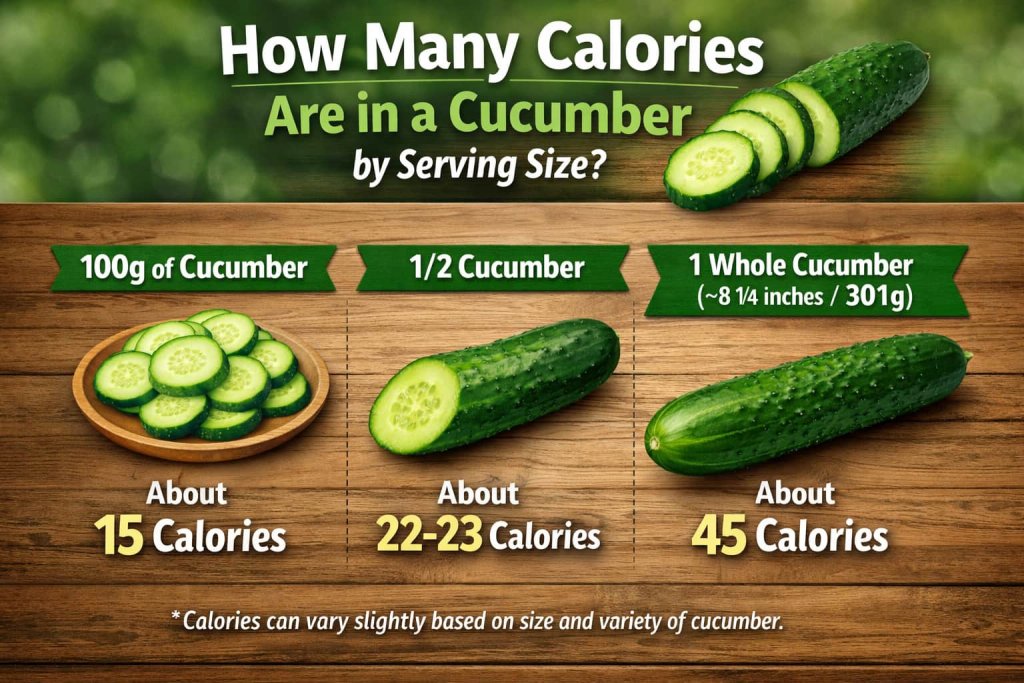
Here is a simple list-style breakdown for plain raw cucumber with peel:
- 100 grams of cucumber: about 15 calories
- 1/2 cucumber: about 22 to 23 calories
- 1 whole cucumber (about 8 1/4 inches / 301 g): about 45 calories
The whole-cucumber value comes from USDA SNAP-Ed. The 100-gram and half-cucumber figures are practical estimates based on that same serving size. Exact calories can vary slightly depending on the cucumber’s size, variety, and how much is trimmed.
Most calorie listings for cucumber are based on raw cucumber with peel. Peeling does not change the calories very much, but it can slightly reduce some nutrients found in or near the skin.
Plain Cucumber vs Prepared Cucumber
These calorie numbers apply to plain raw cucumber. The total can go up quickly when cucumber is served with creamy dressing, mayonnaise-based salads, sweetened pickling mixtures, or large portions of dip.
That is important because cucumber itself is very low in calories, but the ingredients added to it often make the bigger difference in the final calorie count.
Nutrition Profile of Cucumber
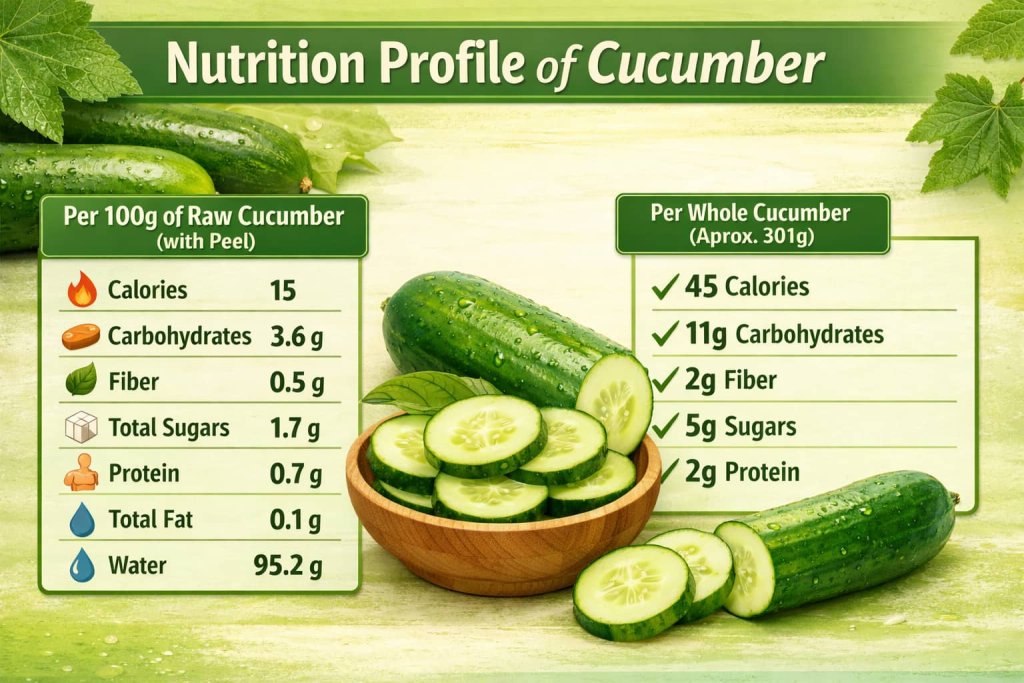
Here is a simple nutrition profile for 100 grams of raw cucumber with peel:
| Nutrient | Amount |
|---|---|
| Calories | 15 |
| Carbohydrates | 3.6 g |
| Fiber | 0.5 g |
| Total sugars | 1.7 g |
| Protein | 0.7 g |
| Total fat | 0.1 g |
| Water | 95.2 g |
For a whole raw cucumber (about 301 g), that works out to about 45 calories, 11 g carbohydrate, 2 g fiber, 5 g sugars, and 2 g protein.
Cucumber is mostly water and naturally light, which is why it works well in salads, snack plates, sandwiches, and lower-calorie meals.
Key Nutrients in Cucumber
Even though cucumber is best known for being low in calories, it still contributes useful nutrients. USDA FoodData Central lists cucumber as a source of small amounts of nutrients such as vitamin K, vitamin C, and potassium, especially when the peel is left on.
In practical terms, cucumber is not a major source of calories, protein, or fiber, but it can still add hydration, freshness, and some micronutrients to everyday meals. That is one reason it works so well in balanced eating patterns built around whole foods.
Is Cucumber Good for Weight Management?
Yes, cucumber can be a good fit for weight management.
Because it is very low in calories, cucumber helps add crunch and volume to meals without raising the calorie total much. A whole cucumber has only about 45 calories, which makes it an easy swap for higher-calorie crunchy sides or snacks.
That said, cucumber is not especially high in protein or fiber, so it may not keep you full for very long on its own. It usually works best when paired with more filling foods such as hummus, Greek yogurt dip, cottage cheese, eggs, tuna, or beans. This makes cucumber more satisfying while still keeping the overall meal or snack fairly light.
For example, using sliced cucumber instead of chips or crackers with lunch can cut calories while still adding crunch and volume. Pairing cucumber with a protein-rich food such as Greek yogurt dip, hummus, or cottage cheese can also make the snack more filling.
Does Cucumber Help With Hydration?
Yes. Cucumber is widely used as a hydrating food because it contains a lot of water and is usually eaten raw. While it does not replace drinking water, it can still support overall fluid intake as part of meals and snacks. Its low calorie content also makes it a practical option in hot weather or when you want something fresh and light.
Who Should Be a Little More Careful
People Taking Warfarin or Similar Blood Thinners
According to the National Institutes of Health Office of Dietary Supplements, people taking warfarin and similar anticoagulants need to keep their vitamin K intake reasonably consistent because sudden changes can increase or decrease the medicine’s effect. Cucumber is not as high in vitamin K as leafy greens, but it does contain some, so consistency still matters.
People Following a Potassium-Restricted Kidney Diet
Cucumber may fit into some lower-potassium eating plans, but anyone with kidney disease should follow their clinician’s advice rather than general food lists alone. Potassium needs can vary a lot from person to person. The National Kidney Foundation includes cucumber among lower-potassium vegetable options, but personal guidance still matters most.
Anyone Eating Cucumber Raw
Because cucumbers are usually eaten raw, food safety matters. The U.S. Food and Drug Administration advises washing all produce thoroughly under running water before preparing or eating it. FDA also says not to wash produce with soap, detergent, or commercial produce wash. For firm produce such as cucumbers, a clean produce brush can be used.
Does Peeling a Cucumber Change the Calories?
Peeling a cucumber does not change the calories very much. The bigger difference is texture, taste, and a small loss of some nutrients found in or near the skin. If you enjoy the peel and the cucumber is washed well, keeping it on is an easy way to keep the full crunch and a bit more nutritional value.
Easy Ways to Eat Cucumber Without Adding Too Many Calories
Cucumber is naturally light, but what you add to it can change that quickly. These simple ideas help keep it lower in calories:
- Slice cucumber into salads for extra crunch and volume
- Pair cucumber sticks with hummus or a yogurt-based dip
- Add cucumber to sandwiches and wraps instead of heavier toppings
- Mix chopped cucumber with tomatoes, herbs, and vinegar for a fresh side salad
- Add cucumber slices to water for flavor without sugar
The main thing to watch is not the cucumber itself, but creamy dressings, large amounts of dip, or prepared salads made with extra oil, mayo, or sugar.
Are Pickles the Same as Fresh Cucumber for Calories?
Not exactly. Pickles start as cucumbers, but the nutrition can change depending on how they are prepared. Sodium is usually much higher in pickles, and sweet pickles may also contain added sugar, so the nutrition profile is not always the same as plain fresh cucumber.
Frequently Asked Questions
How many calories are in half a cucumber?
Half a cucumber is usually about 22 to 23 calories if the whole cucumber is around 45 calories. The exact number depends on the cucumber’s size.
Is cucumber a low-calorie food?
Yes. Cucumber is clearly a low-calorie food. A whole cucumber weighing about 301 grams has only 45 calories, which is very low for that amount of food.
Is cucumber good for weight loss?
Cucumber can support a weight-loss plan because it is low in calories and easy to use in place of higher-calorie snacks or sides. It works best when paired with protein or other filling foods so the meal or snack is more satisfying.
The Bottom Line
Cucumber is one of the easiest low-calorie vegetables to add to your day. A whole raw cucumber has about 45 calories, and even a generous serving stays light. It adds crunch, hydration, and volume to meals without raising calories much, which makes it a practical everyday choice for lighter eating.
Sources/References
- USDA SNAP-Ed Connection — Cucumbers
- U.S. Department of Agriculture — FoodData Central
- U.S. Food and Drug Administration — Selecting and Serving Produce Safely
- National Institutes of Health Office of Dietary Supplements — Vitamin K Fact Sheet for Health Professionals
- National Kidney Foundation — 40 Low Potassium Fruits and Vegetables to Add to Your Grocery List