
A grapefruit is low in calories. According to USDA FoodData Central, 100 grams of raw grapefruit has about 42 calories, and USDA SNAP-Ed lists 1/2 medium grapefruit at about 41 calories. That makes grapefruit a practical, refreshing fruit choice for many people who want something naturally sweet and relatively light.

Understanding grapefruit matters because calories are only part of the story. Grapefruit also provides vitamin C, some fiber, and potassium, but it comes with one important caution: it can interact with certain medicines. The FDA’s grapefruit guidance explains that grapefruit and grapefruit juice can change how some oral medications work.
How Many Calories Are in a Grapefruit?
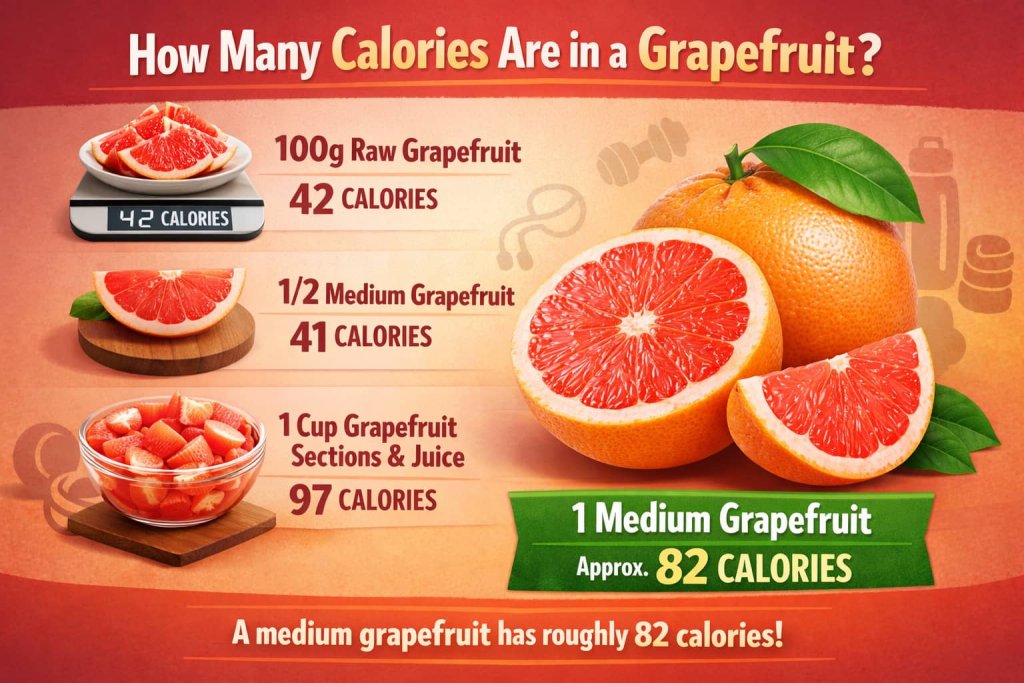
For most readers, these are the most useful everyday numbers:
- 100 grams raw grapefruit: about 42 calories
- 1/2 medium grapefruit: about 41 calories
- 1 cup grapefruit sections with juice: about 97 calories
A practical whole-fruit estimate is that 1 medium grapefruit has roughly 82 calories, based on USDA SNAP-Ed’s figure of about 41 calories for 1/2 medium grapefruit. The exact number can still vary with size and how much edible fruit you eat.
The calorie count can also vary a little depending on the grapefruit’s size, variety, and how much membrane or juice is included. Still, grapefruit is consistently a low-calorie fruit option in USDA nutrition data.
Grapefruit Nutrition Profile
Calories are only one reason grapefruit is popular. A half medium grapefruit provides about:
- 41 calories
- 10 grams of carbohydrate
- 1 gram of fiber
- 9 grams of natural sugar
- 1 gram of protein
- 49 mg of vitamin C
USDA nutrient data also show that 1 cup of raw pink or red grapefruit sections with juice provides 71.8 mg of vitamin C. That means grapefruit gives you a lot of nutritional value for relatively few calories, especially compared with many sweet snacks or desserts.
Key Nutrients in Grapefruit
Vitamin C
Vitamin C is the standout nutrient in grapefruit. The NIH Office of Dietary Supplements lists citrus fruits, including grapefruit, as important food sources of vitamin C. Vitamin C supports normal immune function, collagen formation, and wound healing.
Potassium
The FDA notes that grapefruit contains potassium, a mineral your body needs for normal muscle and nerve function and for healthy blood pressure regulation.
Fiber
Whole grapefruit contains some fiber, which can help with fullness and overall diet quality. The fiber content is modest compared with some other fruits, but it still adds to grapefruit’s usefulness in a balanced eating pattern.
Is Grapefruit Good for Weight Management?
Yes, grapefruit can fit well into a weight-management diet because it is low in calories and contains a lot of water along with some fiber, which can help make it satisfying. That does not mean grapefruit is a special fat-burning food. A more accurate way to think about it is that grapefruit may help support calorie control when it replaces more energy-dense foods.
This fits broader healthy eating guidance. The Dietary Guidelines for Americans recommend eating fruits in their original form and keeping 100% fruit juice in moderate portions. That is one reason whole grapefruit is usually a better everyday choice than large servings of juice.
Why grapefruit may help with weight-conscious eating
- It is low in calories for the volume
- It has high water content
- Whole fruit gives you more chewing and a little fiber
- It can work as a lighter breakfast side, snack, or dessert swap
Whole Grapefruit vs Grapefruit Juice
Whole grapefruit is usually the better choice when you want to manage calories and stay fuller. Juice is easier to drink quickly, and it usually provides less fullness than eating the fruit itself.
A simple rule is this:
- Choose whole grapefruit when you want better fullness and portion control
- Use juice more carefully, especially if you are watching calories or sugar intake
- Be extra cautious with juice if you take medication, because interaction warnings often refer to both grapefruit and grapefruit juice
Who Should Be a Little More Careful With Grapefruit?
This is the most important safety point in the article.
Grapefruit and grapefruit juice can affect how some prescription and over-the-counter oral drugs work. In some cases, the interaction can raise the amount of medicine in your body or otherwise change how the drug works.
People who should be more careful include those taking some:
- cholesterol-lowering medicines
- blood pressure medicines
- other oral medicines that carry a grapefruit warning on the label or medication guide
It is also important to know that grapefruit does not affect every drug in those categories. The FDA says the severity of the interaction can vary depending on the specific medicine, the person, and how much grapefruit or grapefruit juice is consumed.
Another useful detail is that the interaction does not always make a medicine stronger. The FDA notes that grapefruit juice can also reduce how well some medicines work by lowering how much of the drug enters the blood. One example the FDA gives is fexofenadine, an antihistamine.
What to do if you are unsure
- Check the prescription label or medication guide
- Ask your pharmacist
- Ask your clinician before making grapefruit a daily habit if you take regular medication
- If your medication guide says to avoid grapefruit, the FDA also advises being careful with Seville oranges, pomelos, and tangelos, which may have similar effects
Does Grapefruit Have a Lot of Sugar?
Grapefruit contains natural sugar, but not an unusually high amount for fruit. A half medium grapefruit has about 9 grams of sugar, which is usually reasonable for many healthy eating patterns, especially when the fruit is eaten whole.
For most readers, the more practical issue is not the sugar itself but the medication interaction warning. That is what makes grapefruit different from many other fruits in everyday nutrition advice.
Is Grapefruit Keto, Low Carb, or Diabetic-Friendly?
Grapefruit is not a zero-carb food. A half medium grapefruit has about 10 grams of carbohydrates, so whether it fits depends on your overall eating pattern and portion size.
For people managing blood sugar, grapefruit may fit into a balanced meal plan, but portion still matters. The safest and most accurate takeaway is that grapefruit can be part of a healthy diet for many people, but it is not a medical treatment and it is not automatically appropriate for everyone taking medication.
Simple Ways to Eat Grapefruit
If grapefruit works for your diet and does not conflict with your medicines, practical options include:
- eating 1/2 grapefruit with breakfast
- adding grapefruit sections to a fruit bowl
- pairing grapefruit with plain yogurt or cottage cheese
- using grapefruit as a lighter dessert instead of pastries or candy
These ideas can help keep the calorie count modest while adding vitamin C and freshness to meals.
Frequently Asked Questions
How many calories are in half a grapefruit?
About 41 calories for 1/2 medium grapefruit.
How many calories are in a whole grapefruit?
A medium whole grapefruit usually has roughly 82 calories, based on the estimate of about 41 calories for half. The exact number can vary with size.
Is grapefruit good for weight loss?
Grapefruit can support a lower-calorie eating pattern, but it does not directly cause fat loss. Weight change depends on your overall diet, activity, and long-term calorie balance.
What is the healthiest way to eat grapefruit?
For many people, whole grapefruit is the healthiest option because it provides the fruit in its original form and is generally more filling than juice. But the healthiest choice is also the safe choice, so anyone taking medicines should check for grapefruit interaction warnings first.
The Bottom Line on How Many Calories in a Grapefruit
Grapefruit is a low-calorie fruit that can fit well into many eating plans. A half medium grapefruit has about 41 calories, 100 grams has about 42 calories, and a medium whole grapefruit has roughly 82 calories. It also provides vitamin C and some potassium, making it more than just a low-calorie fruit.
The main thing to remember is simple: grapefruit can be a smart, refreshing choice for weight-conscious eating, but people who take certain medicines need to be careful. Before making it a regular part of your routine, check whether it is safe with your medication.
Sources and References
- USDA FoodData Central — FoodData Central
- USDA SNAP-Ed — Grapefruit
- U.S. Food and Drug Administration — Grapefruit Juice and Some Drugs Don’t Mix
- NIH Office of Dietary Supplements — Vitamin C Fact Sheet for Health Professionals
- Dietary Guidelines for Americans — Dietary Guidelines for Americans, 2020–2025