
A hot dog usually has about 140 to 190 calories on its own, and a hot dog with a bun often lands around 270 to 330 calories before toppings. The exact number depends on the type of frank, its size, the bun, and what you add on top. Based on current product nutrition pages and industry nutrition guidance, a standard beef hot dog is often under 200 calories, while a typical bun adds about 100 to 140 more. According to the National Hot Dog and Sausage Council, a traditional 1.5-ounce beef hot dog is under 200 calories, and adding a bun contributes about 100 more calories.
That makes hot dogs one of those foods where the base item is only part of the story. A plain hot dog may seem moderate in calories, but cheese, chili, mayo-based toppings, or large buns can push the meal much higher very quickly.
How Many Calories in a Hot Dog by Type
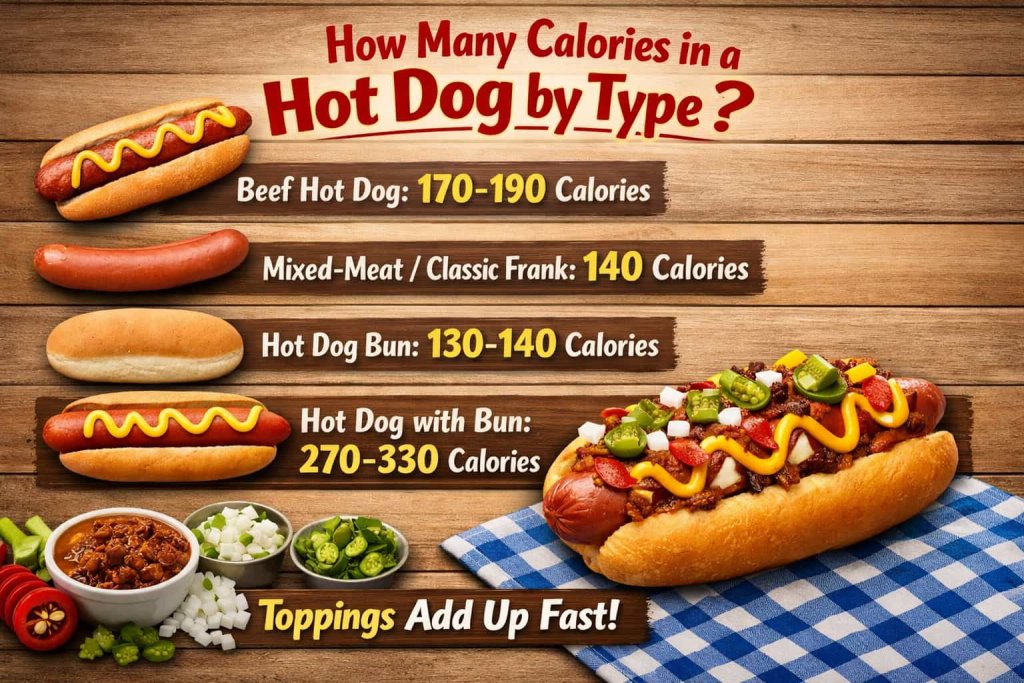
Here is the most practical way to think about hot dog calories.
- A standard beef hot dog is commonly around 170 to 190 calories
- A mixed-meat or classic frank can be around 140 calories
- A standard white hot dog bun often adds about 130 to 140 calories
- A plain hot dog with bun is often around 270 to 330 calories
- Toppings can raise that total fast
For example, Ball Park lists its Beef Hot Dogs at 170 calories per frank, while Oscar Mayer lists a serving size of 1 beef frank at 42 grams, and Wonder Bread lists 130 calories per hot dog bun. Pepperidge Farm lists 140 calories per white hot dog bun.
Practical Calorie Guide for a Hot Dog
A realistic calorie guide looks like this:
- 1 plain standard hot dog: about 140 to 190 calories
- 1 hot dog with bun: about 270 to 330 calories
- 1 hot dog with bun and mustard: often still stays near the lower end
- 1 hot dog with bun, cheese, and chili: can easily move into the 350 to 500+ calorie range depending on portion size
The reason the range is wide is simple: hot dogs are not one standardized food. Size, meat blend, and bun type all change the total.
Why Hot Dog Calories Vary So Much
One important detail is serving size. A standard hot dog is not always the same weight. Some franks are closer to 40 to 45 grams, while others are 55 grams or more, and jumbo dogs can be higher still. That means two hot dogs that look similar can have very different calorie totals. In general, the heavier the frank, the more calories, fat, sodium, and protein it usually contains. This is why checking the serving size on the package gives a more accurate answer than relying on a single generic number.
Nutrition Profile of a Hot Dog
Hot dogs are more than just calories. They also provide protein and a few important minerals, but they are usually high in sodium and often high in saturated fat too.
A representative example from Ball Park’s Beef Hot Dogs provides:
- 170 calories
- 15 g fat
- 6 g saturated fat
- 480 mg sodium
- 6 g protein
Ball Park also lists small amounts of iron on that product page. The National Hot Dog and Sausage Council notes that a traditional beef hot dog provides about 7 g protein and can contribute minerals such as phosphorus, selenium, and zinc.
Key Nutrients in Hot Dogs
Hot dogs can provide a few nutrients that matter, especially when they are meat-based.
Protein
Protein helps support muscle repair, growth, and overall fullness. A standard hot dog usually gives you about 5 to 7 grams.
Vitamin B12
Vitamin B12 helps with nerve function and red blood cell production. The National Hot Dog and Sausage Council notes that a standard beef hot dog can provide a meaningful share of the daily value for B12.
Zinc, Selenium, and Phosphorus
These minerals support immune function, metabolism, and normal body processes. Meat-based hot dogs can provide some of them, though the exact amount varies by brand.
How Toppings Change Hot Dog Calories
This is where calories can jump fast.
Lower-calorie topping choices include:
- mustard
- sauerkraut
- onions
- diced tomatoes
- relish in modest amounts
Higher-calorie topping choices include:
- cheese sauce
- shredded cheese
- chili
- bacon
- mayo-based slaw
- buttered buns
A plain hot dog with mustard is very different from a loaded chili cheese dog. In real life, toppings often matter as much as the hot dog itself.
Here is a practical way to think about common topping changes:
- Mustard: usually very low in calories
- Sauerkraut: usually very low in calories
- Sweet relish: often adds a small amount
- Shredded cheese: can add around 50 to 110 calories depending on portion
- Chili: can add 60 to 150 or more calories depending on amount and recipe
- Mayo-based slaw or creamy sauces: can raise the total quickly
This is why a plain hot dog with mustard can stay relatively moderate in calories, while a chili cheese dog can become a much heavier meal.
Is a Hot Dog Good for Weight Management?
A hot dog can fit into a weight-loss or weight-maintenance plan, but it is usually not one of the best everyday choices for fullness per calorie.
That is because hot dogs tend to be:
- relatively small for their calories
- easy to eat quickly
- commonly paired with calorie-dense buns and toppings
- higher in sodium and saturated fat than many lean protein options
According to the Dietary Guidelines for Americans, a healthy eating pattern should limit foods higher in saturated fat and sodium. Hot dogs can still work occasionally, but leaner foods like chicken breast, fish, beans, tofu, Greek yogurt, or eggs usually make it easier to stay full on fewer calories.
When a Hot Dog Can Fit Better
A hot dog works better for weight management when you:
- choose one standard-size hot dog instead of two
- keep toppings simple
- use a lighter bun or skip half the bun
- pair it with fruit, salad, or vegetables instead of fries or chips
Who Should Be a Little More Careful With Hot Dogs
Some people may want to keep hot dogs more occasional than regular.
People Watching Sodium Intake
Hot dogs can contain several hundred milligrams of sodium in one serving. The American Heart Association recommends no more than 2,300 mg of sodium per day, with an ideal limit of 1,500 mg per day for most adults. The FDA also notes that more than 70% of dietary sodium in the U.S. comes from packaged and prepared foods.
People Managing Blood Pressure
The CDC explains that most sodium people eat comes from processed and restaurant foods. Since hot dogs are processed meats, they can add up quickly in a high-sodium diet.
People Trying to Lower Saturated Fat
The American Heart Association recommends keeping saturated fat to less than 6% of total daily calories for better heart health. One beef hot dog can use up a large chunk of that limit, especially once cheese or buttery toppings are added.
People Who Eat Processed Meat Often
This matters for long-term health, not just calories. The World Health Organization says processed meat has been classified by IARC as carcinogenic to humans in relation to colorectal cancer. The American Institute for Cancer Research reports that eating 50 grams of processed meat per day, about the amount in one hot dog, is linked with a 16% higher risk of colorectal cancer.
People at Higher Risk From Foodborne Illness
According to the USDA FSIS, hot dogs are ready-to-eat, but people at higher risk for listeria infection should take extra care. That includes pregnant women, older adults, and people with weakened immune systems. USDA advises these groups not to eat hot dogs unless they are reheated until steaming hot, about 165°F, before serving. The same guidance is repeated in the official USDA food-safety Q&A on listeriosis prevention.
Are Turkey or Lower-Fat Hot Dogs Lower in Calories?
Sometimes, yes. Turkey dogs and reduced-fat versions are often lower in calories and saturated fat than standard beef hot dogs, but not always. Sodium can still be high, so it is worth checking the label.
That means a “lighter” hot dog is not automatically a low-sodium choice. For many people, the best move is to compare:
- calories
- saturated fat
- sodium
- protein
- serving size
Hot Dog Calories vs. Bun Calories
A useful way to think about the total is this:
- Hot dog alone: often 140 to 190 calories
- Bun alone: often 130 to 140 calories
- Together: often 270 to 330 calories before toppings
So the bun is not a small detail. In many cases, it adds almost as many calories as the hot dog itself.
Are Hot Dogs Healthy?
Hot dogs are not a nutrient-dense staple food in the same way that fish, beans, yogurt, eggs, or minimally processed lean meats can be. They do provide protein and some micronutrients, but they are usually best treated as an occasional convenience food rather than a daily health food.
That does not mean you need to avoid them completely. It means it helps to keep the bigger picture in mind:
- portion size
- frequency
- sodium
- saturated fat
- toppings
- what the rest of the meal looks like
Simple Ways to Make a Hot Dog Lighter
If you enjoy hot dogs, these small changes can make a real difference:
- choose one regular hot dog instead of jumbo size
- use mustard instead of creamy sauces
- add onions, sauerkraut, or tomatoes
- skip cheese and chili when you want a lighter meal
- use a lighter bun or eat it without the full bun
- pair it with vegetables or fruit
Final Answer
Most hot dogs have about 140 to 190 calories by themselves, and about 270 to 330 calories with a bun before toppings. That makes hot dogs manageable once in a while, but they are usually not the best everyday choice for weight management or overall diet quality because they can be high in sodium, saturated fat, and processed meat intake.
If you eat hot dogs occasionally and keep portions and toppings in check, they can fit into a balanced diet. The smartest move is to treat them as an occasional food, not a default protein source.
FAQs
How many calories are in 1 beef hot dog?
A standard beef hot dog is often around 170 to 190 calories, though some brands are a bit lower or higher.
How many calories are in a hot dog with bun?
A hot dog with a standard bun is often around 270 to 330 calories before toppings.
Is a hot dog high in protein?
A hot dog gives some protein, usually about 5 to 7 grams, but it is not as protein-dense as leaner whole-food options.
Are hot dogs okay for weight loss?
They can fit occasionally, but they are usually not the most filling choice for the calories, especially when served with buns and heavy toppings.
Sources/References
- National Hot Dog and Sausage Council — Hot Dog and Sausage Nutrition Guide
- Ball Park — Beef Hot Dogs
- Oscar Mayer — Classic Beef Franks Hot Dogs
- Wonder Bread — Classic Hot Dog Buns
- Pepperidge Farm — Top Sliced White Hot Dog Buns
- Dietary Guidelines for Americans — Dietary Guidelines for Americans, 2020–2025
- American Heart Association — How Much Sodium Should I Eat Per Day?
- FDA — Sodium in Your Diet
- CDC — About Sodium and Health
- World Health Organization — Cancer: Carcinogenicity of the Consumption of Red Meat and Processed Meat
- American Institute for Cancer Research — Processed Meats Increase Colorectal Cancer Risk, New Report Says
- USDA FSIS — Hot Dogs and Food Safety
- USDA Ask USDA — How can I prevent listeriosis when eating ready-to-eat products?