
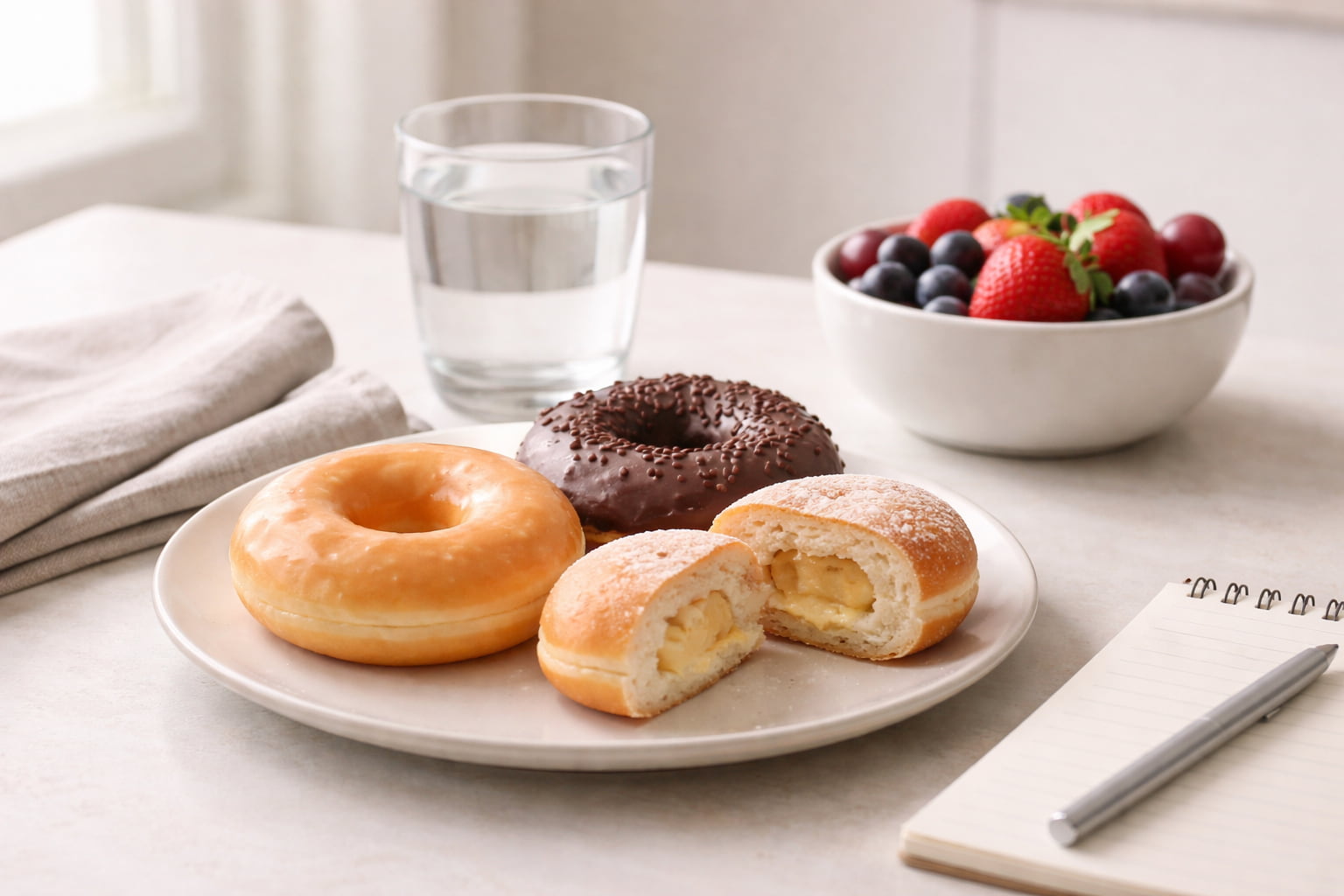
Most donuts have about 200 to 400+ calories each, depending on the type, size, filling, and topping. That is the quick answer most people need. Understanding the range matters because a simple glazed donut and a large filled or cake-style donut can fit very differently into your day. Current official menu data shows that many standard donuts land in the mid-200s, while richer options can climb much higher. According to Dunkin, examples range from 210 calories for a Sugared Donut to 470 calories for a Glazed Stick.
If you are counting calories, trying to manage your weight, or just want a realistic number before ordering, it helps to look beyond one average estimate. The real answer depends on the kind of donut you choose.
How many calories in a donut by type?
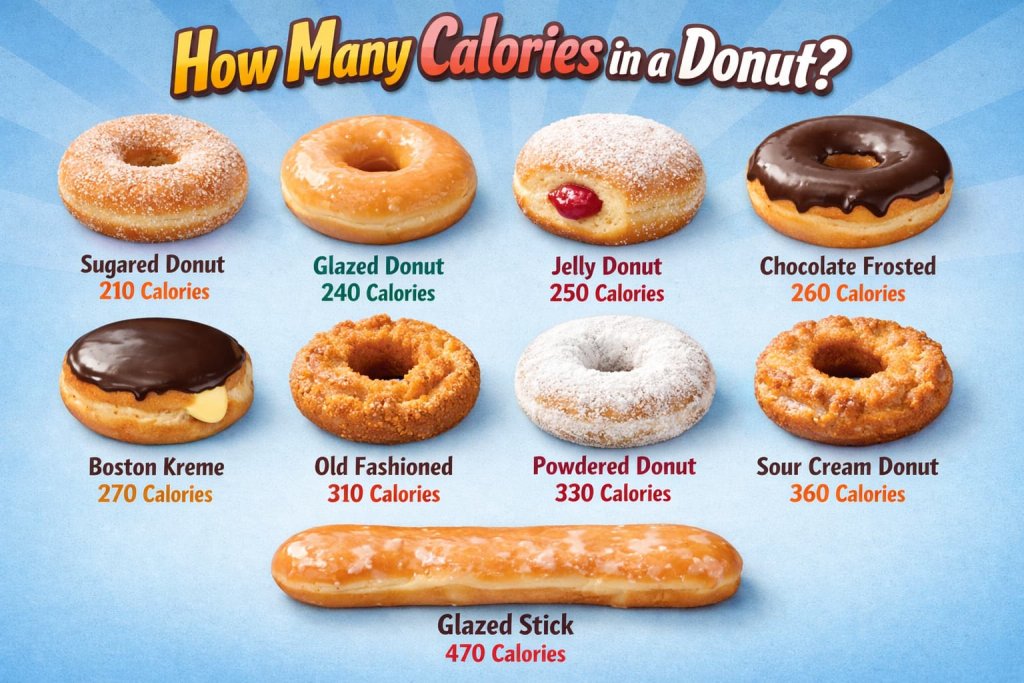
Here is a practical calorie breakdown based on current official menu data:
- Sugared donut: about 210 calories
- Glazed donut: about 240 calories
- Jelly donut: about 250 calories
- Chocolate frosted donut: about 260 calories
- Boston Kreme donut: about 270 calories
- Old fashioned donut: about 310 calories
- Powdered donut: about 330 calories
- Sour cream donut: about 360 calories
- Glazed stick: about 470 calories
A simple rule of thumb is that plain ring donuts are often the lightest, while filled, dense cake donuts, and larger specialty shapes are often the heaviest.
What about mini donuts or donut holes?
Mini donuts and donut holes usually have fewer calories per piece than a full-size donut, but it is easy to eat several at once. That is why the total calories can add up quickly. The most accurate number depends on the brand and portion size, so it is best to check the package label or the restaurant’s official nutrition page when possible.
As a practical rule, a small handful of donut holes or mini donuts can end up similar to, or even more than, the calories in one regular donut if you are not paying attention to portion size.
Nutrition profile of a donut
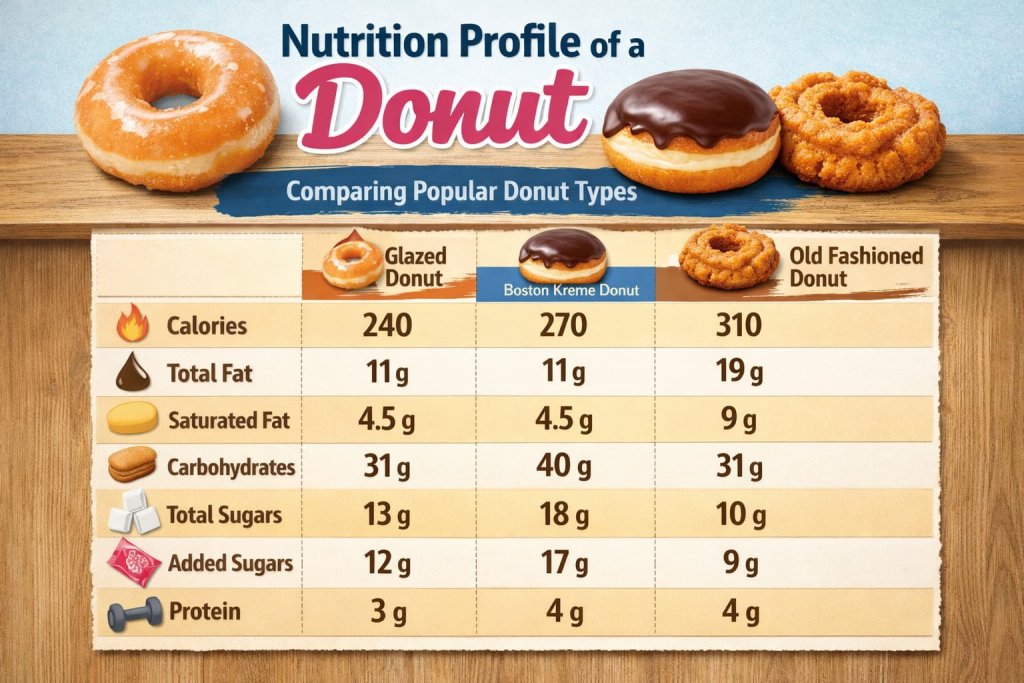
A donut is usually higher in refined carbohydrates, added sugars, and fat than many other breakfast or snack options. Current official data shows the following examples:
| Nutrient | Glazed Donut | Boston Kreme Donut | Old Fashioned Donut |
|---|---|---|---|
| Calories | 240 | 270 | 310 |
| Total fat | 11 g | 11 g | 19 g |
| Saturated fat | 4.5 g | 4.5 g | 9 g |
| Carbohydrates | 31 g | 40 g | 31 g |
| Total sugars | 13 g | 18 g | 10 g |
| Added sugars | 12 g | 17 g | 9 g |
| Protein | 3 g | 4 g | 4 g |
In everyday terms, most donuts provide:
- A fairly high number of calories in a small portion
- A meaningful amount of added sugar
- Some saturated fat
- Very little protein
- Usually little fiber
That combination helps explain why donuts are often less filling than foods with more protein and fiber.
Why donut calories vary so much
Size
A larger donut contains more dough, sugar, and fat. This is one reason a stick-style donut can be much higher in calories than a standard ring donut.
Type of dough
Yeast donuts are often lighter, while cake donuts are denser. In current menu data, old fashioned and sour cream styles are noticeably higher in calories than a plain glazed donut.
Fillings
Cream, custard, and jelly fillings add calories and sugar. That is why filled donuts often come in higher than plain ring donuts.
Frosting and toppings
Chocolate frosting, glaze, powdered sugar, and other toppings can raise the calorie count quickly. Even when the base donut is similar, the topping can make a noticeable difference.
One more reason calorie counts vary is where the donut comes from. A homemade donut, local bakery donut, packaged grocery-store donut, and chain restaurant donut can all differ in size, ingredients, and frying method. That is why official nutrition data is most useful for chain products, while homemade or bakery donuts often require a rough estimate based on size and style.
Is a donut good for weight management?
Usually, a donut is not the most helpful everyday choice for weight management, especially if you are trying to stay full on fewer calories. The CDC says a healthy eating pattern stays within your daily calorie needs and is low in added sugars and saturated fats. CDC nutrition guidance also notes that too much added sugar can contribute to weight gain, obesity, type 2 diabetes, and heart disease.
That does not mean you can never have one. A donut can still fit into an overall balanced diet as an occasional treat. But if your goal is weight loss or better appetite control, foods with more protein, fiber, and volume for the calories are usually more helpful. This is a practical inference from federal healthy eating guidance and the nutrient profile of donuts.
Is a donut a good breakfast?
For most people, a donut is better thought of as an occasional treat than a balanced breakfast. It is usually high in refined carbs, added sugars, and fat, but low in protein and fiber, which means it may not keep you full for very long.
If you do have a donut for breakfast, pairing it with a more filling food such as eggs, plain Greek yogurt, or another protein-rich option can make the meal more balanced and may help with fullness.
Key nutrients in a donut to pay attention to
When looking at donut nutrition, the main things to watch are calories, added sugars, saturated fat, and portion size. The Dietary Guidelines for Americans recommend limiting added sugars to less than 10% of daily calories and saturated fat to less than 10% of daily calories. The CDC explains that on a 2,000-calorie diet, that means no more than 200 calories from added sugars, or about 50 grams per day.
That matters because one donut can use up a noticeable share of that limit. For example, the current Glazed Donut in Dunkin’s guide has 12 grams of added sugars, while richer donut types can go higher.
Who should be a little more careful?
Some people may want to be more careful with donuts because of the calories, sugars, or saturated fat.
People trying to lose weight
Since donuts can be high in calories and not very filling, they can make it harder to stay within a calorie target if eaten often. Federal healthy-weight guidance supports limiting foods higher in added sugars and saturated fat.
People managing blood sugar
Donuts are typically made with refined flour and added sugars, which can make them a less helpful choice for people trying to manage blood sugar or lower diabetes risk. CDC notes that excess added sugar intake can contribute to type 2 diabetes risk over time.
People watching heart health
Many donuts contain a meaningful amount of saturated fat for a single snack or breakfast item. The Dietary Guidelines recommend limiting saturated fat as part of a healthy eating pattern.
People with food allergies
Donuts often contain common allergens such as wheat, milk, eggs, and soy, and they may be processed on shared equipment that also handles peanuts, sesame, tree nuts, fish, and shellfish. According to Dunkin’s current allergen guide, customers with food allergies should check product-specific allergen information carefully.
How to make a donut fit into your day more easily
You do not need an all-or-nothing approach. For many people, the more realistic plan is to eat donuts less often and balance them better.
Helpful strategies include:
- Choose a plain or smaller donut instead of a filled or heavily frosted one
- Pair it with protein, such as eggs or Greek yogurt, rather than making it your whole breakfast
- Skip a sugary coffee drink alongside it
- Share a larger donut
- Check the official nutrition page when available
These habits fit well with federal guidance to stay within calorie needs and limit added sugars and saturated fat.
Frequently asked questions
How many calories are in a glazed donut?
A glazed donut is often around 240 calories, based on current official Dunkin nutrition data, though the exact number varies by brand and size.
Are cake donuts higher in calories than regular donuts?
Often, yes. Cake-style donuts such as old fashioned or sour cream donuts tend to be denser and higher in calories than plain yeast-style ring donuts. Current official menu data supports that pattern.
Are filled donuts higher in calories?
Usually, yes. Fillings such as jelly, custard, or cream add extra calories and sugar, so filled donuts often come in higher than plain glazed versions.
Is one donut a lot of calories?
It depends on your daily needs, but one donut can provide a meaningful amount of calories, added sugar, and saturated fat in a small portion. That is why donuts are usually better treated as an occasional food rather than an everyday staple.
Conclusion
A donut usually contains about 200 to 400+ calories, with plain glazed styles often at the lower end and filled, frosted, or cake-style donuts much higher. The most accurate answer depends on the specific donut. Even a small change, such as choosing a plain donut instead of a filled one or eating half instead of a whole large donut, can make a noticeable difference in calories, added sugar, and saturated fat.
If you are trying to manage your weight or make more filling choices, a donut can still fit once in a while, but it is usually best treated as an occasional treat rather than a regular breakfast.
Checking the official nutrition page before you order is one of the easiest ways to get a more realistic calorie estimate and make a choice that better fits your goals.
Sources/References
- Dunkin — Nutrition
- Dunkin — Nutrition Guide
- Dunkin — Allergen and Ingredient Guide
- CDC — Tips for Healthy Eating for a Healthy Weight
- CDC — Healthy Eating Tips
- CDC — Nutrition Facts Label and Your Health
- U.S. Departments of Agriculture and Health and Human Services — Dietary Guidelines for Americans, 2020–2025