
A medium tangerine has about 47 calories. That makes tangerines a light, convenient fruit snack that can fit easily into many eating patterns, including weight-management plans. According to the University of Minnesota Extension, a small tangerine has about 37 calories, a medium tangerine has about 47 calories, a large tangerine has about 64 calories, and 1 cup of tangerine sections has about 103 calories.

Knowing the calorie count is only part of the picture. Tangerines also give you fiber, vitamin C, and helpful serving-size flexibility. That matters because many people want to know not just how many calories are in a tangerine, but also whether it is filling, whether it supports weight goals, and whether anyone should be more careful with portion size or acidity.
How many calories are in a tangerine by size
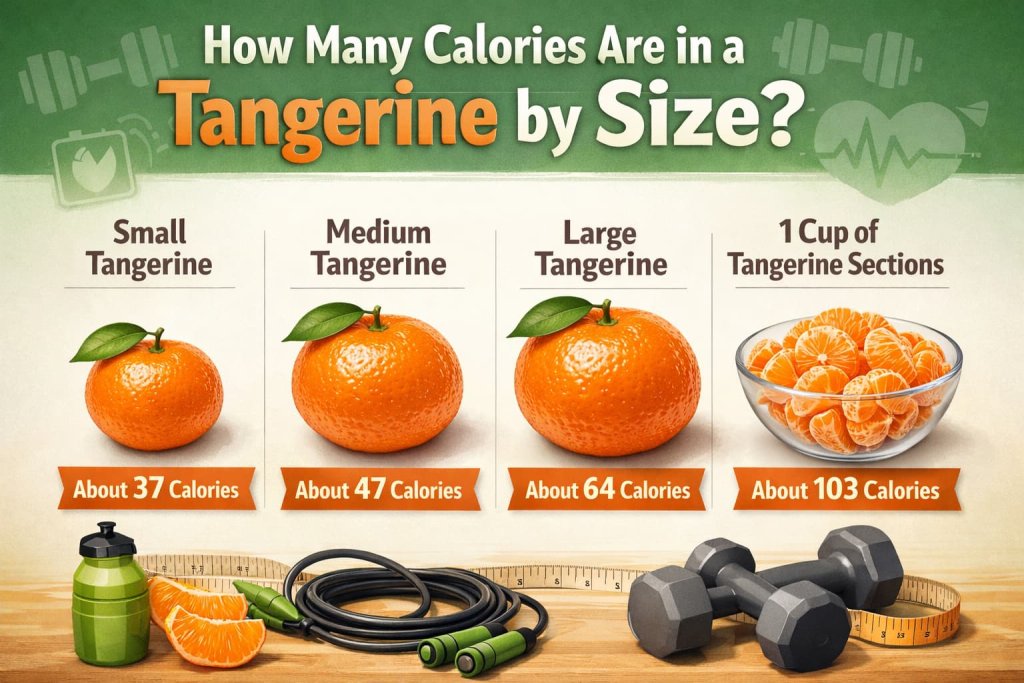
Here is the most practical way to think about tangerine calories:
| Serving size | Calories |
|---|---|
| 1 small tangerine | About 37 |
| 1 medium tangerine | About 47 |
| 1 large tangerine | About 64 |
| 1 cup tangerine sections | About 103 |
These numbers are useful because tangerines vary by size. If you eat two medium tangerines, you are usually getting about 94 calories. If you eat three small ones, you are at roughly 111 calories.
How many calories in a tangerine by form
Size is the main reason calorie counts vary, but the form matters too. A plain fresh tangerine is usually the lightest and simplest option to track. Once tangerines are packed in syrup, turned into juice, or used in fruit cups, the calorie total can rise quickly.
As a practical rule:
- Fresh whole tangerine: usually about 37 to 64 calories per fruit, depending on size
- Fresh tangerine sections: about 103 calories per cup
- Tangerine juice: often gives you more calories and carbs per serving than one whole fruit because it is easier to drink quickly and has less fiber
- Canned or sweetened fruit cups: may be higher in calories if syrup or added sugars are included
If your goal is easier portion control, whole fresh tangerines are usually the best choice.
Nutrition profile of a tangerine
A medium tangerine is low in calories but still gives you meaningful nutrition. The American Diabetes Association notes that whole fruit contains carbohydrate and can be part of a balanced eating plan, while the University of Minnesota Extension lists a medium tangerine at about 47 calories, 12 grams of carbohydrate, 2 grams of fiber, and about 26% of the daily value for vitamin C.
A practical nutrition snapshot for 1 medium tangerine looks like this:
| Nutrient | Approximate amount |
|---|---|
| Calories | 47 |
| Carbohydrates | 12 g |
| Fiber | 2 g |
| Protein | Less than 1 g |
| Fat | Very little |
| Vitamin C | About 26% DV |
Tangerines also provide smaller amounts of folate and potassium. They are mostly water, naturally sweet, and easy to portion, which is one reason they work well as an everyday snack.
Are tangerines good for weight management
Yes, tangerines can be a smart food for weight management. They are relatively low in calories, naturally sweet, and contain fiber, which can help make a snack feel more satisfying than candy, pastries, or sweet drinks. MyPlate guidance says to focus on whole fruits, which supports choosing whole tangerines over juice when you want better fullness for the calories.
For example, one medium tangerine gives you about 47 calories. That is much lower than many packaged snack foods, and it can help satisfy a craving for something sweet without adding a heavy calorie load. Two medium tangerines are still under 100 calories.
That said, “good for weight management” does not mean unlimited. Eating several tangerines at once, or drinking fruit juice instead of eating whole fruit, changes the calorie and carbohydrate total quickly. Whole fruit is usually the more filling choice.
Key nutrients in tangerines
Vitamin C
Vitamin C is the standout nutrient in tangerines. A medium tangerine provides about 26% of the daily value, which is one reason citrus fruits are often included in healthy eating advice.
Fiber
Tangerines are not as high in fiber as some fruits, but they still contribute about 2 grams per medium fruit. That fiber helps make whole fruit more satisfying than juice and supports a more balanced snack.
Folate and potassium
Tangerines also provide smaller but useful amounts of folate and potassium. These nutrients add to the overall nutrition value of the fruit, especially when tangerines are part of a varied eating pattern that includes other fruits and vegetables.
Whole tangerine versus tangerine juice
A whole tangerine is usually the better everyday choice if your goal is fullness, steady snacking, or better portion awareness. MyPlate says fruit can include 100% juice, but it also emphasizes focusing on whole fruits.
That matters because whole tangerines keep the fiber naturally found in the fruit. Juice is easier to drink quickly and may be less filling, even when it is 100% fruit juice. The American Diabetes Association also notes that fruit juice portions are small for the amount of carbohydrate they provide, which is another reason whole fruit is often the more practical option.
Tangerine, mandarin, and clementine calories: what readers should know
Many readers use tangerine, mandarin, and clementine almost interchangeably. In everyday use, that is understandable because they are closely related citrus fruits and their calorie counts are usually fairly similar.
What matters most is not the name on the label but the size of the fruit. Smaller easy-peel citrus fruits tend to have fewer calories per piece than larger ones. So if you are tracking intake closely, it is more accurate to count by small, medium, or large fruit rather than assuming every tangerine or mandarin has the exact same calories.
For most readers, the simplest takeaway is this: a typical tangerine or similar small mandarin-type fruit is usually a low-calorie snack, and one or two pieces can fit easily into a balanced eating pattern.
Who should be a little more careful
Most people can enjoy tangerines without any issue, but a few groups may want to pay more attention.
People with acid reflux or GERD
The National Institute of Diabetes and Digestive and Kidney Diseases says some people with GERD find that acidic foods, such as citrus fruits, can trigger symptoms or make symptoms worse. If tangerines bother you, try a smaller serving or avoid eating them close to bedtime.
People with chronic kidney disease
For some people with chronic kidney disease, potassium intake may need to be adjusted. NIDDK explains that when potassium levels are high, a health care professional may recommend limiting serving sizes of foods that contain potassium. Tangerines are not among the very highest-potassium foods, but portion size can still matter depending on your lab results and care plan.
People tracking carbohydrates closely
Tangerines contain natural fruit carbohydrates, so people with diabetes or anyone counting carbs should still pay attention to serving size. The American Diabetes Association notes that a small piece of whole fruit is often around 15 grams of carbohydrate, which helps put portion planning into context.
Because tangerines come in a whole-fruit form with fiber and a modest calorie count per piece, they are often easier to portion than sweet drinks or desserts. For many people, eating a tangerine with a protein-rich food such as yogurt, nuts, or cottage cheese may help make the snack feel more balanced and satisfying.
People who are prone to tooth sensitivity may also notice that acidic citrus fruits can be irritating if eaten often throughout the day. Eating tangerines as part of a meal instead of constant grazing may be more comfortable for some people.
Easy ways to include tangerines in a healthy diet
Tangerines are easy to use because they require almost no prep. Simple options include:
- Eating one as a mid-morning snack
- Pairing a tangerine with Greek yogurt or a handful of nuts
- Adding sections to a salad
- Packing one with lunch instead of a sugary dessert
- Using peeled segments in a fruit bowl with berries and kiwi
These ideas keep the fruit in whole form, which helps with portion control and fullness compared with juice or sweetened fruit products.
How many tangerines can fit into a reasonable snack
For most people, one to two tangerines makes a very reasonable snack. That usually comes out to about 47 to 94 calories if you are eating medium fruit. Add a protein or fat source, such as yogurt, cottage cheese, or nuts, and the snack may feel more satisfying.
If you are very active, one tangerine may simply be a light fruit serving. If you are closely tracking calories or carbs, using the size-based calorie estimates above is the easiest way to stay accurate.
What a tangerine serving looks like in real life
For most people, a reasonable fruit serving looks like:
- 1 small tangerine: a very light snack
- 1 medium tangerine: a standard single-fruit serving
- 2 medium tangerines: a more filling snack at about 94 calories
- 1 cup of sections: useful for fruit bowls, meal prep, or salads at about 103 calories
This kind of comparison helps when you are estimating calories without a food scale. If the fruit is easy to peel and noticeably small, the lower end of the calorie range is usually more accurate. If it is dense and closer to orange size, the calorie count will be a bit higher.
Frequently asked questions
How many calories are in one small tangerine
One small tangerine has about 37 calories.
How many calories are in two tangerines
Two medium tangerines have about 94 calories. If the fruit is smaller, the total may be closer to 74 calories.
Are tangerines lower in calories than oranges
Usually, yes per fruit, because tangerines are often smaller. A medium tangerine is about 47 calories, while a medium orange is often higher because it is usually larger.
Is a tangerine a good snack for weight loss
It can be. A tangerine is low in calories, naturally sweet, and provides fiber and vitamin C, which makes it a useful whole-fruit snack in a calorie-conscious eating pattern.
The bottom line on how many calories in a tangerine
A medium tangerine has about 47 calories, which makes it a light, convenient, and nutrient-rich fruit choice. It also provides fiber and vitamin C, and it can work well in weight-management plans when eaten as whole fruit.
If you want a simple rule, think of tangerines as a naturally sweet snack that usually lands in the 37 to 64 calorie range per fruit, depending on size. Choose whole tangerines more often than juice, watch portions if you are counting carbs, and be a little more careful if citrus tends to trigger reflux symptoms.
Sources and References
- University of Minnesota Extension — Tangerines
- American Diabetes Association — Fruit
- MyPlate — Fruit group guidance
- National Institute of Diabetes and Digestive and Kidney Diseases — Eating, Diet, & Nutrition for GER & GERD
- National Institute of Diabetes and Digestive and Kidney Diseases — Healthy Eating for Adults with Chronic Kidney Disease