
A large whole egg has about 72 calories. It also provides about 6.3 grams of protein, along with fat, choline, vitamin B12, selenium, and other nutrients that make eggs a compact, nutrient-dense food. According to USDA FoodData Central, the exact calorie count can vary a little by egg size and how you cook it.
That is why it helps to look beyond the calorie number alone. If you are trying to manage your weight, increase protein, or build balanced meals, it is useful to know what comes with those calories, how eggs fit into a healthy eating pattern, and when some people may need to be a bit more careful.
How Many Calories Are in an Egg?
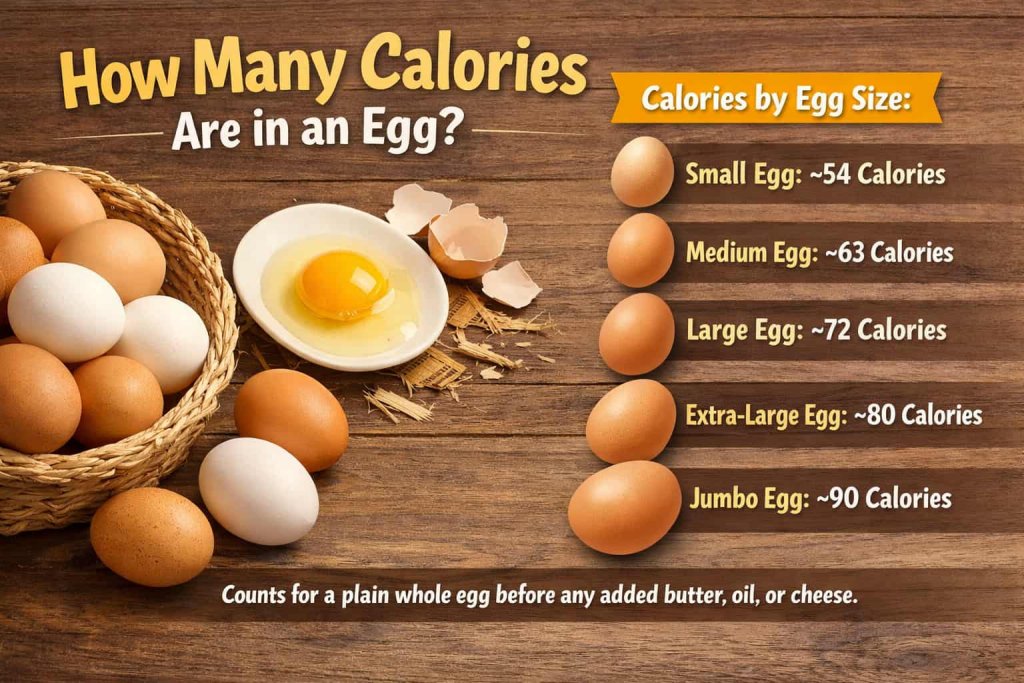
Here is a simple list-style breakdown of egg calories by size:
- Small egg: about 54 calories
- Medium egg: about 63 calories
- Large egg: about 72 calories
- Extra-large egg: about 80 calories
- Jumbo egg: about 90 calories
These numbers apply to a plain whole egg before adding butter, oil, cheese, or other ingredients.
Cooking method matters too:
- Boiled or poached eggs usually stay close to the egg’s original calorie count.
- Fried eggs can be higher in calories because of the added fat used in the pan.
- Egg dishes like omelets or scrambled eggs can vary more depending on milk, cheese, butter, and fillings.
For most readers, the most useful number is this: 1 large egg has about 72 calories.
A large egg’s calories are not split evenly between the white and the yolk. In general, the egg white contains about 17 calories, while the yolk contains about 55 calories. The white provides most of the protein with very few calories, while the yolk contains most of the egg’s fat, cholesterol, choline, and fat-soluble vitamins. That is why removing the yolk lowers calories, but it also changes the overall nutrition profile.
Nutrition Profile of 1 Large Egg
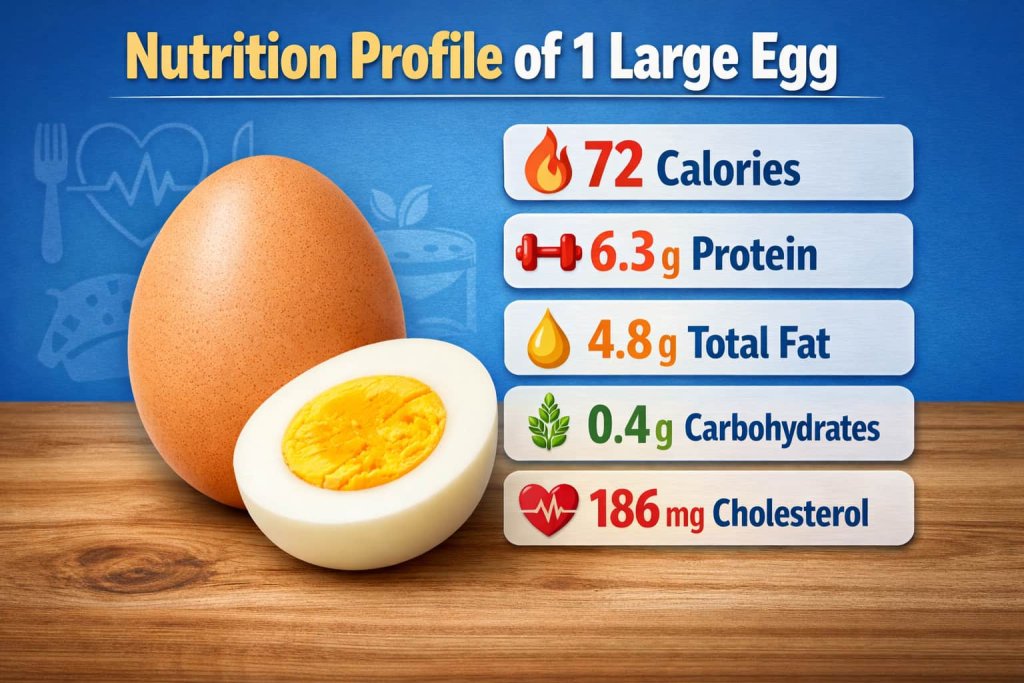
Here is a simple nutrition profile for one large whole egg:
| Nutrient | Amount |
|---|---|
| Calories | 72 |
| Protein | 6.3 g |
| Total fat | 4.8 g |
| Carbohydrates | 0.4 g |
| Cholesterol | 186 mg |
This is one reason eggs are often described as nutrient-dense. For a modest calorie amount, they provide a meaningful amount of protein plus several important vitamins and minerals.
This nutrition profile applies to a plain large egg on its own. The final calorie count can rise quickly when eggs are cooked with butter or oil or served with calorie-dense add-ins such as cheese, cream, sausage, or bacon. In everyday meals, those extras often matter more than the egg itself.
Key Nutrients in Eggs
Eggs are best known for their high-quality protein, but that is only part of the picture. They also provide choline, vitamin B12, riboflavin, selenium, and some vitamin D. The NIH Office of Dietary Supplements explains that choline is important for brain and nervous system function, cell membranes, and several steps involved in metabolism.
Choline is one of the standout nutrients in eggs because many people do not pay much attention to it, even though it plays an important role in normal body function. Eggs are also a practical, familiar source of protein, which is one reason they are included in the USDA MyPlate protein foods group.
Are Eggs Good for Weight Management?
Eggs can be good for weight management because they provide protein for relatively few calories. A large egg gives you about 6.3 grams of protein for about 72 calories, which can help make meals feel more satisfying and easier to build around.
That does not mean eggs cause weight loss on their own. What matters most is your overall eating pattern, portion sizes, and what you eat with them. Two eggs served with vegetables and fruit can fit very differently into a weight-management plan than eggs served with large amounts of butter, sausage, hash browns, and refined bread. The Dietary Guidelines for Americans emphasize the importance of the full dietary pattern rather than treating one food as the whole answer.
For many people, eggs work well because they are simple, affordable, and easy to pair with higher-fiber foods. That can make them a realistic option for breakfast, lunch, or a quick meal that supports fullness without pushing calories too high.
Who Should Be a Little More Careful With Eggs?
Most healthy people can include eggs in a balanced diet, but some people may want to be more thoughtful about how often and how many they eat. The American Heart Association notes that healthy people can include eggs in a heart-healthy eating pattern, while people with elevated LDL cholesterol should pay closer attention to dietary cholesterol and the overall quality of the diet.
People with high LDL cholesterol, existing heart disease, diabetes, or multiple cardiometabolic risk factors may benefit from more personalized advice from a clinician or registered dietitian. In many cases, the bigger issue is not eggs alone, but the overall meal pattern and the amount of saturated fat that comes from foods commonly eaten with eggs.
Some people should also be more careful with raw or undercooked eggs. The FDA warns that even clean, uncracked eggs can contain Salmonella. That matters especially for pregnant women, young children, older adults, and people with weakened immune systems.
Egg Safety and Storage Basics
Egg safety is easy to overlook, but proper handling matters. Eggs should be refrigerated, cracked eggs should be avoided, and eggs should be cooked thoroughly when food safety is a concern.
If you like soft yolks, homemade dressings, or dishes made with undercooked eggs, it is worth remembering that lightly cooked eggs carry more risk than fully cooked eggs. This is especially important for anyone in a higher-risk group.
For storage, shell eggs can usually stay in the refrigerator for 3 to 5 weeks from the day they are placed there, according to USDA. Leftover cooked egg dishes should be refrigerated promptly and used within 3 to 4 days. Keeping eggs in their carton and storing them in the main part of the refrigerator, not the door, can also help protect quality.
Are Eggs Healthy Overall?
For most people, eggs can be part of a healthy diet. They are versatile, affordable, rich in protein, and naturally provide several useful nutrients. They are not a magic food, but they are also not something most healthy people need to avoid.
The best way to think about eggs is in context. A plain egg is very different from a restaurant breakfast loaded with saturated fat and sodium. When eggs are paired with vegetables, beans, fruit, or whole grains, they tend to fit more easily into a balanced eating pattern.
FAQ
How many calories are in 2 eggs?
Two large eggs have about 144 calories before cooking fat or toppings are added.
Do egg whites have fewer calories?
Yes. Egg whites are much lower in calories because most of the fat and cholesterol are in the yolk. The yolk also contains many of the egg’s vitamins, minerals, and choline, so removing it changes the nutrition profile, not just the calories.
Are boiled eggs lower in calories than fried eggs?
Usually, yes. Boiled eggs stay close to the calorie content of the egg itself, while fried eggs can be higher if oil or butter is used.
Are eggs good for losing weight?
They can support a weight-management plan because they provide protein for relatively few calories, but they do not cause weight loss on their own. Your overall eating pattern still matters most.
Conclusion
A large egg has about 72 calories, making eggs a practical option for people who want a filling, protein-rich food without a very high calorie cost. They can fit well into many eating styles, including weight-management plans, as long as you pay attention to portion size, cooking method, and the rest of the meal. If you have high LDL cholesterol, heart-risk concerns, or need to avoid undercooked eggs, a more tailored approach makes sense.
Sources/References
- USDA — FoodData Central
- NIH Office of Dietary Supplements — Choline Fact Sheet for Health Professionals
- USDA MyPlate — Protein Foods
- Dietary Guidelines for Americans — Dietary Guidelines for Americans, 2020–2025
- American Heart Association — Here’s the latest on dietary cholesterol and how it fits in with a healthy diet
- FDA — What You Need to Know About Egg Safety
- USDA — How Long Can You Store Eggs in the Refrigerator?