
Celery is very low in calories: 1 medium stalk has about 6 calories, 100 grams has about 14 calories, and 1 cup of chopped raw celery is also about 14 calories. According to USDA SNAP-Ed’s celery nutrition page, celery is one of the lightest vegetables you can add to snacks, salads, soups, and lunch plates.
That matters because many people want a simple, reliable answer they can actually use. Whether you are tracking calories, trying to build filling low-calorie meals, or just comparing vegetables, celery is an easy food to fit into a balanced eating pattern. Compared with many packaged snack foods, celery gives you a much larger portion for very few calories, which is one reason it shows up so often in weight-management meal plans.
How Many Calories in Celery?
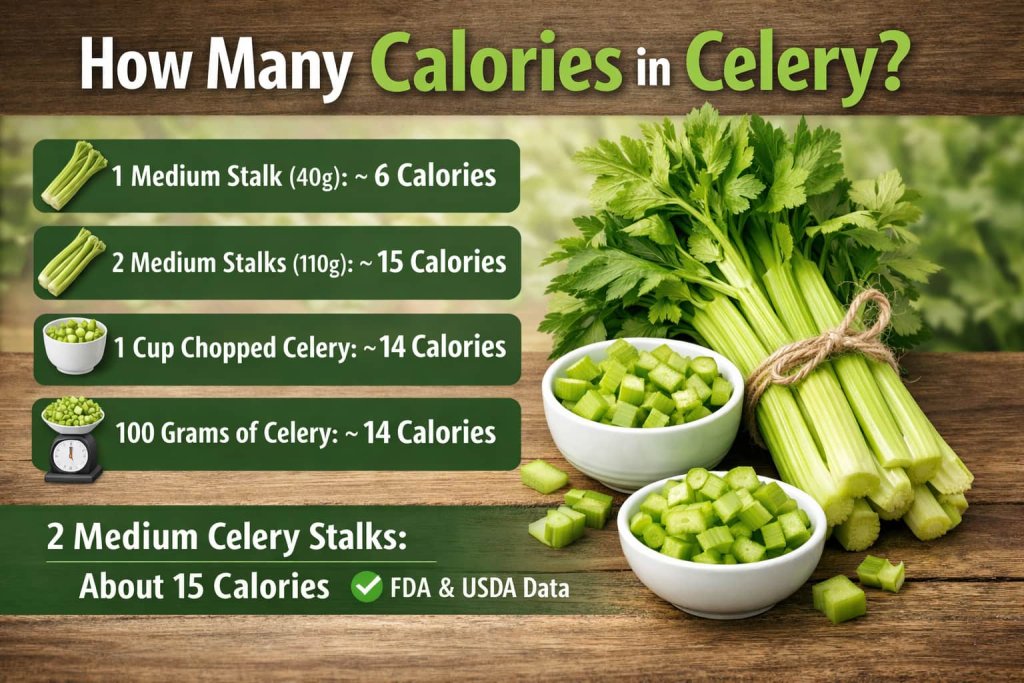
Here are the most practical calorie numbers for raw celery:
- 1 medium stalk (40 g): about 6 calories
- 2 medium stalks (110 g): about 15 calories
- 1 cup chopped raw celery: about 14 calories
- 100 grams raw celery: about 14 calories
Per FDA raw vegetable nutrition data, 2 medium stalks of celery provide about 15 calories, which lines up closely with USDA-based values.
If you eat celery cooked, the calories usually stay very low. Plain cooked celery is still low in calories, but the exact number can shift a little depending on how much water it loses during cooking and whether oil, butter, or sauce is added. In practical terms, plain celery stays a very low-calorie food whether you eat it raw or cooked.
For everyday use, the easiest answer is this: celery is a very low-calorie vegetable, and even a generous serving usually stays under 20 calories unless you add dips, spreads, oil, or dressing. That is worth remembering with common snacks like celery and peanut butter. The celery itself is very low in calories, but the spread usually contributes most of the calories, so portion size matters much more than the celery.
Celery Nutrition Profile
Celery is not just low in calories. It is also mostly water and provides small amounts of carbohydrate and fiber.
Per 1 medium stalk, USDA SNAP-Ed lists:
- Calories: 6
- Carbohydrates: 1 g
- Fiber: 1 g
- Protein: 0 g
- Fat: 0 g
- Sodium: 32 mg
- Vitamin C: 1 mg (snaped.fns.usda.gov)
Per 2 medium stalks, the FDA lists about:
- Calories: 15
- Carbohydrates: 4 g
- Fiber: 2 g
- Potassium: 260 mg
- Vitamin A: 10% Daily Value
- Vitamin C: 15% Daily Value
- Calcium: 4% Daily Value (fda.gov)
The exact numbers vary a little based on stalk size and how the celery is measured, but the big picture stays the same: celery is low in calories, high in water, and modest in fiber and micronutrients. Its high water content is one reason celery feels light and refreshing. Foods with a lot of water can help add volume to meals and snacks without adding many calories. USDA FoodData Central is the main federal source for these food-composition values. (fdc.nal.usda.gov)
Is Celery Good for Weight Management?
Celery can be a good food for weight management because it gives you volume and crunch for very few calories. That can help make snacks and meals feel more satisfying without adding much energy intake. (snaped.fns.usda.gov)
That said, celery is not a magic food. It does not “burn fat,” and it is not necessary for weight loss. What makes it useful is much simpler:
- it is easy to eat in larger portions
- it adds texture and bulk to meals
- it can replace higher-calorie snack foods in some situations
- it pairs well with protein-rich foods that make snacks more balanced
Good examples include celery with:
- hummus
- plain Greek yogurt dip
- tuna salad
- cottage cheese
- a measured amount of peanut butter
The main thing to watch is what you put on it. Celery stays very low in calories on its own, but creamy dips, cheese spreads, and nut butters can raise the total quickly.
Key Nutrients in Celery
Celery is not one of the most nutrient-dense vegetables by calorie count, but it still contributes useful nutrients to the diet.
Vitamin K
Celery contains vitamin K, which helps support normal blood clotting and bone health. This is one reason celery can matter for people taking warfarin, which we cover below. NHS notes that foods high in vitamin K can affect how warfarin works. (nhs.uk)
Potassium
Celery provides potassium in modest amounts. Potassium helps support normal muscle and nerve function and helps maintain fluid balance. The FDA’s raw vegetable chart lists 260 mg potassium in 2 medium stalks of celery. (fda.gov)
Vitamin C
Celery is not a major source of vitamin C compared with some other vegetables, but it still adds a small amount. USDA SNAP-Ed lists 1 mg of vitamin C per medium stalk. (snaped.fns.usda.gov)
Fiber
Celery contains a modest amount of fiber for very few calories. That is one reason it can be helpful in filling snacks and meal-building, especially when combined with protein or healthy fats. (snaped.fns.usda.gov)
Who Should Be a Little More Careful With Celery?
Most people can eat celery without a problem, but a few groups should be more careful.
People Taking Warfarin
If you take warfarin, do not suddenly make big changes to how much vitamin-K-containing food you eat. NHS advises that foods high in vitamin K can affect how warfarin works, but you can still eat them with guidance and consistency. (nhs.uk)
That does not mean you need to avoid celery completely. It means your intake should stay reasonably consistent, especially if you eat a lot of green vegetables from week to week.
People With Celery Allergy or Oral Allergy Syndrome
Celery can trigger allergic symptoms in some people. The American Academy of Allergy, Asthma & Immunology explains that some people with hay fever caused by pollen may notice an itchy mouth or throat after eating foods like celery. This is called oral allergy syndrome or pollen food allergy syndrome.
Symptoms can include:
- itchy mouth
- scratchy throat
- swelling of the lips, mouth, or tongue
- symptoms shortly after eating raw celery (aaaai.org)
Anyone with a known celery allergy should avoid it and follow their clinician’s advice.
People With Digestive Sensitivity
Some people find raw celery harder to tolerate than softer cooked vegetables, especially if they are dealing with bloating, digestive sensitivity, or trouble chewing high-fiber, stringy foods. In those cases, smaller portions or cooked celery may be easier to handle. This is not a safety issue for most people, but it can make celery less comfortable for some readers in real life.
People Watching Sodium From Processed Foods
Raw celery itself is not high in calories, but celery used in canned soups, deli salads, salty juice blends, or packaged snack kits may come with much more sodium than plain fresh celery. This does not make celery unhealthy, but it does mean the full product matters more than the vegetable alone.
Does Celery Have “Negative Calories”?
This is a popular idea, but there is no solid evidence that celery has “negative calories” in a meaningful real-world sense. Celery is simply very low in calories, and your body does use energy to digest food, but not enough to make celery a special fat-burning food.
A more accurate and useful way to say it is this: celery may help lower the calorie density of your overall diet because it is low in calories and high in water.
Best Ways to Eat Celery in a Balanced Diet
Celery works best when you use it as part of a practical eating pattern, not as a diet trick.
Easy ideas include:
- chopped into salads
- added to soups and stews
- paired with hummus or bean dip
- used with tuna or chicken salad
- sliced into stir-fries
- eaten as a crunchy side with sandwiches
For weight management, pairing celery with a protein source usually makes it more satisfying than eating celery alone.
Frequently Asked Questions
How many calories are in one stalk of celery?
One medium stalk of celery has about 6 calories, based on USDA SNAP-Ed data. (snaped.fns.usda.gov)
How many calories are in 100 grams of celery?
Raw celery has about 14 calories per 100 grams based on USDA-derived food composition data and closely matching FDA values. (fda.gov)
Is celery a good snack for weight loss?
It can be. Celery is very low in calories and adds crunch and volume, which may help you build lower-calorie snacks. It works best when paired with balanced foods and sensible portions. (snaped.fns.usda.gov)
Is celery nutritious even though it is low in calories?
Yes. Celery provides small amounts of fiber, potassium, vitamin C, and vitamin K while staying very low in calories. (snaped.fns.usda.gov)
Can people on warfarin eat celery?
Many can, but they should be careful about making sudden large changes to vitamin K intake. NHS advises speaking with your care team if you are changing your diet while taking warfarin. (nhs.uk)
Conclusion
Celery is one of the lowest-calorie vegetables you can eat. A medium stalk has about 6 calories, and even a full cup of chopped raw celery is only about 14 calories. That makes it a smart, practical choice for people who want more volume and crunch in meals without adding many calories.
It is not a miracle food, but it is a useful one. If you want a simple low-calorie vegetable for snacks, salads, soups, and meal prep, celery is an easy option to keep in the fridge.
Sources/References
- USDA SNAP-Ed — Celery nutrition information
- FDA — Nutrition information for raw vegetables
- USDA FoodData Central — Food composition database overview
- NHS — Warfarin
- American Academy of Allergy, Asthma & Immunology — Oral Allergy Syndrome