
Plain black coffee is very low in calories, with a typical 8-ounce cup containing about 2 to 3 calories. For most people, coffee itself is not the main calorie concern. The bigger issue is what gets added to it, such as sugar, syrup, cream, flavored creamer, or whipped toppings.
Understanding how many calories are in coffee matters because it is easy for a nearly calorie-free drink to turn into a high-calorie one. A plain cup can fit well into a balanced eating pattern, but sweetened coffee drinks can add more calories, saturated fat, and added sugar than many people realize. According to the U.S. Department of Agriculture, coffee nutrition data show that plain brewed coffee is minimal in calories, while the Dietary Guidelines Advisory Committee notes that coffee and tea with little or no sweetener or cream are the most nutrient-dense options.
How Many Calories Are in Coffee?
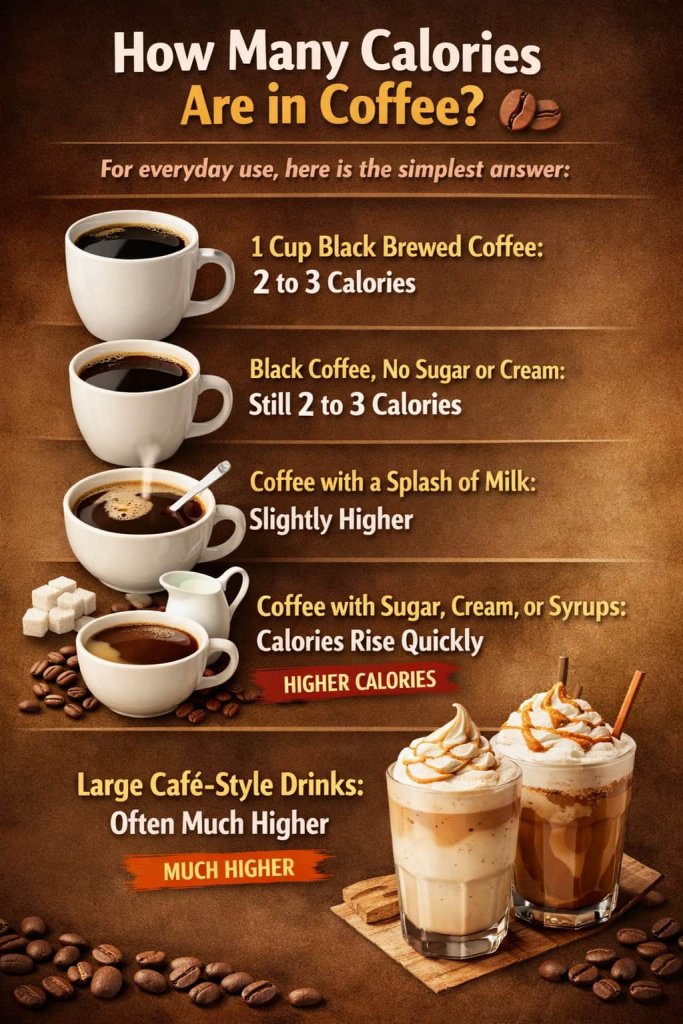
For everyday use, here is the simplest answer:
- 1 cup black brewed coffee: about 2 to 3 calories
- Black coffee with no sugar or cream: still about 2 to 3 calories
- Coffee with a small splash of milk: usually modestly higher
- Coffee with sugar, cream, syrup, or flavored creamer: calories rise quickly
- Large café-style drinks: often much higher, depending on size and recipe
This is why the real answer to how many calories are in coffee depends on whether you mean plain coffee or a prepared coffee drink.
How Many Calories in Coffee by Type
Black brewed coffee
Plain brewed black coffee is the lowest-calorie option. It contains very little energy, almost no carbohydrate, almost no fat, and no meaningful sugar unless something is added. This makes black coffee one of the easiest beverages to fit into a calorie-conscious routine. The Dietary Guidelines Advisory Committee states that coffee without sweeteners or cream contains relatively few calories.
Coffee with sugar
Sugar can change the calorie total fast. Even a small spoonful added once or twice a day can make a difference over time. In practical terms, coffee with sugar is no longer a nearly calorie-free drink.
Coffee with milk or cream
Milk adds some calories, but usually far fewer than heavy cream, half-and-half, or sweetened flavored creamers. The calorie gap becomes much wider when larger pours are used. The Dietary Guidelines report specifically advises choosing add-ins lower in saturated fat and added sugars when possible.
Specialty coffee drinks
Lattes, mochas, frappes, and other dessert-style coffee drinks can contain far more calories than plain coffee because they often include milk, syrups, flavorings, whipped cream, or sweet toppings. The MedlinePlus guidance on cutting beverage calories notes that a 16-ounce flavored latte can contain 250 calories or more.
Nutrition Profile of Coffee
Plain coffee is not a major source of calories, protein, fat, or sugar. Its nutrition value comes more from being a very low-calorie drink and from providing caffeine, along with small amounts of certain minerals.
A typical plain brewed coffee provides:
- Very few calories
- Almost no fat
- Almost no carbohydrate
- No meaningful sugar unless added
- Small amounts of potassium and some other minerals
- Caffeine, if it is not decaffeinated
The Dietary Guidelines Advisory Committee also notes that coffee and tea contribute about 9% to 11% of potassium intake for adults, which is useful context even though coffee is not a major nutrient-dense food in the same way as vegetables, beans, or dairy.
Is Coffee Good for Weight Management?
Coffee can work well for weight management when it is kept simple.
Why plain coffee can fit into a weight-loss plan
Plain black coffee is very low in calories, so it can be included without adding much to total daily energy intake. That makes it a practical choice for people trying to lose weight or maintain weight.
Where coffee can become a problem
The challenge is not the coffee itself. It is the extras. The Dietary Guidelines Advisory Committee says coffee and tea contribute 13% to 14% of added sugars intake for adults, largely because many people drink them with sugar, syrups, creamers, or other sweet additions.
That means coffee may support a calorie-conscious routine when it is plain or lightly prepared, but it can work against weight goals when it becomes a sweetened beverage.
Best coffee choices for weight management
For a more weight-friendly option, these choices are usually the most practical:
- Black coffee
- Coffee with a small amount of unsweetened milk
- Coffee with little or no added sugar
- Smaller portions of milk-based drinks
- Fewer flavored syrups and sweet toppings
Key Nutrients in Coffee
Coffee is not usually consumed for its calories or macronutrients. It is more often valued for caffeine and for being a low-calorie beverage option.
Key points to know:
- Coffee contains caffeine unless it is decaf
- Coffee contributes some potassium to the diet
- Plain coffee is very low in calories
- Sweetened coffee drinks can contribute meaningful added sugar
This is one reason plain coffee can fit well into many eating patterns, while heavily sweetened coffee beverages should be treated more like an occasional treat than an everyday low-calorie drink.
How Much Caffeine Is in Coffee?
Caffeine matters just as much as calories for many readers.
The U.S. Food and Drug Administration says that for most adults, up to 400 milligrams of caffeine per day is an amount not generally associated with negative effects. The FDA explains that this is roughly equal to about two to three 12-ounce cups of coffee, though the actual caffeine in coffee varies by brand, brewing style, and serving size.
So even if your coffee is very low in calories, it may still be high in caffeine depending on how strong it is and how much you drink.
Who Should Be a Little More Careful With Coffee?
Coffee can fit into many healthy eating patterns, but some people should be more cautious.
Pregnant people
The American College of Obstetricians and Gynecologists advises keeping caffeine below 200 milligrams per day during pregnancy. That is important because coffee size and brew strength can vary a lot.
Breastfeeding people
ACOG also says moderate caffeine intake, around 200 milligrams per day, is unlikely to affect most babies, but some infants may be more sensitive than others. Smaller amounts may be a better fit if a baby seems unusually fussy or wakeful.
People sensitive to caffeine
The FDA notes that caffeine sensitivity varies widely. Some people feel jittery, anxious, restless, or have trouble sleeping at lower amounts than others.
People trying to lose weight
Anyone using coffee as part of a weight-loss routine should pay close attention to what goes into the cup. Creamers, syrups, sugar, and whipped toppings can change the calorie total much more than the coffee itself.
Is Black Coffee Better Than Coffee With Add-Ins?
For calorie control, black coffee is usually the better choice.
Black coffee gives you the coffee flavor and caffeine with almost no calories. Coffee with a small amount of milk can still be reasonable. But once the drink includes sweetened creamers, syrups, flavor shots, or heavy cream, the calorie total rises much faster.
That does not mean you have to drink coffee black. It means the most useful question is not just how many calories are in coffee, but how many calories are in the version of coffee you actually drink.
Common Questions About Coffee Calories
Does black coffee break a calorie deficit?
A plain black coffee is so low in calories that it generally fits easily into a calorie deficit. For most people, the real concern is not black coffee but the add-ins.
Is coffee itself fattening?
Plain coffee is not high in calories, so on its own it is not usually considered fattening. Sweetened coffee drinks are a different story because they can add significant calories and sugar.
Does decaf coffee have calories?
Decaf coffee is also very low in calories when plain. The same basic rule applies: the calories mostly come from what is added.
Is coffee healthy?
Coffee can fit into a healthy eating pattern for many adults, especially when it is consumed in moderate amounts and kept low in added sugar and saturated fat. The FDA’s caffeine guidance and the Dietary Guidelines beverage guidance are the most practical references here.
Final Thoughts on How Many Calories in Coffee
If you want the simplest answer, plain black coffee has about 2 to 3 calories per cup and is one of the lowest-calorie drinks you can choose. For most people, the real calorie difference comes from what is mixed into it.
If your goal is weight management, black coffee or coffee with minimal add-ins is usually the smartest option. Keep an eye on sugar, syrups, creamers, and oversized specialty drinks, because those can turn coffee from a nearly calorie-free beverage into a much heavier one.
Choosing simpler coffee most of the time can help you enjoy it without letting hidden calories add up.
Sources/References
- U.S. Department of Agriculture — FoodData Central
- Dietary Guidelines Advisory Committee — Scientific Report of the 2025 Dietary Guidelines Advisory Committee: Part D, Chapter 3: Beverages
- U.S. Food and Drug Administration — Spilling the Beans: How Much Caffeine is Too Much?
- American College of Obstetricians and Gynecologists — How much coffee can I drink while I’m pregnant?
- American College of Obstetricians and Gynecologists — Breastfeeding Your Baby
- MedlinePlus — 10 ways to cut 500 calories a day