
For most adults trying to lose weight, a practical target is about 1.2 to 1.6 grams of protein per kilogram of body weight per day. That is usually higher than the basic adult minimum of 0.8 g/kg/day, which is designed to prevent deficiency, not necessarily to support fat loss, fullness, and muscle retention during a calorie deficit. Understanding the right protein target matters because too little can make dieting harder, while too much can crowd out other important foods or be the wrong fit for people with certain medical conditions.
According to the National Academies/NCBI, the adult RDA is 0.8 g/kg/day, while MedlinePlus notes that protein should generally make up 10% to 35% of total calories. A widely cited review indexed in PubMed supports the higher 1.2 to 1.6 g/kg/day range as a practical target for many adults during weight loss.
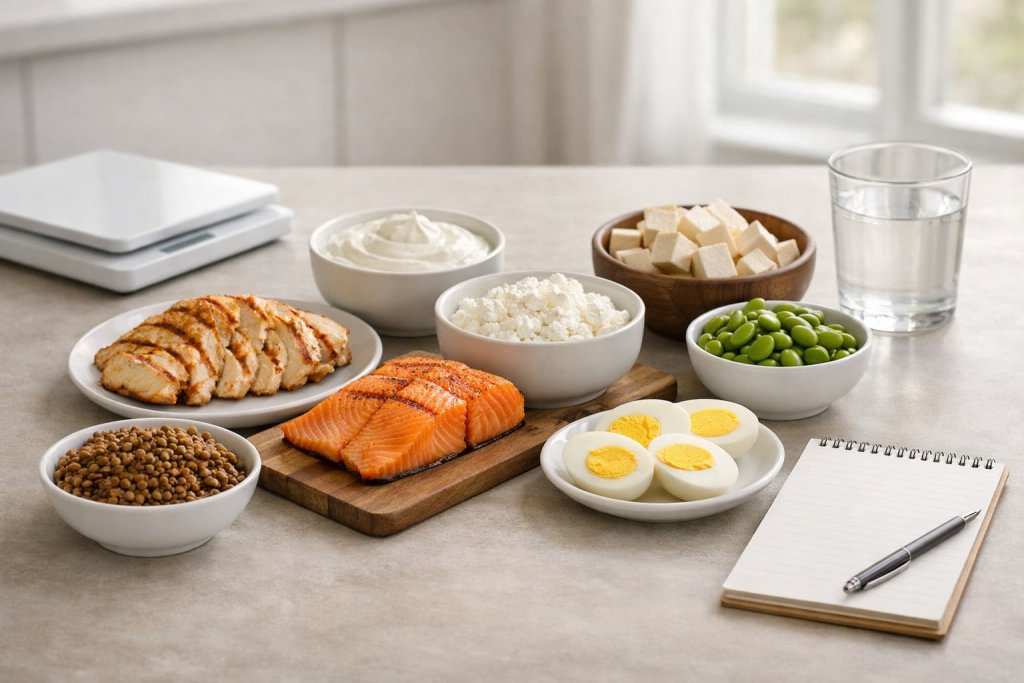
A good daily protein goal depends on your body weight, activity level, age, and overall health. For many people, the simplest approach is to calculate a target based on body weight, spread that protein across meals, and choose mostly nutrient-dense sources such as fish, poultry, eggs, Greek yogurt, beans, lentils, tofu, tempeh, and soy foods. The Dietary Guidelines for Americans and USDA MyPlate both support building meals around nutrient-dense protein foods rather than relying heavily on highly processed “high-protein” products.
How Much Protein to Lose Weight Per Day
For weight loss, many experts use 1.2 to 1.6 g/kg/day as a practical range. This range is supported by research showing that higher-protein diets may help with appetite control, body weight management, and preservation of lean mass during energy restriction. A separate meta-analysis indexed in PubMed found that benefits for muscle gain tend to level off around 1.6 g/kg/day for many adults, which makes that upper end a useful benchmark for people who lift weights while dieting.
Here is the quick rule:
Safe practical target
- General weight loss: 1.2 to 1.6 g/kg/day
- Basic adult minimum: 0.8 g/kg/day
- Active people doing strength training: often closer to the upper end of the range
The basic minimum is still important, but it is not usually the best target for preserving muscle during fat loss. Research indexed in PubMed suggests that protein intakes above the RDA can help protect fat-free mass during short-term weight loss.
Protein Calculator for Weight Loss
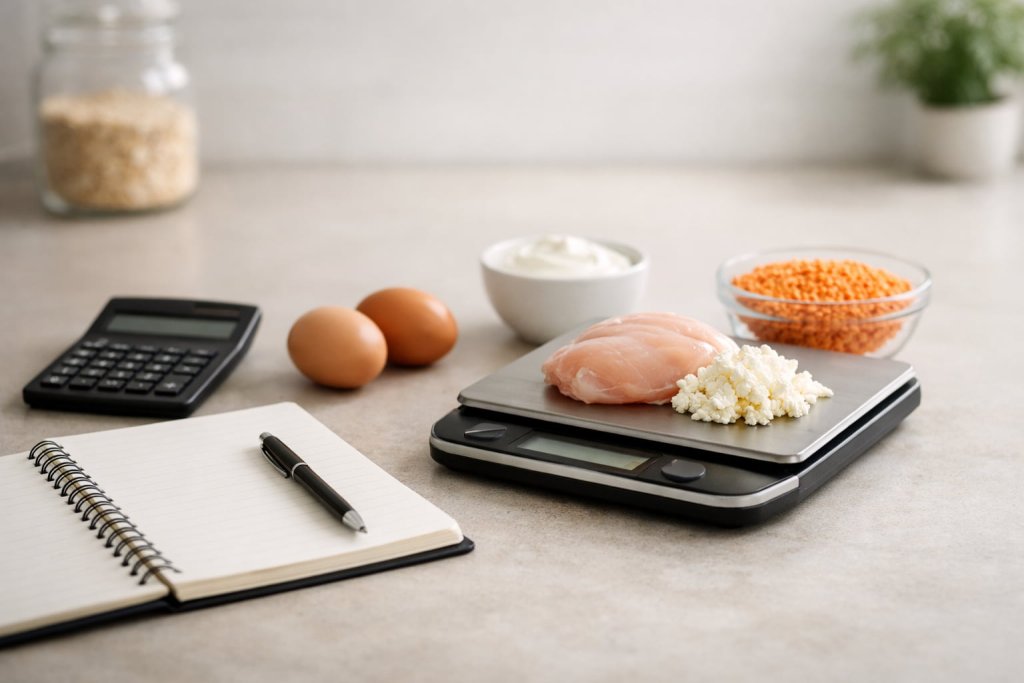
To estimate your daily target, multiply your body weight in kilograms by 1.2 to 1.6.
Formula:
Body weight in kg × 1.2 to 1.6 = grams of protein per day
Examples
If you weigh 60 kg
- 72 to 96 grams per day
If you weigh 70 kg
- 84 to 112 grams per day
If you weigh 80 kg
- 96 to 128 grams per day
If you weigh 90 kg
- 108 to 144 grams per day
These examples fit the research-backed range commonly used for weight loss planning.
What If You Use Pounds Instead of Kilograms?
If you know your body weight in pounds, divide by 2.2 to convert to kilograms.
Formula:
Body weight in pounds ÷ 2.2 = weight in kg
Then multiply that number by 1.2 to 1.6.
Example
If you weigh 180 pounds:
- 180 ÷ 2.2 = about 81.8 kg
- 81.8 × 1.2 = about 98 g/day
- 81.8 × 1.6 = about 131 g/day
So a reasonable target would be about 98 to 131 grams of protein per day.
Why More Protein Can Help With Weight Loss
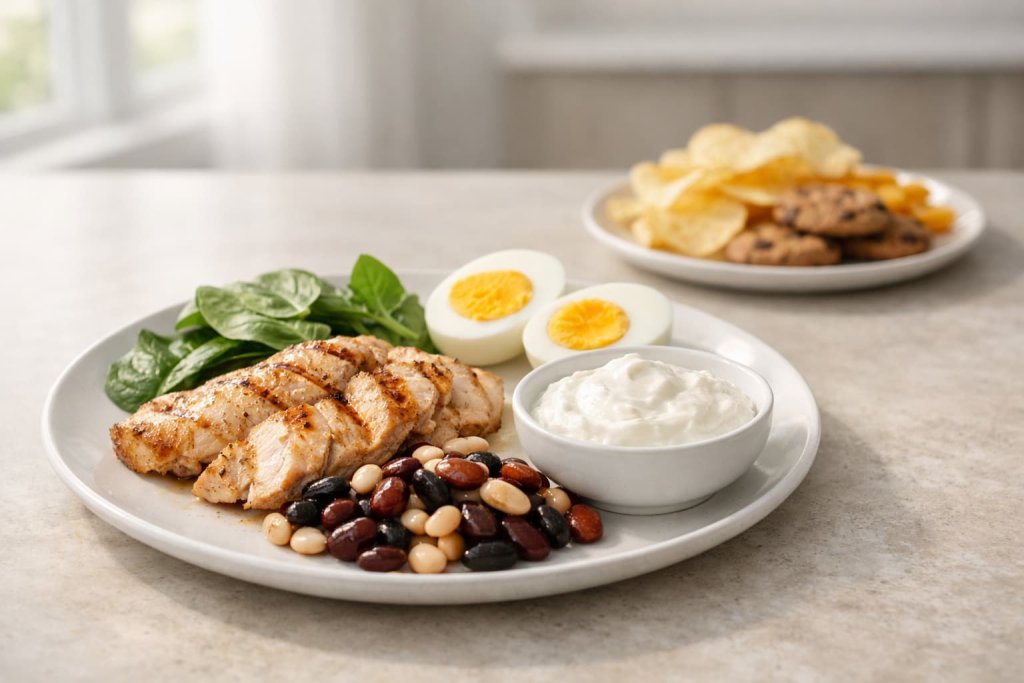
Protein may help with weight loss for a few practical reasons.
It can help you feel fuller
Higher-protein eating patterns may improve appetite control and reduce hunger for some people, which can make it easier to stay in a calorie deficit.
It can help preserve lean mass
When you lose weight, you want to lose as much fat as possible while holding onto muscle. Protein intakes above the RDA appear to help protect fat-free mass during dieting, especially when combined with resistance training.
It can make meals more satisfying
Meals with a good protein source often keep people satisfied longer than meals built mostly around refined carbs alone. That makes it easier to avoid frequent snacking or overeating later in the day. This is one reason higher-protein diets are often used in weight-management plans.
How Much Protein Per Meal for Weight Loss?
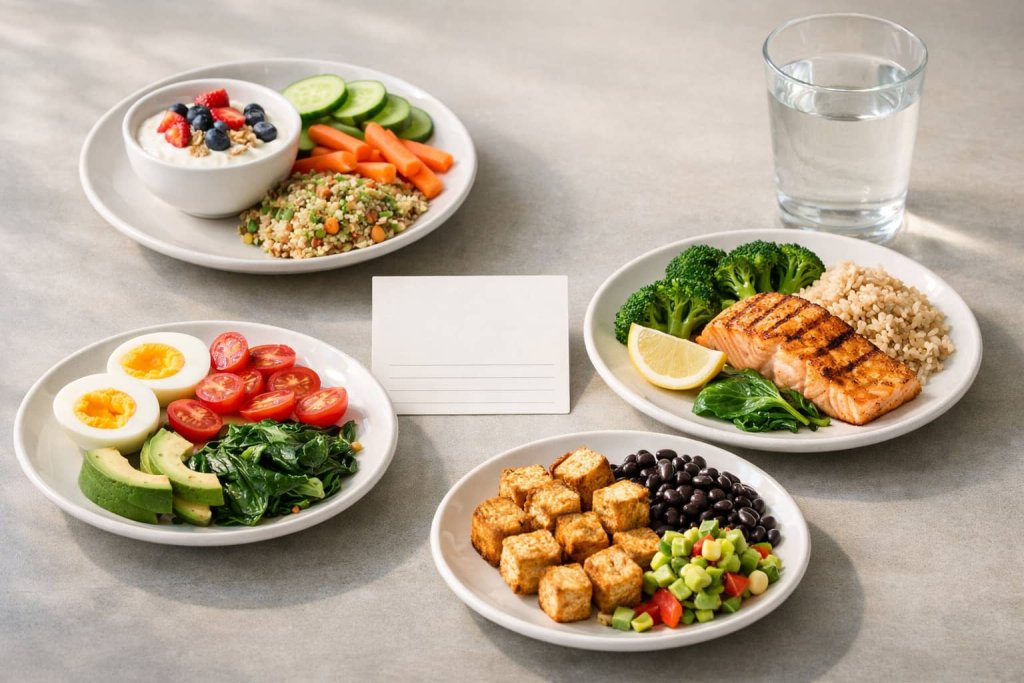
A practical approach is to spread protein across the day instead of eating most of it at dinner.
Research commonly uses about 25 to 30 grams of protein per meal as a simple target. A review indexed in PubMed also suggests that a meal target of roughly 0.4 g/kg per meal across at least four meals can be useful for people trying to maximize muscle protein synthesis while reaching a daily intake around 1.6 g/kg/day.
Example meal pattern for a 100-gram daily goal
- Breakfast: 25 g
- Lunch: 25 g
- Snack: 15 to 20 g
- Dinner: 30 to 35 g
This pattern is often easier than trying to cram all your protein into one meal.
Best Protein Foods for Weight Loss
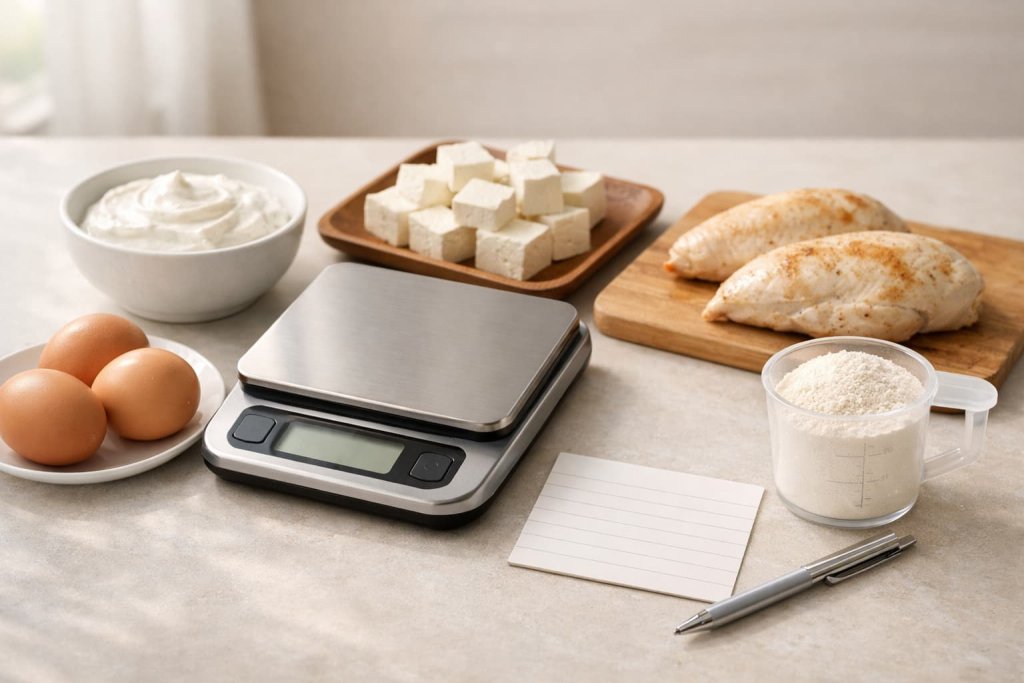
The best protein foods for weight loss are usually the ones that give you protein along with other nutrients, while still fitting your calorie needs.
Lean animal-based options
- Chicken breast
- Turkey
- Fish and seafood
- Eggs
- Greek yogurt
- Cottage cheese
Plant-based options
According to USDA MyPlate, protein foods include seafood, lean meats, poultry, eggs, beans, peas, lentils, soy products, nuts, and seeds. MyPlate also shows practical ounce-equivalent examples: 1 egg, 1 tablespoon peanut butter, and 1/4 cup cooked beans, peas, or lentils each count as about 1 ounce-equivalent in the protein foods group.
How to Increase Protein Without Overdoing Calories
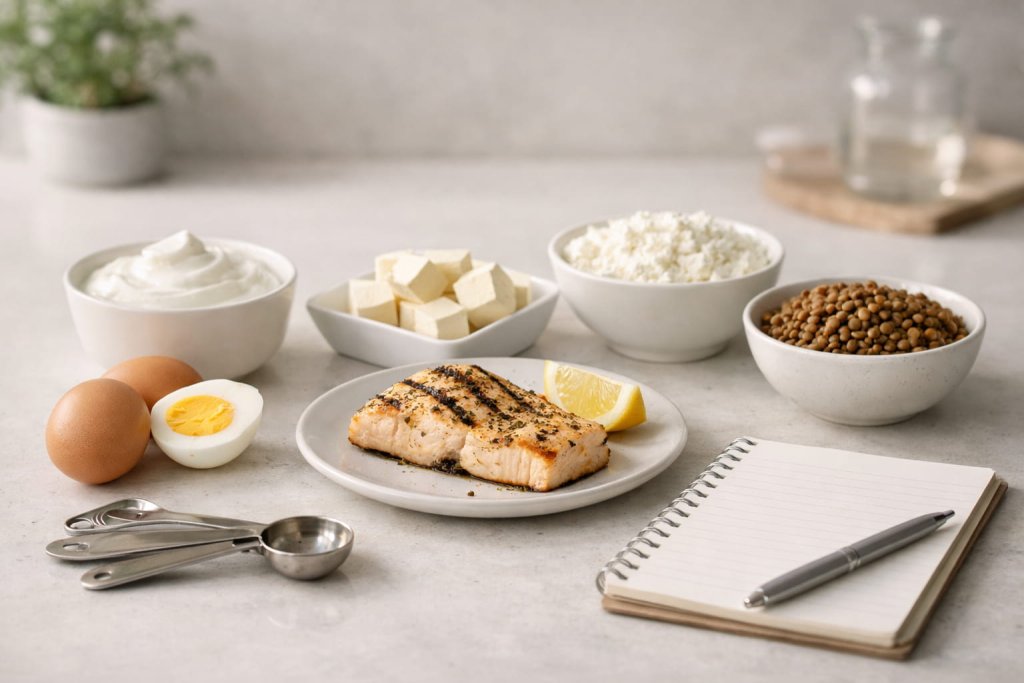
A higher-protein diet does not need to mean huge steaks or expensive supplements. Small swaps can make a big difference.
Smart ways to raise protein intake
- Add Greek yogurt to breakfast
- Choose eggs or egg whites with toast or oatmeal
- Include beans, lentils, tofu, or chicken at lunch
- Add cottage cheese or edamame as a snack
- Build dinner around fish, poultry, tofu, or legumes
- Pair carbs with protein instead of eating carbs alone
The Dietary Guidelines for Americans recommend nutrient-dense eating patterns, which is a good reminder to focus on overall meal quality, not just protein grams.
Is More Protein Always Better?
Not necessarily.
For many adults trying to lose weight, moving from the minimum intake up to a moderate higher-protein range can be helpful. But going far beyond that is not automatically better. At some point, more protein may simply replace fiber-rich carbs, healthy fats, fruits, vegetables, or other foods that also matter for health and diet quality. Research on muscle-related benefits also suggests that gains tend to level off around 1.6 g/kg/day for many people who do resistance training.
Who Should Be More Careful With Higher Protein Intakes?
Some people should not use a generic weight-loss protein formula without checking with a clinician or registered dietitian.
People with chronic kidney disease
The NIDDK notes that restriction of excessive dietary protein may help reduce albuminuria in chronic kidney disease, and individualized guidance is appropriate. That means a high-protein weight-loss plan may not be the right fit if you have CKD.
Pregnant people
MedlinePlus notes that you need more protein during pregnancy. Pregnancy nutrition should be individualized, so standard weight-loss advice is not the right approach during pregnancy unless your clinician gives specific guidance.
Older adults
MedlinePlus states that some older adults need more protein. That can matter because calorie needs may fall with age while protein needs may stay the same or rise in some cases.
People with major medical conditions or very low appetite
If you have kidney disease, liver disease, difficulty eating enough, or you are taking weight-loss medication that reduces appetite, a personalized plan is usually safer than a generic target.
Does Protein Powder Help With Weight Loss?
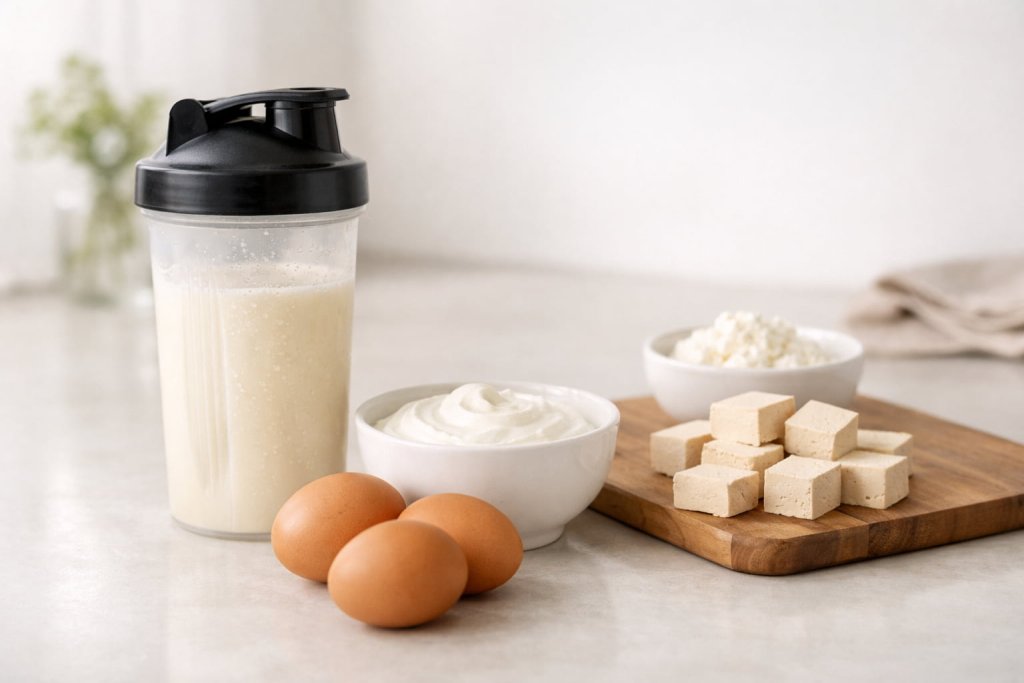
Protein powder can help only if it makes your daily intake easier to reach without pushing calories too high. It is not required for weight loss.
Whole foods are often more filling and give you extra nutrients. But a simple protein shake can be useful when:
- You miss breakfast often
- You struggle to hit your protein goal
- You need a quick post-workout option
- You want a portable snack with measured protein
The Dietary Guidelines for Americans support getting nutrients from healthy dietary patterns built around nutrient-dense foods, so powders are best treated as a convenience tool, not the foundation of your diet.
Common Mistakes People Make
Eating too little protein at breakfast
Many people save most of their protein for dinner. That often leaves breakfast and lunch too low in protein, which can make hunger harder to manage later.
Focusing only on protein and ignoring calories
Protein helps, but weight loss still depends on overall energy balance. A high-protein diet can still stall fat loss if portions are too large.
Choosing heavily processed “high-protein” foods all day
Some protein bars, desserts, and snacks are still high in calories, added sugars, or saturated fat. Whole-food protein sources are usually a better base.
Forgetting strength training
Protein works best for muscle retention when paired with resistance training. Without that signal, preserving lean mass during weight loss can be harder.
FAQ
1. What is the minimum protein you need per day?
For healthy adults, the basic RDA is 0.8 grams per kilogram of body weight per day. That is the minimum reference point, not always the best target for weight loss.
2. What is the best protein target for fat loss?
A practical range for many adults is 1.2 to 1.6 g/kg/day. This range is commonly used because it may help with fullness and muscle retention during a calorie deficit.
3. Is 0.8 g/kg enough when trying to lose weight?
It may meet the minimum for general health in many healthy adults, but it is often lower than the range used to support weight loss and lean-mass retention.
4. How many meals should you spread protein across?
Many people do well spreading protein across 3 to 4 meals, with roughly 25 to 30 grams per meal as a simple guide.
5. Do you need protein shakes to lose weight?
No. Whole foods can easily cover protein needs for many people. Protein shakes are optional and mostly useful for convenience.
6. Can too much protein be a problem?
It can be, especially if you have chronic kidney disease or another condition that changes your nutrition needs. That is why medical context matters.
7. Is 100 grams of protein enough to lose weight?
For some people, yes. For others, no. It depends on body weight. A 100-gram target fits well for many adults, but a better way to judge it is by using grams per kilogram of body weight. For example, 100 grams is generous for some smaller adults but may be too low for a larger, very active person.
8. Should you eat more protein when cutting calories?
Usually, yes. During a calorie deficit, increasing protein above the basic RDA can help support fullness and lean-mass retention. That is why many weight-loss plans aim for about 1.2 to 1.6 g/kg/day rather than just 0.8 g/kg/day.
9. Is 30 grams of protein per meal good for weight loss?
For many people, yes. Around 25 to 30 grams per meal is a useful practical target and can make it easier to spread protein evenly through the day.
10. Can you lose weight on a low-protein diet?
You can lose weight on many calorie-controlled diets, but lower protein intake may make it harder to stay full and may increase the risk of losing more lean mass during dieting. Protein is not the only factor, but it is an important one.
Conclusion
The best answer to how much protein to lose weight is usually not a single universal number. For most adults, 1.2 to 1.6 grams of protein per kilogram of body weight per day is a smart, practical range. It is high enough to support fullness and help protect lean mass, but still realistic for everyday eating.
Start by calculating your target, spread protein across meals, and build your diet around nutrient-dense foods instead of chasing protein alone. If you have kidney disease, are pregnant, are older, or have another medical condition that affects nutrition, get personalized advice before making major changes.
This content is for informational purposes only and not medical advice.