
A dementia stages chart describes how changes in memory, thinking, behavior, communication, movement, and independence may progress over time. However, it cannot predict exactly which symptoms a person will experience or how quickly their condition will change.
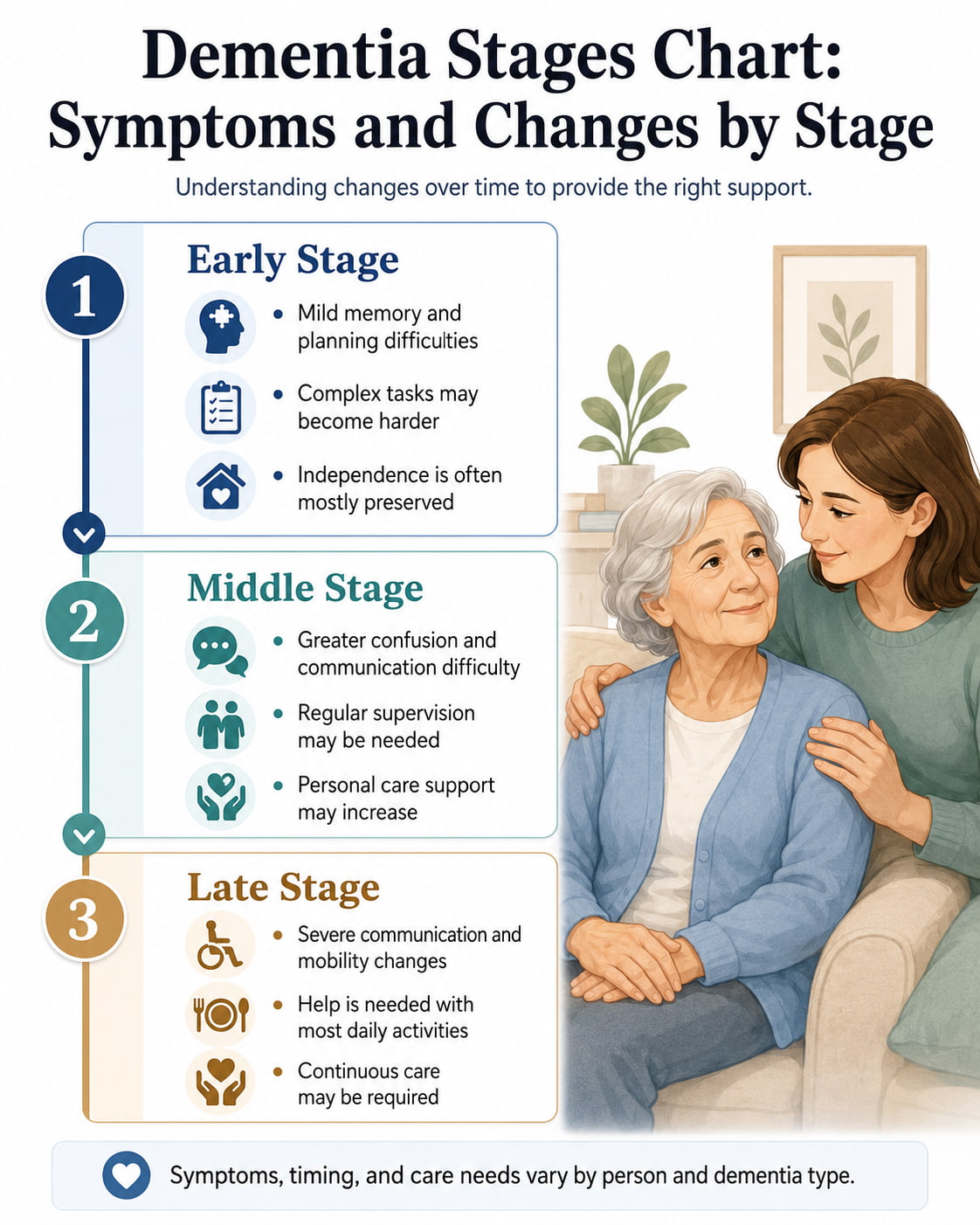
Dementia affects each person differently. Symptoms may overlap between stages, and different types of dementia do not always follow the same pattern. The seven-stage chart below is based mainly on the Global Deterioration Scale, which is most applicable to Alzheimer’s disease and similar progressive dementias.
Understanding the stages can help families recognize changing care needs, prepare for safety concerns, and have more informed conversations with healthcare professionals.
Dementia Stages Chart: Seven Stages at a Glance
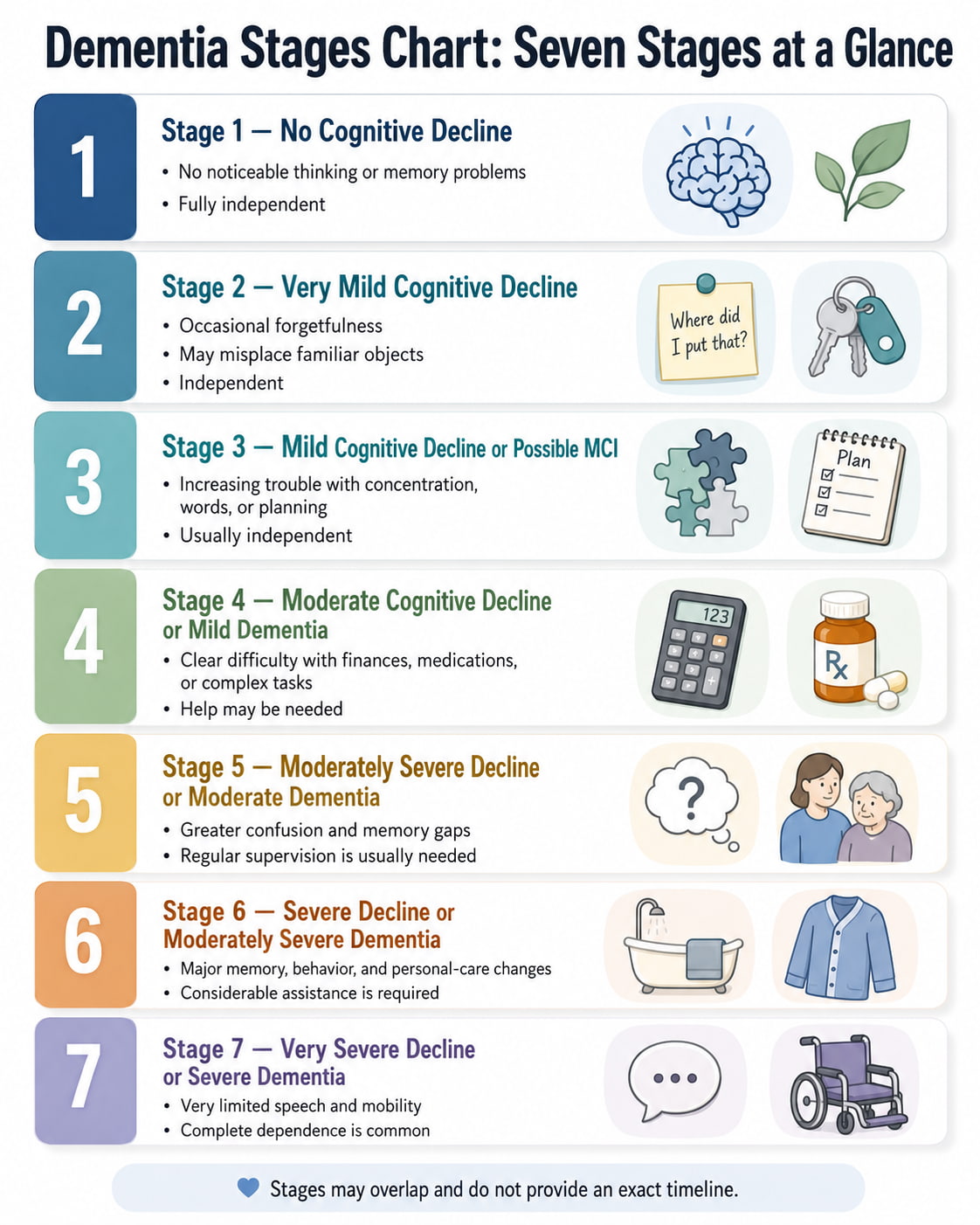
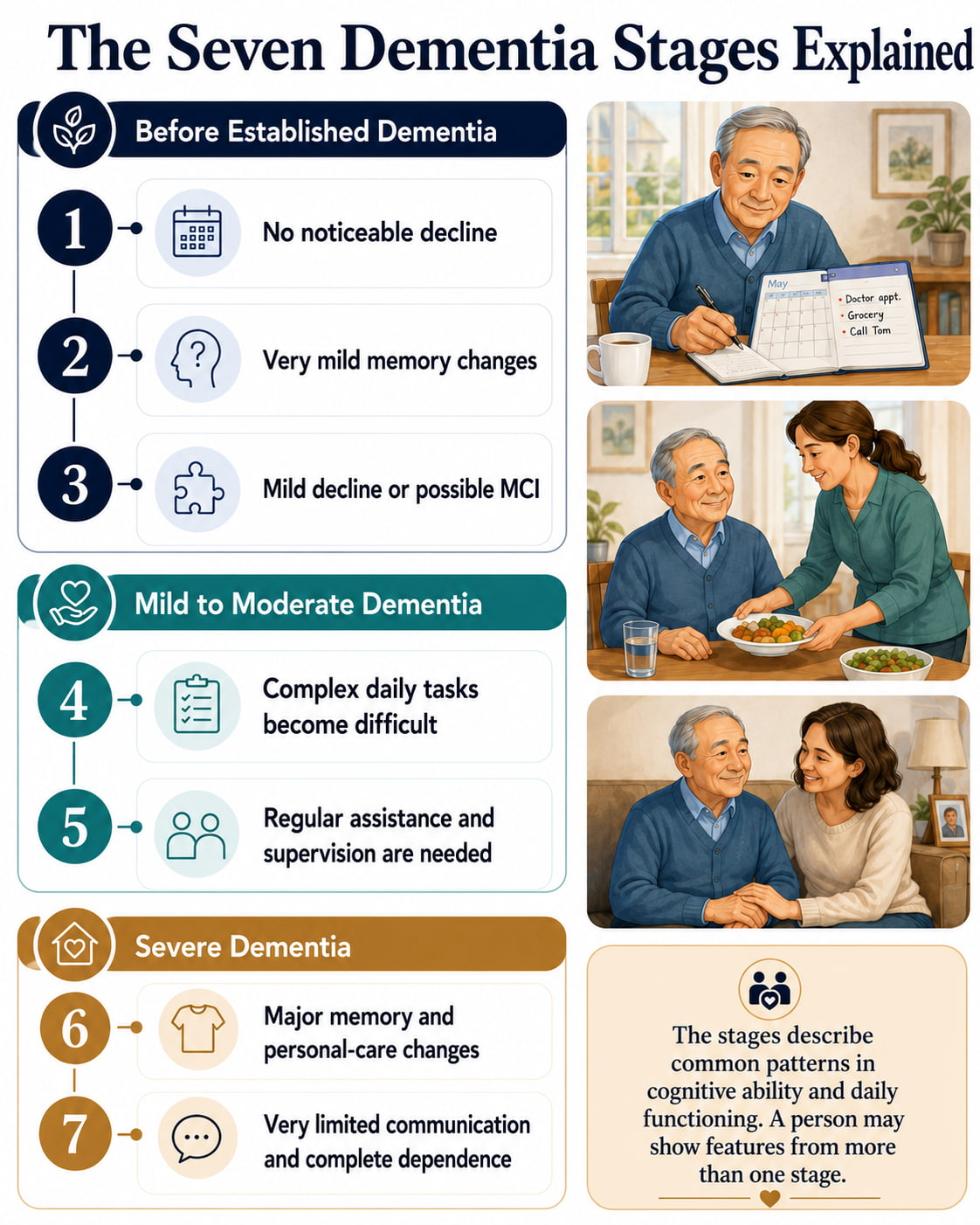
The Global Deterioration Scale, also called the Reisberg Scale, organizes cognitive and functional decline into seven stages. Stages 1 through 3 generally occur before established dementia, while stages 4 through 7 describe increasing levels of dementia-related impairment.
| Stage | Common description | Typical symptoms and changes | Level of independence |
|---|---|---|---|
| Stage 1 | No cognitive decline | No noticeable problems with memory, thinking, communication, or daily tasks | Fully independent |
| Stage 2 | Very mild cognitive decline | Occasional forgetfulness, difficulty recalling names, or misplacing familiar objects | Independent |
| Stage 3 | Mild cognitive decline or possible MCI | Increasing difficulty concentrating, learning new information, finding words, planning, or handling demanding tasks | Usually independent, although complex tasks may take longer |
| Stage 4 | Moderate cognitive decline or mild dementia | Clear problems with recent memory, finances, medications, planning, travel, or complicated household tasks | Basic self-care is generally preserved, but help with complex activities may be needed |
| Stage 5 | Moderately severe decline or moderate dementia | Greater confusion about time and place, significant memory gaps, difficulty choosing appropriate clothing, and reduced safety awareness | Regular supervision and daily assistance are usually needed |
| Stage 6 | Severe decline or moderately severe dementia | Major memory loss, difficulty recognizing close people, personality or sleep changes, and problems with dressing, bathing, or toileting | Considerable hands-on assistance is required |
| Stage 7 | Very severe decline or severe dementia | Very limited speech, declining movement, difficulty walking or swallowing, and inability to communicate needs clearly | Complete dependence and continuous care are generally required |
The seven-stage model was introduced by Dr. Barry Reisberg and colleagues in the original Global Deterioration Scale research. It is a clinical framework rather than a home diagnostic test.
What Do Dementia Stages Mean?
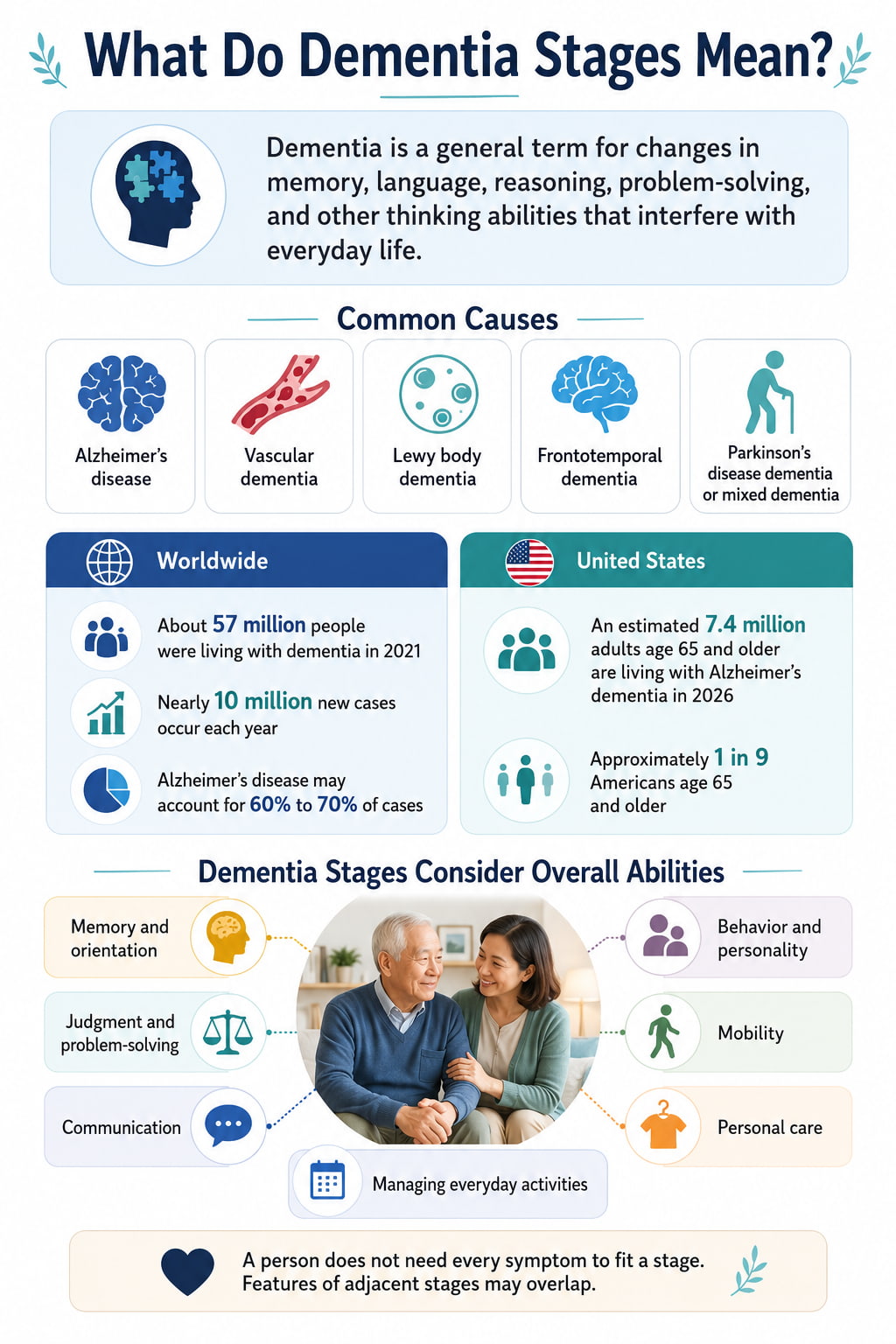
Dementia is not a single disease. It is a general term for a decline in memory, language, reasoning, problem-solving, or other thinking abilities that becomes serious enough to interfere with everyday life.
Alzheimer’s disease is the most common cause, but dementia can also result from vascular disease, Lewy body disease, frontotemporal degeneration, Parkinson’s disease, or a combination of conditions.
According to the World Health Organization’s dementia fact sheet, approximately 57 million people worldwide were living with dementia in 2021, and nearly 10 million new cases occur each year. Alzheimer’s disease may account for approximately 60% to 70% of cases.
In the United States, the 2026 Alzheimer’s Disease Facts and Figures report estimates that 7.4 million adults age 65 and older are living with Alzheimer’s dementia. That is approximately one in nine Americans in this age group.
A dementia stage is usually based on the person’s overall abilities, including:
- Memory and orientation
- Judgment and problem-solving
- Communication
- Behavior and personality
- Mobility
- Personal care
- Ability to manage everyday activities
A person does not need to have every listed symptom to fit a particular stage. Someone may also show characteristics of two adjacent stages at the same time.
The Seven Dementia Stages Explained
Stage 1: No Cognitive Decline
At Stage 1, there are no noticeable symptoms of cognitive decline. The person can work, socialize, manage money, remember appointments, travel, and complete everyday activities normally.
This stage does not mean that biological changes cannot be present in the brain. In Alzheimer’s disease, changes may begin years before noticeable symptoms appear. However, the Global Deterioration Scale classifies a person without observable cognitive or functional problems as Stage 1.
Stage 2: Very Mild Cognitive Decline
Stage 2 may involve minor memory lapses that are not clearly different from common age-related forgetfulness.
A person might:
- Forget a familiar name temporarily
- Misplace keys, glasses, or a phone
- Need more time to remember a word
- Forget why they entered a room
- Feel that their memory is not as sharp as before
These changes generally do not interfere with independence, employment, social activities, or household responsibilities. Friends, relatives, and healthcare professionals may not notice a measurable decline.
Occasional forgetfulness alone does not establish that someone has dementia.
Stage 3: Mild Cognitive Decline or Possible MCI
During Stage 3, changes may become noticeable to family members or coworkers. A clinical assessment may identify mild problems with memory, concentration, language, or organization.
Possible changes include:
- Repeating questions
- Forgetting recently learned information
- Difficulty remembering names after meeting new people
- Trouble finding the right word
- Reduced ability to plan or organize
- Difficulty traveling to an unfamiliar location
- Declining performance in complex work or social situations
- Frequently losing important belongings
Stage 3 is sometimes associated with mild cognitive impairment, or MCI. MCI is not the same as dementia because the person can usually continue performing normal daily activities independently.
Some people with MCI later develop dementia, while others remain stable or improve, particularly when medication effects, sleep problems, depression, nutritional deficiencies, or other contributing conditions are addressed.
Stage 4: Moderate Cognitive Decline or Mild Dementia
Stage 4 is generally the first stage that clearly falls within the dementia range on the Global Deterioration Scale.
Memory and thinking problems begin to interfere with complex everyday activities. The person may still appear independent in familiar situations, but closer observation reveals meaningful difficulty.
Common changes include:
- Forgetting recent conversations or events
- Difficulty managing bills or bank accounts
- Missing medication doses
- Trouble planning meals or shopping
- Difficulty following several steps
- Reduced ability to travel alone
- Problems handling unexpected situations
- Withdrawal from challenging activities
- Denial or limited awareness of difficulties
Basic activities such as eating, using the bathroom, and dressing are usually preserved. However, family members may need to monitor finances, appointments, medication routines, driving, and household safety.
Early-stage planning is especially important because the person may still be able to communicate preferences and participate in legal, financial, housing, and future-care decisions.
Stage 5: Moderately Severe Cognitive Decline or Moderate Dementia
At Stage 5, the person may no longer be able to live safely without regular assistance.
They may have difficulty remembering important personal details, such as:
- Their address
- Their telephone number
- The current date
- Where they are
- The names of less familiar relatives
- Details about recent events
The person may need help selecting suitable clothing, preparing meals, taking medications, attending appointments, and navigating outside the home.
They usually remember their own name and recognize close family members. Eating and using the bathroom may remain possible without extensive assistance, although supervision is often necessary.
Safety risks may increase because the person may become lost, leave appliances running, respond poorly to emergencies, or make unsafe financial decisions.
Stage 6: Severe Cognitive Decline or Moderately Severe Dementia
Stage 6 involves major changes in memory, behavior, communication, and personal care.
Possible symptoms include:
- Forgetting the names of a spouse, child, or caregiver
- Confusing family members with other people
- Becoming disoriented inside familiar surroundings
- Difficulty dressing in the correct order
- Needing help bathing or toileting
- Changes in sleep patterns
- Repetitive behavior
- Anxiety, agitation, suspicion, or withdrawal
- Hallucinations or false beliefs
- Wandering
- Bladder or bowel control problems
Not everyone experiences significant behavioral symptoms. When they do occur, they may be caused or worsened by pain, fear, noise, hunger, fatigue, medication effects, an unfamiliar environment, or difficulty communicating.
Caregivers often need to provide simple instructions, predictable routines, reassurance, supervision, and substantial hands-on support.
Stage 7: Very Severe Cognitive Decline or Severe Dementia
Stage 7 is the most advanced stage on the chart. The person becomes completely dependent on others for daily care.
Changes may include:
- Speech becoming limited to a few words or sounds
- Inability to hold a conversation
- Difficulty expressing pain, thirst, hunger, or discomfort
- Loss of the ability to walk independently
- Difficulty sitting upright or changing position
- Muscle stiffness
- Problems chewing or swallowing
- Increased risk of dehydration or inadequate nutrition
- Loss of bladder and bowel control
- Greater vulnerability to infections and skin problems
Although verbal communication may be limited, the person may still respond to a calm voice, familiar music, gentle touch, facial expressions, and a reassuring presence.
Care at this stage usually focuses on dignity, comfort, positioning, skin protection, mouth care, appropriate nutrition, symptom recognition, and support for the family.
The Alzheimer’s Association’s stage overview emphasizes that symptoms and progression vary considerably between individuals.
Early-, Middle-, and Late-Stage Dementia
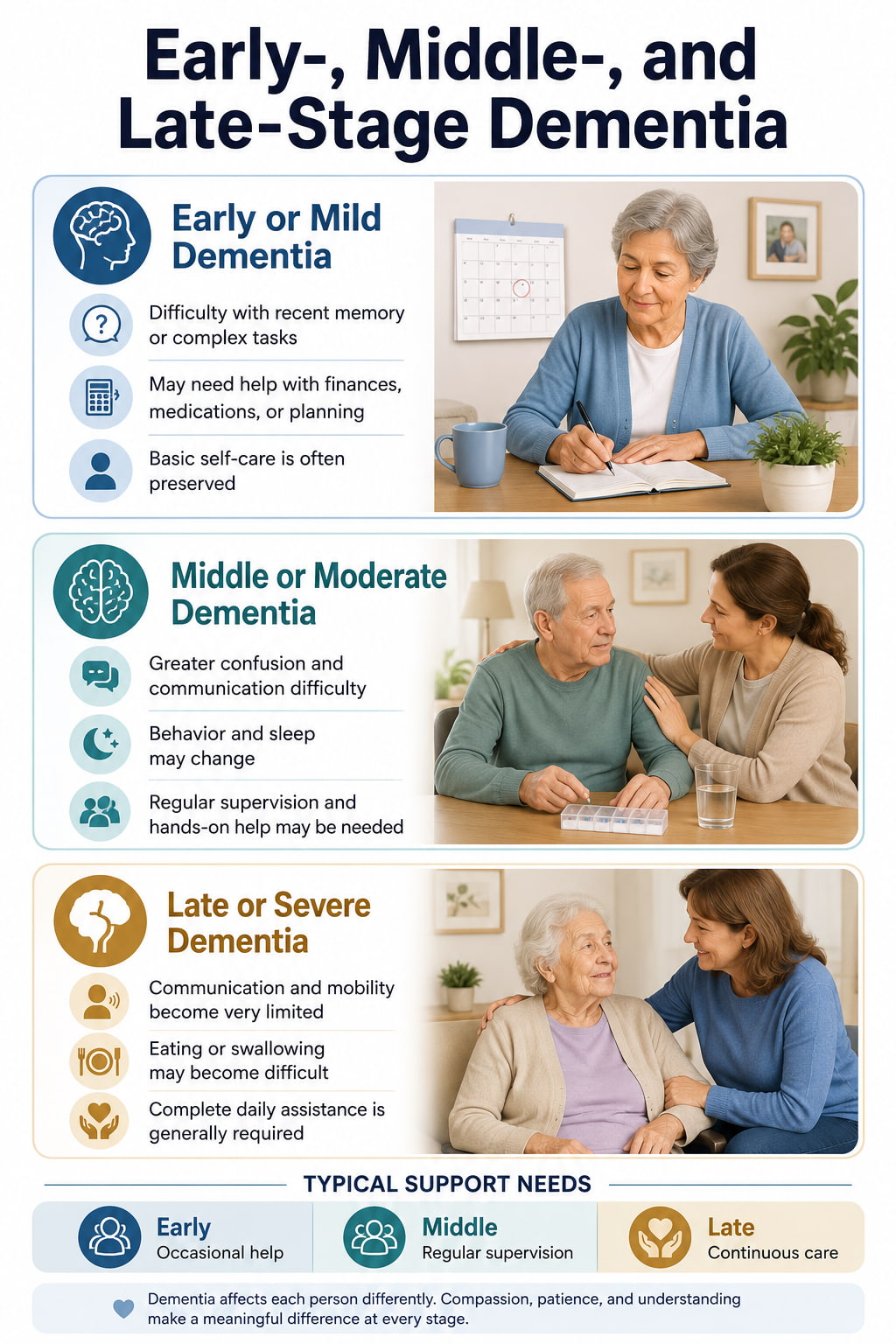
Many healthcare and caregiving resources use three broad stages instead of seven.
| Broad stage | Approximate seven-stage equivalent | General level of support |
|---|---|---|
| Early or mild dementia | Mainly Stage 4 | The person may remain largely independent but needs help with complex tasks |
| Middle or moderate dementia | Mainly Stages 5 and 6 | Regular supervision and increasing hands-on assistance are needed |
| Late or severe dementia | Mainly Stage 7 | Continuous care and full assistance are usually required |
This comparison is only approximate. Stage 3 may involve MCI or another pre-dementia condition and should not automatically be labeled early-stage dementia.
Early-Stage Changes
During early-stage dementia, a person may continue working, driving, socializing, and completing familiar routines.
Problems are usually most noticeable during complicated activities, such as managing finances, learning new technology, organizing travel, following detailed instructions, or responding to unexpected situations.
Middle-Stage Changes
During middle-stage dementia, memory loss and confusion become more noticeable. Communication, behavior, sleep, judgment, and personal care may also change.
This stage often requires the greatest adjustment from families because the person may still be physically active while having reduced judgment and safety awareness.
Late-Stage Changes
During late-stage dementia, physical and communication difficulties become more prominent. The person may need help with every aspect of daily life, including eating, positioning, hygiene, mobility, and communicating discomfort.
How Dementia Can Change More Than Memory
Dementia is often associated with forgetfulness, but its effects can extend well beyond memory.
Cognitive Changes
These may include difficulty with:
- Concentration
- Planning
- Decision-making
- Problem-solving
- Understanding risk
- Recognizing familiar objects
- Judging distance or space
- Following several steps
Communication Changes
A person may:
- Struggle to find words
- Lose track of conversations
- Repeat phrases or questions
- Use an incorrect word
- Have difficulty understanding long explanations
- Speak less as the condition progresses
Behavioral and Emotional Changes
Possible changes include:
- Anxiety
- Apathy
- Irritability
- Suspicion
- Restlessness
- Social withdrawal
- Repetitive actions
- Sleep disruption
- Hallucinations
Behavioral changes should be viewed as possible communication. Pain, infection, hunger, constipation, fear, fatigue, overstimulation, or medication effects may contribute.
Physical Changes
Later-stage symptoms may include:
- Slower walking
- Balance problems
- Muscle stiffness
- Falls
- Difficulty coordinating movement
- Problems chewing or swallowing
- Reduced bladder or bowel control
Do All Types of Dementia Follow the Same Stages?
No. The seven-stage dementia chart is most useful for describing a typical Alzheimer’s-related pattern. Other conditions may begin with different symptoms or progress differently.
Alzheimer’s Disease
Recent-memory problems are often prominent early. Over time, language, reasoning, orientation, behavior, movement, and personal care may also be affected.
Vascular Dementia
Early symptoms may involve slowed thinking, poor attention, difficulty planning, impaired judgment, or walking and balance problems. Symptoms can sometimes worsen in noticeable steps following strokes or additional blood-vessel damage.
Lewy Body Dementia
Possible early features include:
- Visual hallucinations
- Large fluctuations in alertness or attention
- Dream-enactment behaviors during sleep
- Muscle stiffness or slow movement
- Balance problems
- Sensitivity to certain medications
Memory loss may be less prominent at first than changes in attention, movement, or visual processing.
Frontotemporal Dementia
Early symptoms may involve personality, judgment, behavior, emotional control, or language rather than memory. Some frontotemporal disorders also cause movement problems.
Mixed Dementia
A person can have more than one disease affecting the brain, such as Alzheimer’s disease combined with vascular damage. Symptoms may therefore reflect more than one pattern.
Because of these differences, a healthcare professional should determine the likely type and severity rather than relying only on a general chart.
How Long Does Each Dementia Stage Last?
There is no fixed duration for any dementia stage.
Progression can be affected by:
- The type and cause of dementia
- Age at symptom onset
- Overall physical health
- Stroke history
- Other neurological conditions
- Medication effects
- Infections or hospitalization
- Nutrition and hydration
- The person’s original level of function
For Alzheimer’s disease, people live an average of approximately four to eight years after diagnosis, although some live considerably longer. This estimate covers the period after diagnosis and does not predict how long an individual stage will last.
Changes are not always smooth or predictable. A person may appear stable for months and then need more support. Abilities can also vary from one day—or one part of the day—to another.
How Doctors Determine Dementia Severity
A dementia stage cannot be established with a chart alone. Healthcare professionals consider both cognitive symptoms and their effect on everyday functioning.
An evaluation may include:
- A detailed medical history
- Information from a relative or caregiver
- Cognitive and memory assessments
- Evaluation of daily activities
- Physical and neurological examinations
- Medication review
- Blood or urine tests
- Brain imaging
- Mental health assessment
- Hearing and vision evaluation
- Specialized biomarker testing when appropriate
There is no single test that identifies every cause of dementia.
The National Institute on Aging’s dementia guide explains that depression, medication side effects, vitamin deficiencies, thyroid problems, heavy alcohol use, delirium, and other medical conditions can sometimes cause dementia-like symptoms.
Practical Support at Different Dementia Stages
Support During Early-Stage Dementia
Helpful steps may include:
- Include the person in decisions
- Establish a predictable routine
- Use calendars, reminders, and labeled storage
- Review medication management
- Simplify financial accounts
- Assess driving safety
- Complete legal and advance-care documents
- Discuss future housing and care preferences
- Encourage appropriate physical and social activity
Support should preserve independence rather than taking over every task unnecessarily.
Support During Middle-Stage Dementia
Priorities often include:
- Supervise medications and meals
- Simplify instructions to one step at a time
- Reduce noise and environmental confusion
- Install appropriate home safety equipment
- Secure hazardous products
- Monitor wandering risk
- Provide help with dressing and hygiene
- Maintain regular sleep and meal schedules
- Arrange respite support for caregivers
Avoid arguing over incorrect statements when correction is not necessary for safety. A calm response and gentle redirection are often more helpful.
Support During Late-Stage Dementia
Care may focus on:
- Comfort and dignity
- Safe eating and swallowing
- Regular repositioning
- Skin care
- Mouth care
- Gentle movement
- Recognizing nonverbal signs of pain
- Managing infections and other medical problems
- Maintaining familiar voices, music, and touch
- Supporting family caregivers
A physician, nurse, speech-language pathologist, dietitian, physical therapist, or palliative-care team may provide guidance based on the person’s needs.
When to Seek Medical Evaluation
Arrange a medical appointment when changes in memory, language, judgment, behavior, or daily functioning:
- Interfere with work or household responsibilities
- Cause repeated safety concerns
- Become noticeable to other people
- Continue to worsen
- Affect medication or money management
- Lead to getting lost in familiar locations
Early evaluation may identify the cause, reveal contributing medical problems, and allow the person to participate in future planning.
Sudden Confusion Is Not a Normal Stage Change
Dementia usually causes gradual decline. A sudden change over hours or days should not automatically be interpreted as movement to a later stage.
Seek prompt medical attention for sudden:
- Severe confusion
- Unusual sleepiness
- Hallucinations
- Agitation
- Weakness or numbness
- Speech difficulty
- Loss of balance
- Fever
- Reduced fluid intake
- Major decline in mobility
Possible causes include delirium, infection, dehydration, pain, medication effects, a head injury, or stroke. Tell healthcare professionals immediately when a person with dementia seems suddenly worse or significantly different.
Call emergency services for possible stroke symptoms, severe breathing difficulty, loss of consciousness, or another life-threatening emergency.
Frequently Asked Questions
What are the seven stages of dementia?
The seven stages are no cognitive decline, very mild decline, mild decline, moderate decline, moderately severe decline, severe decline, and very severe decline. In the Global Deterioration Scale, established dementia generally begins at Stage 4.
What stage of dementia includes forgetting family members?
Difficulty remembering the names or identities of close family members often becomes more noticeable during Stage 6. However, recognition can vary by person, relationship, environment, and time of day.
Is Stage 3 considered dementia?
Not necessarily. Stage 3 may represent mild cognitive impairment. People with MCI generally remain independent in normal daily activities, although complex tasks may become more difficult.
What are the signs that dementia is getting worse?
Possible signs include increasing repetition, greater confusion, declining judgment, difficulty with personal care, getting lost, changes in communication, behavioral symptoms, reduced mobility, or needing more supervision.
A sudden change should receive prompt medical assessment rather than being assumed to be normal progression.
Can someone move through dementia stages quickly?
Yes, but the rate varies. Some people change gradually over several years, while others decline more quickly. Vascular events, infection, delirium, hospitalization, medication effects, or another medical condition may cause an abrupt decline.
How long does the final stage of dementia last?
There is no dependable timeline. The final stage may last for weeks, months, or longer, depending on the type of dementia, overall health, mobility, nutrition, swallowing ability, infections, and other complications.
Can dementia stages improve?
Most progressive degenerative dementias worsen over time. However, day-to-day functioning can fluctuate, and addressing pain, infection, depression, poor sleep, medication effects, dehydration, or sensory problems may improve alertness or functioning.
Conclusion
A dementia stages chart can make a complicated condition easier to understand, but it should be used as a planning guide rather than an exact forecast. The most important change across the stages is the gradual loss of independence, from difficulty with complex activities to needing complete daily assistance.
If you notice persistent changes in memory, communication, behavior, judgment, or everyday functioning, arrange a professional medical evaluation. An accurate assessment can identify the likely cause, clarify current care needs, and help families plan while the person can still participate in important decisions.
This content is for informational purposes only and not medical advice.