
Breathing exercises may help lower blood pressure by promoting relaxation, improving autonomic balance, and reducing stress-related spikes in heart rate and vascular tension. When practiced consistently, slow and controlled breathing techniques can support healthier blood pressure levels alongside diet, physical activity, and medical care.
High blood pressure (hypertension) is a major risk factor for heart disease and stroke. Learning how breathing influences your nervous system can give you a simple, low-cost tool to support long-term cardiovascular health. In this guide, you’ll learn the 8 best breathing exercises to lower blood pressure, how they work, how often to practice them, and who should use caution.
What Are Breathing Exercises to Lower Blood Pressure?
Breathing exercises to lower blood pressure are structured breathing patterns designed to slow your breathing rate, deepen each breath, and encourage relaxation of the nervous system.
These exercises typically involve:
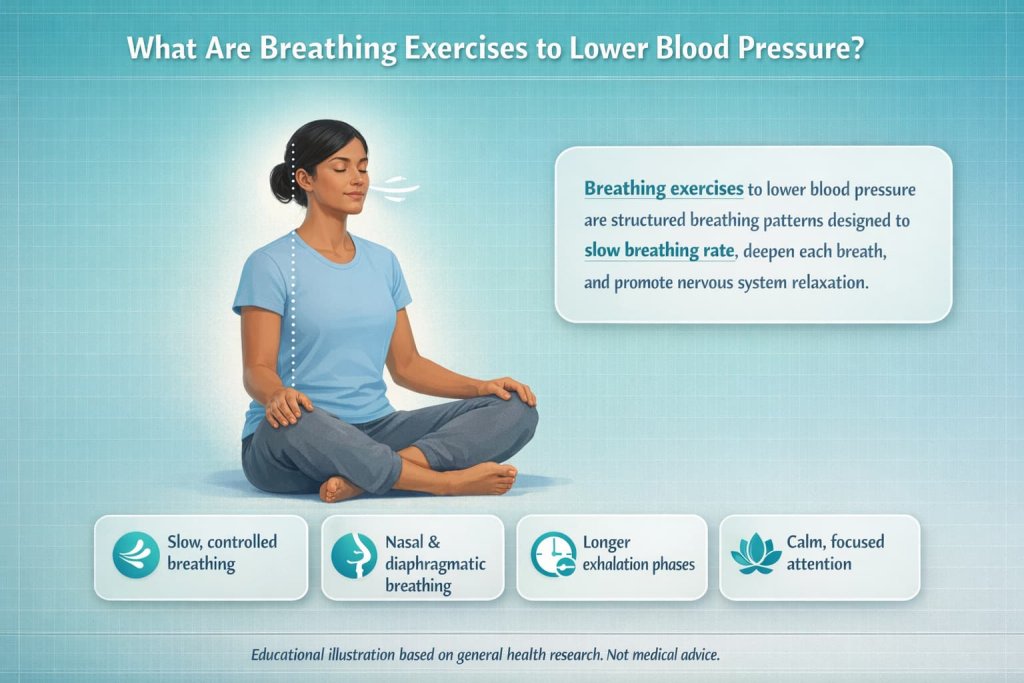
- Slow, controlled inhalation and exhalation
- Emphasis on nasal and diaphragmatic breathing
- Longer exhalation phases
- Calm, focused attention
Research suggests that such practices may help influence heart rate variability, blood vessel tone, and stress hormone levels—factors that affect blood pressure regulation.
8 Best Breathing Exercises to Lower Blood Pressure
Breathing exercises to lower blood pressure focus on slow, controlled breathing patterns that help calm the nervous system and reduce stress-related blood pressure spikes. When practiced consistently, these techniques may support healthier blood pressure levels as part of an overall heart-healthy lifestyle.
1. Slow Paced Breathing
Slow paced breathing is one of the most researched breathing methods for blood pressure support and relaxation.
How to do it
- Sit or lie down in a comfortable position with your spine neutral
- Inhale slowly through your nose for 4–5 seconds
- Exhale gently for 5–6 seconds, letting the breath flow out naturally
- Aim for about 6–10 total breaths per minute
- Continue for 5–10 minutes without forcing the breath
Why it works
Reducing breathing speed may help shift the nervous system toward a calmer state. This can support improved autonomic balance and reduce stress-related spikes in blood pressure, especially during periods of anxiety or mental tension.
Trainer Tip
Use a timer or breathing app at first to stay consistent. If you feel lightheaded, slightly shorten the exhale and breathe more naturally.
2. Diaphragmatic (Belly) Breathing
This technique emphasizes deep breathing from the diaphragm rather than shallow chest breathing.
How to do it
- Lie on your back or sit upright with relaxed shoulders
- Place one hand on your chest and one on your abdomen
- Inhale through your nose, allowing your belly to rise
- Exhale slowly through your nose or mouth as the belly falls
- Keep your chest relatively still throughout the breath
Why it works
Diaphragmatic breathing encourages efficient airflow and relaxation. By minimizing upper-chest tension, it may help reduce stress responses that can contribute to elevated blood pressure.
Trainer Tip
If your chest rises more than your belly, slow the inhale further and imagine breathing into the lower ribs and abdomen.
3. 4-7-8 Breathing
Often used for relaxation and sleep support, this method emphasizes controlled timing and longer exhalation.
How to do it
- Inhale quietly through your nose for 4 seconds
- Hold the breath gently for 7 seconds
- Exhale slowly through your mouth for 8 seconds
- Repeat for 3–6 cycles, staying relaxed
Why it works
Extended breath holding and prolonged exhalation may increase relaxation responses and help calm stress-driven nervous system activity that influences blood pressure.
Trainer Tip
If the breath hold feels uncomfortable, shorten the hold to 4–5 seconds and gradually progress as comfort improves.
4. Box Breathing (4-4-4-4)
Also known as square breathing, this technique promotes rhythm, focus, and controlled breathing.
How to do it
- Inhale through your nose for 4 seconds
- Hold the breath for 4 seconds
- Exhale slowly for 4 seconds
- Hold again for 4 seconds before the next inhale
Why it works
This steady breathing pattern may help reduce acute stress reactions, which can temporarily raise blood pressure during emotional or mental strain.
Trainer Tip
Visualize each side of a square as you breathe to improve focus and consistency.
5. Resonant Breathing
Resonant breathing targets a breathing rhythm often associated with heart rate variability.
How to do it
- Breathe at approximately 5–6 breaths per minute
- Inhale and exhale for equal durations
- Keep breaths smooth, continuous, and unforced
- Maintain relaxed posture throughout
Trainer Tip
Count slowly or use a metronome-style breathing guide to maintain an even rhythm.
6. Alternate Nostril Breathing
Common in yoga-based practices, this technique encourages slow, mindful breathing and attention control.
How to do it
- Sit upright with relaxed shoulders
- Close one nostril and inhale through the other
- Switch nostrils and exhale slowly
- Continue alternating sides in a smooth pattern
Why it works
The focused, slow breathing pattern may help calm mental stress and promote relaxation, indirectly supporting blood pressure management.
Trainer Tip
Avoid forceful breathing. Keep the breath light, smooth, and controlled.
7. Extended Exhale Breathing
This variation places greater emphasis on the exhale phase of breathing.
How to do it
- Inhale through your nose for 4 seconds
- Exhale slowly for 6–8 seconds
- Pause briefly before the next inhale
- Continue for several minutes
Why it works
Longer exhalations may encourage relaxation pathways linked to lower heart rate and reduced vascular tension.
Trainer Tip
If the long exhale feels difficult, reduce it by one or two seconds and progress gradually.
8. Guided Relaxation Breathing
This approach combines breathing with guided relaxation or mindfulness audio.
How to do it
- Choose a guided breathing or relaxation audio
- Sit or lie in a quiet, comfortable environment
- Follow the breathing cues without rushing
- Focus attention on the breath and body sensations
Why it works
Combining breathing with mental relaxation may improve stress management, which plays an important role in blood pressure regulation.
Trainer Tip
Use guided sessions during high-stress periods or before sleep to support consistency and relaxation.
How Often Should You Practice Breathing Exercises for Blood Pressure?
Consistency matters more than duration.
General guidance:
- Practice once or twice daily
- Aim for 5–10 minutes per session
- Use breathing exercises during stressful moments as needed
Organizations such as the Centers for Disease Control and Prevention emphasize lifestyle-based strategies—including stress management—as part of overall heart-health support.
How Breathing Exercises May Help Lower Blood Pressure
Breathing exercises do not directly “treat” hypertension, but they may support healthier blood pressure responses through several mechanisms:
- Encouraging parasympathetic (“rest-and-digest”) nervous system activity
- Reducing stress and anxiety, which can temporarily elevate blood pressure
- Improving breathing efficiency and oxygen exchange
- Helping regulate heart rate and vascular resistance
According to American Heart Association, relaxation-based breathing techniques are commonly recommended as part of stress-management strategies that support heart health.
Who Should Be Careful With Breathing Exercises?
Breathing exercises are generally safe, but extra caution is advised if you:
- Experience dizziness, fainting, or shortness of breath
- Have advanced cardiovascular or respiratory conditions
- Are pregnant and new to breath-holding techniques
If symptoms occur, stop the exercise and consult a healthcare professional.
Can Breathing Exercises Replace Blood Pressure Medication?
No. Breathing exercises should not replace prescribed medication or clinical care. They are best viewed as a supportive lifestyle strategy that may complement medical treatment and other healthy habits.
The World Health Organization consistently emphasizes that hypertension management typically involves a combination of lifestyle changes and professional medical guidance.
Lifestyle Habits That Work Well With Breathing Exercises
Breathing exercises are most effective when combined with other heart-healthy habits that support overall blood pressure regulation.
- Regular physical activity helps improve cardiovascular efficiency and complements relaxation-based breathing
- Balanced nutrition rich in whole foods and lower sodium supports healthy blood pressure levels
- Quality sleep improves nervous system balance, making breathing exercises more effective
- Stress-management habits such as mindfulness or gentle stretching reinforce calming effects
- Limiting alcohol and avoiding tobacco supports long-term heart health
Organizations like the American Heart Association and the World Health Organization emphasize that breathing exercises work best as part of a broader lifestyle approach, not as a standalone strategy.
Frequently Asked Questions (FAQs)
Do breathing exercises really lower blood pressure?
Research suggests breathing exercises may help reduce blood pressure modestly, especially when practiced regularly alongside other healthy habits.
How long does it take to see results?
Some people notice relaxation effects immediately, while measurable blood pressure changes may take several weeks of consistent practice.
Can I do breathing exercises while sitting or lying down?
Yes. Most breathing exercises can be performed seated, lying down, or even standing comfortably.
Is nasal breathing better than mouth breathing?
Nasal breathing is often encouraged because it supports controlled airflow and relaxation.
Are breathing devices necessary?
No. Most breathing exercises require no equipment, though some people choose guided apps or simple timers.
Can breathing exercises help stress-related blood pressure spikes?
Yes. Breathing exercises are commonly used to manage acute stress, which can temporarily raise blood pressure.
Conclusion
Breathing exercises to lower blood pressure offer a simple, accessible way to support heart health by reducing stress and encouraging calmer nervous system activity. While they are not a cure or replacement for medical care, consistent practice may play a helpful role in a comprehensive blood pressure management plan.
If you’re managing high blood pressure, consider pairing breathing exercises with regular physical activity, balanced nutrition, and professional medical advice for the best long-term outcomes.
References
- Breathing Brings Benefits Infographic (American Heart Association)
- It’s not just inspiration – careful breathing can help your health (American Heart Association, Jul 7, 2023)
- Effect of breathing exercises on blood pressure and heart rate: A systematic review and meta-analysis (PubMed, 2023)
- Time-Efficient Inspiratory Muscle Strength Training Lowers Blood Pressure and Improves Endothelial Function (Journal of the American Heart Association, 2021)
- Managing High Blood Pressure (CDC, Dec 13, 2024)
- Hypertension (Fact sheet) (World Health Organization, Sep 25, 2025)
- Lifestyle management of hypertension: International Society of Hypertension position paper (PMC Full Text, 2023)