
Diaphragmatic breathing exercises help you breathe more deeply and efficiently by using your diaphragm instead of relying too much on shallow chest breathing. They may also help you feel calmer, slow your breathing rate, and make breathing feel less effortful when practiced correctly. Learning this technique matters because it can support everyday breathing comfort, stress management, and better breathing control without equipment. Cleveland Clinic, the American Lung Association, and the NHS all describe diaphragmatic or belly breathing as a practical, beginner-friendly breathing method.

The basic idea is simple: breathe in slowly through your nose, let your belly rise, keep your chest relatively quiet, and exhale slowly with control. That sounds easy, but many people do better when they start with a clear setup and a few simple variations. This guide covers five of the best diaphragmatic breathing exercises, how to do them, why they work, common mistakes, and when to get guidance first.
What Is Diaphragmatic Breathing?
Diaphragmatic breathing is a technique that helps you use the diaphragm, the main breathing muscle under your lungs, more effectively. Cleveland Clinic explains that it may strengthen the diaphragm, decrease the work of breathing, and help you use less effort and energy to breathe. The American Lung Association also notes that belly breathing can help slow your breathing and improve breathing control, especially during shortness of breath.
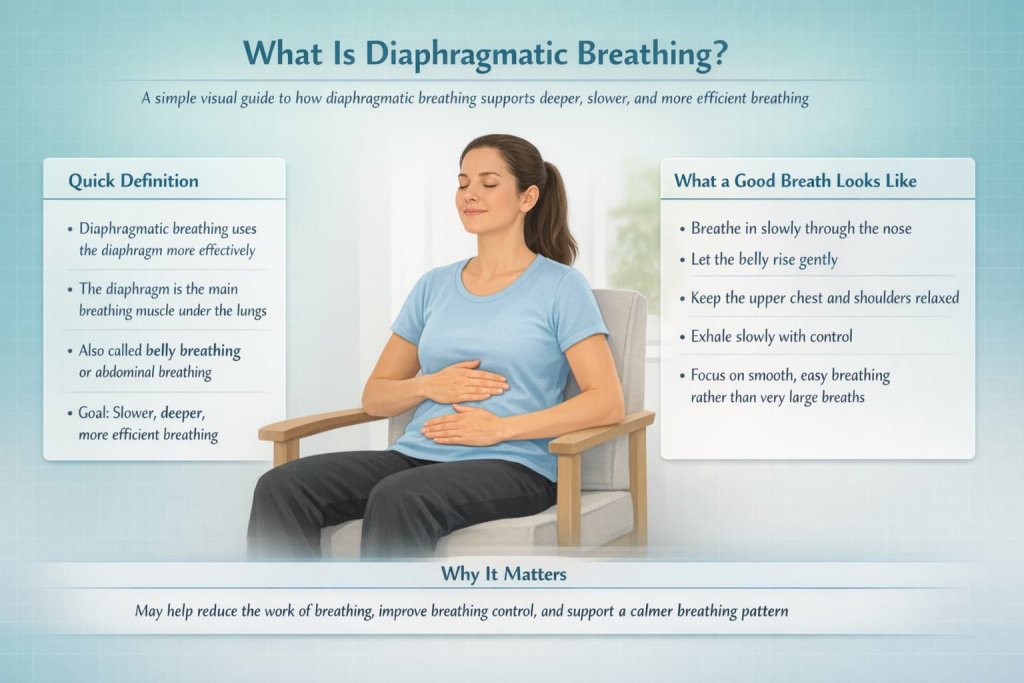
It is also called belly breathing or abdominal breathing. In a well-done diaphragmatic breath, your belly expands gently as you inhale, instead of your shoulders lifting or your upper chest doing most of the work.
Why Diaphragmatic Breathing Exercises Work
These exercises work by helping you slow down and organize your breathing pattern. That can make breathing feel more efficient and less rushed. According to Cleveland Clinic, diaphragmatic breathing may reduce the work of breathing and improve lung efficiency, while the American Lung Association says it can help you catch your breath and use less energy to breathe.
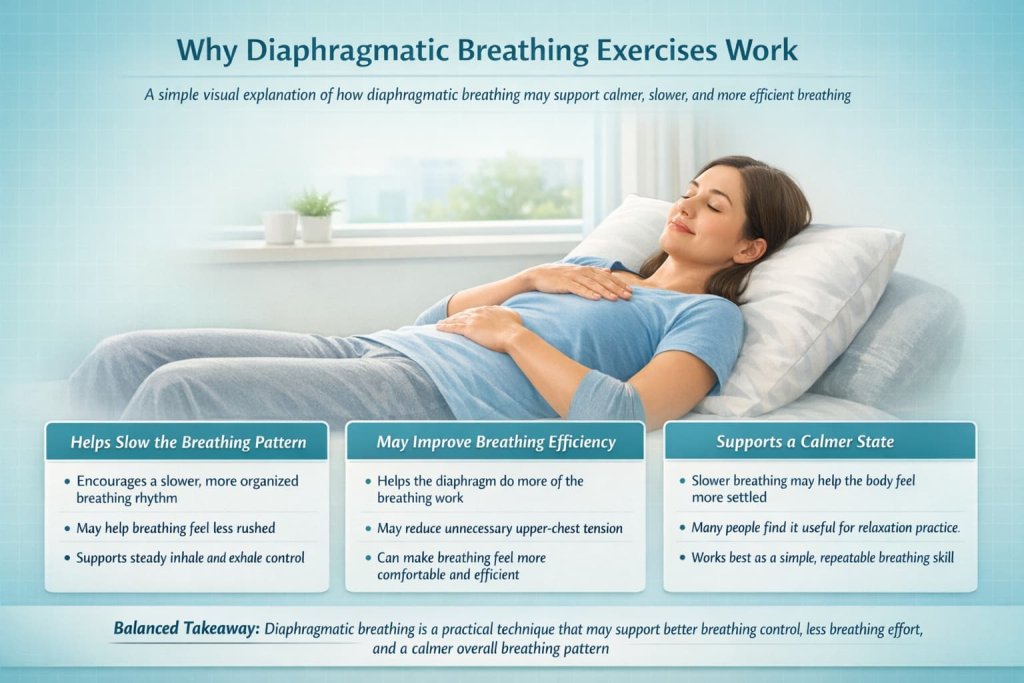
For stress support, slower breathing can also encourage a calmer state. Michigan Medicine describes slow diaphragmatic breathing as a technique that involves slowing the breath to communicate safety to the brain. That does not make it a treatment for anxiety or a substitute for medical care, but it helps explain why many people find it calming.
5 Best Diaphragmatic Breathing Exercises
These 5 diaphragmatic breathing exercises can help you practice slower, deeper, and more controlled breathing. Start with the easiest variation and build consistency to support better breathing and stress relief.
1. Basic Lying Diaphragmatic Breathing
Why it works: Lying on your back reduces extra tension and makes it easier to notice whether your belly is rising more than your chest. This is often the simplest place to start. Cleveland Clinic uses this type of setup for learning the movement.
How to do it:
- Lie on your back with your knees bent and your head, neck, and shoulders relaxed.
- Place one hand on your upper chest and the other just below your rib cage.
- Breathe in slowly through your nose.
- Let your belly move outward against your lower hand.
- Keep the hand on your chest as still as possible.
- Exhale slowly and gently.
- Repeat for 5 to 10 breaths at a comfortable pace.
Trainer Tip: Do not force a huge inhale. A calm, controlled belly rise is better than taking an overly deep breath that creates tension.
2. Seated Diaphragmatic Breathing
Why it works: This variation helps you practice the same breathing pattern in a more functional position that is easy to use during the day, at work, or before sleep. Michigan Medicine recommends seated slow diaphragmatic breathing with the feet on the floor.
How to do it:
- Sit comfortably in a chair with your feet flat on the floor.
- Relax your shoulders and jaw.
- Place your hands on your belly or one hand on your chest and one on your belly.
- Breathe in slowly through your nose.
- Feel your belly expand gently.
- Breathe out slowly without shrugging your shoulders or tensing your neck.
- Continue for 1 to 5 minutes.
Trainer Tip: Sit tall but relaxed. Good posture helps, but you should not feel stiff or rigid.
3. Counted Diaphragmatic Breathing
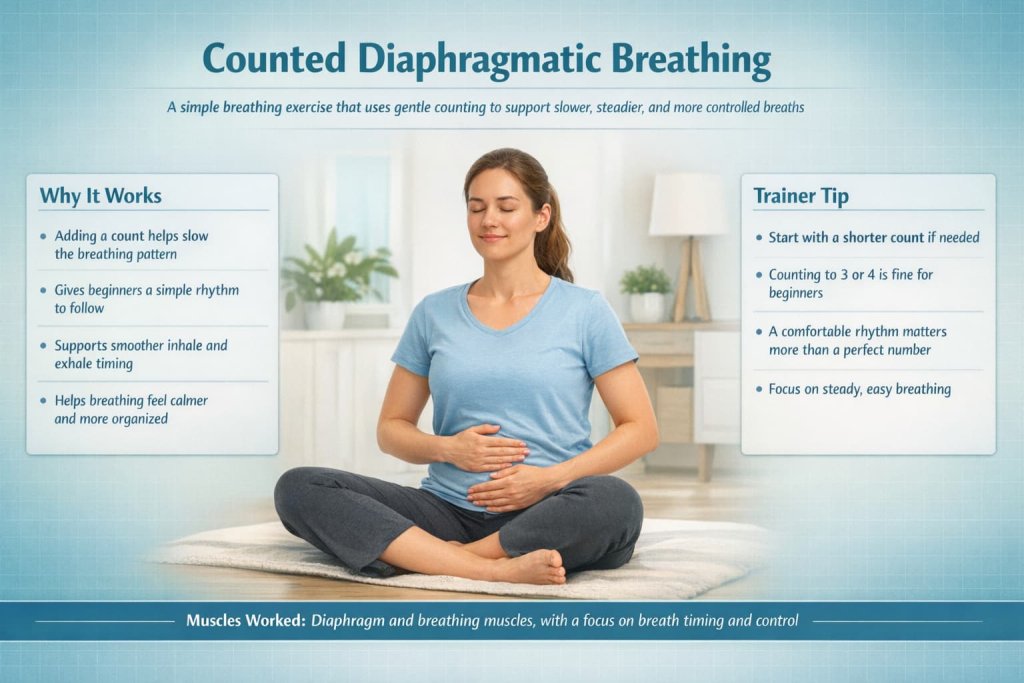
Why it works: Adding a count helps slow the breath and gives beginners a simple rhythm to follow. NHS guidance suggests counting gently on the inhale and exhale for several minutes.
How to do it:
- Sit, stand, or lie down in a comfortable position.
- Breathe in gently through your nose.
- Let the breath move as deep into your belly as feels comfortable.
- Count slowly from 1 to 4 or 1 to 5 as you inhale.
- Exhale gently and count from 1 to 4 or 1 to 5 again.
- Keep the breath smooth, not forced.
- Continue for about 5 minutes if comfortable.
Trainer Tip: If counting to 5 feels too long, start with 3 or 4. A comfortable rhythm is more useful than trying to copy an exact number.
4. Diaphragmatic Breathing With Pursed-Lip Exhale
Why it works: This combines a belly inhale with a slower, controlled exhale. The American Lung Association and Cleveland Clinic both describe pursed-lip breathing as a helpful way to slow breathing and improve breathing control.
How to do it:
- Sit comfortably or lie down.
- Breathe in slowly through your nose and let your belly rise.
- Purse your lips gently, as if you are blowing out a candle softly.
- Exhale slowly through your pursed lips.
- Keep your shoulders relaxed.
- Repeat for 5 to 10 breaths.
Trainer Tip: Keep the lips lightly pursed, not tightly squeezed. The exhale should feel smooth and easy.
5. Relaxation-Focused Slow Diaphragmatic Breathing
Why it works: This variation is useful when your goal is to settle down, pause, and reset your breathing. Michigan Medicine specifically frames slow diaphragmatic breathing as a calming technique, and the NHS supports slow, gentle belly breathing for stress.
How to do it:
- Sit or lie down somewhere comfortable.
- Rest your hands on your belly.
- Inhale slowly and calmly through your nose.
- Let your belly rise with a normal, unforced breath.
- Pause briefly if it feels natural.
- Exhale slowly and fully, staying relaxed through your face, shoulders, and neck.
- Continue for several minutes.
Trainer Tip: Think slow and soft, not big and dramatic. Relaxation-focused breathing should feel steady, not intense.
How Often Should You Practice Diaphragmatic Breathing Exercises?
Many people do well starting with a few minutes once or twice a day. NHS guidance suggests continuing a calming breathing exercise for at least 5 minutes, while Cleveland Clinic notes that breathing exercises usually get easier with repeated practice. In real life, consistency matters more than long sessions. A short practice done daily is often more realistic than waiting for the perfect time.
A practical starting point is:
- 1 to 5 minutes per session
- 1 to 2 sessions per day
- extra practice when you want to settle your breathing
Common Mistakes to Avoid
Breathing Too Forcefully
A very large inhale can create tension in the neck, chest, or shoulders. These exercises should feel controlled and comfortable, not strained, as noted by Michigan Medicine.
Lifting the Chest Instead of the Belly
A little chest movement is normal, but the main movement should come from the belly area if the diaphragm is doing more of the work, based on the hand-placement cue used by Cleveland Clinic.
Shrugging the Shoulders
This often means accessory muscles are doing too much. Relax your shoulders and jaw before each breath, which is consistent with the setup guidance from Michigan Medicine.
Trying to Progress Too Quickly
You do not need advanced breath-holding or complicated breath patterns to get value from diaphragmatic breathing. Simple, repeatable practice is enough for most beginners. That fits the basic technique guidance used by Cleveland Clinic, NHS, and Michigan Medicine.
Who May Benefit Most From Diaphragmatic Breathing Exercises?
These exercises may be useful for:
- beginners who tend to breathe shallowly
- people who want a simple relaxation skill
- people who want better breath control during daily life
- some people with breathing-related conditions who have been taught breathing exercises by a clinician
The American Lung Association especially discusses belly breathing for people living with asthma or COPD when they feel short of breath. Still, breathing exercises should fit your situation, and medical guidance matters if you have a known lung, heart, or neuromuscular condition.
Who Should Be Careful or Seek Guidance First?
Get professional guidance before starting or changing breathing exercises if:
- you feel chest pain
- you become dizzy repeatedly with practice
- you have severe or worsening shortness of breath
- you have a diagnosed lung, heart, or neurological condition and are unsure what is safe for you
- breathing practice makes you feel worse instead of better
Diaphragmatic breathing is usually gentle, but it is still important to stop if symptoms feel unusual, strong, or worsening. For people with chronic lung disease, a clinician or pulmonary rehabilitation team may give the most appropriate breathing plan, as explained by Cleveland Clinic.
Are Diaphragmatic Breathing Exercises Really Effective?
They can be effective for improving breathing awareness, practicing slower breathing, and helping many people feel calmer or more in control of their breath. Authoritative medical sources support these practical benefits, especially around breathing efficiency and symptom management. What they do not support is exaggerated claims. Diaphragmatic breathing is a useful skill, not a magic fix, and it works best as a simple routine you practice consistently.
Frequently Asked Questions
What Is the Best Position for Diaphragmatic Breathing Exercises?
For most beginners, lying on the back with knees bent is the easiest starting position because it makes belly movement easier to feel. Sitting is a strong next step for daily practice, based on the technique guidance from Cleveland Clinic.
How Long Should Diaphragmatic Breathing Exercises Last?
A short session of 1 to 5 minutes is a realistic place to begin. NHS stress-breathing guidance suggests practicing for at least 5 minutes when comfortable.
Can Diaphragmatic Breathing Help With Stress?
It may help reduce feelings of stress and support relaxation. Cleveland Clinic and Michigan Medicine both describe slower diaphragmatic breathing as calming, though it is not a substitute for mental health care when more support is needed.
Is Diaphragmatic Breathing the Same as Belly Breathing?
Yes. Cleveland Clinic lists belly breathing and abdominal breathing as other names for diaphragmatic breathing.
Should My Chest Stay Completely Still?
Not necessarily. The goal is for the belly to do most of the visible movement, with the chest staying relatively quiet. A small amount of chest motion can still be normal, which fits the standard hand-placement instructions from Cleveland Clinic.
Can I Do Diaphragmatic Breathing Every Day?
Yes, many people can practice it daily because it is low impact and does not require equipment. Daily short sessions are commonly recommended in practice-based guidance from Cleveland Clinic.
Does Diaphragmatic Breathing Replace Medical Treatment?
No. It can be a supportive technique, but it does not replace care for asthma, COPD, anxiety disorders, sleep problems, or any other medical condition, as the American Lung Association makes clear through its breathing-exercise guidance.
Conclusion
Diaphragmatic breathing exercises are one of the simplest ways to practice deeper, calmer, more controlled breathing. Start with the basic lying version, then build to seated, counted, or pursed-lip variations as they feel comfortable. Keep the breaths gentle, stay consistent, and focus on control rather than intensity. That simple approach is usually the best way to breathe better and stress less.