
Breathing exercises to increase lung capacity focus on improving how efficiently your lungs fill and empty, strengthening breathing muscles, and helping you take deeper, more controlled breaths. While your anatomical lung size does not dramatically change in adulthood, consistent breathing practice may support better breathing efficiency, respiratory muscle strength, and overall breathing comfort—especially during daily activity or exercise.
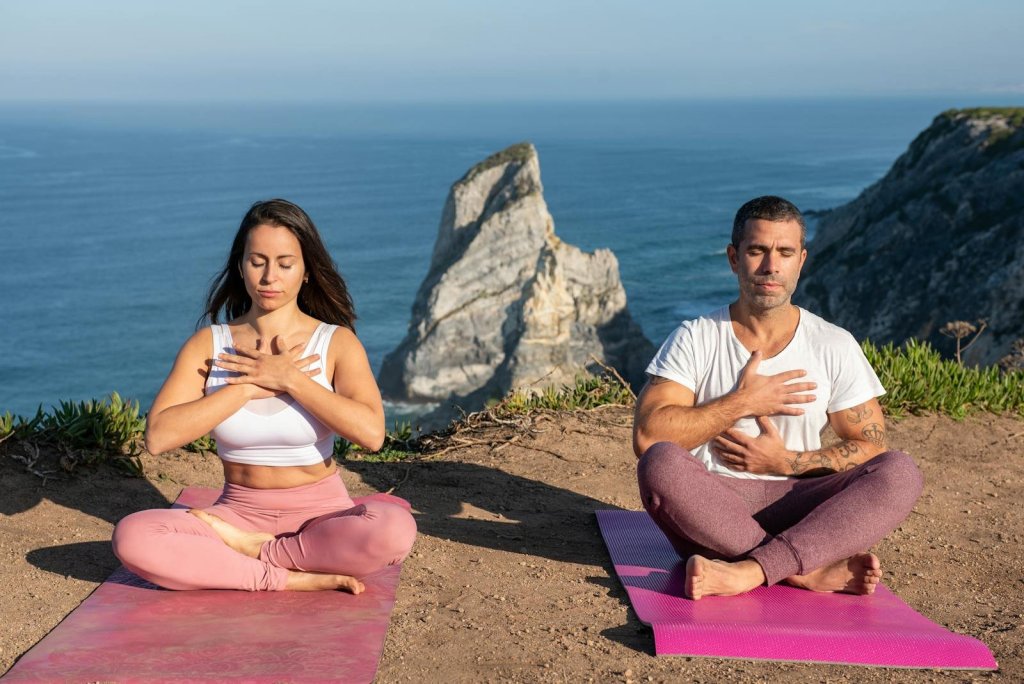
Understanding how to breathe more effectively is important because shallow or inefficient breathing can contribute to early fatigue, shortness of breath, and reduced exercise tolerance. The techniques below are widely recommended by respiratory health organizations and are designed to be safe, simple, and accessible for most people.
What Does “Increasing Lung Capacity” Really Mean?
When people talk about increasing lung capacity, they usually mean one or more of the following:
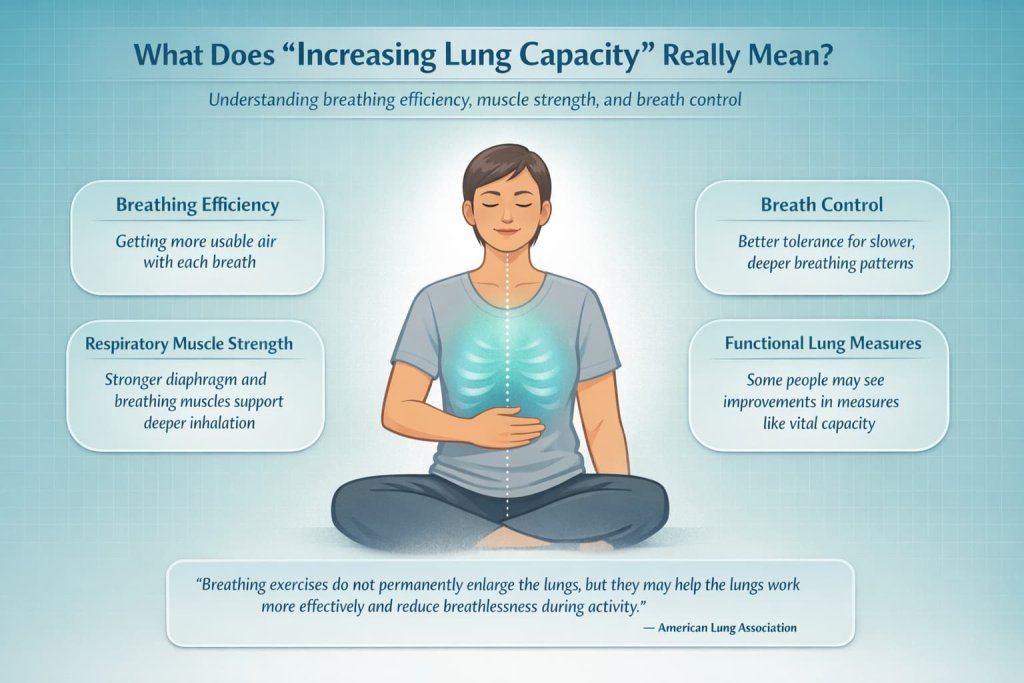
- Improving breathing efficiency (getting more air per breath)
- Strengthening the diaphragm and respiratory muscles
- Increasing breath control and tolerance for deeper breaths
- Improving measures like vital capacity in some individuals
According to the American Lung Association, breathing exercises do not permanently enlarge the lungs, but they may help your lungs work more effectively and reduce breathlessness during activity.
How Breathing Exercises May Help Increase Lung Capacity
Breathing exercises may help increase lung capacity by improving how efficiently your lungs and breathing muscles work, rather than by permanently enlarging the lungs themselves. In most adults, lung size is largely fixed, but breathing patterns, muscle strength, and breath control can change with consistent practice.
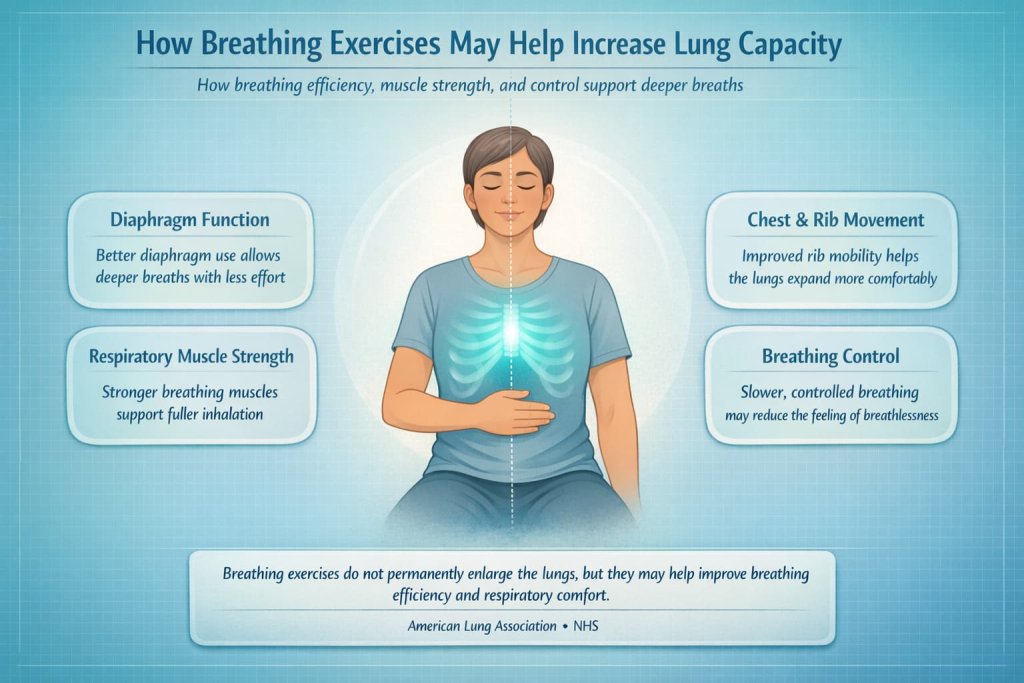
Regular breathing exercises may support:
- Better diaphragm function, allowing deeper breaths with less effort
- Stronger respiratory muscles, which can improve the ability to inhale more fully
- Improved chest and rib movement, helping the lungs expand more comfortably
- Slower, more controlled breathing, which may reduce the sensation of breathlessness
According to respiratory guidance from organizations such as the American Lung Association and the NHS, these techniques are often used to support breathing efficiency, exercise tolerance, and overall respiratory comfort. While results vary by individual, consistent practice may help you feel able to take fuller, deeper breaths during daily activities and physical exertion.
6 Best Breathing Exercises to Increase Lung Capacity
These breathing exercises focus on improving breathing efficiency, strengthening respiratory muscles, and helping you take deeper, more controlled breaths. Practiced consistently, they may support better breathing comfort during daily activities and exercise.
1. Diaphragmatic (Belly) Breathing
How to do it
- Sit or lie comfortably with one hand on your chest and one on your belly
- Inhale slowly through your nose, letting your belly rise
- Keep your chest relatively still
- Exhale gently through your nose or mouth
- Continue for 5–10 minutes
Why it works
This technique encourages deeper breaths by engaging the diaphragm more fully, which may improve breathing efficiency and reduce reliance on shallow chest breathing.
2. Pursed-Lip Breathing
How to do it
- Inhale slowly through your nose for about 2 seconds
- Purse your lips as if blowing out a candle
- Exhale slowly for about 4 seconds
- Repeat for several minutes
Why it works
Pursed-lip breathing helps slow your breathing rate and may keep airways open longer during exhalation, supporting better air exchange.
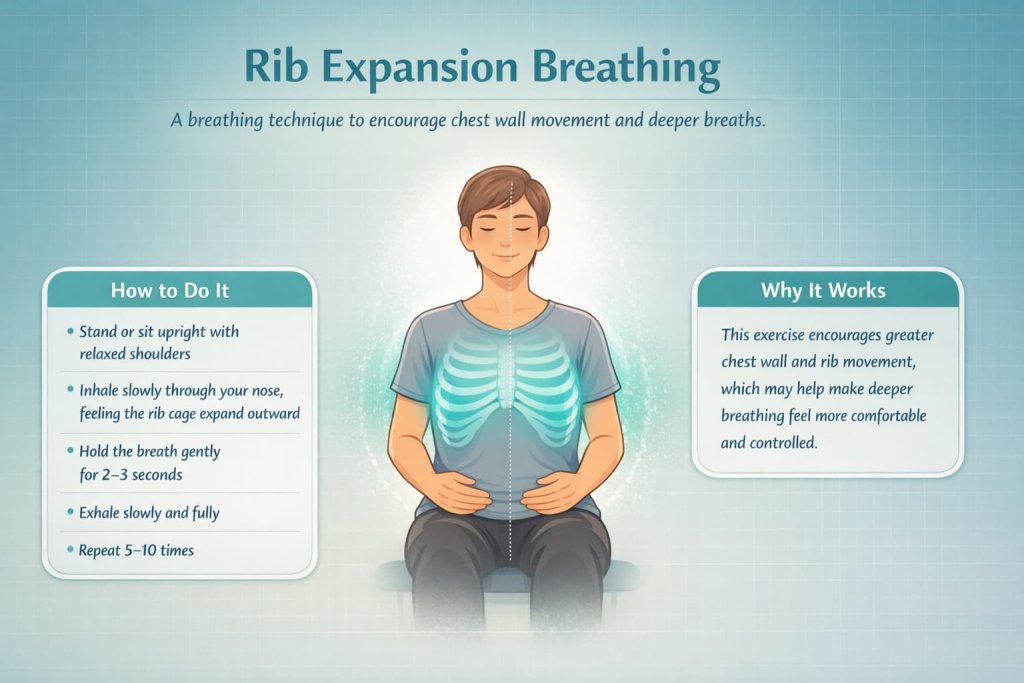
3. Rib Expansion Breathing
How to do it
- Stand or sit upright with relaxed shoulders
- Inhale deeply through your nose, focusing on expanding your rib cage sideways
- Hold the breath gently for 2–3 seconds
- Exhale slowly and fully
- Repeat 5–10 times
Why it works
This exercise promotes greater chest wall movement, which may help you feel more comfortable taking deeper breaths.
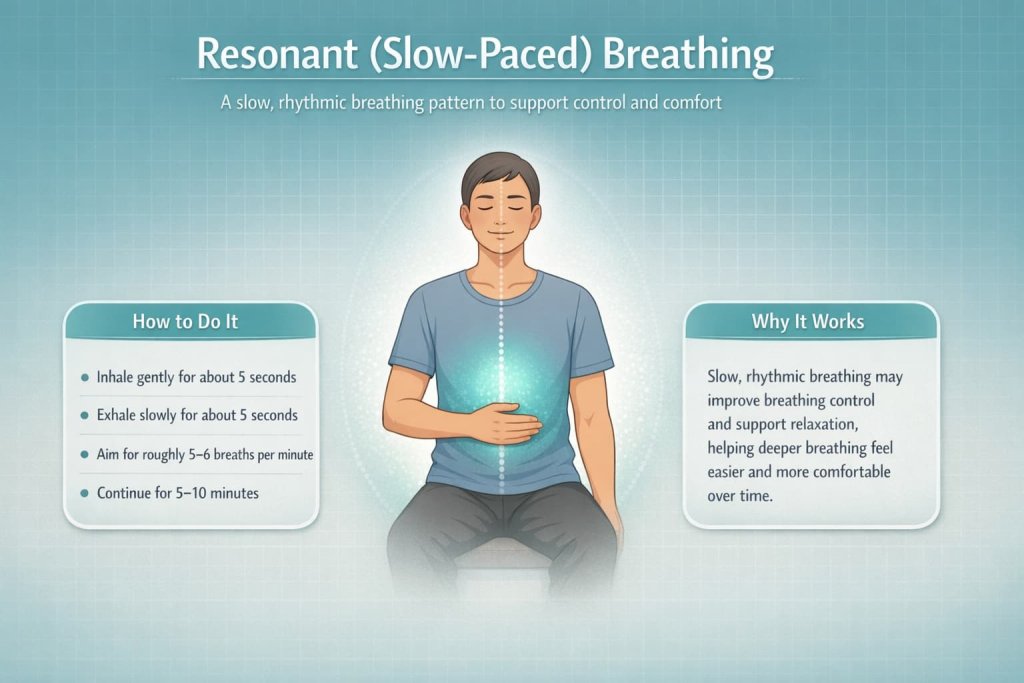
4. Resonant (Slow-Paced) Breathing
How to do it
- Inhale for about 5 seconds
- Exhale for about 5 seconds
- Aim for roughly 5–6 breaths per minute
- Continue for 5–10 minutes
Why it works
Slow, rhythmic breathing may improve breathing control and support relaxation, which can make deeper breathing feel easier over time.
5. Breath Stacking (Advanced Technique)
How to do it
- Take a small breath in through your nose
- Without exhaling, take another small sip of air
- Continue stacking breaths until your lungs feel comfortably full
- Hold briefly, then exhale slowly
- Perform only a few repetitions
Why it works
Breath stacking is used in some clinical settings to help increase the size of each breath and improve chest expansion. It should be performed gently and without strain.
6. Inspiratory Muscle Training (IMT)
How to do it
- Use a handheld inspiratory muscle trainer if available
- Inhale forcefully against resistance as instructed
- Complete short daily sessions (often 5–15 minutes)
- Follow device-specific guidance
Why it works
Research shows IMT may strengthen the muscles used for inhalation and can modestly improve measures related to breathing capacity when practiced consistently.
How Often Should You Practice Breathing Exercises?
Most respiratory health organizations recommend practicing breathing exercises:
- Daily or at least 5 days per week
- For 5–15 minutes per session
- Consistently over several weeks
The NHS notes that regular, gentle practice is more effective than occasional long sessions.
Who May Benefit Most From These Exercises?
Breathing exercises to increase lung capacity may be helpful for:
- People who experience shallow breathing from prolonged sitting or stress
- Individuals starting aerobic or endurance training
- Older adults seeking better breathing control
- People recovering from illness (with medical clearance)
How Long Does It Take to See Results?
The time it takes to notice benefits from breathing exercises depends on factors such as consistency, current fitness level, age, and overall respiratory health. Most people experience changes gradually rather than immediately.
General timelines reported in clinical and wellness guidance include:
- 1–2 weeks: Improved awareness of breathing patterns and better control during rest
- 3–4 weeks: Breathing may feel smoother and more comfortable during light activity
- 4–8 weeks: Measurable improvements in breathing efficiency or respiratory muscle strength may occur with regular practice
Health organizations emphasize that short, daily sessions are more effective than occasional long sessions. Practicing for just a few minutes each day may support steady, sustainable improvements over time.
If progress feels slow or breathing remains difficult, a healthcare professional can help determine whether additional evaluation or guided respiratory training is appropriate.
When to Be Cautious or Seek Professional Guidance
You should stop and seek medical advice if you experience:
- Dizziness or lightheadedness
- Chest pain
- Severe or worsening shortness of breath
Frequently Asked Questions
Can breathing exercises permanently increase lung size?
No. Lung size is mostly fixed, but breathing exercises may improve how efficiently your lungs function and how deeply you can breathe.
How long does it take to notice improvements?
Many people notice better breathing control within 2–4 weeks of consistent practice.
Are breathing exercises safe for everyone?
Most gentle techniques are safe, but people with chronic lung or heart conditions should consult a healthcare professional first.
Can athletes benefit from breathing exercises?
Yes. Improved breathing efficiency and respiratory muscle strength may support endurance and recovery.
Is nose breathing better than mouth breathing?
Nasal breathing is often recommended because it slows airflow and may improve breathing efficiency in many situations.
Do breathing exercises replace medical treatment?
No. They may support overall breathing health but are not a substitute for medical care.
Conclusion
Breathing exercises to increase lung capacity focus on improving breathing efficiency, strengthening respiratory muscles, and helping you breathe deeper with more control. When practiced consistently and gently, these techniques may support better daily breathing and physical performance.
If you want to breathe deeper and more comfortably, start with one or two exercises, practice them daily, and build consistency over time.
References
- Cleveland Clinic — Diaphragmatic Breathing (Belly Breathing)
- Cleveland Clinic — Pursed-Lip Breathing
- European Respiratory Society (Breathe) — Russo et al. (2017) Slow Breathing Review
- PubMed — Russo et al. (2017) Slow Breathing (Abstract/Index)
- PubMed — Laborde et al. (2022) Voluntary Slow Breathing Systematic Review + Meta-analysis
- PubMed — Tran et al. (2025) Inspiratory Muscle Training (IMT) Meta-analysis
- Frontiers — Torres-Castro et al. (2025) IMT Overview of Systematic Reviews