
Double chin exercises can help improve neck posture and strengthen the muscles under your chin and along your neck, which may make the jawline look more supported over time. They do not reliably “spot-reduce” fat under the chin, but they’re a safe, equipment-free way to build better head-and-neck alignment and muscle control.
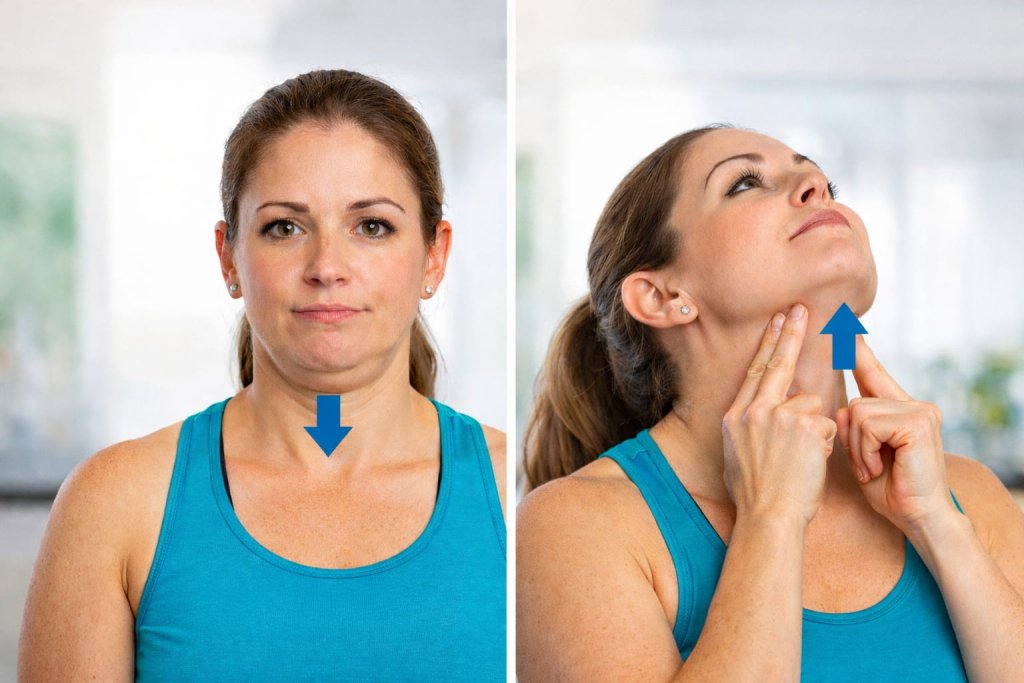
Understanding this matters because a “double chin” look is often a mix of posture (forward head position), muscle tone, genetics, and body-fat distribution. The goal of this routine is simple: train the neck and jaw area gently, improve posture, and avoid strain.
What causes a double chin look
A fuller area under the chin can come from one or more factors:
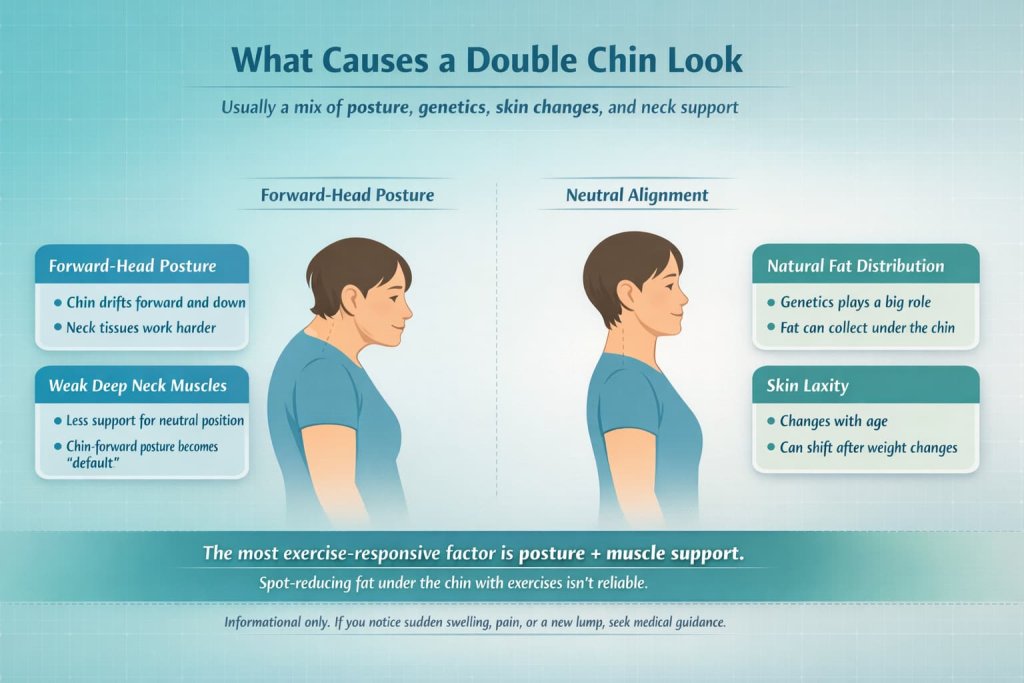
- Forward-head posture (chin drifting forward and down)
- Natural fat distribution (genetics plays a big role)
- Skin laxity (changes with age and weight changes)
- Weak deep neck muscles (less support for neutral alignment)
The most exercise-responsive piece is usually posture + muscle support, not fat loss in one specific area.
What results you can realistically expect from double chin exercises
With consistent practice, many people notice:
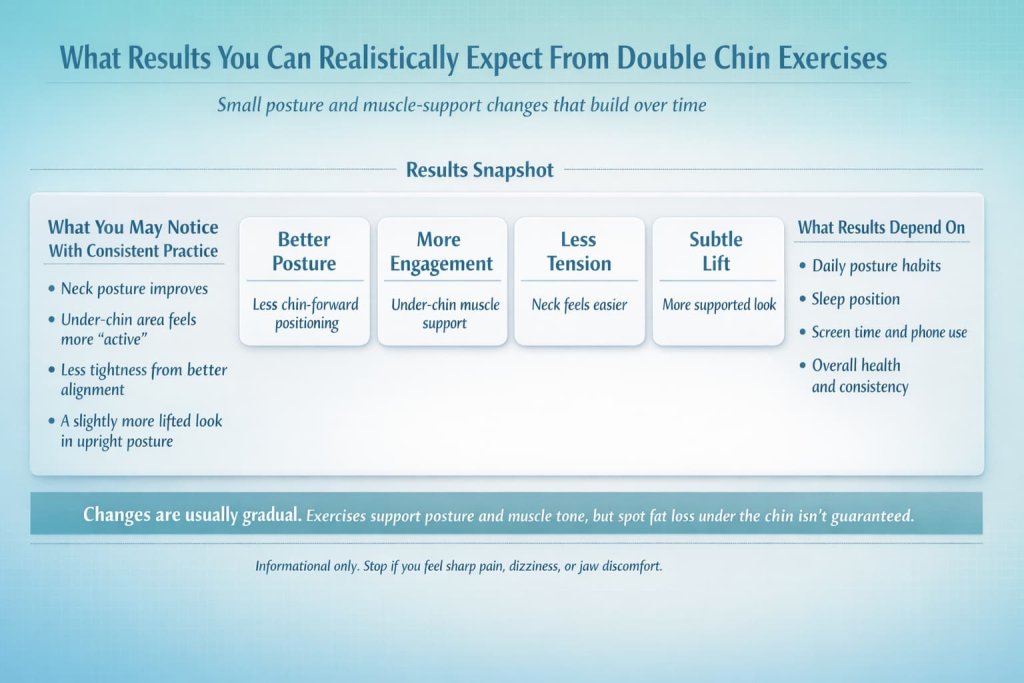
- Better neck posture (less “chin-forward” positioning)
- Improved under-chin muscle engagement
- Less neck tension from better alignment
- A subtly more “lifted” look when standing and sitting tall
Keep expectations realistic: changes are typically gradual and depend on posture habits, sleep position, screen time, and overall health.
6 best double chin exercises
These 6 double chin exercises focus on posture and strengthening the muscles under your chin and along your neck to support a tighter-looking jawline at home. Do them gently and consistently for best results, and stop if you feel sharp pain or jaw discomfort.
1. Chin Tuck Hold (Deep Neck Flexor Builder)
How to do it:
- Sit or stand tall with ribs stacked over hips
- Look straight ahead (not up)
- Glide your head straight back (like making a gentle “double chin”)
- Hold 5–10 seconds while breathing normally
- Repeat 8–10 times
Why it works:
This trains the deep neck flexors that help pull your head back into neutral posture, which can reduce “chin-forward” positioning and improve the way the jawline sits in daily posture.
Muscles worked:
Deep neck flexors and upper neck stabilizers.
Trainer Tip:
Think “back,” not “down.” If your chin drops toward your chest, reset and make the glide smaller so you feel control instead of strain.
2. Wall Chin Tuck + Posture Reset
How to do it:
- Stand with your back against a wall (butt, upper back, and head lightly touching if possible)
- Do a small chin tuck (head glides back)
- Hold 5–8 seconds
- Repeat 6–8 reps
Why it works:
The wall acts like a posture guide, helping you feel what “neutral” alignment is and making it easier to avoid over-tilting or compensating with the lower back.
Muscles worked:
Deep neck flexors plus mid-back postural muscles that support upright posture.
Trainer Tip:
Keep shoulders relaxed and down. If you feel neck strain or jaw tension, shorten the hold and reduce how far you glide back.
3. Tongue-to-Roof Press (Under-Chin Activation)
How to do it:
- Close your lips gently (teeth not clenched)
- Press your entire tongue flat to the roof of your mouth
- While pressing, swallow once and keep the tongue pressure
- Hold 5 seconds
- Repeat 8–10 times
Why it works:
Tongue posture can help recruit muscles under the jaw and encourage better head-and-neck positioning, which may support a more “lifted” look when combined with good posture.
Muscles worked:
Suprahyoid group (under-chin support muscles) and tongue stabilizers.
Trainer Tip:
Keep it gentle. If you cramp, shorten the hold to 2–3 seconds and build up gradually over a week or two.
4. Neck Flexion Isometric (Supine Hold)
How to do it:
- Lie on your back with knees bent
- Do a small chin tuck first
- Lift your head just 1–2 inches (small movement)
- Hold 3–5 seconds, then lower
- Repeat 6–10 reps
Why it works:
This builds strength and endurance in the front-of-neck support system without big motion, which can improve head control and reduce the tendency to rest in a chin-forward posture.
Muscles worked:
Deep neck flexors, sternocleidomastoid (lightly), and neck stabilizers.
Trainer Tip:
If your neck feels like it’s “gripping,” lower your head and switch back to chin tucks only until you can keep the effort smooth and controlled.
5. Platysma “Neck Tightener” (Gentle Tension Hold)
How to do it:
- Sit or stand tall
- Gently press your lips together
- Pull the corners of your mouth slightly down and back (subtle)
- Feel the front of the neck lightly tighten
- Hold 5 seconds
- Repeat 8–12 reps
Why it works:
The platysma is a superficial neck muscle that can respond to light, controlled holds. When paired with upright posture, it may improve how the front of the neck feels and looks during daily movement.
Muscles worked:
Platysma and the lower face/neck tension system.
Trainer Tip:
Avoid overdoing facial tension. This should feel like mild firming, not a hard grimace or jaw clench.
6. Jawline Lift (Upward Reach Without Neck Compression)
How to do it:
- Stand tall and lengthen through the back of your neck
- Tilt your head slightly back (small range)
- Push your lower jaw forward gently (no pain)
- Hold 3–5 seconds
- Repeat 6–10 reps
Why it works:
This targets the under-chin area and jaw control while reinforcing upright posture, which can help the neck look more supported when you’re standing and sitting tall.
Muscles worked:
Under-chin support muscles, jaw stabilizers, and the front of the neck (lightly).
Trainer Tip:
Keep the range small. If you feel pinching in the neck or jaw discomfort, stop and switch to tongue-to-roof presses and chin tucks instead.
Safety first
Stop and scale down if you notice:
- Sharp pain in the neck or jaw
- Dizziness, headache, or tingling
- Clicking or pain at the jaw joint (TMJ discomfort)
- Symptoms that worsen day to day
Use gentle effort. These are small muscles and they respond best to controlled reps, not force.
How often to do this routine
A practical schedule:
- 4–6 days per week
- 5–8 minutes total
- Choose 3–4 exercises per session, or do all 6 if it feels easy
Progress by increasing hold time first, then reps.
Common mistakes that make double chin exercises less effective
- Doing big, aggressive movements instead of small controlled reps
- Tilting the head back too far (compresses the neck)
- Clenching the jaw or teeth
- Holding your breath
- Only training exercises while keeping the same “chin-forward” posture all day
The fastest improvement usually comes from fixing screen posture plus doing chin tucks regularly.
Quick daily posture habits that support better jawline alignment
- Raise your screen to eye level when possible
- Keep a “long neck” when texting (phone higher, chin neutral)
- Do 1 set of chin tucks during study breaks
- Sleep with a pillow height that keeps your neck neutral (not sharply flexed)
When to talk to a clinician
Consider medical guidance if you have:
- Persistent neck pain, headaches, dizziness, or nerve symptoms
- Jaw joint pain (TMJ) that worsens with facial work
- A sudden new swelling or lump under the chin/neck
- Concerns about appearance that are causing significant stress
Also, it helps to know the limits of exercise: if the “double chin” is mostly submental fat, overall lifestyle factors and genetics matter most, and evidence-based medical options are typically discussed in clinical resources such as Johns Hopkins Medicine.
FAQs
Can double chin exercises get rid of a double chin?
They can strengthen and tone the muscles under the chin and improve posture, which may improve appearance over time. They don’t reliably remove fat from one area.
How long until I see results?
Many people notice posture changes in 2–4 weeks, while visible changes often take 6–12 weeks of consistent practice.
How many minutes a day should I do double chin exercises?
A focused routine of 5–8 minutes most days is enough for muscle and posture training.
Are double chin exercises safe for teens?
Usually yes when done gently, but avoid pushing through pain or jaw discomfort. If you have neck pain, dizziness, or jaw issues, talk to a clinician.
Do jaw exercisers or chewing gum help?
They may strengthen chewing muscles, but they can also irritate the jaw joint for some people. If you get clicking or jaw pain, skip them.
What’s the most effective exercise in this list?
For most people, chin tucks are the best starting point because they directly target forward-head posture and deep neck support.
What if my “double chin” is mostly fat?
Then overall health habits (sleep, activity, nutrition) and genetics matter most. For adults who want targeted reduction, one FDA-approved option sometimes discussed with clinicians is deoxycholic acid injections for submental fat as described in the official FDA labeling.
Conclusion
Double chin exercises work best when you treat them as posture + neck muscle training, not a quick fix. Start with chin tucks, add tongue presses and gentle holds, and keep your daily screen posture in check. If you stay consistent for 6–12 weeks, you’ll give your neck and jawline the best chance to look more supported.
This content is for informational purposes only and not medical advice.
References
- National Center for Biotechnology Information. (2018). Association of facial exercise with the appearance of aging (full text). PubMed Central. PubMed Central
- Saeed, A., Shafique, M., & colleagues. (2021). Efficacy of deep cervical flexor muscle training on neck pain and disability: A systematic review and meta-analysis. PubMed. PubMed
- National Center for Biotechnology Information. (2020). Effects of deep cervical flexor training on forward head posture and neck pain (full text). PubMed Central. PubMed Central
- StatPearls Publishing. (2023). Anatomy, head and neck, platysma. NCBI Bookshelf. StatPearls (NCBI Bookshelf) — Platysma
- StatPearls Publishing. (2025). Anatomy, head and neck: Suprahyoid muscles. NCBI Bookshelf. StatPearls (NCBI Bookshelf) — Suprahyoid Muscles