
Dumbbell workouts are one of the most effective ways for women to tone, strengthen, and sculpt lean muscles — without bulking up.
Whether you train at home or in the gym, dumbbells deliver full-body results by engaging stabilizer muscles, boosting metabolism, and building strength safely.
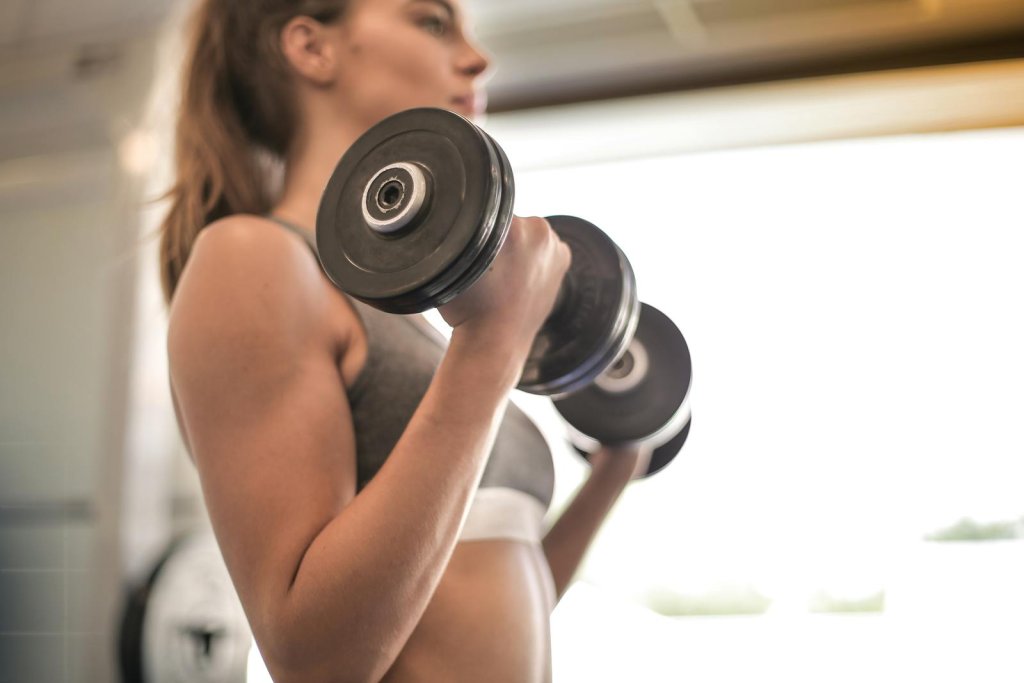
According to Prevention Magazine (2024), just 30 minutes of weight training twice a week can noticeably improve muscle definition and strength in women. This makes dumbbell workouts an efficient, accessible, and science-backed path to better fitness.
In this guide, you’ll learn the 15 best dumbbell exercises for women, how to do them with proper form, the muscles they target, and trainer-approved tips for getting faster, lasting results.
15 Best Dumbbell Workouts for Women
Below are the most effective dumbbell exercises for sculpting a lean, toned, and strong physique — from your arms to your legs and core.
1. Dumbbell Squat
Why it works: Builds total lower-body strength while toning your thighs and glutes — a must for lean, sculpted legs.
Muscles worked: Quadriceps, hamstrings, glutes, core.
How to do it:
- Hold a dumbbell in each hand at shoulder height or by your sides.
- Lower hips back and down until thighs are parallel to the floor.
- Drive through heels to return to standing.
Trainer Tip: Keep your chest tall and knees tracking over toes — never let them cave inward.
2. Dumbbell Romanian Deadlift
Why it works: Targets hamstrings and glutes while reinforcing proper hip hinge movement and posture.
Muscles worked: Glutes, hamstrings, lower back.
How to do it:
- Hold dumbbells in front of thighs, palms facing you.
- Hinge at hips, lowering weights toward mid-shin while keeping your back flat.
- Squeeze glutes to return upright.
Trainer Tip: Keep your spine neutral and move slowly — feel the stretch in your hamstrings.
3. Dumbbell Reverse Lunge
Why it works: Strengthens each leg independently to fix muscle imbalances and improve stability.
Muscles worked: Quads, hamstrings, glutes, calves.
How to do it:
- Hold dumbbells at your sides.
- Step one leg back and lower both knees to 90°.
- Push through your front heel to stand and alternate legs.
Trainer Tip: Keep your chest upright and core tight for better balance and control.
4. Dumbbell Chest Press
Why it works: Strengthens the chest, shoulders, and triceps while improving upper-body tone.
Muscles worked: Pectorals, anterior deltoids, triceps.
How to do it:
- Lie on a flat bench, holding dumbbells above your chest.
- Lower slowly until elbows are at 90°, then press back up.
Trainer Tip: Exhale as you press up and avoid locking your elbows — keep steady tension.
5. Dumbbell Bent-Over Row
Why it works: Builds a stronger, more defined back and corrects posture from desk work.
Muscles worked: Lats, rhomboids, traps, rear delts, core.
How to do it:
- Hinge forward with a straight back, dumbbells hanging below shoulders.
- Pull weights to your ribcage, squeezing shoulder blades together.
- Lower slowly and repeat.
Trainer Tip: Keep neck neutral — look slightly ahead, not up.
6. Dumbbell Shoulder Press
Why it works: Tones and defines shoulders while improving upper-body balance and strength.
Muscles worked: Deltoids, triceps, upper chest.
How to do it:
- Sit or stand with dumbbells at shoulder level, palms forward.
- Press weights overhead until arms are straight.
- Lower with control.
Trainer Tip: Engage your core to prevent lower-back arching.
7. Dumbbell Bicep Curl
Why it works: Isolates the biceps to build strength and arm definition.
Muscles worked: Biceps brachii, brachialis, forearms.
How to do it:
- Hold dumbbells at your sides, palms facing forward.
- Curl weights toward your shoulders, keeping elbows close.
- Lower slowly to starting position.
Trainer Tip: Avoid swinging — control each rep for maximum tension.
8. Dumbbell Tricep Kickback
Why it works: Firms the back of the arms and improves definition — great for eliminating flabby areas.
Muscles worked: Triceps brachii.
How to do it:
- Hinge forward slightly with dumbbells at your sides.
- Bend elbows to 90°, then extend arms straight back.
- Squeeze triceps before returning to start.
Trainer Tip: Keep upper arms still — only move your forearms.
9. Dumbbell Lateral Raise
Why it works: Shapes and sculpts the shoulders, adding width and aesthetic balance.
Muscles worked: Lateral deltoids.
How to do it:
- Stand with dumbbells by your sides, elbows slightly bent.
- Lift weights out to shoulder height.
- Lower slowly with control.
Trainer Tip: Don’t lift above shoulder level — that keeps focus on delts, not traps.
10. Dumbbell Step-Up
Why it works: Strengthens legs and glutes while improving single-leg stability and coordination.
Muscles worked: Quads, glutes, hamstrings, calves.
How to do it:
- Hold dumbbells at your sides.
- Step onto a sturdy bench or box with one foot.
- Drive through the heel to stand, then step down. Alternate sides.
Trainer Tip: Control both the upward and downward movement — no hopping.
11. Dumbbell Glute Bridge Press
Why it works: Combines glute activation with chest strength for a full-body challenge.
Muscles worked: Glutes, chest, triceps, core.
How to do it:
- Lie on your back, knees bent, dumbbells above your chest.
- Lift hips to form a straight line from shoulders to knees.
- Perform chest presses while keeping hips up.
Trainer Tip: Maintain glute squeeze — don’t let hips sag
12. Dumbbell Plank Row
Why it works: Builds upper-back strength and a rock-solid core simultaneously.
Muscles worked: Core, lats, traps, shoulders.
How to do it:
- Get into a plank with hands gripping dumbbells.
- Row one arm up toward your ribs while stabilizing with the other.
- Alternate arms.
Trainer Tip: Keep hips level — avoid twisting your torso.
13. Dumbbell Russian Twist
Why it works: Strengthens obliques, improves rotational control, and sculpts the waistline.
Muscles worked: Obliques, rectus abdominis, transverse abdominis.
How to do it:
- Sit with knees bent and lean back slightly.
- Hold one dumbbell close to your chest.
- Twist torso side to side, tapping the dumbbell near each hip.
Trainer Tip: Keep core tight and move slowly — quality over speed.
14. Dumbbell Sumo Squat to Upright Row
Why it works: A compound move that boosts calorie burn and tones the entire body.
Muscles worked: Glutes, quads, traps, shoulders, core.
How to do it:
- Hold one dumbbell with both hands between your legs.
- Lower into a wide-stance squat.
- As you rise, pull dumbbell up to chest height, elbows leading.
Trainer Tip: Keep your back straight and elbows high during the pull.
15. Dumbbell Deadlift to Curl to Press
Why it works: Combines three powerful movements into one for total-body strength and fat burn.
Muscles worked: Glutes, hamstrings, biceps, shoulders, core.
How to do it:
- Perform a deadlift to lift dumbbells to your thighs.
- Curl the weights up, then press overhead.
- Reverse the motion to return to start.
Trainer Tip: Flow through each phase smoothly — avoid jerking or rushing.
How Often Should Women Do Dumbbell Workouts?
- Beginner: 2 sessions per week (full-body).
- Intermediate: 3 sessions per week, split upper/lower.
- Advanced: 4–5 sessions weekly, focusing on progressive overload.
👉 Each workout should last 30–45 minutes, including warm-up and cool-down.
Common Mistakes to Avoid
- Using weights that are too light — challenge your muscles.
- Skipping rest days — recovery builds muscle.
- Neglecting form — quality beats quantity.
- Forgetting nutrition — protein supports muscle repair.
Sample Dumbbell Workout Plan for Women
| Level | Focus | Sessions/Week | Example Split |
|---|---|---|---|
| Beginner | Form & full-body tone | 2 | Full-body (Mon & Thu) |
| Intermediate | Strength & endurance | 3 | Upper/Lower/Full |
| Advanced | Sculpting & definition | 4–5 | Push/Pull/Legs/Core |
💡 Tip: Aim for 10–12 reps per exercise, 3 sets each. Rest 45–60 seconds between sets.
FAQs
1. Will dumbbell workouts make me bulky?
No — women lack the testosterone levels to gain large muscle mass. Dumbbells create lean, toned definition.
2. Can I do dumbbell workouts at home?
Absolutely. All 15 moves require minimal space and a single dumbbell pair.
3. What dumbbell weight should I start with?
Beginners can start with 5–10 lb and increase gradually as strength improves.
4. How soon will I see results?
Consistency brings visible tone in 4–6 weeks with proper nutrition.
5. Should I lift heavy or light for toning?
Use a weight that challenges you for 8–12 reps — that’s the sweet spot for toning and strength.
6. Do I need to do cardio too?
Cardio complements strength training — 2–3 short cardio sessions weekly enhance fat burn.
7. Is it safe for women over 40?
Yes — resistance training is vital for women over 40 to prevent muscle loss and support bone health.
Conclusion
Dumbbell workouts are a simple, powerful, and proven way for women to build strength, tone muscles, and boost confidence — all without heavy machines or gym memberships.
Start with two sessions a week, focus on form, and progressively challenge yourself.
Strong looks beautiful — and it starts with a pair of dumbbells.
References
- American Heart Association — 2024 Scientific Statement (Circulation)
Resistance training is safe and effective for adults with and without CVD and improves major cardio-metabolic risk factors.
Read on AHA Journals. - CDC — Adult Physical Activity Guidelines
Adults should get 150 min/wk moderate aerobic activity plus ≥2 days/wk muscle-strengthening covering all major muscle groups.
Read the CDC guidance. - WHO — Physical Activity Fact Sheet (Updated June 26, 2024)
Global guidance: 150–300 min/wk moderate (or 75–150 vigorous) and muscle-strengthening on ≥2 days/wk.
Read the WHO fact sheet. - Harvard Health — Resistance Training & Heart Health (Apr 1, 2024)
Summarizes evidence that resistance training improves blood pressure, blood sugar, lipids, and body composition.
Read Harvard Health. - Harvard T.H. Chan School — Strength Training & Mortality (Meta-analysis)
Doing ~30–60 min/week of strength training is linked to lower all-cause, CVD, and cancer mortality.
Read Harvard Chan summary.