
Hand and finger exercises help improve mobility, support strength, and may reduce stiffness by keeping your joints and tendons moving regularly. These movements are simple, joint-friendly, and can be done anywhere, making them useful for anyone who types often, performs repetitive tasks, or experiences mild hand tightness.
Understanding these exercises matters because hand mobility supports everyday functions like gripping, lifting, carrying, typing, cooking, and personal care. A consistent routine often includes mobility work, stretching, and light strengthening. These exercises may also support comfort for individuals managing conditions such as arthritis or carpal tunnel—when done appropriately.
What Are Hand and Finger Exercises?
Hand and finger exercises are simple mobility, stretching, and strengthening movements designed to keep your hand joints moving comfortably and maintain functional grip and dexterity.
They typically include:
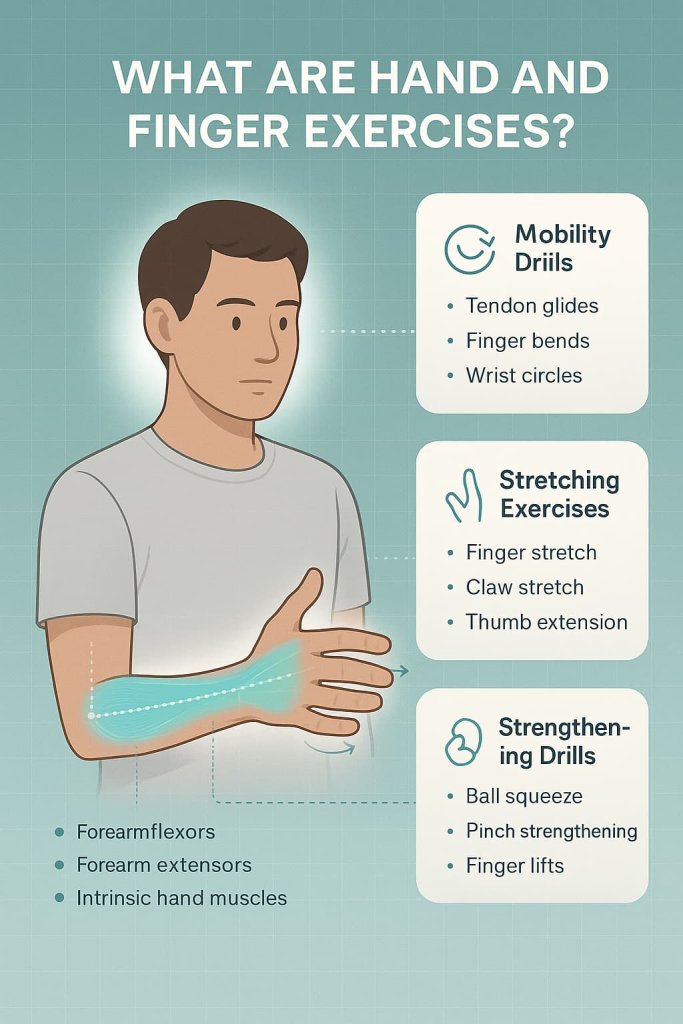
- Mobility drills: tendon glides, finger bends, wrist circles
- Stretching exercises: finger stretch, claw stretch, thumb extension
- Strengthening drills: ball squeeze, pinch strengthening, finger lifts
These exercises help maintain joint movement, muscle balance, and coordination without heavy resistance. They are often used in physical therapy, occupational therapy, and routine home care.
12 Best Hand and Finger Exercises to Improve Strength, Flexibility & Mobility
Strengthening your hands doesn’t require equipment — just simple, gentle movements you can do anywhere. These 12 exercises target mobility, coordination, and grip strength to support pain-free daily function.
1. Fist Stretch (Gentle Fist Exercise)
Why it works:
The fist stretch helps warm up the hand by increasing circulation through the fingers and palm. It supports smoother joint movement and may reduce the stiff, tight feeling that often comes from typing, gripping tools, or morning stiffness.
Muscles worked:
Intrinsic hand muscles, flexor tendons, flexor digitorum superficialis and profundus.
How to do it:
- Start with your hand open and fingers extended.
- Slowly close your fingers into a loose, gentle fist without squeezing tightly.
- Open your hand again, spreading your fingers comfortably wide.
- Repeat 10 to 12 times per hand.
Trainer Tip:
Avoid clenching. Keeping the fist light ensures you target mobility instead of compressing irritated joints.
2. Finger Stretch (Flat Finger Extension)
Why it works:
This stretch lengthens the soft tissues around the finger joints and supports smoother motion when bending and straightening. It may help reduce general finger tightness from prolonged task use.
Muscles worked:
Finger extensors, flexor tendons, intrinsic stabilizers.
How to do it:
- Place your hand flat on a table or your thigh.
- Gently straighten your fingers while keeping them relaxed.
- Hold the position for 5 to 10 seconds.
- Release and repeat 8 to 10 times.
Trainer Tip:
Maintain a neutral wrist position to avoid putting stress on the wrist joint.
3. Claw Stretch (Hook Fist)
Why it works:
The claw stretch promotes mobility in the middle and end finger joints, supporting fine-motor tasks like gripping, typing, and buttoning.
Muscles worked:
Intrinsic hand muscles, flexor tendons, lumbricals.
How to do it:
- Hold your hand up with your palm facing you.
- Bend your fingertips downward so your hand forms a “claw” shape.
- Keep your knuckles upright.
- Hold for 5 seconds.
- Repeat 8 to 10 reps.
Trainer Tip:
Move slowly to ensure all finger joints participate evenly without strain.
4. Tendon Glide Series
Why it works:
This sequence helps the flexor tendons glide through their natural pathways, which supports mobility and may reduce stiffness linked to repetitive hand use. It is commonly recommended in therapy for flexibility and comfort.
Muscles worked:
Flexor tendons, intrinsic hand muscles, lumbricals.
How to do it:
Move through the following positions:
- Straight hand
- Hook fist
- Tabletop position
- Full fist
- Straight fist
Perform 3 to 5 slow rounds per hand.
Trainer Tip:
Stop immediately if you feel sharp pain or nerve-like sensations such as tingling or numbness.
5. Finger Lifts
Why it works:
This drill strengthens the small muscles that control individual finger movement, supporting coordination, typing accuracy, and playing musical instruments.
Muscles worked:
Intrinsic hand muscles, finger extensors.
How to do it:
- Place your hand flat on a table.
- Lift one finger at a time as high as comfortably possible.
- Hold for 1 to 2 seconds.
- Lower slowly.
- Repeat 10 reps per finger.
Trainer Tip:
Focus on smooth lifts rather than height. Even small controlled movements are effective.
6. Thumb-to-Fingertip Touches
Why it works:
This exercise supports precision grip and coordination, improving tasks like writing, pinching, picking up small objects, and daily hand dexterity.
Muscles worked:
Thumb flexors, opponens pollicis, lumbricals.
How to do it:
- Touch your thumb to each fingertip one at a time.
- Create a rounded “O” shape with each touch.
- Hold briefly and release.
- Repeat 2 to 3 rounds per hand.
Trainer Tip:
Move slowly to refine control and improve fine-motor patterns.
7. Thumb Extension Stretch
Why it works:
Extending the thumb away from the palm helps counteract tightness from gripping, texting, and repetitive thumb motions. This stretch supports comfortable thumb mobility.
Muscles worked:
Thumb extensors, abductor pollicis longus.
How to do it:
- With your palm relaxed, gently pull your thumb outward.
- Hold 10 seconds.
- Release and repeat 5 to 8 times per hand.
Trainer Tip:
Stretch to mild tension only. Overstretching can irritate the thumb joint.
8. Grip Squeeze (Soft Ball or Towel)
Why it works:
Strengthens the muscles responsible for gripping and holding objects. This exercise may help support daily activities such as opening jars, carrying bags, and using tools.
Muscles worked:
Forearm flexors, intrinsic hand muscles, flexor digitorum group.
How to do it:
- Hold a soft foam ball or rolled towel in your hand.
- Squeeze gently for 3 to 5 seconds.
- Release slowly.
- Repeat 10 reps per hand.
Trainer Tip:
Choose a soft item. Avoid firm objects that require high force, which can strain irritated joints.
9. Pinch Strengthening
Why it works:
Improves thumb and finger coordination for precision-based tasks such as writing, fastening buttons, and lifting small items.
Muscles worked:
Thumb flexors, adductor pollicis, intrinsic hand muscles.
How to do it:
- Pinch a folded towel, putty, or soft clothespin.
- Hold for about 3 seconds.
- Release slowly.
- Repeat 8 to 10 reps.
Trainer Tip:
Use a soft or moderate-resistance material to avoid overloading the thumb joint.
10. Finger Abduction and Adduction (Finger Spreads)
Why it works:
Strengthens the small stabilizing muscles that help spread and close the fingers, supporting controlled, coordinated finger movement.
Muscles worked:
Interossei muscles, intrinsic hand muscles.
How to do it:
- Spread your fingers wide apart.
- Bring them back together slowly.
- Repeat 10 to 12 reps.
Trainer Tip:
Relax your wrist. The movement should come from your fingers only.
11. Wrist Flexion and Extension Stretch
Why it works:
Supports wrist flexibility, which contributes to overall hand function and reduces tension from typing, gripping, or repetitive wrist positions.
Muscles worked:
Forearm flexors, forearm extensors.
How to do it:
- Extend your arm forward with your palm facing down.
- Use the opposite hand to gently bend your wrist downward.
- Hold for 10 seconds.
- Reverse direction and bend the wrist upward.
- Hold for 10 seconds.
- Repeat 3 to 5 times.
Trainer Tip:
Use gentle pressure only. The stretch should feel mild and comfortable.
12. Median Nerve Glide (Gentle Variation)
Why it works:
This controlled movement pattern supports nerve mobility in the wrist and forearm, helpful for individuals experiencing mild tightness from repetitive hand use. It does not diagnose or treat nerve conditions but may support comfort.
Muscles worked:
Minimal; focuses on nerve movement rather than muscle strength.
How to do it:
- Start with your arm at your side and elbow bent.
- Open your palm and extend your fingers.
- Gently move from a bent wrist to neutral, then to a light extension.
- Keep the motion small and smooth.
- Perform 5 to 8 slow repetitions.
Trainer Tip:
Stop immediately if you notice increasing numbness, tingling, or discomfort.
Safety Tips Before Starting Hand and Finger Exercises
- Start with gentle, pain-free movements.
- Avoid forcing stiff or swollen joints.
- Mild stretch is okay; sharp pain is not.
- During flare-ups (e.g., arthritis), keep exercises lighter.
- If numbness or weakness is present, consult a healthcare professional.
How Often Should You Do Hand and Finger Exercises?
Most people can safely perform gentle hand and finger exercises daily, especially mobility movements like tendon glides, finger stretches, and thumb movements. These drills use light range-of-motion patterns that do not place significant stress on the joints when performed comfortably.
A safe general guideline:
- Mobility exercises: 1–2 times per day (light and pain-free)
- Stretching exercises: Daily or as needed
- Strengthening exercises: 3–4 days per week, allowing rest between sessions for comfort
- Repetitions: 8–12 slow, controlled repetitions per exercise
If you experience mild morning stiffness or desk-related hand fatigue, brief mobility work throughout the day may help support comfort. Always keep movements gentle and avoid forcing any position.
These recommendations align with typical guidance from physical therapists and occupational therapists for joint-friendly hand care routines.
Who Should Avoid or Modify These Exercises
Avoid or modify if you have:
- Recent hand, wrist, or thumb surgery
- Significant joint swelling
- Severe arthritis deformity
- Persistent numbness or tingling
- Suspected nerve entrapment without medical evaluation
Seek medical guidance if unsure—it ensures safety and appropriate progression.
When to See a Doctor or Hand Therapist
Because hand and wrist issues can involve joints, tendons, ligaments, or nerves, it is important to seek medical guidance if symptoms do not improve or worsen over time. A doctor or certified hand therapist can provide a personalized assessment and recommend exercises or treatment options tailored to your condition.
Seek professional evaluation if you experience:
- Persistent numbness, tingling, or burning sensations in the hand or fingers
- Increasing weakness or difficulty gripping objects
- Significant swelling, redness, or heat around a joint
- Sharp or worsening pain during or after exercises
- Visible deformity or joint changes
- Symptoms related to an injury, fall, or sudden onset of pain
- Nighttime symptoms that interrupt sleep (common in nerve-related conditions)
Individuals recovering from hand or wrist surgery, or those with advanced arthritis, carpal tunnel syndrome, or nerve compression, should consult a clinician before starting a new hand-exercise routine.
Conclusion
Hand and finger exercises are simple, effective tools to support joint mobility, hand strength, and daily comfort. By practicing these movements consistently and staying within a pain-free range, you can enhance dexterity, grip function, and everyday hand use. Start with a few exercises, warm up gently, and progress gradually based on comfort.
References
- Mayo Clinic – Hand Exercises for People with Arthritis
General hand and finger exercises (fist, fingertip touch, thumb moves) that closely match your content. - Arthritis Foundation – 9 Exercises to Help Hand Arthritis
Clear explanations of why hand exercises matter and how they may help symptoms and function. - Abdolrazaghi HA et al. – Effectiveness of Tendon and Nerve Gliding Exercises in Mild Carpal Tunnel Syndrome
Research backing your inclusion of tendon and nerve glides for wrist and hand symptoms. - Wulandari R et al. – Nerve Tendon Gliding Exercise to Reduce Pain in Carpal Tunnel Syndrome
Randomized trial supporting nerve–tendon gliding to reduce pain and improve function in CTS. - Arthritis Australia – Hand Exercises (Exercise Sheet PDF)
Practical exercise sheet with many of the same drills: making a fist, finger bends, thumb moves, and safety cues.