
Horizontal pull exercises are rowing-style movements that strengthen your upper and mid-back, train your arms, and help support better posture by building the muscles that control the shoulder blades. They matter because many people do far more pressing than pulling, which can leave the upper body less balanced over time. The good news is that the right mix of rows can improve back strength, support shoulder function, and fit almost any training level.
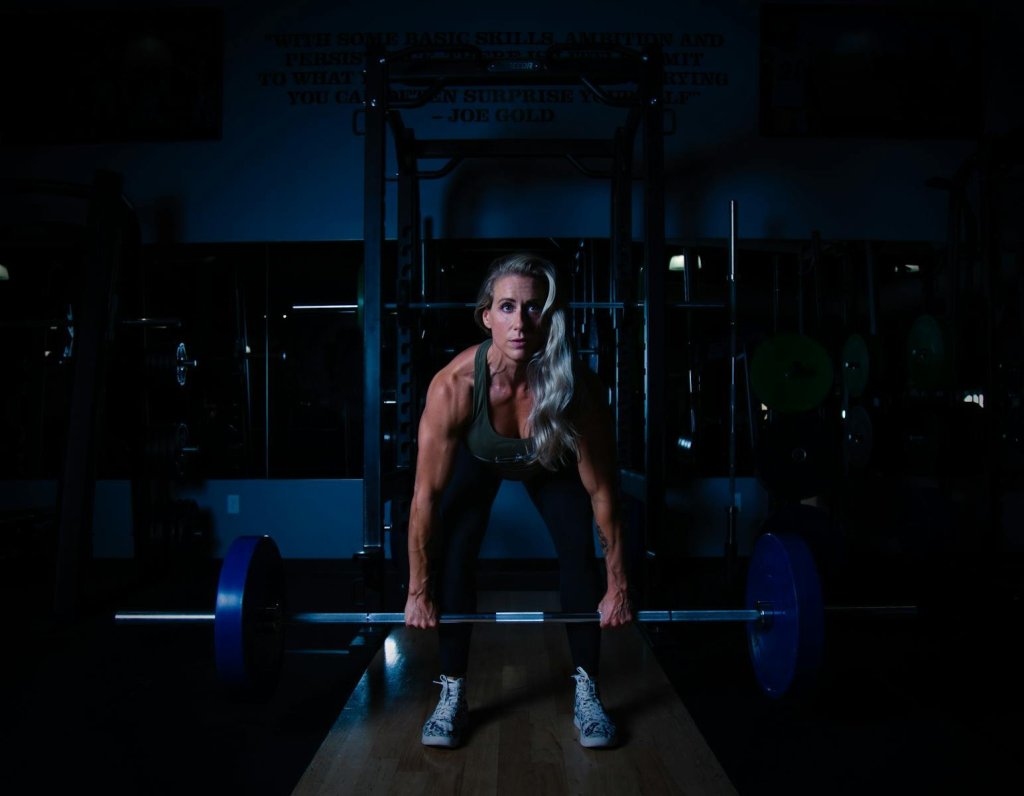
A strong horizontal pulling routine usually includes a mix of bodyweight, dumbbell, cable, machine, and barbell options. That variety helps you train the lats, rhomboids, middle trapezius, rear delts, and biceps from slightly different angles. Guidance from the American Council on Exercise, the CDC, and PubMed Central supports the value of rowing patterns in a balanced strength program.
What Are Horizontal Pull Exercises?
Horizontal pull exercises involve pulling resistance toward your torso on a mostly horizontal path. In practice, that usually means some form of row. Unlike vertical pulls such as pull-ups or pulldowns, horizontal pulls emphasize moving the elbows back while controlling scapular retraction and shoulder extension.
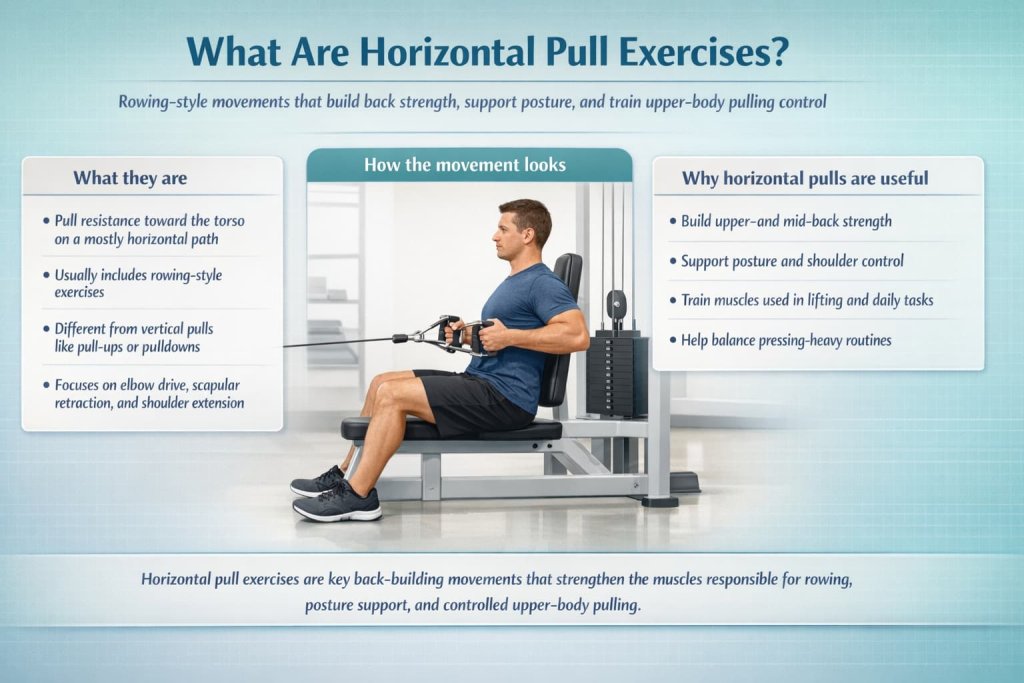
These exercises are popular because they train important back muscles used in lifting, posture support, and everyday tasks like carrying, pulling, and maintaining upper-body control. Research published in PubMed Central found notable activation of the latissimus dorsi, biceps brachii, and middle trapezius-rhomboids during rowing variations, which is one reason row variations are such a staple in strength programs.
8 Best Horizontal Pull Exercises
Build a stronger back with these 8 best horizontal pull exercises designed to improve upper-body strength, posture support, and pulling control. From beginner-friendly rows to advanced variations, these moves help train the muscles that keep your back strong and balanced.
1. Seated Cable Row
How to do it:
- Sit tall with your feet braced and your chest lifted.
- Grip the handle and begin with your arms extended without rounding forward.
- Pull the handle toward your lower ribs or upper waist.
- Let your elbows travel back close to your sides.
- Pause briefly, then return under control.
Why it works:
The seated cable row is one of the most practical horizontal pull exercises because it is stable, scalable, and easy to learn. It lets you focus on clean scapular retraction and elbow drive without needing to balance your whole body.
Muscles worked:
Lats, rhomboids, middle traps, rear delts, biceps, and forearms.
Trainer Tip:
Use a weight that lets you keep your chest up and shoulders down. The American Council on Exercise cues lifters to avoid rounding forward and to keep the movement controlled throughout the rep.
2. Chest-Supported Row
How to do it:
- Set your chest against an incline bench or chest-supported row machine.
- Hold the handles or dumbbells with your arms hanging straight down.
- Pull your elbows back until your hands reach the sides of your torso.
- Pause without shrugging.
- Lower slowly to the start.
Why it works:
Chest support reduces momentum and limits unnecessary low-back involvement. That makes this a strong option for lifters who want to focus on the back itself or who want a stricter row with less body English.
Muscles worked:
Middle back, lats, rear delts, biceps, and scapular stabilizers.
Trainer Tip:
Think “elbows back, chest heavy on the pad.” This helps keep the row strict and prevents swinging.
3. Bent-Over Barbell Row
How to do it:
- Stand with your feet about hip-width apart and hinge at the hips.
- Hold the bar with your hands just outside shoulder width.
- Brace your trunk and keep your spine neutral.
- Row the bar toward your lower ribs or upper abdomen.
- Lower the bar with control without losing position.
Why it works:
The bent-over barbell row is a classic strength-builder because it allows substantial loading while training the back, arms, and trunk together. It also builds positional strength since you must hold the hinge while rowing.
Muscles worked:
Lats, rhomboids, middle traps, rear delts, biceps, spinal erectors, and core stabilizers.
Trainer Tip:
Do not turn it into an upright shrug. Keep the torso angle steady and avoid jerking the weight up.
4. Single-Arm Dumbbell Row
How to do it:
- Place one hand and the same-side knee on a bench, or support yourself with one hand on a rack.
- Hold a dumbbell in the free hand with the arm extended.
- Pull the dumbbell toward your hip, not straight to the shoulder.
- Pause briefly at the top.
- Lower slowly and repeat before switching sides.
Why it works:
This variation is excellent for unilateral strength, side-to-side control, and learning how to drive the elbow through the row. It is also beginner-friendly and works well in home gyms.
Muscles worked:
Lats, rhomboids, traps, rear delts, biceps, and grip muscles.
Trainer Tip:
Keep your torso quiet. The goal is to row with the back, not twist the whole body to move the weight.
5. Inverted Row
How to do it:
- Set a bar in a rack or use a suspension trainer.
- Lie under it and grab the bar with an overhand grip.
- Keep your body in a straight line from head to heels.
- Pull your chest toward the bar.
- Lower under control until your arms are straight.
Why it works:
The inverted row is one of the best bodyweight horizontal pull exercises. It teaches full-body tension, scapular control, and pulling strength without needing heavy external load.
Muscles worked:
Upper back, lats, rear delts, biceps, forearms, glutes, and core.
Trainer Tip:
Make it easier by bending your knees or raising the bar. Make it harder by elevating your feet.
6. T-Bar Row
How to do it:
- Stand over the T-bar setup with a stable stance.
- Hinge at the hips and grip the handle.
- Brace your trunk and pull the load toward your chest or upper abdomen.
- Squeeze the shoulder blades together at the top.
- Lower slowly.
Why it works:
The T-bar row is a strong choice for building back thickness because it combines a heavy loading potential with a stable pulling path. Many lifters find it easier to load hard than a strict dumbbell row.
Muscles worked:
Lats, rhomboids, middle traps, rear delts, biceps, and spinal stabilizers.
Trainer Tip:
Stay controlled near the bottom. Do not let the shoulders dump forward between reps.
7. Machine Row
How to do it:
- Adjust the seat and chest pad so the handles align well with your torso.
- Sit tall and brace lightly through the trunk.
- Pull the handles back until your elbows pass your sides.
- Pause for a moment.
- Return slowly to the start.
Why it works:
Machine rows are useful for beginners and for higher-volume hypertrophy work because they reduce balance demands and make progression simple. They can also be helpful when you want to train hard without excessive setup complexity.
Muscles worked:
Lats, rhomboids, middle traps, rear delts, and biceps.
Trainer Tip:
Do not shorten the range just to move more weight. A smooth full rep is usually more useful than a rushed heavy one.
8. Suspension Row
How to do it:
- Hold the suspension handles and lean back with your body straight.
- Start with your arms extended and shoulders set.
- Pull your chest toward the handles.
- Keep your ribs down and body aligned.
- Lower back with control.
Why it works:
Suspension rows are adjustable, joint-friendly, and excellent for learning scapular control. You can quickly change the difficulty by changing your body angle, which makes them useful for both beginners and advanced trainees.
Muscles worked:
Upper back, lats, rear delts, biceps, forearms, core, and glutes.
Trainer Tip:
Keep the body rigid like a plank. The straighter and lower your body angle, the harder the exercise becomes.
How to Choose the Right Horizontal Pull Exercise
The best choice depends on your experience level, equipment, and training goal.
For beginners, seated cable rows, machine rows, suspension rows, and single-arm dumbbell rows are usually the easiest to learn. For strength and loading, barbell rows and T-bar rows are often better picks. For strict muscle focus with less low-back stress, chest-supported rows are hard to beat.
A smart plan is to pair one stable row with one more demanding row pattern. For example, you might use seated cable rows for clean volume work and barbell rows for heavier strength work.
Horizontal Pull Exercise Form Tips
Good technique matters more than using the heaviest weight possible. Common coaching cues across exercise guidance from the American Council on Exercise include keeping the chest lifted, maintaining a neutral spine, controlling the lowering phase, and avoiding shrugging the shoulders up toward the ears.
Use these simple form rules:
- Keep your chest up and spine neutral
- Start the pull by setting the shoulders back and down
- Drive the elbows back instead of yanking with the hands
- Avoid swinging, jerking, or overextending the low back
- Lower the weight with control
Common Mistakes to Avoid
Many horizontal pull exercises look simple, but a few errors show up often.
Using too much weight is the biggest one. When that happens, people usually start shrugging, shortening the range of motion, or using momentum. Another common mistake is losing trunk position, especially during bent-over rows. Others pull mostly with the arms and never fully engage the upper back.
A better approach is to use a load that lets you feel the back muscles working while still keeping the movement clean. Controlled reps usually beat messy heavy reps for both muscle-building and long-term consistency.
Why Horizontal Pull Exercises Matter for Strength and Posture
Horizontal pulling helps strengthen the muscles that support the shoulder blades and upper back. That does not mean one exercise can fix posture on its own, but stronger upper-back muscles can support better shoulder position and movement quality when paired with balanced training and daily habits.
A 2024 meta-analysis available through PubMed Central found evidence that adding scapular-focused work can improve shoulder function, which supports using well-coached rowing patterns in many programs. Public-health guidance from the Physical Activity Guidelines for Americans also recommends muscle-strengthening work for all major muscle groups on at least 2 days per week, which gives horizontal pulls an important place in a balanced routine.
Sample Horizontal Pull Workout
Here is a simple example you can include in a back or upper-body day:
Option 1: Beginner
- Seated cable row: 3 sets of 10 to 12
- Single-arm dumbbell row: 3 sets of 8 to 10 each side
- Suspension row: 2 to 3 sets of 8 to 12
Option 2: Intermediate
- Bent-over barbell row: 4 sets of 6 to 8
- Chest-supported row: 3 sets of 8 to 12
- Inverted row: 2 to 3 sets close to technical fatigue
Adults should generally include muscle-strengthening activity at least 2 days per week, according to the Physical Activity Guidelines for Americans and the CDC.
Are Horizontal Pull Exercises Better Than Vertical Pull Exercises?
Not better. Just different.
Horizontal pulls are especially useful for upper-back development, scapular control, and rowing strength. Vertical pulls usually place more emphasis on overhead pulling patterns such as pull-ups and pulldowns. Most balanced programs benefit from both. If your routine includes lots of pressing, adding enough horizontal pulling can be especially helpful for training balance.
FAQ About Horizontal Pull Exercises
Are rows considered horizontal pull exercises?
Yes. Rows are the main category of horizontal pull exercises because the resistance moves toward your torso on a mostly horizontal line.
What muscles do horizontal pull exercises work most?
They mainly work the lats, rhomboids, middle trapezius, rear delts, and biceps, with help from grip and trunk stabilizers, as shown in rowing research available through PubMed Central.
Can horizontal pull exercises improve posture?
They can help support better posture by strengthening the upper-back and scapular muscles, but they are not a guaranteed fix by themselves. Overall training habits, daily positions, and movement patterns also matter, which aligns with current scapular exercise evidence in PubMed Central.
How often should I do horizontal pull exercises?
Most people can include them 1 to 3 times per week depending on their routine. General public-health guidance from the Physical Activity Guidelines for Americans recommends muscle-strengthening work on at least 2 days per week.
What is the best horizontal pull exercise for beginners?
Seated cable rows, machine rows, suspension rows, and single-arm dumbbell rows are all strong beginner options because they are easier to control and progress.
Should I do more horizontal pulling if I bench press a lot?
Often, yes. Many lifters benefit from enough rowing volume to balance frequent pressing. That can help support shoulder comfort, upper-back strength, and overall program balance.
Are bodyweight horizontal pull exercises effective?
Yes. Inverted rows and suspension rows can be very effective for building pulling strength, especially when you adjust the body angle or progress the difficulty over time.
Conclusion
Horizontal pull exercises deserve a regular place in most strength programs because they build the back, train the arms, and support stronger, more balanced upper-body movement. The best results usually come from mixing stable beginner-friendly rows with harder loading options over time.
References
- American Council on Exercise (ACE): Seated Row Technique Guide
- PubMed: High-Density Surface Electromyography Excitation of Muscles During Seated Row Variations
- PubMed Central: A Systematic Review of the Exercises That Produce Optimal Muscle Ratios of the Scapular Stabilizers
- PubMed Central: Recruitment of Shoulder Complex and Torso Stabilizer Muscles During Commonly Used Variations of the Suspension Rowing Exercise