
The Pendlay row is a strict barbell row variation where each rep starts from the floor, helping you build back strength and explosive pulling power with less momentum. It matters because the floor reset can make every rep more consistent, which is useful when you want cleaner technique and a stronger upper back.
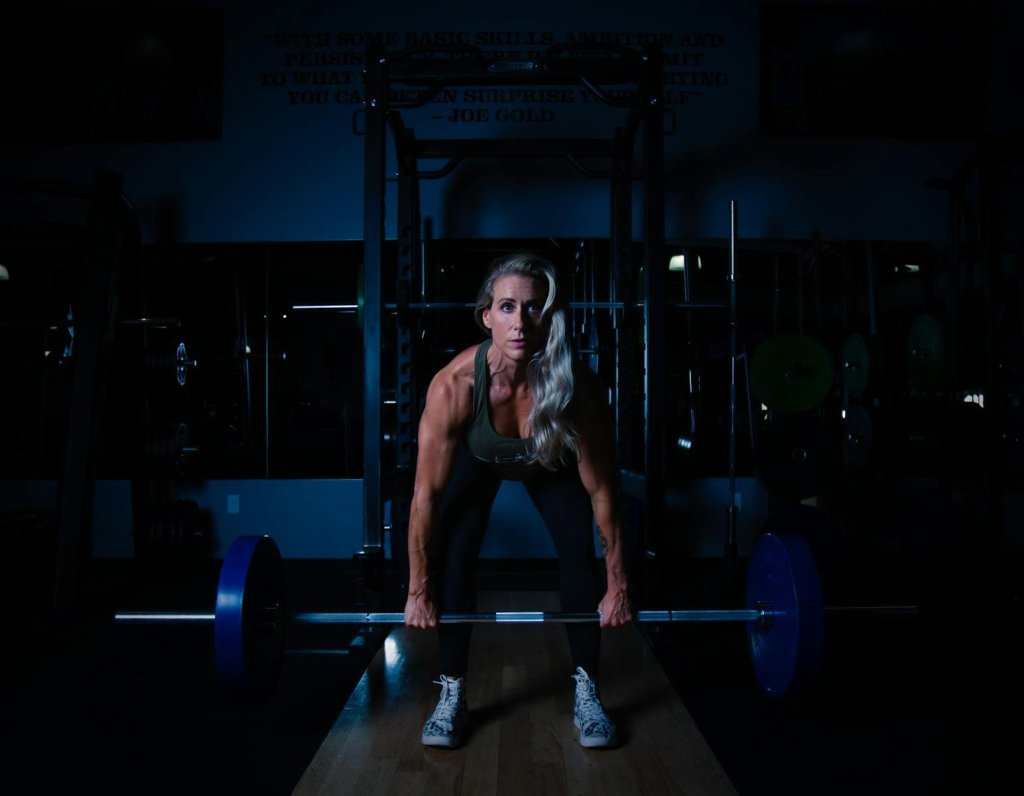
If you are learning it for the first time, focus on four things: a solid hip hinge, a neutral spine, the bar starting from the floor every rep, and pulling without jerking your torso around. General activity guidance from the CDC and ACSM also supports including muscle-strengthening work at least two days per week, which is the broader training context where a movement like the Pendlay row can fit.
What Is the Pendlay Row?
The Pendlay row is a barbell rowing exercise popularized by coach Glenn Pendlay. Unlike a looser bent-over row, the bar comes back to the floor between reps, and the goal is to keep the upper body fixed rather than using body English to move the load.
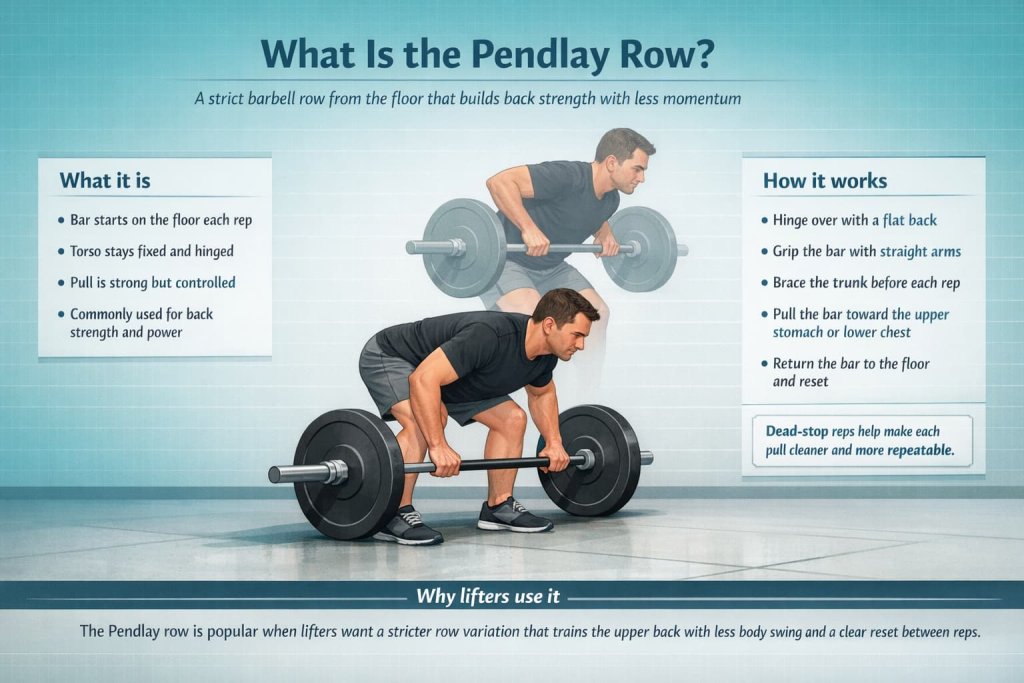
In simple terms, you hinge over, grip the bar, brace your trunk, and pull the bar toward the upper stomach or lower chest. Then you set it back down and reset before the next rep. This pause from the floor is one reason many lifters use the Pendlay row when they want cleaner reps and less momentum than a typical barbell row.
How to Do the Pendlay Row
Setup
- Load a barbell on the floor.
- Stand with feet about hip-width to shoulder-width apart.
- Take an overhand grip, usually around shoulder-width or slightly wider.
- Hinge at the hips until your torso is close to parallel with the floor.
- Bend the knees enough to reach the bar without rounding your back.
- Brace your trunk and keep your spine neutral.
Execution
- Pull the bar from the floor toward your upper abs or lower chest.
- Keep your torso as steady as possible.
- Let the elbows travel back, not straight out to the sides.
- Lower the bar back to the floor under control.
- Reset your brace and body position before the next rep.
This matches the main themes across current exercise guides: overhand grip, hip hinge, near-parallel torso, bar pulled toward the torso, and a full reset on the floor each rep.
Muscles Worked in the Pendlay Row
The Pendlay row mainly works the following muscles:
- Latissimus dorsi
- Rhomboids
- Middle and upper trapezius
- Rear deltoids
- Biceps and brachialis
- Erector spinae and trunk stabilizers isometrically
- Glutes and hamstrings as part of the hinged position
The American Council on Exercise lists the bent-over row as a barbell movement for the back, shoulders, and arms, while current Pendlay-row guides also emphasize the lats, upper back, rear delts, and arm flexors.
Pendlay Row Variations and Alternatives
1. Chest-Supported Row
Why it works:
The chest-supported row is a helpful alternative when you want to train the upper back without holding a long bent-over position. Because your chest stays supported on a bench or machine pad, it usually reduces how much the lower back and hip hinge have to work. That can make it easier to focus on controlled pulling and better squeeze through the upper back.
Muscles worked:
This variation mainly trains the lats, rhomboids, middle traps, rear delts, and biceps. The support also helps shift more attention toward the upper-back muscles by lowering the stability demand from the trunk and lower body.
How to do it:
- Set an incline bench and lie chest-down with a dumbbell in each hand, or use a chest-supported row machine.
- Let your arms hang straight down under control.
- Keep your chest in contact with the pad and your neck neutral.
- Pull the weights toward your lower ribs or sides.
- Squeeze the shoulder blades together at the top.
- Lower the weights slowly to the start position.
Trainer Tip:
Do not shrug your shoulders up as you row. Think about pulling the elbows back and slightly down so the upper back does the work instead of the neck taking over.
2. Seated Cable Row
Why it works:
The seated cable row gives you a more stable setup and smooth resistance through the full rep. It is often easier for beginners because the machine setup helps reduce balance demands, and the seated position can make it simpler to learn controlled rowing mechanics. It is also useful for getting more continuous tension than a dead-stop Pendlay row.
Muscles worked:
This exercise mainly works the lats, rhomboids, middle traps, rear delts, and biceps. The trunk still helps stabilize your body, but the seated setup usually makes it easier to focus on the pull itself.
How to do it:
- Sit at a cable row station with your feet braced on the platform.
- Grab the handle with straight arms and sit tall.
- Keep your chest up and shoulders down.
- Pull the handle toward your midsection.
- Let the elbows travel back close to your body.
- Pause briefly, then return the handle forward under control.
Trainer Tip:
Avoid turning the movement into a rocking motion. Keep your torso mostly steady so the back muscles, not momentum, drive the rep.
3. Standard Bent-Over Barbell Row
Why it works:
The standard bent-over barbell row is a strong choice when you want more continuous tension and a little more flexibility in torso angle. Unlike the Pendlay row, the bar usually does not return fully to the floor between reps, so the muscles stay under tension for longer. Many lifters use it for general back size and strength because it allows a natural rowing rhythm.
Muscles worked:
This variation trains the lats, rhomboids, traps, rear delts, biceps, and forearms, while the lower back, glutes, hamstrings, and trunk help maintain the hinged position. It is still a full-body-supported row, even though the upper back remains the main target.
How to do it:
- Stand with your feet about hip-width apart and hold a barbell with an overhand grip.
- Hinge at the hips until your torso is angled forward.
- Keep your spine neutral and knees slightly bent.
- Pull the bar toward your lower chest or upper stomach.
- Lower the bar under control without standing up between reps.
- Maintain the hinged position throughout the set.
Trainer Tip:
Choose a torso angle you can control well. If you keep rising up during the set, the weight is probably too heavy or your brace is fading.
4. One-Arm Dumbbell Row
Why it works:
The one-arm dumbbell row is useful when you want to train each side separately and reduce the technical demand of a strict bilateral barbell row. It can help you focus on one arm at a time, improve control from side to side, and make it easier to find a comfortable pulling path. Many people also find it easier on the lower back because one hand and one knee can stay supported.
Muscles worked:
This variation mainly works the lats, rhomboids, traps, rear delts, and biceps. The trunk and shoulder stabilizers also help control the movement, especially if you perform it without twisting.
How to do it:
- Place one knee and the same-side hand on a bench.
- Hold a dumbbell in the opposite hand with the arm hanging straight down.
- Keep your back flat and chest open.
- Pull the dumbbell toward your hip or lower ribs.
- Pause briefly at the top without twisting your torso.
- Lower the dumbbell slowly and repeat before switching sides.
Trainer Tip:
Think about driving the elbow back instead of curling the weight up. That usually helps you keep the focus on the back rather than letting the arm dominate the lift.
Pendlay Row Benefits
Builds Upper-Back Strength
The Pendlay row trains the muscles involved in horizontal pulling, including the lats, upper back, rear shoulders, and elbow flexors. Because the movement starts from a dead stop, you have to create force on each rep instead of relying on the stretch-shortening effect or torso swing.
Reinforces Explosive Pulling
Many coaches like the Pendlay row for athletes and strength-focused lifters because the floor reset encourages a forceful concentric pull.
Makes Rep Quality Easier to Judge
Because every rep begins from the same position on the floor, it is easier to spot when form changes. If the bar path drifts, your torso rises too much, or the reps turn into a shrug-and-heave pattern, it is usually obvious. That can make the exercise useful for people who want more repeatable rowing technique. This is a coaching inference based on the dead-stop setup described in current form guides.
Pendlay Row Form Tips That Matter Most
Keep Your Spine Neutral
A good Pendlay row starts with a strong hip hinge and a neutral back. A 2021 review available through PubMed Central notes that maintaining a neutral spine during lifting requires core stability and control, which helps explain why this exercise can feel technical for many lifters.
Do Not Turn It Into a Cheat Row
If your chest shoots up and the rep becomes a full-body yank, the weight is probably too heavy. The point of the Pendlay row is not to use the most load possible at any cost. The point is to produce force from a controlled dead stop. Current coaching sources repeatedly stress minimal upper-body movement.
Reset Before Every Rep
Treat each rep like a new rep, not like part of a bouncing set. Re-brace, set your back, and pull again. This is the defining habit that separates a real Pendlay row from a standard bent-over row done a bit sloppily.
Pull to the Right Spot
Most lifters do best pulling toward the upper abs or lower chest. Pulling too low can turn the rep into more of a hip-and-arm movement. Pulling too high can make it feel cramped and less efficient.
Common Pendlay Row Mistakes
Rounding the Lower Back
This usually happens when the load is too heavy, hamstring mobility is limited, or the setup is rushed. If you cannot reach the start position with a flat back, elevate the bar slightly on blocks or reduce the load.
Using Too Much Momentum
The Pendlay row should be forceful, but not messy. A powerful rep still has a stable torso and a clear reset between reps.
Standing Too Upright
If your torso angle becomes too high, the exercise drifts toward a different style of barbell row. That is not automatically wrong, but it is no longer a true Pendlay row.
Letting the Bar Drift Away
A bar that swings far from the body can make the lift less efficient and harder to control. Keep the bar path close and direct.
Pendlay Row vs Barbell Row
| Feature | Pendlay Row | Traditional Bent-Over Barbell Row |
|---|---|---|
| Start position | Bar starts from floor each rep | Usually starts from a hanging position |
| Torso angle | Closer to parallel with floor | Often more upright |
| Momentum | Lower if done correctly | Often easier to cheat |
| Rep style | Dead stop and reset | More continuous tension |
| Main feel | Strict, forceful, repeatable | Flexible, can be heavier or looser |
The American Council on Exercise and NASM describe the broader bent-over row pattern as a hip-hinged pulling exercise, while Pendlay-specific guides add the dead-stop floor reset and stricter torso position.
Is the Pendlay Row Good for Power?
Yes, it can be. Because each rep begins from a dead stop, the exercise encourages strong force production at the start of the pull. That is why many lifters use it when they want a row that feels more explosive than a smooth, continuous bent-over row. Still, it is best described as a strength and power-supporting accessory lift, not a direct replacement for Olympic-lift pulling or sport-specific power training.
Is the Pendlay Row Safe?
For many healthy adults with good technique, it can be a useful exercise. But it does place meaningful demands on your hip hinge, trunk bracing, and back position. Research indexed on PubMed comparing rowing exercises found that the standing bent-over row pattern produced large back-muscle activation but also the highest lumbar spine load among the row variations studied. That does not mean rows are unsafe by default. It means form, loading, and exercise selection matter.
You may want to start with a chest-supported row, seated cable row, or lighter bent-over row if you are new to lifting, have poor hip-hinge control, or are returning after back symptoms. If you have current or recurring back pain, getting individualized guidance from a qualified clinician or coach is the safer call. That caution fits both the technical demands of the lift and common coaching practice.
Who Should Try the Pendlay Row?
The Pendlay row can be a good fit for:
- Intermediate and advanced lifters
- People training for back strength and barbell pulling power
- Lifters who want stricter rowing reps
- Athletes who already have a solid hip hinge and trunk brace
It may be less ideal as a first rowing exercise for complete beginners.
Best Sets and Reps for the Pendlay Row
There is no single required rep scheme, but these are practical options:
- Strength focus: 3 to 5 sets of 3 to 6 reps
- General muscle and strength: 3 to 4 sets of 6 to 10 reps
- Technique practice: lighter sets of 5 to 8 crisp reps
Use a load you can move without losing your back position or turning the lift into a body-swing row. For general health, the CDC, WHO, and ACSM all support including muscle-strengthening work on at least two days per week, but the exact programming of Pendlay rows depends on your goal and experience.
Quick Pendlay Row Checklist
Before each set, ask yourself:
- Is my spine neutral?
- Am I hinged enough to keep the movement true to the exercise?
- Is the bar starting from a dead stop?
- Can I pull without jerking my torso up?
- Am I resetting between reps?
If the answer is no to more than one of those, lower the weight and clean up the setup.
Frequently Asked Questions
Is the Pendlay row better than the barbell row?
Not better for everyone. The Pendlay row is stricter and more repeatable because the bar resets on the floor each rep. A standard barbell row can be more flexible and may allow more continuous tension. The better choice depends on your goal and technique level.
What muscles does the Pendlay row work most?
It mainly trains the lats, rhomboids, traps, rear delts, and arm flexors, while the trunk and hip muscles help hold the position.
Can beginners do the Pendlay row?
Some can, but it is often easier to learn on supported row variations first. Current coaching guidance suggests the exercise is more advanced than many beginner row options because of the hip-hinge and trunk-control demands.
Should the bar touch the floor every rep?
Yes. That full reset is one of the main features that defines the Pendlay row.
How heavy should Pendlay rows be?
Heavy enough to challenge you, but light enough to keep your torso stable and your spine neutral. If you have to yank the bar or rise up hard to finish the rep, it is too heavy for clean Pendlay-row form. This is a practical coaching inference based on current form guidance.
Are Pendlay rows good for posture?
They can support a balanced strength program by training the upper back and pulling muscles, but no single exercise guarantees better posture by itself. Broader posture and comfort outcomes depend on training balance, daily habits, and individual factors. That is the most evidence-based way to frame it.
Can the Pendlay row bother the lower back?
It can if your technique is poor, your load is too high, or your hip hinge is not solid. Research on rowing patterns shows the bent-over row setup carries meaningful lumbar loading, which is why good form and smart exercise selection matter.
Conclusion
The Pendlay row is a smart choice when you want a stricter barbell row that builds back strength and reinforces powerful pulling from a dead stop. The keys are simple: hinge well, brace hard, keep the torso steady, and reset every rep. Start lighter than your ego wants, master the pattern, and then build load gradually.