
Yoga exercises can help improve strength, flexibility, and balance when you practice them regularly with good form and appropriate modifications. They are worth learning because a smart yoga routine can support joint mobility, posture, body control, and general wellness without requiring much equipment.
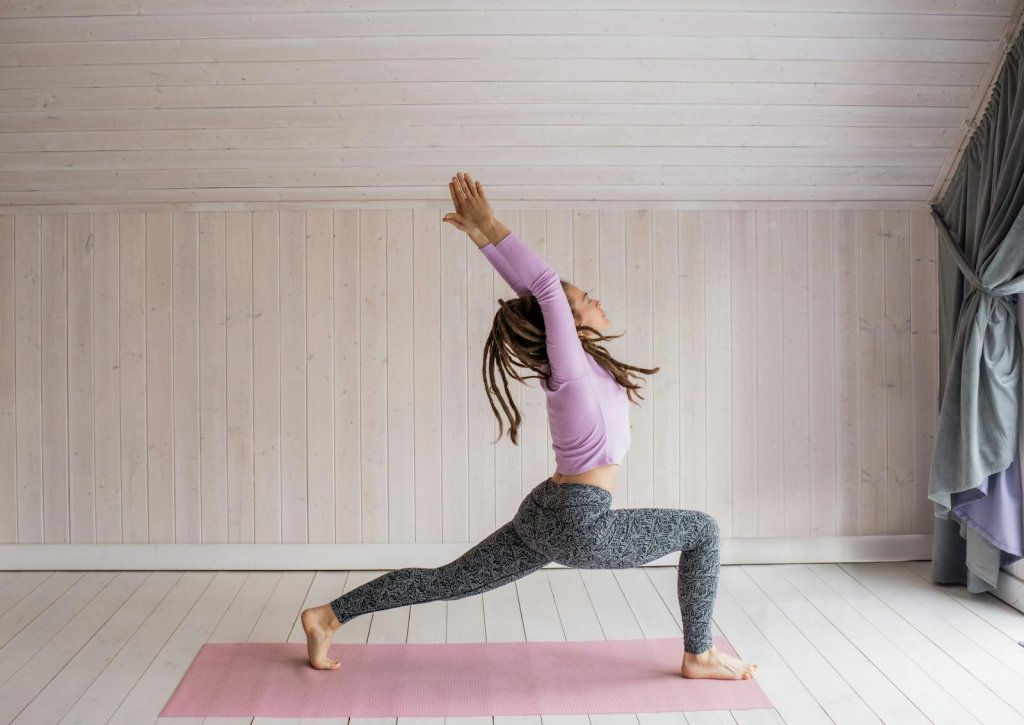
If you are new to yoga, start with simple poses, controlled breathing, and short holds. A balanced routine should include standing poses, core-focused positions, gentle back extension, and mobility work. According to the National Center for Complementary and Integrative Health, yoga may support general wellness, stress management, sleep, and balance, while Mayo Clinic notes that a well-rounded fitness routine should include strength, balance, and flexibility training. For adults with poorer mobility, the World Health Organization also recommends balance-focused activity on 3 or more days per week.
What are yoga exercises?
Yoga exercises are movement-based poses and transitions that train your body through posture, breathing, balance, mobility, and muscular control. Some poses are more strength-focused, some are better for flexibility, and others challenge balance and coordination.
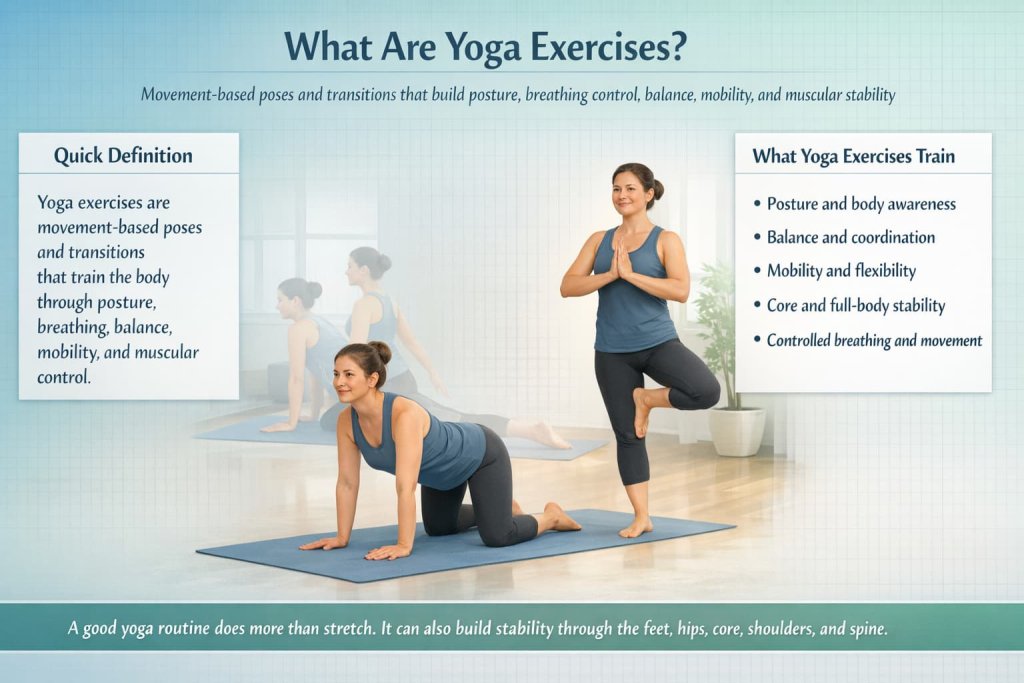
That is why a good yoga list should not only include deep stretches. It should also include positions that build stability through the feet, hips, core, shoulders, and spine.
Benefits of yoga exercises
A practical yoga program can support several fitness goals at once.
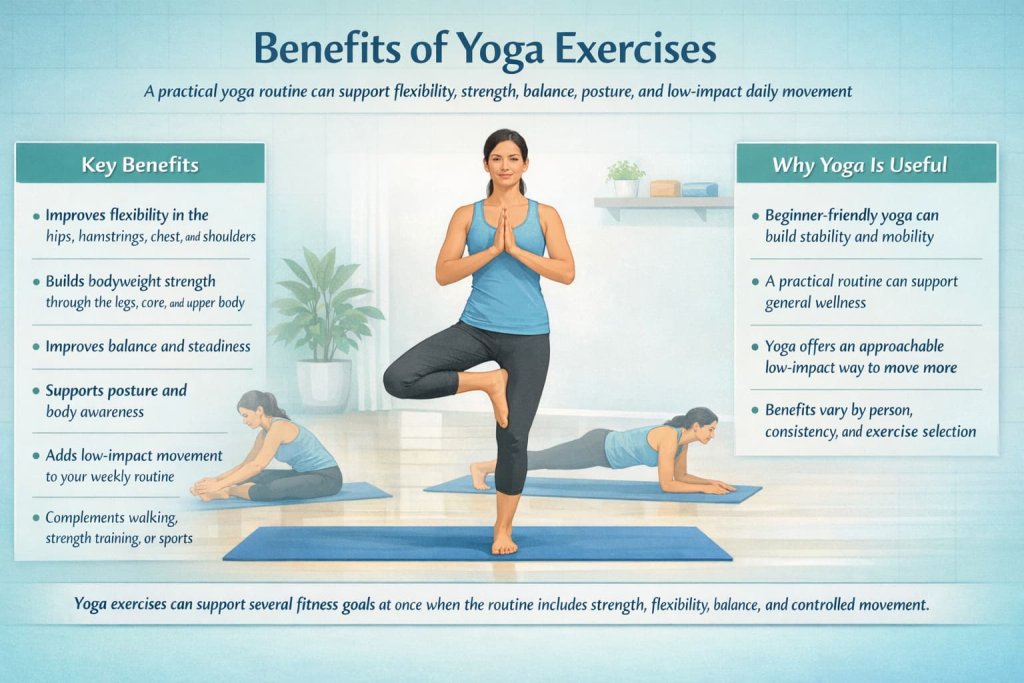
Regular yoga exercises may help you:
- Improve flexibility in the hips, hamstrings, chest, and shoulders
- Build bodyweight strength through the legs, core, and upper body
- Improve balance and steadiness
- Support posture and body awareness
- Add low-impact movement to your weekly routine
- Complement walking, strength training, or sports
The American Council on Exercise emphasizes beginner-friendly poses that build stability and mobility rather than forcing extreme range of motion. Yoga may help with general wellness and some pain-related conditions, though benefits vary by person and condition. Physical inactivity also remains common globally, which makes approachable movement options like yoga especially useful for many people.
16 best yoga exercises for strength, flexibility, and balance
Build a stronger, more flexible, and balanced body with these 16 yoga exercises designed for beginners and regular practice alike. From gentle mobility poses to strength-building holds, this list helps you move better, feel steadier, and create a simple full-body routine at home.
1. Mountain Pose
How to do it:
- Stand tall with feet hip-width apart or together
- Spread your toes and press evenly through both feet
- Keep your ribs stacked over your hips
- Let your shoulders relax down
- Breathe slowly and hold for 20 to 45 seconds
Why it works:
Mountain Pose looks simple, but it teaches posture, balance, foot pressure, and full-body alignment. It is a strong starting point for nearly every standing yoga exercise.
Trainer Tip:
Do not lock your knees. Think tall, steady, and relaxed rather than stiff.
2. Chair Pose
How to do it:
- Stand with feet hip-width apart
- Sit your hips back like you are lowering onto a chair
- Raise your arms overhead if comfortable
- Keep your chest lifted and weight centered through your feet
- Hold for 15 to 30 seconds
Why it works:
Chair Pose builds lower-body endurance and trunk control while also challenging balance. It is one of the best yoga exercises for combining strength and posture.
Trainer Tip:
Keep your weight spread across the whole foot, not only the toes.
3. Downward-Facing Dog
How to do it:
- Start on hands and knees
- Lift your hips up and back
- Straighten your legs as much as comfortable
- Press your hands firmly into the floor
- Lengthen your spine and hold for 20 to 45 seconds
Why it works:
This pose trains shoulder stability, spinal length, hamstring flexibility, and full-body tension control. It is both a mobility and strength exercise.
Trainer Tip:
A slight bend in the knees is completely fine if your hamstrings feel tight.
4. Plank Pose
How to do it:
- Start on your hands and knees
- Step your feet back into a straight-body position
- Keep shoulders over wrists
- Brace your core and squeeze your glutes
- Hold for 15 to 30 seconds while breathing steadily
Why it works:
Plank Pose builds total-body strength and anti-extension core control. It also teaches you to hold a neutral body line under tension.
Trainer Tip:
Do not let your lower back sag. Keep your ribs down and push the floor away.
5. Cobra Pose
How to do it:
- Lie face down with hands under your shoulders
- Gently lift your chest using your back muscles and light arm support
- Keep your elbows close to your body
- Look slightly forward, not sharply up
- Hold for 10 to 20 seconds
Why it works:
Cobra Pose strengthens the back side of the body and adds gentle spinal extension. It can help balance out long periods of sitting.
Trainer Tip:
Lift only as high as you can without pinching the lower back.
6. Child’s Pose
How to do it:
- Kneel on the floor and sit back toward your heels
- Reach your arms forward or rest them by your sides
- Let your torso relax between or over your thighs
- Breathe slowly and hold for 20 to 60 seconds
Why it works:
Child’s Pose is a gentle recovery position that can help reduce tension and improve comfort between harder poses. It is useful for pacing a beginner session.
Trainer Tip:
Place a cushion under your hips or chest if the position feels cramped.
7. Cat-Cow
How to do it:
- Start on hands and knees
- Inhale as you gently lift your chest and tailbone
- Exhale as you round your back and tuck your chin
- Move slowly through 6 to 10 controlled reps
- Keep the movement comfortable and smooth
Why it works:
Cat-Cow improves spinal mobility and body awareness. It is a good warm-up before stronger yoga exercises.
Trainer Tip:
Move segment by segment through your spine instead of rushing.
8. Warrior I
How to do it:
- Step one foot forward into a split stance
- Bend the front knee while the back leg stays straight
- Square your chest as much as comfortable
- Raise your arms overhead
- Hold for 15 to 30 seconds, then switch sides
Why it works:
Warrior I builds leg strength, hip control, and postural endurance. It also stretches the back-leg hip flexors.
Trainer Tip:
Shorten your stance if you feel wobbly or compressed.
9. Warrior II
How to do it:
- Step into a wide stance
- Turn the front foot forward and the back foot slightly inward
- Bend the front knee while keeping the back leg strong
- Extend your arms out to the sides
- Hold for 15 to 30 seconds, then switch sides
Why it works:
Warrior II develops hip strength, lateral stability, and endurance through the legs and trunk. It is excellent for building control in the frontal plane.
Trainer Tip:
Keep the front knee tracking over the middle toes, not collapsing inward.
10. Triangle Pose
How to do it:
- Stand in a wide stance
- Turn one foot out and keep the other slightly in
- Reach forward over the front leg
- Place your hand on your shin, a block, or the floor
- Extend the top arm upward and hold, then switch sides
Why it works:
Triangle Pose blends hamstring length, hip mobility, trunk control, and balance. It is a strong flexibility-based pose that still demands body awareness.
Trainer Tip:
Do not force the bottom hand to the floor. Lengthen first, then hinge.
11. Tree Pose
How to do it:
- Stand tall on one leg
- Place the other foot on your ankle or inner calf
- Bring your hands together at your chest or overhead
- Focus on a steady point in front of you
- Hold for 15 to 30 seconds, then switch sides
Why it works:
Tree Pose is one of the best yoga exercises for single-leg balance, posture, and hip control.
Trainer Tip:
Avoid pressing the lifted foot directly into the knee joint.
12. Bridge Pose
How to do it:
- Lie on your back with knees bent and feet flat
- Press through your feet and lift your hips
- Keep your ribs controlled and knees aligned
- Hold for 15 to 30 seconds
- Lower slowly
Why it works:
Bridge Pose strengthens the glutes and posterior chain while opening the front of the hips. It also supports core and pelvic control.
Trainer Tip:
Lift with your hips, not by over-arching the lower back.
13. Boat Pose
How to do it:
- Sit tall with knees bent and feet on the floor
- Lean back slightly while keeping your spine long
- Lift your feet if you can maintain control
- Extend your arms forward
- Hold for 10 to 20 seconds
Why it works:
Boat Pose challenges trunk strength, hip flexor control, and balance in a seated position.
Trainer Tip:
Keep your chest lifted. If your back rounds, keep your toes on the floor.
14. Locust Pose
How to do it:
- Lie face down with arms by your sides or slightly out
- Lift your chest, arms, and legs a little off the floor
- Keep your neck long
- Hold for 10 to 20 seconds
- Lower with control
Why it works:
Locust Pose strengthens the back body, especially the glutes and spinal extensors. It helps balance routines that include a lot of forward bending.
Trainer Tip:
Think length before height. Small, clean lifts are better than forcing range.
15. Seated Forward Fold
How to do it:
- Sit with legs extended in front of you
- Sit tall and hinge forward from the hips
- Reach toward your shins, ankles, or feet
- Keep the movement gentle and controlled
- Hold for 20 to 45 seconds
Why it works:
This pose focuses on posterior-chain flexibility, especially the hamstrings and lower back area. It also encourages slower breathing and relaxation.
Trainer Tip:
Bend your knees slightly if your back rounds too much.
16. Corpse Pose
How to do it:
- Lie on your back with arms relaxed at your sides
- Let your legs rest naturally
- Close your eyes if comfortable
- Breathe slowly and stay still for 1 to 3 minutes
- Focus on releasing tension
Why it works:
Corpse Pose helps you recover, slow your breathing, and finish the session in a controlled state. It is not a strength pose, but it is an important part of a balanced yoga practice.
Trainer Tip:
Use a pillow under your knees if lying flat bothers your back.
Who should be careful before starting yoga exercises?
Yoga is often gentle, but it is not automatically risk-free for every person.
Be extra careful or get medical guidance first if you have:
- Recent surgery
- Severe osteoporosis
- Uncontrolled high blood pressure
- Significant balance problems
- Acute joint injury
- Severe back pain, nerve symptoms, or worsening pain with movement
- Pregnancy-related limitations that require exercise modification
Some positions may need to be modified for people with bone or spine concerns. The safest approach is to stay within a comfortable range, avoid forcing end positions, and stop any movement that causes sharp, radiating, or worsening pain.
How often should you do yoga exercises?
For general fitness, 2 to 4 sessions per week is a practical starting point. Short routines done consistently often work better than rare long sessions.
Adults should aim for at least 150 minutes of moderate-intensity activity per week, plus muscle-strengthening work on 2 or more days weekly. If balance is a goal, especially in older adults or those with poorer mobility, balance-focused activity on 3 or more days per week can fit well into a yoga-based routine.
Common mistakes to avoid with yoga exercises
Many beginners get better results by doing less, but doing it better.
Watch out for these common mistakes:
- Forcing flexibility instead of building it gradually
- Holding your breath
- Collapsing into joints instead of using active muscle control
- Choosing advanced poses too early
- Ignoring pain signals
- Letting fatigue ruin alignment
The goal is not to look advanced. The goal is to move with control, comfort, and consistency.
Do yoga exercises really help with strength, flexibility, and balance?
Yes, they can. The exact result depends on the poses you choose, how often you practice, and your starting fitness level.
Strength-focused yoga poses such as Chair, Plank, Warrior I, Warrior II, Boat, Bridge, and Locust can build muscular endurance and control. Flexibility-focused poses like Downward-Facing Dog, Triangle, Child’s Pose, and Seated Forward Fold can improve mobility over time. Balance poses like Tree and steady standing positions can improve body awareness and stability.
This is also why a mixed routine works better than only doing passive stretches.
FAQ about yoga exercises
Are yoga exercises good for beginners?
Yes, many yoga exercises are beginner-friendly when you start with simple poses, short holds, and good modifications. Foundational options like Mountain Pose, Child’s Pose, Cat-Cow, Bridge Pose, and Tree Pose are often easier starting points.
Can yoga exercises replace strength training?
Yoga can build strength, especially for beginners, but it may not fully replace progressive strength training for people whose main goal is maximal strength or muscle gain. It works best as either a starting point or part of a broader fitness plan.
How long should I hold a yoga pose?
Many beginners do well with 15 to 30 seconds per pose. Recovery poses can be held longer if comfortable. Quality matters more than long holds.
Should yoga exercises hurt?
No. Stretching sensation and muscular effort can be normal, but sharp, pinching, radiating, or worsening pain is a sign to stop and modify.
Which yoga exercises are best for balance?
Tree Pose, Mountain Pose, Warrior II, and controlled standing transitions are especially helpful for balance. Single-leg poses are usually the most direct challenge.
Can I do yoga exercises every day?
Yes, many people can do yoga daily if they keep the intensity appropriate and vary the session. Some days can focus on strength, while others can be lighter and more mobility-based.
What should I do if I am very stiff?
Start with gentle positions, shorter holds, and props such as blocks, cushions, or a chair. Improvement usually comes from regular, comfortable practice rather than pushing aggressively.
Conclusion
The best yoga exercises are the ones you can practice consistently with control and good form. A balanced mix of standing poses, core work, gentle back extension, mobility drills, and recovery positions can help you build strength, flexibility, and balance over time.
Start with a few foundational poses, keep the sessions manageable, and progress gradually. That steady approach is usually what delivers the best long-term results.