
Beginner yoga poses are simple, foundational postures designed to help you safely build strength, improve flexibility, and support relaxation without strain. Starting with the right poses matters because proper alignment, controlled breathing, and gradual progression reduce injury risk and help you feel confident from day one.
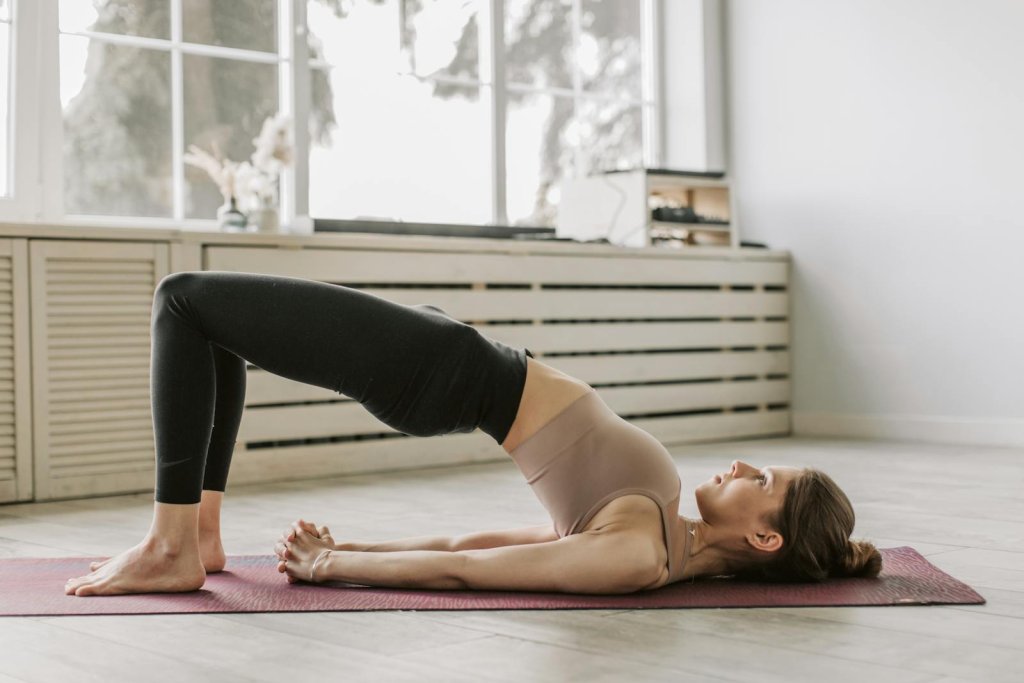
Yoga is widely recognized by organizations such as the National Center for Complementary and Integrative Health (NCCIH) and Mayo Clinic as a low-impact mind–body practice that supports physical function and stress management when practiced appropriately. For beginners, focusing on basic poses, short hold times, and pain-free movement is key.
Below is a complete, beginner-friendly guide to the 20 best beginner yoga poses, including what they do, why they matter, and how to practice them safely.
What Are Beginner Yoga Poses?
Beginner yoga poses are foundational postures that emphasize:
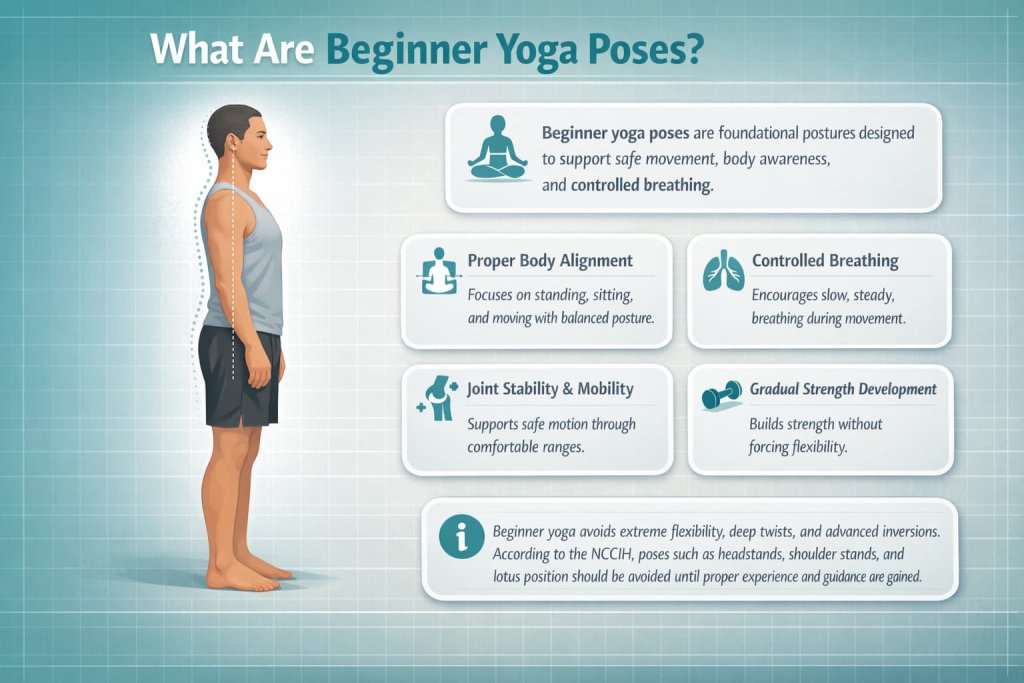
- Proper body alignment
- Controlled breathing
- Joint stability and mobility
- Gradual strength development
These poses avoid extreme flexibility, deep twists, or advanced inversions. According to the NCCIH, beginners should avoid advanced postures such as headstands, shoulder stands, or lotus position until they have sufficient experience and guidance.
Benefits of Beginner Yoga Poses
Regular practice of beginner yoga poses may help support:
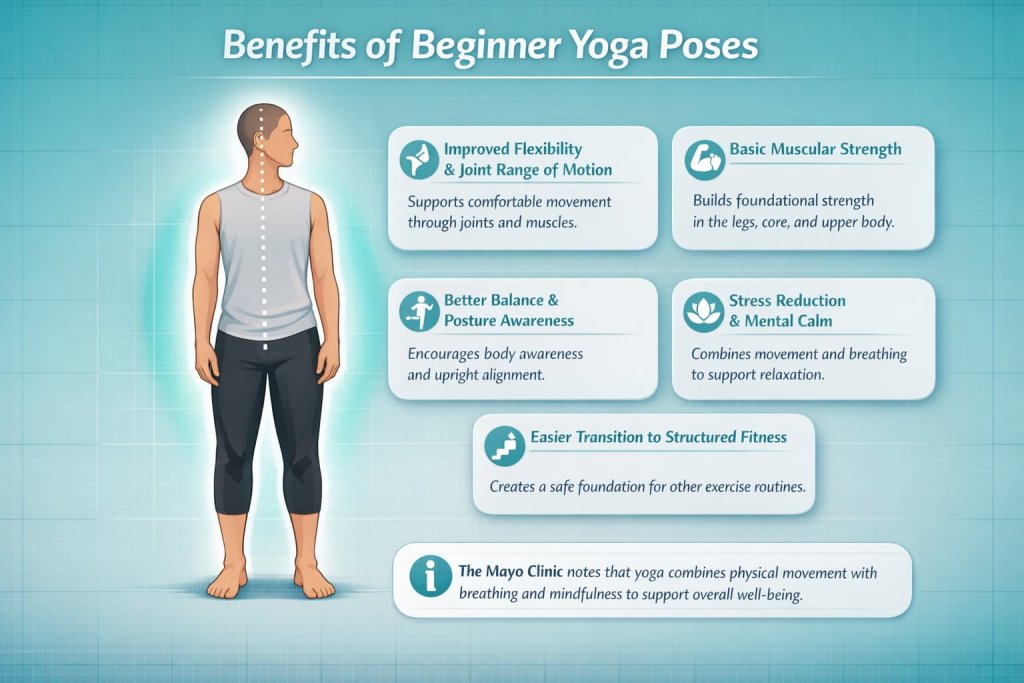
- Improved flexibility and joint range of motion
- Basic muscular strength in the legs, core, and upper body
- Better balance and posture awareness
- Stress reduction and mental calm
- Easier transition into more structured fitness routines
The Mayo Clinic notes that yoga combines physical movement with breathing and mindfulness, which together support overall well-being.
20 Best Beginner Yoga Poses
These 20 beginner yoga poses focus on gentle strength, flexibility, balance, and relaxation using safe, foundational movements.
They are designed to help beginners build confidence, improve body awareness, and support calm, pain-free movement when practiced consistently.
1. Mountain Pose (Tadasana)
Why it works:
Mountain Pose builds postural awareness and body alignment. It teaches beginners how to stand evenly, engage key muscles gently, and connect breath with stillness.
Muscles worked:
Postural muscles, calves, quadriceps, glutes, core stabilizers, upper back
How to do it:
- Stand tall with feet hip-width apart
- Distribute weight evenly through both feet
- Engage thighs lightly and lengthen the spine
- Relax shoulders down and back
- Breathe slowly through the nose
Trainer Tip:
Think of growing taller from the crown of your head without tensing your shoulders.
2. Chair Pose (Utkatasana)
Why it works:
Chair Pose strengthens the lower body while reinforcing proper knee and hip alignment. It also increases body awareness during weight-bearing movement.
Muscles worked:
Quadriceps, glutes, hamstrings, core, calves
How to do it:
- Stand with feet hip-width apart
- Bend knees as if sitting back into a chair
- Keep chest lifted and spine neutral
- Shift weight into heels
- Hold while breathing steadily
Trainer Tip:
If knees feel strained, reduce depth or sit back further into the hips.
3. Tree Pose (Vrksasana)
Why it works:
Tree Pose improves balance and joint stability while strengthening the legs. It also enhances focus and coordination.
Muscles worked:
Ankles, calves, quadriceps, glutes, core stabilizers
How to do it:
- Stand tall in Mountain Pose
- Place one foot on the opposite ankle or calf
- Keep hips level and chest upright
- Focus your gaze on a fixed point
- Switch sides after holding
Trainer Tip:
Use a wall or chair lightly for balance support if needed.
4. Warrior I (Virabhadrasana I)
Why it works:
Warrior I builds leg strength and hip mobility while encouraging upright posture and controlled breathing.
Muscles worked:
Quadriceps, glutes, hip flexors, calves, core, shoulders
How to do it:
- Step one foot forward and bend the front knee
- Turn back foot slightly outward
- Square hips toward the front
- Lift chest and lengthen spine
- Hold while breathing calmly
Trainer Tip:
Shorten your stance if balance or hip comfort feels limited.
5. Warrior II (Virabhadrasana II)
Why it works:
This pose develops endurance in the legs and promotes lateral hip strength while improving body awareness.
Muscles worked:
Quadriceps, glutes, inner thighs, outer hips, core
How to do it:
- Step feet wide apart
- Bend front knee while keeping back leg straight
- Extend arms parallel to the floor
- Gaze over front hand
- Maintain steady breathing
Trainer Tip:
Keep front knee tracking over toes to reduce knee stress.
6. Cat–Cow Pose (Marjaryasana–Bitilasana)
Why it works:
Cat–Cow gently mobilizes the spine and helps coordinate movement with breathing, making it ideal for warm-ups.
Muscles worked:
Spinal extensors, abdominal muscles, neck, shoulders
How to do it:
- Start on hands and knees
- Inhale, lift chest and tailbone
- Exhale, round spine and tuck chin
- Move slowly with breath
- Repeat several cycles
Trainer Tip:
Move within a comfortable range—never force spinal motion.
7. Downward-Facing Dog (Adho Mukha Svanasana)
Why it works:
This pose strengthens the upper body while gently stretching the legs and spine.
Muscles worked:
Shoulders, arms, core, hamstrings, calves
How to do it:
- Start on hands and knees
- Lift hips upward and back
- Keep knees slightly bent if needed
- Press hands firmly into the mat
- Lengthen spine rather than forcing heels down
Trainer Tip:
Focus on spinal length, not touching heels to the floor.
8. Plank Pose (Modified)
Why it works:
Modified Plank builds core and upper-body strength while maintaining spinal stability.
Muscles worked:
Core, shoulders, chest, arms, glutes
How to do it:
- Start on hands and knees
- Step knees back so body forms a straight line
- Engage core and glutes
- Keep neck neutral
- Hold briefly with steady breathing
Trainer Tip:
Stop if your lower back starts to sag or strain.
9. Cobra Pose (Bhujangasana)
Why it works:
Cobra Pose supports gentle spinal extension and posture awareness without excessive compression.
Muscles worked:
Lower back, glutes, shoulders, chest
How to do it:
- Lie face down with hands under shoulders
- Press lightly into hands to lift chest
- Keep elbows bent and close to body
- Engage legs gently
- Lower slowly with control
Trainer Tip:
Lift only as high as feels comfortable—pain is a signal to stop.
10. Sphinx Pose
Why it works:
Sphinx Pose offers a mild backbend suitable for beginners with limited spinal mobility.
Muscles worked:
Lower back, glutes, abdominal stabilizers
How to do it:
- Lie on stomach with forearms on the floor
- Elbows under shoulders
- Gently lift chest
- Relax shoulders away from ears
- Breathe slowly
Trainer Tip:
Place a folded towel under elbows if shoulders feel strained.
11. Bridge Pose (Setu Bandhasana)
Why it works:
Bridge Pose strengthens the posterior chain and supports hip extension without excessive spinal load.
Muscles worked:
Glutes, hamstrings, lower back, core
How to do it:
- Lie on back with knees bent
- Feet hip-width apart and flat on floor
- Press through heels to lift hips
- Keep ribs gently down
- Lower slowly
Trainer Tip:
Avoid flaring ribs—lift from the hips, not the lower back.
12. Low Lunge (Anjaneyasana)
Why it works:
Low Lunge helps stretch hip flexors and supports balance and lower-body mobility.
Muscles worked:
Hip flexors, quadriceps, glutes, calves
How to do it:
- Step one foot forward
- Lower back knee to the floor
- Keep torso upright
- Engage core lightly
- Switch sides after holding
Trainer Tip:
Use padding under the knee for comfort.
13. Triangle Pose (Trikonasana)
Why it works:
Triangle Pose improves lateral flexibility and balance while strengthening the legs.
Muscles worked:
Inner thighs, outer hips, core, back muscles
How to do it:
- Stand with feet wide apart
- Turn front foot outward
- Reach torso over front leg
- Place hand on shin or block
- Keep chest open
Trainer Tip:
Shorten your stance to reduce strain.
14. Seated Forward Fold (Paschimottanasana)
Why it works:
This pose gently stretches the hamstrings and supports relaxation.
Muscles worked:
Hamstrings, calves, spinal muscles
How to do it:
- Sit with legs extended
- Bend knees slightly if needed
- Hinge forward from hips
- Rest hands on legs
- Breathe deeply
Trainer Tip:
Never force your chest toward your legs.
15. Easy Pose (Sukhasana)
Why it works:
Easy Pose supports upright sitting, breathing, and mindfulness practices.
Muscles worked:
Hip stabilizers, core, postural muscles
How to do it:
- Sit cross-legged comfortably
- Sit on a cushion if needed
- Lengthen spine
- Relax shoulders
- Breathe calmly
Trainer Tip:
Elevating hips often improves comfort and posture.
16. Child’s Pose (Balasana)
Why it works:
A restorative pose that promotes relaxation and gentle spinal lengthening.
Muscles worked:
Lower back, hips, shoulders
How to do it:
- Kneel with hips back toward heels
- Fold torso forward
- Rest forehead on mat or block
- Relax arms
- Breathe slowly
Trainer Tip:
Widen knees for extra comfort.
17. Legs Up the Wall (Gentle Variation)
Why it works:
Encourages relaxation and supports circulation while calming the nervous system.
Muscles worked:
Minimal muscular demand; passive relaxation
How to do it:
- Lie on your back near a wall
- Extend legs upward against the wall
- Relax arms by your sides
- Close eyes
- Breathe slowly
Trainer Tip:
Bend knees slightly if hamstrings feel tight.
18. Corpse Pose (Savasana)
Why it works:
Savasana allows the body and mind to fully relax after movement.
Muscles worked:
None actively; full-body relaxation
How to do it:
- Lie flat on your back
- Let arms and legs relax outward
- Close eyes
- Focus on breathing
- Remain still
Trainer Tip:
Stay at least 2–5 minutes to gain full benefit.
19. Standing Side Stretch
Why it works:
Improves lateral trunk mobility and posture awareness with minimal joint stress.
Muscles worked:
Obliques, shoulders, upper back
How to do it:
- Stand tall
- Raise one arm overhead
- Lean gently to the opposite side
- Keep hips stable
- Switch sides
Trainer Tip:
Move slowly and avoid collapsing forward.
20. Supine Spinal Twist (Gentle)
Why it works:
Supports spinal rotation and relaxation while lying down, making it safe for beginners.
Muscles worked:
Spinal stabilizers, glutes, core
How to do it:
- Lie on back with knees bent
- Drop knees gently to one side
- Keep shoulders relaxed
- Hold briefly
- Switch sides
Trainer Tip:
Use pillows under knees for extra support.
How to Structure a Beginner Yoga Session
A well-structured beginner yoga session helps the body move safely from gentle activity to relaxation. A simple, balanced session may include:
Gentle Warm-Up (5–10 minutes)
- Cat–Cow Pose
- Standing Side Stretch
- Easy Pose with breathing
Main Practice (10–20 minutes)
- Mountain Pose
- Chair Pose
- Warrior I and II
- Tree Pose
- Downward-Facing Dog
- Low Lunge
Cool-Down and Relaxation (5–10 minutes)
- Seated Forward Fold
- Supine Spinal Twist
- Legs Up the Wall
- Corpse Pose
Short, consistent sessions with slow, controlled movement are often more effective for beginners than longer, demanding practices.
How Often Should Beginners Practice Yoga?
According to guidance summarized by the American College of Sports Medicine (ACSM), adults benefit from regular movement that supports strength, mobility, and balance. Beginners can start with:
- 2–3 yoga sessions per week
- 20–40 minutes per session
- Short pose holds (10–30 seconds) with rest as needed
Consistency matters more than intensity at the beginner level.
Common Beginner Yoga Mistakes to Avoid
- Forcing flexibility instead of moving gradually
- Holding the breath during poses
- Skipping warm-up or relaxation poses
- Comparing yourself to others
- Ignoring discomfort or pain signals
Listening to your body is essential for long-term progress.
Who Should Be Careful Before Starting Yoga?
While beginner yoga poses are generally considered low-impact, certain individuals may need extra caution or professional guidance before starting.
You should consider modifications or consult a qualified healthcare or fitness professional if you:
- Are pregnant or recently postpartum
- Have had recent surgery or a serious injury
- Experience chronic back, neck, knee, or hip pain
- Have balance limitations or a history of falls
- Have cardiovascular conditions or uncontrolled blood pressure
- Have joint conditions such as advanced arthritis or osteoporosis
According to the National Center for Complementary and Integrative Health (NCCIH), some yoga poses may not be appropriate for everyone, especially when underlying health conditions are present. Beginner-friendly variations and props can help reduce strain, but individual needs should always guide practice.
Safety Guidelines Before You Start Yoga
Before practicing beginner yoga poses, keep these evidence-based guidelines in mind:
- Move slowly and stay within a pain-free range of motion
- Use props such as blocks, straps, or chairs for support
- Avoid holding your breath during poses
- Skip hot yoga or extreme styles if you are new
- Consult a qualified professional if you are pregnant, older, or managing a medical condition
The NCCIH emphasizes that most yoga-related injuries are strains or sprains and are more likely when poses are forced or poorly aligned.
When to Modify or Stop Yoga Poses
Listening to your body is essential when practicing beginner yoga poses. Yoga should never cause sharp pain, dizziness, or discomfort that feels unsafe.
You should modify or stop a pose if you experience:
- Sharp or stabbing pain
- Numbness or tingling
- Dizziness, lightheadedness, or shortness of breath
- Joint pressure that feels unstable
- Inability to maintain steady breathing
Modification options include:
- Reducing range of motion
- Using props such as blocks, straps, or chairs
- Shortening hold time
- Choosing a gentler variation or resting in Child’s Pose
If symptoms persist or worsen, discontinue the session and seek professional guidance. The NCCIH emphasizes that yoga is safest when practiced without forcing movement and with respect for individual limits.
Frequently Asked Questions About Beginner Yoga Poses
Are beginner yoga poses safe for most people?
Yes, when practiced gently and with proper alignment. The NCCIH reports that serious yoga injuries are rare when poses are performed correctly.
Can beginner yoga poses build strength?
Yes. Many beginner poses support body-weight strength in the legs, core, and upper body, especially when practiced consistently.
How long should I hold beginner yoga poses?
Most beginners benefit from holding poses for 10–30 seconds, focusing on breathing rather than depth.
Do I need equipment to start yoga?
No. A mat is helpful, but household items like towels or chairs can be used as props.
Is yoga good for stress relief?
Research suggests yoga may help support relaxation and short-term stress reduction, especially when combined with breathing and mindfulness practices.
Should beginners avoid hot yoga?
Yes. The NCCIH cautions that hot yoga may increase the risk of dehydration or overheating, especially for beginners.
Conclusion
Beginner yoga poses provide a safe, effective way to build strength, improve flexibility, and support mental calm. By focusing on simple postures, controlled breathing, and consistent practice, you create a strong foundation for long-term physical and mental well-being.
If you are new to yoga, start slowly, listen to your body, and consider learning from a qualified instructor. With patience and regular practice, beginner yoga poses can become a sustainable part of your healthy lifestyle.
References
- ACSM — Physical Activity Guidelines (strength + overall activity framing)
- CDC — Adult Physical Activity Guidelines (overview + weekly recommendations)
- Systematic Review/Meta-analysis (2024, PMC) — Yoga and stress outcomes
- Practical recommendations on stretching (2025, PubMed record) — hold-time/volume guidance
- Randomized controlled trial (2023, PubMed) — Yoga and balance/flexibility outcomes