
Barre exercises for seniors are one of the safest and most effective low-impact ways to improve balance, strength, and mobility. These small, controlled movements support joint comfort while strengthening key muscle groups used for walking, standing, and daily tasks.
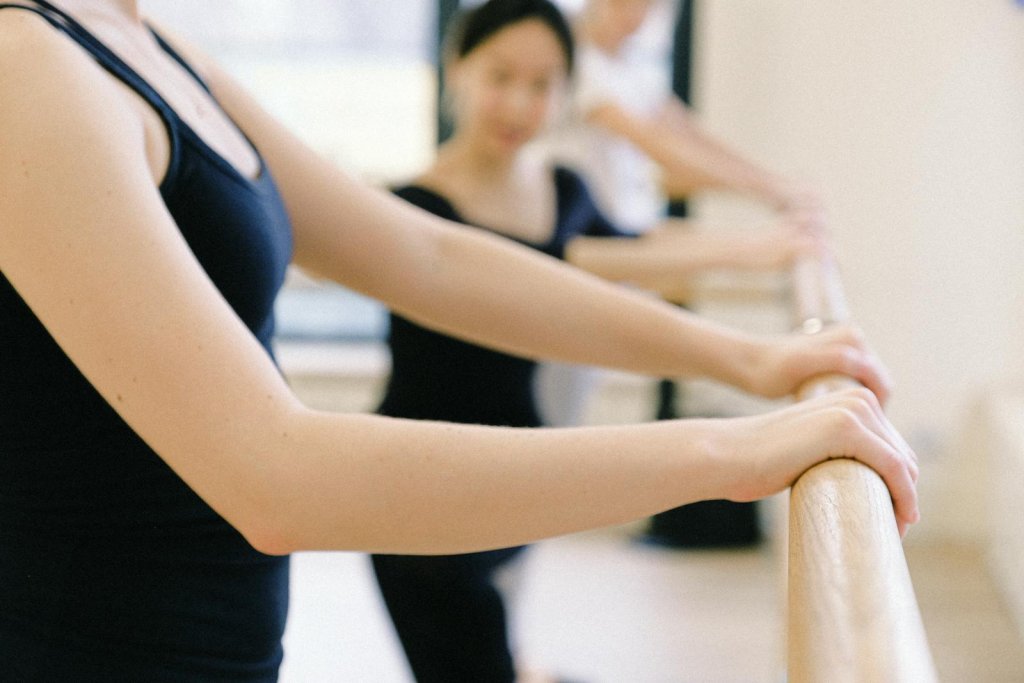
Barre is especially beneficial for older adults because it focuses on posture, stability, and alignment—all essential for fall prevention and confident movement. With a sturdy chair or countertop, seniors can easily perform barre safely at home.
In this guide, you’ll learn the best four senior-friendly barre exercises, how to do them correctly, and why they help support long-term mobility. These exercises align with ACSM and CDC recommendations for older-adult strength and balance training.
What Are Barre Exercises for Seniors?
Barre exercises for seniors are modified, low-impact strength and balance movements inspired by ballet, Pilates, and physical therapy principles. They use small ranges of motion, high control, and a stable support surface, making them safe for individuals over 60.
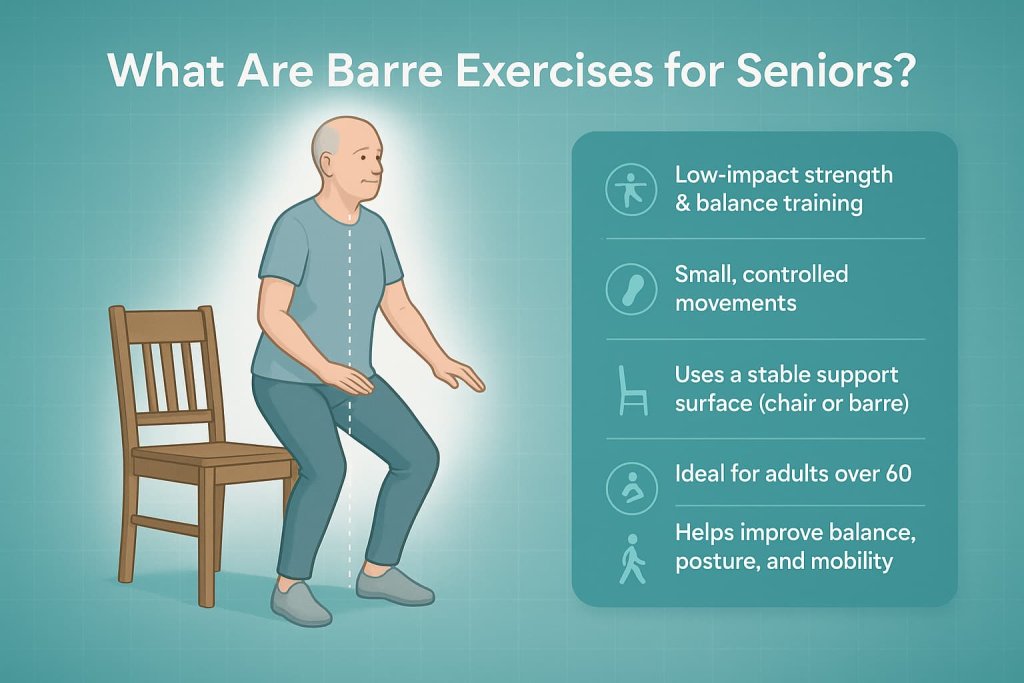
Benefits include:
- Improved balance and stability
- Strengthened legs, hips, and core
- Enhanced posture
- Better mobility for walking and daily activities
- Very low joint stress compared to traditional workouts
Barre is suitable for most seniors, including beginners, because movements can be performed at a slow tempo with full support.
4 Best Barre Exercises for Seniors to Improve Balance, Strength, and Mobility
Below are the four best barre exercises for older adults, selected for safety, joint-friendliness, and functional benefit.
1. Supported Plié Squat
A gentle squat variation that strengthens the quads, glutes, and hips while keeping a stable, upright posture.
Why it works
The wide stance increases base of support, making it safer for seniors to squat without losing balance. The movement strengthens the major muscles used for standing up from a chair, climbing stairs, and maintaining stable posture, while also improving hip mobility.
Muscles worked
- Quads
- Glutes
- Inner thighs (adductors)
- Core (light engagement for posture)
How to do it
- Stand behind a sturdy chair and hold the backrest lightly for balance.
- Step your feet wider than shoulder-width with your toes turned slightly outward.
- Bend your knees slowly, lowering your hips just a few inches while keeping the torso tall.
- Press evenly through your heels to return to standing.
- Perform 8–12 slow, controlled repetitions.
Trainer Tip
Focus on knee alignment. Keep knees tracking over the toes to reduce stress on the joints and maintain proper form.
2. Heel Raises (Calf Raises)
A simple, effective movement to strengthen the calves and improve ankle stability.
Why it works
Calf strength is crucial for walking, balance, and preventing trips. Stronger ankles also support safer movement on stairs and uneven surfaces, which is especially important for seniors.
Muscles worked
- Calves (gastrocnemius and soleus)
- Ankle stabilizers
- Lower-leg muscles
How to do it
- Stand upright, lightly holding a chair for balance.
- Rise slowly onto your toes, lifting your heels off the floor.
- Hold for a brief moment, then lower with full control.
- Perform 10–15 repetitions.
Trainer Tip
Pause at the top for 1–2 seconds to challenge your balance and increase lower-leg stability.
3. Side Leg Lift (Hip Abduction)
A low-impact movement that strengthens the hips and supports sideways-stepping stability.
Why it works
Hip abductor strength often declines with age, contributing to poor balance and increased fall risk. This exercise helps stabilize the pelvis during walking and improves side-to-side control.
Muscles worked
- Hip abductors (gluteus medius and minimus)
- Outer thighs
- Core stabilizers
How to do it
- Stand sideways to a chair, holding it with the hand closest to the chair.
- Slowly lift the opposite leg out to the side, keeping toes pointing straight ahead.
- Avoid leaning your body—keep your torso tall and stable.
- Lower the leg with slow control.
- Perform 8–12 repetitions per side.
Trainer Tip
Hold the leg at the top for one second to build more stability and hip control.
4. Back Leg Reach (Arabesque Tap)
A gentle, controlled hip-extension movement that enhances posterior strength and upright posture.
Why it works
Strengthening the glutes and back extensors supports a more upright, confident posture and helps with smoother walking strides. This exercise also encourages healthy hip mobility without stressing the lower back.
Muscles worked
- Glutes
- Hamstrings
- Lower back muscles
- Core
How to do it
- Stand tall while lightly holding a chair.
- Extend one leg straight behind you, keeping your torso upright and hips squared forward.
- Tap your foot gently on the floor behind you, then return to the starting position.
- Move slowly and with control.
- Perform 8–12 repetitions per side.
Trainer Tip
Keep the movement small. Avoid arching your lower back—focus on lifting from the glutes, not the spine.
How to Warm Up Before Barre Exercises
A safe warm-up prepares joints and muscles for movement.
2–3 minute gentle warm-up:
- March in place — 30 seconds
- Arm circles — 10 each direction
- Hip circles — 8 per side
- Seated or standing ankle circles — 10 per direction
- Side steps holding a chair — 20 seconds
Stay within a comfortable, pain-free range.
Common Mistakes to Avoid
- Leaning too far on the chair (it’s for balance, not support)
- Moving too fast or using momentum
- Lifting legs too high, causing back strain
- Locking knees or holding breath
- Skipping warm-up and cool-down stretches
Who Should Avoid or Modify Barre Exercises
Seniors should modify or seek medical guidance if they have:
- Recent hip, knee, or back surgery
- Severe arthritis flare-ups
- Uncontrolled dizziness or balance disorders
- Osteoporosis requiring movement restrictions
- Pain during any position or range of motion
When in doubt, go slower and reduce the range of motion.
Why Are Barre Exercises Better for Seniors?
Barre is especially beneficial for older adults because it:
- Uses small, controlled, joint-friendly movements
- Supports better balance and posture
- Improves hip, leg, and core strength
- Reduces fall risk through stability training
- Works well for beginners and those with limited mobility
These features make barre an excellent long-term training option for healthy aging.
FAQ
1. Is barre safe for seniors over 70?
Yes—when modified with a chair and performed slowly, barre is safe for most adults over 70.
2. Can barre help prevent falls?
Yes. Barre strengthens hips, ankles, and core muscles that improve balance and stability.
3. How often should seniors do barre?
2–3 sessions per week alongside walking or light cardio.
4. Do I need dance experience to start barre?
Not at all. Barre is beginner-friendly and uses small, simple movements.
5. Can I do barre if I have arthritis?
Often, yes. Barre is low-impact. Start with small movements and avoid any painful positions.
6. Do I need special equipment?
Just a sturdy chair or countertop.
7. Can I do barre at home as a beginner?
Yes—barre is one of the easiest at-home exercise styles for seniors.
Conclusion
Barre exercises for seniors provide a safe, joint-friendly way to improve balance, strength, and everyday mobility. With just a chair and a few minutes a day, seniors can build confidence, support fall prevention, and stay active well into older age.
Start with the four exercises above, move slowly, and stay consistent—your mobility and stability will improve over time.
References
- Sherrington C et al. – Exercise to Prevent Falls in Older Adults (Br J Sports Med, 2017)
Meta-analysis showing that exercise—especially balance-challenging programs—significantly reduces fall rates in older adults. - NHS – Physical Activity Guidelines for Older Adults
Practical UK guidance for adults 65+, emphasizing strength, balance, and flexibility 2+ days per week. - CDC – Growing Stronger: Strength Training for Older Adults
A practical CDC guide to safe, progressive strength training at home for older adults (good support for your exercise-format sections).