
Barre exercises are low-impact, ballet-inspired movements that help build lean strength, core stability, and improved posture. These exercises use small, controlled motions and isometric holds to target muscles deeply—especially in the legs, glutes, and core. Understanding how barre works is important because it’s accessible to beginners, joint-friendly, and requires little equipment, making it ideal for at-home workouts.
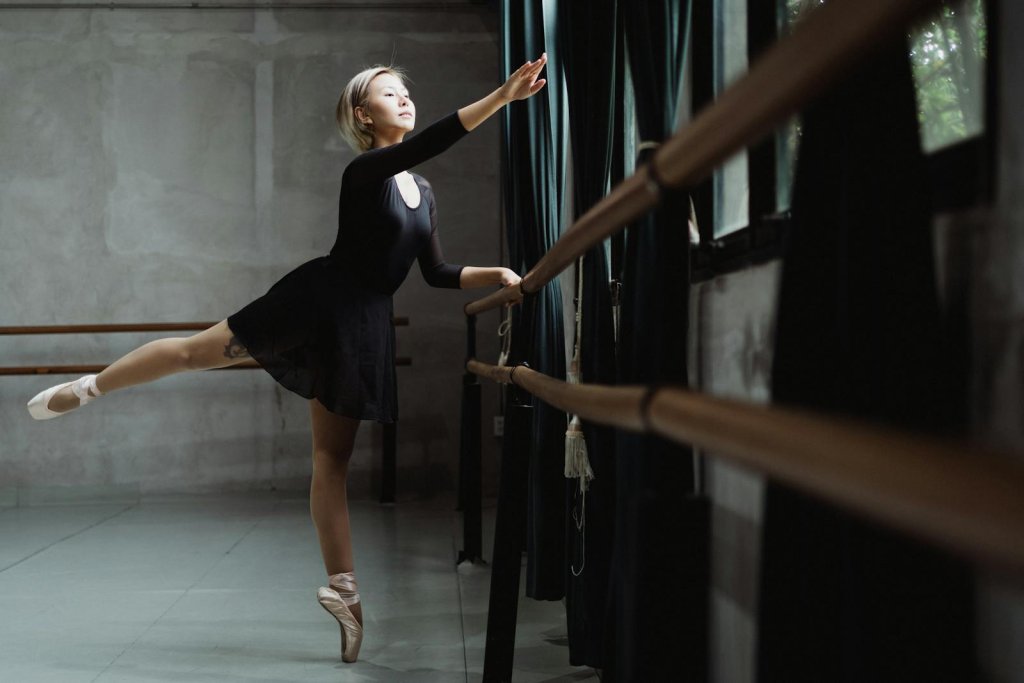
In this guide, you’ll learn the eight best barre exercises, how to do them safely, how to modify them, and why they are effective. You can use a ballet barre, chair, or countertop for support.
What Are Barre Exercises?
Barre exercises combine elements of ballet, Pilates, yoga, and functional strength training. Instead of heavy weights, barre relies on:
- Small, repetitive movements
- Isometric holds
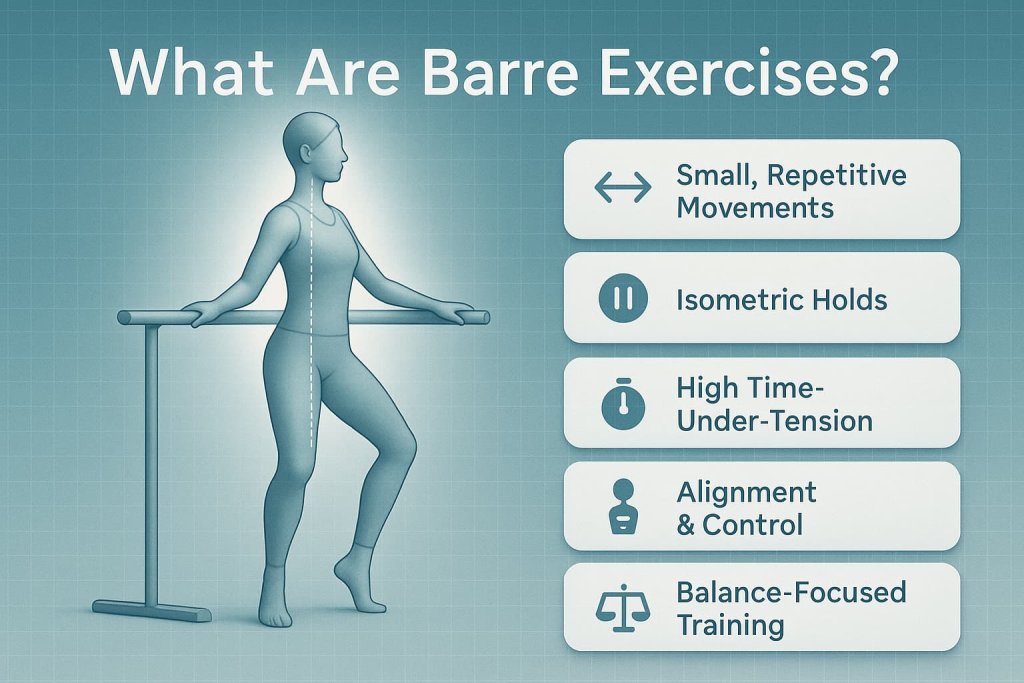
- High muscle time-under-tension
- Controlled breath and alignment
- Balance-focused positions
These exercises engage stabilizing muscles that many workouts neglect, helping you build functional strength, mobility, and better alignment.
Benefits of Barre Exercises
Barre exercises may help support:
- Improved muscle endurance through high-repetition, low-impact strength work
- Stronger glutes, quads, calves, and core from controlled, targeted movements
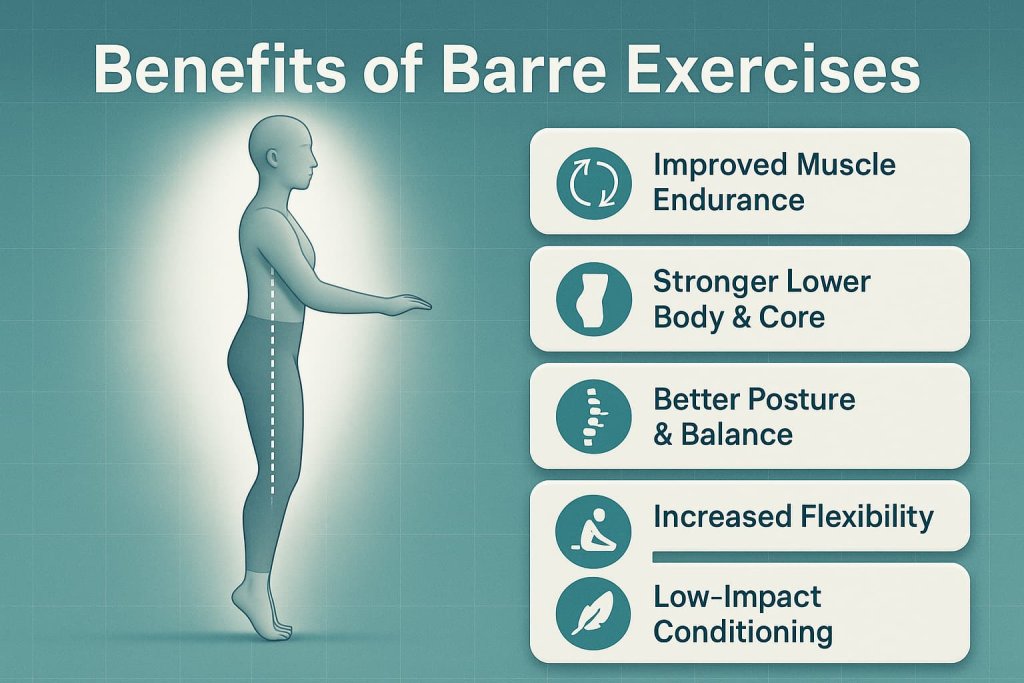
- Better posture and balance, thanks to alignment-focused training
- Increased flexibility, due to integrated stretching
- Low-impact conditioning suitable for beginners or people returning to exercise
8 Best Barre Exercises to Sculpt a Lean, Strong, Dancer-Like Body
Below are the top exercises that deliver the greatest sculpting and strengthening benefits using only a chair or barre.
1. Second-Position Plié
Why It Works
This barre staple increases lower-body strength by placing continuous tension on the quads, glutes, and inner thighs. The wide stance opens the hips, helping improve mobility and alignment. Because the movement emphasizes upright posture, it also supports better core engagement and balance.
Muscles Worked
Quadriceps, gluteus maximus, gluteus medius, adductors (inner thighs), calves, deep core stabilizers.
How to Do It
- Stand with your feet wider than shoulder distance and toes turned out naturally (not forced).
- Lightly rest one or both hands on the barre for balance.
- Bend your knees and lower into a deep plié, keeping your chest lifted and spine neutral.
- Hold the bottom position and pulse 1–2 inches up and down to increase muscle activation.
- Press through your heels to return to standing without locking the knees.
Trainer Tip
Keep your knees tracking directly over your toes—if your knees roll inward, reduce your turnout angle.
2. Relevé Heel Raise
Why It Works
Relevés strengthen the calves while training ankle stability—key for balance and joint protection. The upward lift also teaches controlled foot mechanics, which supports better alignment in all barre and daily movements.
Muscles Worked
Gastrocnemius, soleus, intrinsic foot muscles, ankle stabilizers, core.
How to Do It
- Stand tall with feet hip-width apart and gently hold the barre.
- Slowly lift your heels to rise onto the balls of your feet, maintaining even pressure through all toes.
- Pause briefly at the top, then lower with control.
- Add small pulses at the top position to increase calf endurance.
Trainer Tip
Think of “pressing the floor away from you” rather than simply lifting your heels—this encourages full calf and foot engagement.
3. Parallel Thigh Work (Small Squat Pulses)
Why It Works
This micro-movement style keeps the muscle fibers under continuous tension, creating deep engagement in the quads and glutes. The narrow stance also activates stabilizers that help improve knee control and balance.
Muscles Worked
Quadriceps, glutes, hamstrings, core stabilizers.
How to Do It
- Stand with feet hip-width apart, parallel to each other.
- Hold the barre lightly and bend your knees into a narrow squat.
- Keep your torso upright and spine neutral.
- Stay low and pulse 1–2 inches up and down without losing form.
- Maintain steady breathing as the burn builds.
Trainer Tip
Smaller pulses recruit more stabilizers—focus on precision, not depth.
4. Standing Glute Lift (Seat Work)
Why It Works
This move targets the glutes without stressing the lower back. The small lifts improve hip extension strength, which is essential for walking, climbing stairs, and maintaining pelvic stability.
Muscles Worked
Gluteus maximus, gluteus medius, hamstrings, deep core stabilizers.
How to Do It
- Stand behind the barre and hinge slightly forward so your spine stays long.
- Extend one leg straight behind you, keeping hips level.
- Lift the leg a few inches and pulse upward in controlled motions.
- Avoid arching your lower back.
- Switch sides after completing the set.
Trainer Tip
Imagine your lifted leg reaching long behind you—not high—to maintain proper alignment and glute focus.
5. Barre Lunge with Pulse
Why It Works
Lunges challenge single-leg strength and improve hip control. Adding pulses increases time under tension, activating the glutes and quads more deeply while refining balance and stability.
Muscles Worked
Quads, glutes, hamstrings, calves, core.
How to Do It
- Stand with one hand on the barre for light support.
- Step one foot back into a lunge, lowering your back knee toward the floor.
- Keep your front knee aligned over your ankle and torso tall.
- Pulse 1–2 inches at the bottom of the lunge to intensify the work.
- Push through the front heel to rise and repeat on the other side.
Trainer Tip
Drive downward through the front heel rather than leaning into the barre—this protects the knee and maximizes glute activation.
6. Standing Side Leg Lift
Why It Works
This exercise isolates the gluteus medius, one of the most important muscles for hip stability and balance. Strengthening it can support better walking mechanics and lower-body alignment.
Muscles Worked
Gluteus medius, hip abductors, obliques (light engagement).
How to Do It
- Stand tall with one hand on the barre, feet parallel.
- Lift your outside leg straight out to the side without leaning your torso.
- Keep toes facing forward or slightly turned down.
- Pulse at the top in small, controlled motions.
- Switch sides to repeat.
Trainer Tip
Think of “reaching” your leg outward rather than lifting it high—the goal is controlled movement, not a large range.
7. Core Curl (Barre Ab Work)
Why It Works
Core curls strengthen deep abdominal muscles that support posture, balance, and spinal stability. The rounded-spine position challenges the core without excessive neck strain when done correctly.
Muscles Worked
Rectus abdominis, transverse abdominis, obliques.
How to Do It
- Sit with knees bent and feet flat, spine tall.
- Lean back slightly until your core engages.
- Gently round your spine into a controlled curl.
- Pulse upward in small movements, keeping tension in the core—not the neck.
- Maintain slow, steady breathing.
Trainer Tip
If your hip flexors dominate, bring your feet closer in or support yourself lightly behind your thighs to maintain proper core recruitment.
8. Ballet-Inspired Arabesque Lift
Why It Works
This elegant movement strengthens the glutes, hamstrings, and back extensors while improving hip extension and posture control. It also trains balance and full-body alignment similar to classical ballet work.
Muscles Worked
Glutes, hamstrings, spinal extensors, core.
How to Do It
- Stand tall beside the barre and place one hand lightly on it.
- Extend one leg behind you, forming a long line from head to foot.
- Without arching your back, lift the leg a few inches and pulse upward.
- Maintain square hips and level shoulders throughout.
- Switch sides after completing the set.
Trainer Tip
Keep ribs pulled down and shoulders relaxed—this helps prevent lower-back compensation and keeps the work in the glutes.
How to Add Barre Exercises to Your Routine
- Perform barre exercises 2–3 days per week.
- Aim for 10–20 reps per movement or 30–60 seconds of pulses.
- Add light dumbbells for upper-body sequences if desired.
- Combine barre with walking or low-impact cardio for balanced fitness.
Safety Tips for Barre Workouts
- Move within a comfortable range of motion—avoid forcing turnout or exaggerated positions.
- Keep your spine neutral and avoid overarching your lower back.
- If you have knee, hip, or back concerns, modify depth and seek guidance from a professional.
- Barre supports strength and mobility but does not treat or cure medical conditions.
“This content is for informational purposes only and not medical advice.”
FAQs
1. Is barre good for beginners?
Yes. Barre exercises are low-impact and easy to modify, making them ideal for beginners.
2. Can barre replace strength training?
Barre improves muscle endurance and toning but does not provide the heavy resistance needed for maximal strength development.
3. Do I need a ballet barre?
No. You can use a chair, counter, or sturdy surface for support.
4. How often should I do barre exercises?
Most people benefit from barre 2–3 times per week.
5. Can barre help with flexibility?
Yes. Many barre movements integrate stretches that may support flexibility over time.
6. Does barre burn fat?
Barre can support calorie burn and muscle endurance, but combining it with cardio may produce better fat-loss results.
7. Is barre safe for people with joint pain?
Often yes, because it’s low-impact. However, always modify movements and consult a healthcare provider if you have joint issues.
Conclusion
Barre exercises offer a powerful way to build lean strength, improve posture, and enhance flexibility—all with minimal equipment and low impact on your joints. By practicing these eight barre exercises consistently, you can sculpt a dancer-like physique while supporting balance, stability, and overall fitness.
Start with 10–15 minutes, focus on form, and add intensity gradually for the best results.
References
- ACE (American Council on Exercise) — Hitting the Barre: Understanding the Popular Group Fitness Trend
- Krasova I. et al. — Barre-fitness as a Modern Means of Improving the Health of Women in the First Period of Adulthood (2023)