
Plantar fasciitis exercises are one of the most effective first-line ways to reduce heel pain, improve foot function, and support long-term recovery. Most people with plantar fasciitis improve within months when consistent stretching, strengthening, and activity modification are used alongside supportive footwear.
Understanding which exercises to do—and how to do them safely—matters because the plantar fascia responds best to gentle, regular loading rather than rest alone. Medical and physiotherapy guidelines emphasize targeted stretching, calf and foot strengthening, and gradual progression to reduce strain on the heel.
What Is Plantar Fasciitis?
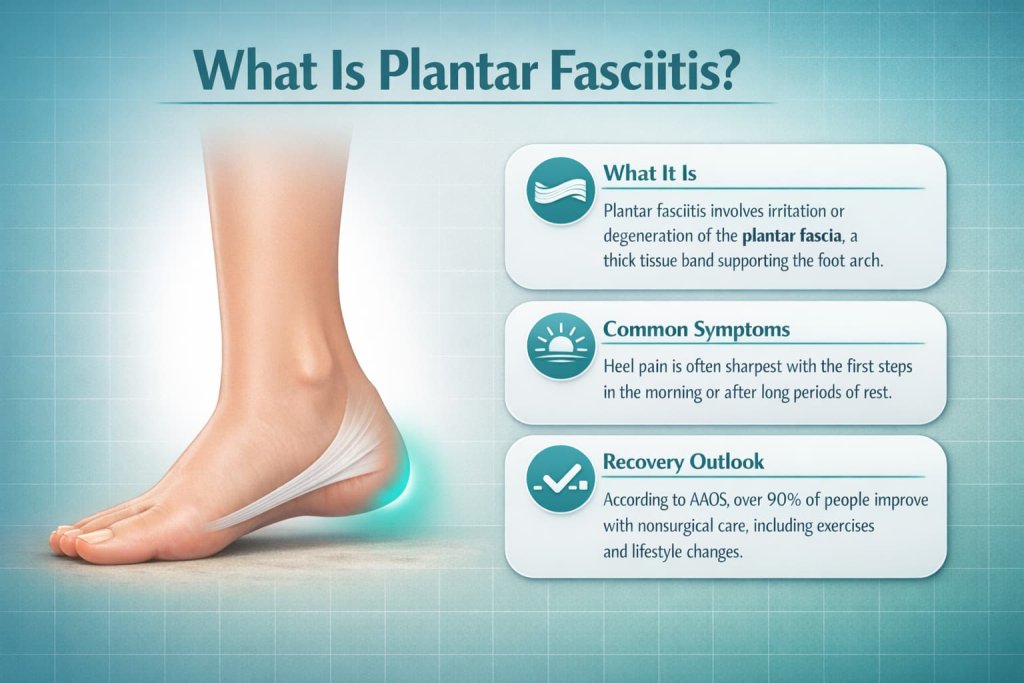
Plantar fasciitis is a common cause of heel pain caused by irritation or degeneration of the plantar fascia, a thick band of tissue running from the heel bone to the toes. Pain is often sharpest with the first steps in the morning or after long periods of sitting.
According to AAOS, over 90% of people improve with nonsurgical treatment, including exercises and lifestyle changes, within about 10 months .
Why Exercises Matter for Plantar Fasciitis
Well-designed plantar fasciitis exercises may help support:
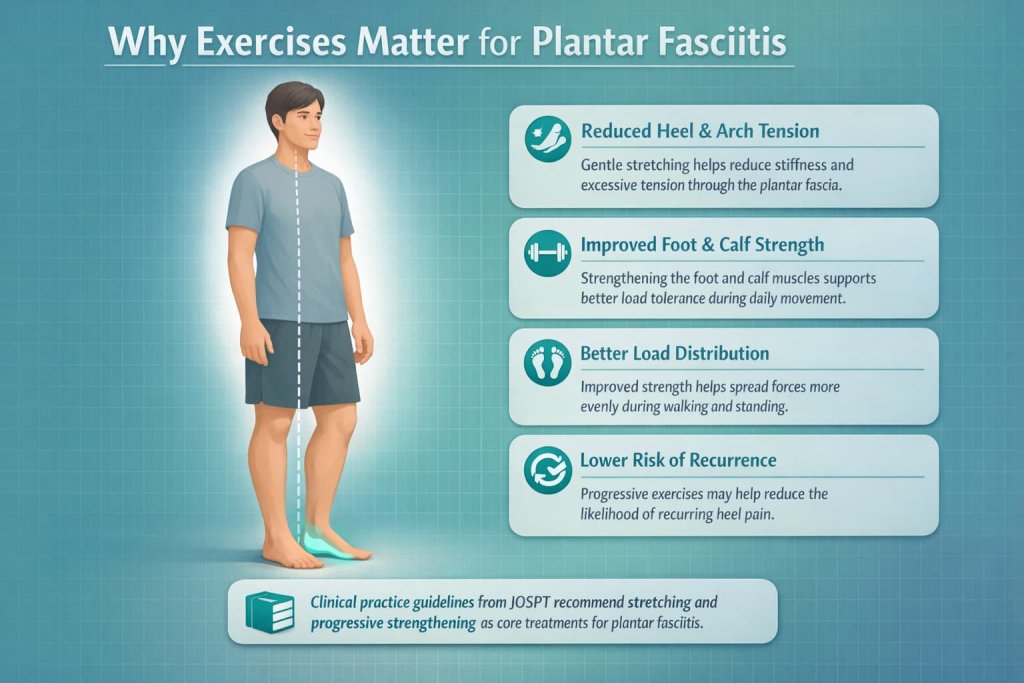
- Reduced tension on the heel and arch
- Improved calf and foot strength
- Better load distribution during walking and standing
- Reduced recurrence of heel pain
Clinical practice guidelines published in the Journal of Orthopaedic & Sports Physical Therapy (JOSPT) recommend stretching and progressive strengthening as core treatments for heel pain related to plantar fasciitis.
10 Best Plantar Fasciitis Exercises
Targeted plantar fasciitis exercises focus on gentle stretching and progressive foot-calf strengthening to reduce heel pain and improve daily function. When performed consistently and pain-free, these exercises may help support recovery and lower the risk of recurring symptoms.
1. Plantar Fascia Stretch (Toe Pull-Back)
Why it works:
This stretch directly loads the plantar fascia in a controlled, lengthened position. It is especially effective for reducing morning “first-step” pain by restoring tissue extensibility after overnight stiffness.
Muscles worked:
Plantar fascia, flexor digitorum brevis, flexor hallucis longus, intrinsic foot muscles.
How to do it:
- Sit and cross one foot over the opposite knee
- Hold the heel with one hand
- Gently pull the toes back toward the shin
- Hold for 20–30 seconds
- Repeat 2–3 times
Trainer Tip:
You should feel a firm stretch along the arch, not sharp heel pain. If discomfort is high, reduce the toe pull slightly and increase gradually over days.
2. Towel Stretch (Before Getting Out of Bed)
Why it works:
This stretch lengthens both the plantar fascia and calf muscles before weight-bearing, helping reduce pain with the first steps of the day.
Muscles worked:
Plantar fascia, gastrocnemius, soleus, Achilles tendon.
How to do it:
- Sit upright in bed with legs extended
- Loop a towel around the ball of your foot
- Keep the knee straight
- Gently pull the towel toward you
- Hold for 30 seconds
- Repeat 2–3 times
Trainer Tip:
This is most effective before standing in the morning. Keep the stretch gentle—this is preparation, not aggressive stretching.
3. Wall Calf Stretch (Gastrocnemius)
Why it works:
Tight calf muscles increase tension through the Achilles tendon into the heel. Improving calf flexibility reduces strain transmitted to the plantar fascia during walking.
Muscles worked:
Gastrocnemius, Achilles tendon, plantar fascia (indirect load reduction).
How to do it:
- Stand facing a wall
- Place hands on the wall at shoulder height
- Step one leg back
- Keep the back knee straight and heel down
- Lean forward until a calf stretch is felt
- Hold 30 seconds
- Repeat 2–3 times per side
Trainer Tip:
Avoid bouncing. A steady, relaxed hold is more effective than forcing the heel lower.
4. Bent-Knee Calf Stretch (Soleus)
Why it works:
The soleus muscle influences ankle motion during walking and standing. Improving soleus flexibility helps reduce heel strain during prolonged standing and slow walking.
Muscles worked:
Soleus, Achilles tendon, plantar fascia (indirect).
How to do it:
- Stand in the same wall-stretch position
- Bend the back knee slightly
- Keep the heel firmly on the floor
- Sit into the stretch gently
- Hold for 30 seconds
- Repeat 2–3 times
Trainer Tip:
You should feel this lower in the calf compared to the straight-knee stretch. Keep movements slow and controlled.
5. Heel Raises
Why it works:
Progressive calf strengthening improves the foot’s ability to tolerate load. Stronger calves reduce excessive strain on the plantar fascia during push-off in walking.
Muscles worked:
Gastrocnemius, soleus, intrinsic foot stabilizers.
How to do it:
- Stand holding a chair or wall for balance
- Slowly rise onto your toes
- Pause briefly at the top
- Lower your heels with control
- Perform 8–12 repetitions
- Complete 2–3 sets
Trainer Tip:
Lowering slowly is just as important as lifting. Stop if heel pain increases during or after the set.
6. Towel Scrunches
Why it works:
This exercise strengthens the intrinsic foot muscles that help support the arch, reducing over-reliance on the plantar fascia for stability.
Muscles worked:
Flexor digitorum brevis, lumbricals, interossei, intrinsic arch stabilizers.
How to do it:
- Sit with feet flat on the floor
- Place a towel under your foot
- Use your toes to scrunch the towel toward you
- Continue for 30–60 seconds
- Switch feet if needed
Trainer Tip:
Avoid curling the ankle or lifting the heel. The movement should come only from the toes.
7. Toe Pickups (Marbles or Objects)
Why it works:
This exercise improves foot coordination and endurance while strengthening muscles that help control arch mechanics during standing and walking.
Muscles worked:
Intrinsic foot muscles, toe flexors, arch stabilizers.
How to do it:
- Place small objects on the floor
- Pick them up one by one using your toes
- Place them into a container
- Continue for 1–2 minutes
Trainer Tip:
Quality matters more than speed. Move slowly and deliberately to improve neuromuscular control.
8. Arch Doming (Short-Foot Exercise)
Why it works:
Arch doming trains active arch support without gripping the toes. This improves foot stability and reduces stress on the plantar fascia during weight-bearing.
Muscles worked:
Abductor hallucis, intrinsic foot muscles, medial arch stabilizers.
How to do it:
- Stand barefoot with weight evenly distributed
- Gently draw the ball of the foot toward the heel
- Lift the arch without curling the toes
- Hold for 5 seconds
- Repeat 8–10 times
Trainer Tip:
If your toes curl, reduce effort. This exercise should feel subtle and controlled, not forceful.
9. Calf Stretch on a Step
Why it works:
This variation allows a deeper calf stretch and may improve ankle mobility, reducing heel stress when tolerated without pain.
Muscles worked:
Gastrocnemius, soleus, Achilles tendon.
How to do it:
- Stand on a step with heels hanging off
- Hold a railing or wall for balance
- Slowly lower your heels
- Hold briefly at the bottom
- Rise back up with control
Trainer Tip:
Only use this stretch once basic calf stretches are comfortable. Stop immediately if heel pain increases.
10. Gentle Foot Rolling or Self-Massage
Why it works:
Self-massage may help reduce perceived stiffness and improve comfort when combined with stretching and strengthening.
Muscles worked:
Plantar fascia, intrinsic foot muscles (passive pressure).
How to do it:
- Sit or stand with light support
- Roll your foot over a ball or frozen bottle
- Apply light to moderate pressure
- Roll slowly for 1–2 minutes
Trainer Tip:
This should feel relieving, not painful. Avoid aggressive pressure directly on the heel bone.
How Often Should You Do Plantar Fasciitis Exercises?
Most authoritative sources recommend:
- Stretching: 2–3 times daily
- Strengthening: 3–4 times per week
- Hold stretches 20–30 seconds
Consistency matters more than intensity.
When to Start Plantar Fasciitis Exercises
Most people with plantar fasciitis can begin gentle stretching exercises as soon as heel pain allows, even during the early stages of symptoms. Light stretching may help reduce stiffness, especially first-step pain in the morning. Exercises should always feel comfortable to mildly challenging, not painful.
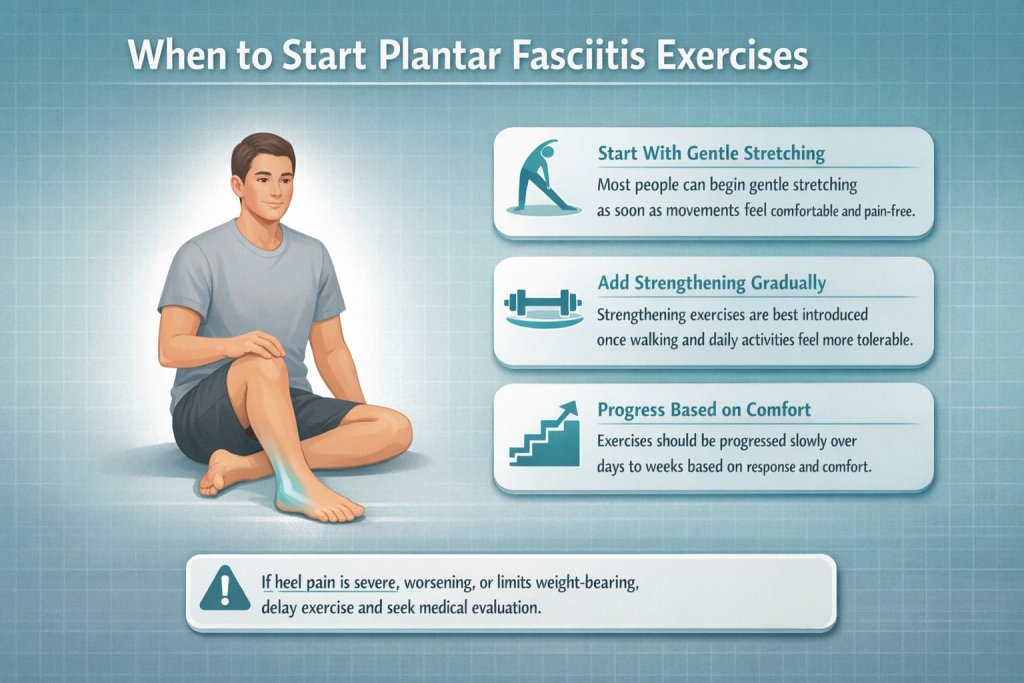
General guidance supported by physiotherapy and orthopedic sources includes:
- Stretching can usually start right away if movements are pain-free.
- Strengthening exercises are best introduced once daily activities such as walking feel more tolerable.
- Exercises should be progressed gradually over days to weeks, based on comfort and response.
If heel pain is severe, worsening, or limiting weight-bearing, it’s best to delay exercise and seek medical evaluation to rule out other causes of heel pain.
Safety Guidelines for Plantar Fasciitis Exercises
Following proper safety guidelines helps reduce the risk of flare-ups and supports steady improvement.
Key safety points include:
- Keep all exercises pain-free or low-discomfort during and after movement.
- Avoid aggressive stretching or bouncing, especially early on.
- Stop exercises if you feel sharp heel pain, increasing soreness, or pain that worsens the next day.
- Wear supportive footwear during daily activities to reduce strain on the plantar fascia.
- Avoid barefoot walking on hard surfaces during flare-ups.
- Progress intensity and volume slowly—consistency matters more than intensity.
- Modify or skip exercises during periods of increased pain.
If symptoms do not improve after several weeks of consistent, well-tolerated exercise, or if pain interferes with normal walking, consult a qualified healthcare professional for individualized guidance.
What Else Helps Exercises Work Better?
Exercises are most effective when combined with:
- Supportive footwear or orthotics
- Avoiding barefoot walking on hard floors
- Gradual activity modification
- Night splints for persistent morning pain (1–3 months)
When to Be Cautious
Seek medical evaluation if:
- Pain is severe or worsening
- You cannot bear weight
- Pain persists despite several weeks of consistent exercise
Frequently Asked Questions
How long does plantar fasciitis take to heal?
Most people improve within several months, and over 90% recover without surgery using conservative care .
Are exercises better than rest?
Yes. Research shows progressive loading and stretching are more effective than rest alone for long-term improvement.
Can I do these exercises every day?
Stretching can usually be done daily. Strengthening should include rest days.
Should I stop walking or running?
High-impact activity may need temporary reduction, but complete inactivity is rarely recommended.
Do night splints really help?
Yes, especially for morning pain, according to AAOS and clinical guidelines.
Is heel pain always plantar fasciitis?
No. Other conditions can mimic symptoms. Persistent pain should be evaluated.
Conclusion
Plantar fasciitis exercises are a safe, evidence-based way to relieve heel pain, restore foot strength, and reduce recurrence when done consistently. Focus on daily stretching, gradual strengthening, and supportive habits rather than quick fixes.
If heel pain continues despite regular exercise, consult a qualified healthcare professional for individualized guidance.
References
- Plantar Fasciitis and Bone Spurs (AAOS OrthoInfo)
- Plantar Fasciitis: Diagnosis and Treatment (Mayo Clinic)
- Heel Pain–Plantar Fasciitis: Revision 2023 (Orthopaedic Section PDF)
- Heel Pain–Plantar Fasciitis: Revision 2023 (JOSPT DOI Page)
- Plantar Fasciitis (NHS)
- High-Load Strength Training Improves Outcome in Plantar Fasciitis (Rathleff et al., PubMed)