
The most effective way to reduce flabby arms over 60 is regular, light-to-moderate strength training that targets the triceps, biceps, and shoulders at least twice per week.
As we age, natural muscle loss (sarcopenia) and reduced activity can make the upper arms appear softer. The good news is that safe, age-appropriate exercises can help improve arm strength, firmness, and everyday function without heavy weights or complicated routines.
Below are the best beginner-friendly arm exercises for adults over 60, followed by safety tips, weekly programming advice, FAQs, and references.
What Causes Flabby Arms After 60?
Flabby or sagging arms are usually caused by a combination of:
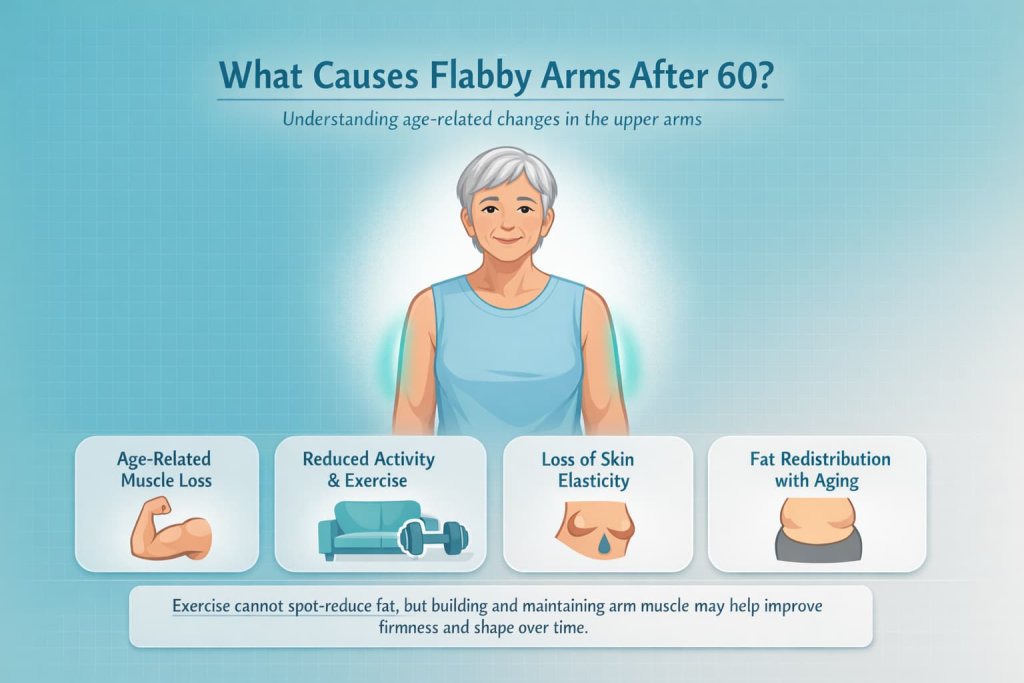
- Age-related muscle loss
- Reduced daily movement or strength training
- Loss of skin elasticity
- Fat redistribution with aging
Exercise cannot spot-reduce fat, but building and maintaining arm muscle can improve firmness and shape over time.
Can Exercises Really Help Flabby Arms After 60?
Yes—exercise can help improve arm strength, firmness, and function after 60, but it’s important to understand what changes are realistic.
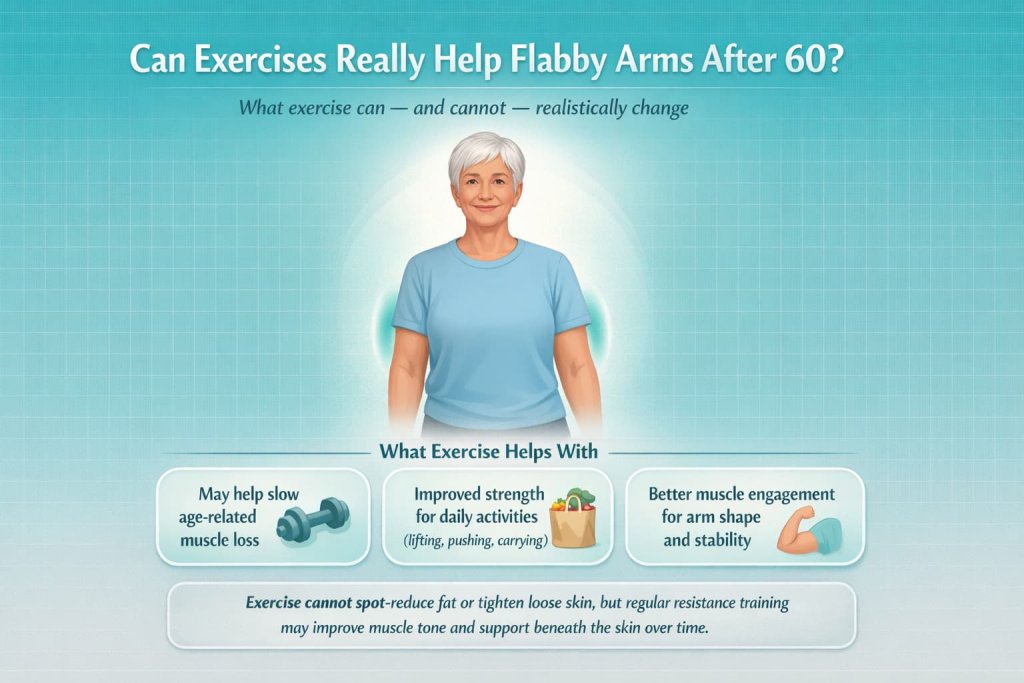
With aging, muscle mass naturally declines and skin elasticity decreases. Exercises cannot spot-reduce fat or “tighten” loose skin, but regular resistance training can increase muscle tone and strength beneath the skin, which often makes the arms look firmer and more supported over time.
When practiced consistently:
- Arm exercises may help slow age-related muscle loss
- Strength gains can improve daily activities like lifting, pushing, and carrying
- Improved muscle engagement can enhance overall arm shape and stability
Results depend on consistency, proper technique, and overall lifestyle factors such as nutrition and physical activity level.
8 Best Exercises for Flabby Arms Over 60
Below are 8 safe, effective exercises that can help improve arm strength and firmness after 60 when done consistently with proper form. These movements focus on the biceps, triceps, and shoulders using light resistance and joint-friendly techniques suitable for older adults.
1. Biceps Curls
How to do it
- Hold light dumbbells or water bottles with palms facing forward
- Stand or sit upright with shoulders relaxed
- Keep elbows close to your sides throughout the movement
- Curl the weights toward your shoulders in a slow, controlled motion
- Lower the weights back down just as slowly
- Perform 8–12 repetitions
Why it works
Biceps curls directly strengthen the biceps, which play a key role in lifting, carrying, and pulling movements. Improving biceps strength helps counter age-related muscle loss and supports everyday tasks like carrying groceries or lifting household items.
Muscles worked
- Biceps brachii
- Forearm muscles (secondary)
Trainer Tip
If you feel your shoulders lifting or swinging, the weight is too heavy. Lighter resistance with strict control is far more effective for toning arms over 60.
2. Overhead Triceps Extension
How to do it
- Hold one light dumbbell or water bottle with both hands
- Raise your arms overhead, keeping elbows close to your ears
- Bend your elbows to lower the weight behind your head
- Straighten your arms to return to the starting position
- Perform 8–12 repetitions
Why it works
This exercise targets the triceps, the muscle group most associated with arm sagging. Strengthening the triceps improves arm firmness and supports pushing movements used in daily life.
Muscles worked
- Triceps brachii
- Shoulders (stabilizers)
Trainer Tip
Keep your core gently engaged and ribs down to avoid arching your lower back during the movement.
3. Chair Triceps Dips (Modified)
How to do it
- Sit on the edge of a sturdy chair with feet flat on the floor
- Place hands beside your hips, fingers facing forward
- Slide hips slightly off the chair
- Bend elbows just a few inches
- Press through your hands to straighten your arms
- Perform 6–10 controlled repetitions
Why it works
Modified chair dips use body weight to strengthen the triceps while keeping joint stress low. The shortened range of motion makes this version safer for older adults.
Muscles worked
- Triceps brachii
- Shoulders (secondary)
- Chest (secondary)
Trainer Tip
Only lower as far as feels comfortable. This is not about depth—it’s about controlled strength.
4. Wall Push-Ups
How to do it
- Stand facing a wall, arms extended
- Place hands on the wall at chest height
- Bend elbows to bring your chest toward the wall
- Keep your body in a straight line
- Push back to the starting position
- Perform 8–15 repetitions
Why it works
Wall push-ups strengthen the arms and upper body while significantly reducing wrist and shoulder strain compared to floor push-ups.
Muscles worked
- Triceps
- Chest
- Shoulders
- Core (light engagement)
Trainer Tip
Step your feet farther from the wall to make the exercise slightly more challenging as you get stronger.
5. Lateral Arm Raises
How to do it
- Hold light dumbbells at your sides
- Stand or sit tall with shoulders relaxed
- Raise arms out to the sides until shoulder height
- Pause briefly, then lower slowly
- Perform 8–12 repetitions
Why it works
Lateral raises strengthen the shoulders, which improves arm shape and gives the upper arms a firmer, more lifted appearance.
Muscles worked
- Lateral deltoids
- Upper trapezius (secondary)
Trainer Tip
Lift only to shoulder height. Raising higher shifts stress away from the target muscles and into the joints.
6. Resistance Band Pull-Apart
How to do it
- Hold a resistance band with both hands at chest height
- Keep arms straight but not locked
- Pull hands apart until the band stretches across your chest
- Slowly return to the starting position
- Perform 10–15 repetitions
Why it works
This exercise improves upper-arm and shoulder stability while supporting posture, which often declines with age.
Muscles worked
- Rear shoulders
- Upper back
- Triceps (secondary)
Trainer Tip
Focus on squeezing your shoulder blades together rather than pulling with your hands.
7. Arm Circles
How to do it
- Extend arms out to the sides at shoulder height
- Make small circles forward for 10–15 seconds
- Reverse direction for another 10–15 seconds
- Keep movements slow and controlled
Why it works
Arm circles promote shoulder mobility and gentle muscle activation, making them ideal as a warm-up or low-impact toning movement.
Muscles worked
- Shoulders
- Upper arms (light activation)
Trainer Tip
Small circles are more effective than large, fast ones—especially for shoulder comfort.
8. Seated Chest Press (Band or Dumbbells)
How to do it
- Sit upright in a chair with feet flat on the floor
- Hold dumbbells or a resistance band at chest level
- Press arms forward until elbows are nearly straight
- Slowly return to the starting position
- Perform 8–12 repetitions
Why it works
This movement builds pushing strength needed for daily tasks such as getting up from a chair or pushing doors open.
Muscles worked
- Chest
- Triceps
- Shoulders
Trainer Tip
Exhale as you press forward and inhale as you return—steady breathing improves control and comfort.
How Often Should You Do Arm Exercises After 60?
According to the American College of Sports Medicine and the CDC:
- Strength train at least 2 days per week
- Perform 1–3 sets of 8–12 reps
- Allow rest days between sessions
Consistency matters more than intensity.
Safety Guidelines for Arm Exercises Over 60
Safety is essential when exercising after 60, especially for the shoulders, elbows, and wrists.
Follow these guidelines to reduce injury risk:
- Start with light resistance and progress gradually
- Use slow, controlled movements
- Maintain proper posture and breathing (avoid holding your breath)
- Stop immediately if you feel sharp pain, dizziness, or joint discomfort
- Allow at least one rest day between strength sessions for the same muscles
If you have arthritis, osteoporosis, cardiovascular conditions, or previous injuries, exercises should be adjusted to your comfort level.
Common Mistakes to Avoid When Toning Arms Over 60
Avoiding common mistakes can make arm exercises safer and more effective.
Frequent errors include:
- Using weights that are too heavy, leading to poor form
- Rushing repetitions instead of controlling the movement
- Locking joints at the top of each exercise
- Ignoring pain signals and pushing through discomfort
- Training the arms every day without adequate recovery
Focusing on proper form, moderate volume, and consistency delivers better long-term results than intensity alone.
When to Talk to a Doctor or Physical Therapist
You should consult a healthcare professional before starting or modifying an exercise routine if you:
- Have chronic joint pain or limited range of motion
- Have been diagnosed with heart disease, osteoporosis, or neurological conditions
- Experience frequent dizziness, shortness of breath, or balance issues
- Are recovering from surgery or injury
A doctor or physical therapist can help determine appropriate exercises, resistance levels, and modifications based on your health history.
Frequently Asked Questions
Can flabby arms really be toned after 60?
Yes. While skin elasticity changes with age, muscle strength and firmness can improve at any age with regular training.
How long before I see results?
Most people notice strength improvements within 4–6 weeks and visible changes with consistent training over several months.
Do I need heavy weights?
No. Light dumbbells, resistance bands, or bodyweight exercises are effective and safer for older adults.
Is walking enough to tone arms?
Walking is excellent for cardiovascular health, but arm firmness requires resistance exercises.
Can women over 60 build arm muscle safely?
Yes. Strength training is safe and recommended for older women when done with proper form and progression.
Should I train arms every day?
No. 2–3 non-consecutive days per week allows muscles to recover and adapt.
Conclusion
Flabby arms over 60 are common—but they are not permanent. With safe, simple strength exercises done consistently, you can improve arm firmness, strength, and daily function at any age. Start light, stay consistent, and focus on progress—not perfection.
If you’re ready, your next step is to build a simple weekly routine and stick with it.
References
- CDC: Older Adults Physical Activity Guidelines
- CDC: What Counts as Physical Activity for Older Adults
- National Institute on Aging: Exercise Toolkit for Older Adults
- World Health Organization: Physical Activity Recommendations
- NHS: Physical Activity Guidelines for Older Adults (65+)
- NSCA Position Statement: Resistance Training for Older Adults