
Pilates ball exercises are low-impact movements that use a small Pilates ball or stability ball to improve core strength, balance, and flexibility. They challenge your muscles through gentle instability, helping you build control, coordination, and posture support without heavy loads.
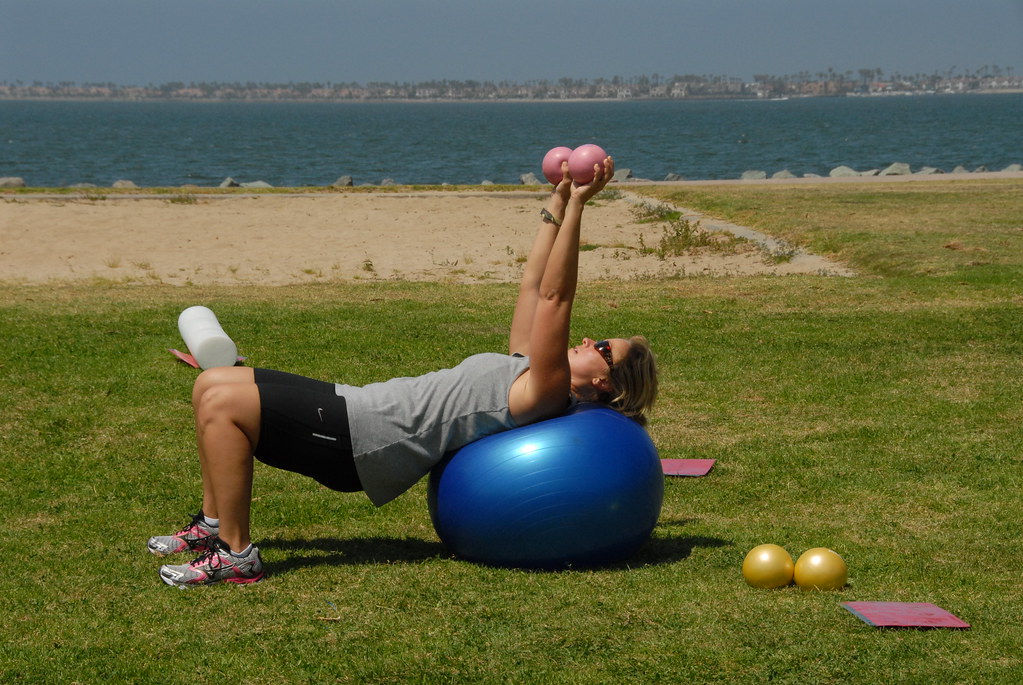
Understanding how Pilates ball exercises work matters because core stability and balance play a key role in everyday movement, injury prevention, and long-term joint health. This guide walks you through the best Pilates ball exercises, how to perform them safely, how often to practice, and what to expect—based on current fitness and public-health guidance.
What Are Pilates Ball Exercises?
Pilates ball exercises are controlled, low-impact movements performed with either:
- A small Pilates ball (mini ball), usually 9–12 inches in diameter
- A stability ball (Swiss ball), commonly 55–75 cm in diameter
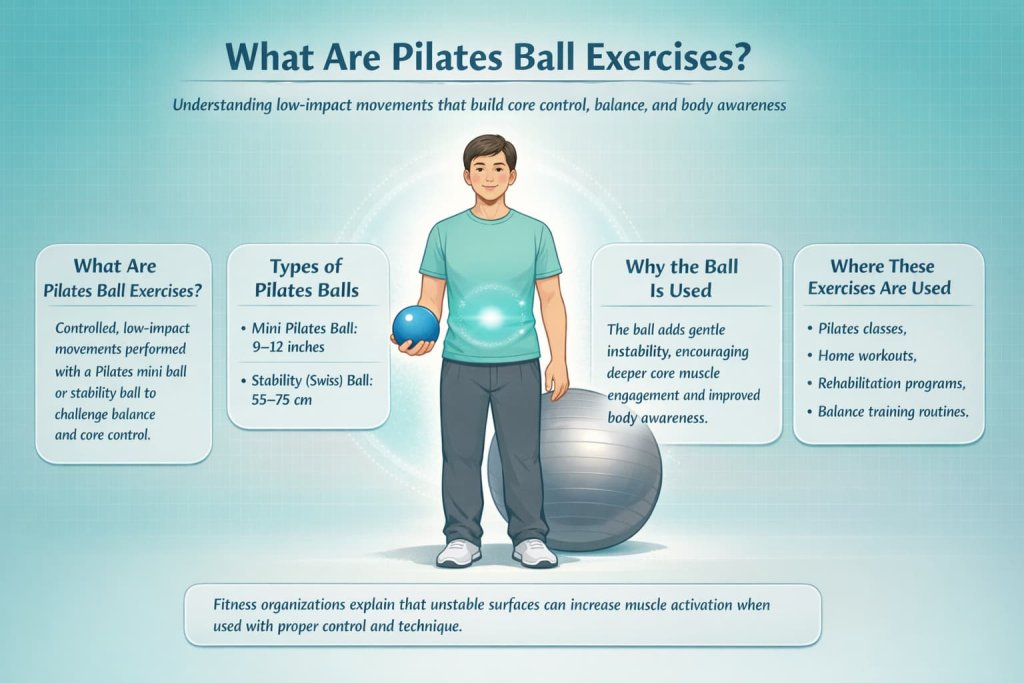
The ball introduces instability, which encourages deeper core muscle engagement and improved body awareness. These exercises are commonly used in Pilates classes, home workouts, rehabilitation programs, and balance training routines.
Organizations such as the American Council on Exercise (ACE) explain that unstable surfaces can increase muscle activation when used with proper control and technique.
11 Best Pilates Ball Exercises
These Pilates ball exercises focus on improving core strength, balance, and controlled flexibility using low-impact, joint-friendly movements. Each exercise can be modified to suit beginners while still challenging stability and posture as strength improves.
1. Ball Pelvic Tilt
How to do it
- Lie on your back with knees bent and feet flat on the floor
- Place the Pilates ball under your pelvis or sacrum
- Gently tilt your pelvis to flatten your lower back toward the floor
- Hold briefly, then return to a neutral spine with control
Why it works
This movement activates the deep core muscles responsible for spinal support and pelvic control. The ball provides subtle feedback, helping you recognize and correct excessive arching or flattening of the lower back.
Muscles worked
Deep abdominals, pelvic stabilizers, lower spinal support muscles
Trainer Tip
Think of gently tipping a bowl of water at your pelvis—small, controlled motion is more effective than force.
2. Ball Bridge
How to do it
- Lie on your back with knees bent and feet hip-width apart
- Place the Pilates ball between your knees
- Gently squeeze the ball as you lift your hips upward
- Pause at the top, then lower your hips slowly
Why it works
The added squeeze activates the inner thighs while reinforcing proper hip extension. This improves coordination between the glutes and core while reducing compensation from the lower back.
Muscles worked
Glutes, hamstrings, inner thighs, core stabilizers
Trainer Tip
Keep your ribs down and avoid pushing the hips too high to maintain spinal neutrality.
3. Seated Ball Balance Hold
How to do it
- Sit upright on a stability ball
- Place feet flat on the floor, hip-width apart
- Stack your head over shoulders and shoulders over hips
- Hold your balance without gripping with your feet
Why it works
Sitting on an unstable surface challenges postural muscles that support balance and upright alignment. Even small adjustments require continuous core engagement.
Muscles worked
Deep core stabilizers, lower back muscles
Trainer Tip
If balance feels challenging, lightly touch a wall or chair until control improves.
4. Ball Dead Bug
How to do it
- Lie on your back with arms and knees raised
- Hold the ball between opposite hand and knee
- Extend the free arm and leg while keeping the ball steady
- Return to start and switch sides
Why it works
This exercise reinforces cross-body coordination and teaches the core to stabilize the spine while the limbs move independently.
Muscles worked
Transverse abdominis, hip flexors, deep spinal stabilizers
Trainer Tip
Move slowly and keep your lower back gently pressed into the floor.
5. Wall Squat With Ball
How to do it
- Place a stability ball between your mid-back and the wall
- Step feet slightly forward
- Lower into a squat while keeping chest upright
- Press through heels to return to standing
Why it works
The ball supports spinal alignment, making squats more accessible while reinforcing proper knee and hip mechanics.
Muscles worked
Quadriceps, glutes, core stabilizers
Trainer Tip
Lower only as far as comfortable—depth improves with strength and mobility.
6. Ball Chest Press
How to do it
- Sit on a stability ball holding dumbbells
- Walk feet forward until hips are lifted into a bridge
- Press dumbbells upward over the chest
- Lower weights with control
Why it works
The unstable base increases core engagement while performing a traditional upper-body strength movement.
Muscles worked
Chest, shoulders, triceps, core stabilizers
Trainer Tip
Keep hips level and avoid letting the ball roll during presses.
7. Ball Roll-Out
How to do it
- Kneel on the floor with forearms resting on the ball
- Slowly roll the ball forward by extending the arms
- Maintain a neutral spine
- Pull the ball back using core control
Why it works
This anti-extension exercise teaches the core to resist arching while the arms move, improving trunk stability.
Muscles worked
Abdominals, shoulders, deep spinal stabilizers
Trainer Tip
Stop before your lower back starts to sag—range matters less than control.
8. Ball Side Bend
How to do it
- Sit on the ball with one foot wider for support
- Lower your torso gently to one side
- Lift back to upright using your side muscles
Why it works
Side bending strengthens the lateral core muscles that help stabilize the spine during everyday movements.
Muscles worked
Obliques, spinal stabilizers
Trainer Tip
Avoid momentum—slow, deliberate movement improves effectiveness.
9. Ball Hamstring Curl
How to do it
- Lie on your back with heels resting on the ball
- Lift hips into a bridge
- Bend knees to roll the ball toward you
- Extend legs back out slowly
Why it works
The unstable surface increases hamstring and glute activation while challenging core control.
Muscles worked
Hamstrings, glutes, core stabilizers
Trainer Tip
If full curls are difficult, start with small ranges or keep hips slightly lower.
10. Ball Plank
How to do it
- Place forearms on the stability ball
- Extend legs into a plank position
- Keep head, shoulders, hips, and heels aligned
- Hold steady while breathing
Why it works
Instability increases the demand on deep core muscles compared to floor planks.
Muscles worked
Core muscles, shoulders, upper back
Trainer Tip
Short holds with good form are better than long holds with poor alignment.
11. Ball Inner-Thigh Squeeze
How to do it
- Sit or lie with the ball placed between your knees
- Gently squeeze the ball
- Release slowly and repeat
Why it works
This simple movement activates the adductors and supports pelvic stability without joint strain.
Muscles worked
Inner thighs (adductors), pelvic stabilizers
Trainer Tip
Think “gentle activation,” not maximum force.
How Often Should You Do Pilates Ball Exercises?
General fitness guidelines recommend:
- 2–3 sessions per week for strength and core training
- 1–3 sets per exercise
- 8–12 controlled repetitions or timed holds
The WHO and CDC recommend including muscle-strengthening and balance exercises weekly, especially for adults and older populations.
Benefits of Pilates Ball Exercises
Regular Pilates ball training may help support:
- Core muscle engagement and trunk control
- Balance and coordination
- Posture awareness
- Joint-friendly strength development
- Flexibility and controlled range of motion
Public-health guidance from the Centers for Disease Control and Prevention (CDC) and the World Health Organization (WHO) highlights the importance of muscle-strengthening and balance activities as part of a well-rounded fitness routine.
Who Can Benefit From Pilates Ball Exercises?
Pilates ball exercises are suitable for a wide range of people because they are low-impact, scalable, and focused on control rather than heavy loading. They may be especially helpful for:
- Beginners who want gentle core and balance training
- Office workers looking to counter prolonged sitting and poor posture
- Older adults aiming to maintain balance, coordination, and joint-friendly strength
- People returning to exercise after a break, using modified movements
- Anyone seeking low-impact training that supports stability and flexibility
Exercises should always be adjusted to individual ability and performed within a comfortable, pain-free range.
How to Choose the Right Pilates Ball Size
Selecting the correct ball size is important for safety, comfort, and effectiveness.
- Mini Pilates ball (9–12 inches): Best for inner-thigh work, core activation, and alignment support
- Stability ball (55–75 cm): Used for seated balance, bridges, planks, and full-body exercises
General guidance for stability balls:
- When sitting on the ball, feet should be flat on the floor
- Knees should be close to hip height
- Hips, knees, and ankles should feel stable and supported
Choose a ball made from anti-burst material and inflate it to a firm but slightly flexible feel.
Common Mistakes to Avoid With Pilates Ball Exercises
Avoiding common errors helps reduce injury risk and improves results.
- Moving too quickly or using momentum
- Over-inflating the ball, which reduces control
- Holding your breath instead of breathing steadily
- Allowing poor posture or spinal collapse
- Progressing to advanced movements before mastering basics
Focus on slow, controlled motion, steady breathing, and quality alignment rather than repetitions or difficulty.
Safety Guidelines Before Starting Pilates Ball Exercises
- Choose the correct ball size for your height
- Use slow, controlled movements
- Stop if you feel sharp pain or dizziness
- Keep a stable surface and open space around you
- Consult a qualified professional if you have joint or spine conditions
Frequently Asked Questions
Are Pilates ball exercises good for beginners?
Yes. Many movements are beginner-friendly and can be modified easily.
Can Pilates ball exercises help with balance?
They may help support balance by challenging postural control.
Is a Pilates ball the same as a stability ball?
No. A Pilates ball is smaller, while a stability ball is larger and supports body weight.
How long should a Pilates ball workout be?
Most routines last 15–30 minutes, depending on intensity.
Can older adults do Pilates ball exercises?
Yes, when exercises are modified and safety guidelines are followed.
Do Pilates ball exercises build muscle?
They support muscle engagement and endurance rather than maximal strength.
Conclusion
Pilates ball exercises offer a simple, joint-friendly way to build core strength, improve balance, and enhance flexibility. Whether you’re new to exercise or adding variety to your routine, these movements can fit easily into a home or studio workout.
If you’re looking to improve stability and movement quality, start with a few exercises and progress gradually as your control improves.
References
- CDC: Older Adult Activity Guidelines (includes balance activities)
- Physical Activity Guidelines for Americans, 2nd Edition (official PDF)
- Mayo Clinic: Video Guide to Choosing the Right Fitness Ball Size
- ACE: Core-Strengthening Stability Ball Workout (form + programming ideas)
- Systematic Review (2023, PMC): Pilates Training and Balance in Older Adults