
Mid back exercises help strengthen the muscles between your shoulder blades, support better posture, and may reduce posture-related discomfort when done consistently.
Understanding how to train your mid back properly matters because weak or inactive mid-back muscles are commonly linked with rounded shoulders, upper-back stiffness, and inefficient shoulder movement. With the right mix of strengthening and mobility work, you can support daily movement, exercise performance, and long-term spine health.
This guide covers 12 effective mid back exercises, safety tips, how often to train, and evidence-based guidance from trusted health and fitness organizations.
What Are Mid Back Exercises?
Mid back exercises primarily target the thoracic spine region and scapular stabilizers, including the rhomboids, middle trapezius, and lower trapezius muscles. These muscles help:
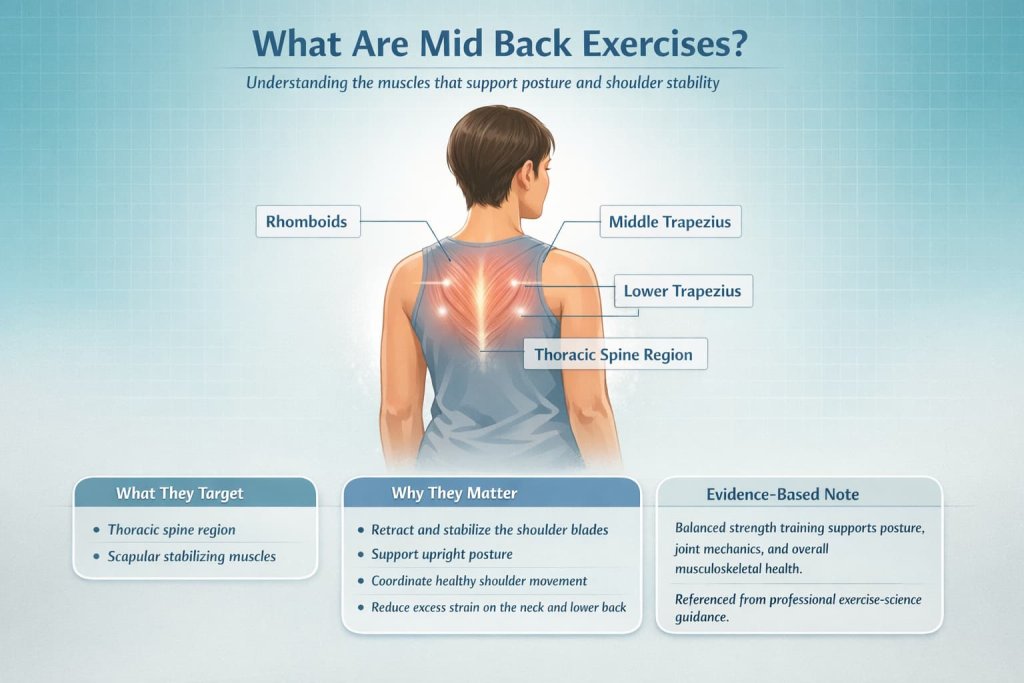
- Retract and stabilize the shoulder blades
- Support upright posture
- Coordinate healthy shoulder movement
- Reduce excessive strain on the neck and lower back
According to guidance aligned with the American College of Sports Medicine, balanced strength training supports posture, joint mechanics, and overall musculoskeletal health.
12 Best Mid Back Exercises
These exercises target the muscles between your shoulder blades to support strength, posture, and daily movement control. When done consistently and with proper form, they may help improve upper-back stability and overall comfort.
1. Seated Cable Row
How to do it
- Sit tall with feet firmly planted and knees slightly bent
- Hold the handle with arms extended and shoulders relaxed
- Pull the handle toward your torso while squeezing your shoulder blades together
- Pause briefly, then return slowly to the start
- Perform 8–15 controlled reps
Why it works
This exercise reinforces controlled scapular retraction, which is essential for mid back strength and postural support during daily movements and lifting tasks.
Trainer Tip
Avoid leaning back excessively—keep your torso upright to ensure the mid back does the work.
2. Bent-Over Dumbbell Row
How to do it
- Hinge at the hips with a neutral spine
- Hold dumbbells with arms hanging toward the floor
- Pull elbows up and back, drawing shoulder blades together
- Lower slowly with control
- Complete 8–12 reps
Why it works
The hip-hinged position challenges mid back strength while teaching coordination between the torso and arms.
Trainer Tip
Keep your neck neutral and avoid rounding the upper back during the pull.
3. Chest-Supported Dumbbell Row
How to do it
- Lie face down on an incline bench
- Hold dumbbells with palms facing inward
- Pull weights toward your ribs while squeezing the shoulder blades
- Lower slowly
- Perform 10–15 reps
Why it works
By supporting the torso, this exercise minimizes lower-back involvement and isolates the mid back more effectively.
Trainer Tip
Focus on slow tempo—this movement benefits from controlled execution rather than heavy load.
4. Resistance Band Row
How to do it
- Anchor a band at chest height
- Hold handles with arms extended
- Pull the band toward your body while keeping elbows close
- Pause briefly, then return slowly
- Perform 12–20 reps
Why it works
Bands provide constant tension and are joint-friendly, making them ideal for beginners or home workouts.
Trainer Tip
Choose a band that allows smooth control without snapping back.
5. Face Pull
How to do it
- Attach a rope to a cable or resistance band at face height
- Pull handles toward your face with elbows flared slightly
- Squeeze shoulder blades together
- Return slowly
- Perform 10–15 reps
Why it works
Face pulls promote balanced shoulder mechanics and mid-to-upper back activation.
Trainer Tip
Pull with elbows, not hands—this keeps emphasis on the upper-mid back.
6. Prone Y Raise
How to do it
- Lie face down on a bench or mat
- Raise arms overhead in a Y shape with thumbs up
- Lift arms slightly off the surface
- Lower slowly
- Perform 10–15 reps
Why it works
This movement targets the lower trapezius, which plays a key role in postural control and shoulder stability.
Trainer Tip
Use very light weights or bodyweight—control matters more than load.
7. Prone T Raise
How to do it
- Lie face down with arms extended out to the sides
- Lift arms to form a T shape
- Squeeze shoulder blades together
- Lower slowly
- Perform 10–15 reps
Why it works
Prone T raises strengthen the mid back while reinforcing controlled scapular retraction.
Trainer Tip
Avoid shrugging—keep shoulders down and away from your ears.
8. Inverted Row
How to do it
- Set a bar at waist height
- Lie underneath and grip the bar
- Pull your chest toward the bar
- Lower under control
- Perform 6–12 reps
Why it works
This bodyweight exercise challenges the mid back while engaging the arms and core for total upper-body control.
Trainer Tip
Bend your knees to reduce difficulty or straighten legs to progress.
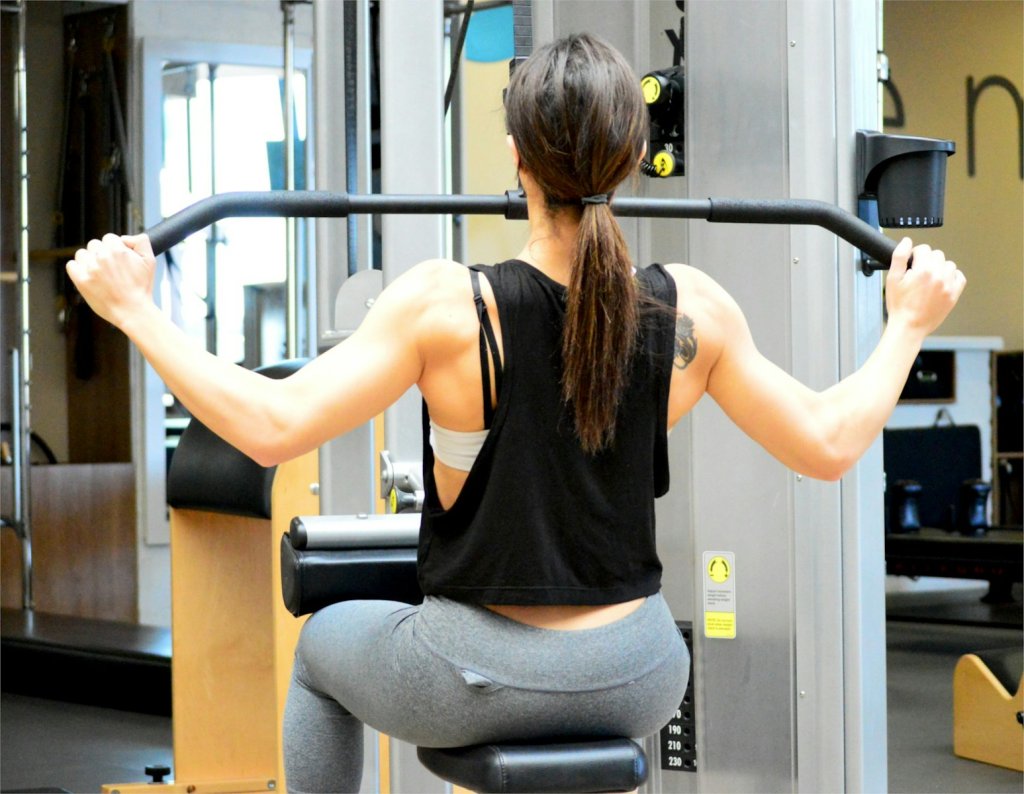
9. Lat Pulldown (Neutral or Wide Grip)
How to do it
- Sit tall with hands on the bar
- Pull bar down toward upper chest
- Squeeze shoulder blades together
- Return slowly to start
- Perform 8–12 reps
Why it works
When performed with controlled scapular movement, lat pulldowns engage the mid back in addition to the lats.
Trainer Tip
Avoid pulling behind the neck—this reduces shoulder strain.
10. Single-Arm Dumbbell Row
How to do it
- Support one knee and hand on a bench
- Hold a dumbbell with the opposite arm
- Pull elbow toward your hip
- Lower slowly
- Perform 8–12 reps per side
Why it works
Unilateral training improves posture awareness and helps correct strength imbalances.
Trainer Tip
Keep hips square and avoid twisting during the pull.
11. Wall Slides
How to do it
- Stand with back and arms against a wall
- Slide arms upward while maintaining contact
- Lower slowly
- Perform 10–15 reps
Why it works
Wall slides improve mid back endurance and shoulder mobility with minimal joint stress.
Trainer Tip
Move slowly and stop if you lose wall contact.
12. Resistance Band Pull-Apart
How to do it
- Hold a band at shoulder height
- Pull hands apart until arms are extended
- Squeeze shoulder blades together
- Return slowly
- Perform 12–20 reps
Why it works
This simple drill reinforces upright posture and scapular control during daily activities.
Trainer Tip
Keep ribs down and avoid arching your lower back.
How Often Should You Do Mid Back Exercises?
For most adults:
- 2–3 sessions per week of targeted mid back work
- 2–4 sets per exercise
- 8–15 controlled repetitions
This approach aligns with recommendations from the National Institute on Aging, which highlights the importance of regular strength training for posture, balance, and independence.
Benefits of Doing Mid Back Exercises Regularly
Consistent mid back training may help:
- Improve postural alignment over time
- Support shoulder and neck comfort
- Enhance upper-body strength balance
- Reduce compensatory strain from prolonged sitting
- Improve exercise form in pulling and pressing movements
Public health recommendations from the Centers for Disease Control and Prevention emphasize strength training at least twice per week for overall musculoskeletal health.
How to Warm Up Before Mid Back Exercises
Warming up before mid back exercises prepares the spine and shoulders for movement and helps reduce injury risk. A good warm-up should focus on gentle circulation, thoracic mobility, and light shoulder blade activation.
A simple and effective warm-up may include:
- Light full-body movement (2–5 minutes)
Brisk walking, marching in place, or easy arm swings to increase blood flow. - Thoracic mobility drills
Gentle movements such as thoracic extensions, seated rotations, or open-book stretches to encourage mid-back movement. - Scapular activation exercises
Low-resistance band rows, wall slides, or shoulder blade squeezes to “wake up” the mid back muscles. - Controlled breathing
Slow, relaxed breathing to reduce upper-body tension and promote better movement control.
The warm-up should feel easy and comfortable, not fatiguing. If you feel pain, dizziness, or sharp discomfort, stop and reassess before continuing.
Can Mid Back Exercises Really Help with Pain Relief?
Mid back exercises may help support posture-related discomfort, especially when stiffness or weakness contributes to poor alignment. Research reviews have found that structured exercise programs can improve thoracic posture and shoulder positioning, which are often linked to mid-back tension.
However, exercises are not a replacement for medical care. For persistent or worsening pain, consult a qualified professional.
Who Should Be Careful Before Doing Mid Back Exercises?
Use caution and seek professional guidance if you have:
- Persistent or severe back pain
- Numbness, tingling, or weakness in the arms or legs
- A recent spinal injury or surgery
- Unexplained pain that worsens at night or with rest
Guidance from Mayo Clinic and National Health Service recommends medical evaluation when back pain is severe, ongoing, or accompanied by concerning symptoms.
Common Mistakes to Avoid with Mid Back Exercises
- Using momentum instead of controlled movement
- Over-squeezing the shoulder blades aggressively
- Neglecting posture during rows and pulls
- Training mid back without balancing mobility work
- Ignoring pain signals during exercise
Frequently Asked Questions (FAQs)
1. Are mid back exercises good for posture?
Yes. Strengthening the mid back supports shoulder blade positioning, which is essential for upright posture.
2. Can I do mid back exercises at home?
Absolutely. Resistance bands, dumbbells, and bodyweight movements can be very effective.
3. How long does it take to see posture improvements?
Many people notice improved posture awareness within a few weeks, with visible changes often taking 6–12 weeks of consistent training.
4. Are mid back exercises safe for beginners?
Yes, when performed with light resistance, proper form, and gradual progression.
5. Should I stretch my mid back too?
Yes. Combining strengthening with gentle thoracic mobility exercises supports comfort and movement quality.
6. Can mid back exercises help neck discomfort?
They may help indirectly by improving shoulder and upper-back support, which can reduce neck strain.
Conclusion
Mid back exercises play a crucial role in strength, posture, and long-term spine support. When performed consistently and with proper form, they can enhance daily movement, exercise performance, and overall comfort. Start with manageable resistance, focus on control, and progress gradually.
If discomfort persists or worsens, consult a qualified healthcare or fitness professional before continuing.
References
- CDC: Adult Physical Activity Guidelines (strength training 2+ days/week)
- U.S. Department of Health & Human Services: Physical Activity Guidelines for Americans (PDF)
- ACSM: Physical Activity Guidelines (strength and overall activity targets)
- WHO: Physical Activity Recommendations (muscle-strengthening 2+ days/week)
- National Institute on Aging (NIH): Tips for Getting and Staying Active
- Mayo Clinic: Back Pain—When to See a Doctor (safety/red flags)
- BMC Musculoskeletal Disorders (2024): Therapeutic exercise and posture outcomes (systematic review/meta-analysis)
- NHS: Thoracic Spine Exercises (mid back mobility examples)