
Runner’s knee strengthening exercises are targeted movements that focus on building strength around the hips, thighs, and knees to reduce stress on the kneecap and support safer running mechanics.
Understanding these exercises matters because runner’s knee—often referred to as patellofemoral pain—commonly develops when the muscles controlling knee alignment and shock absorption are not strong enough to handle repetitive running loads.
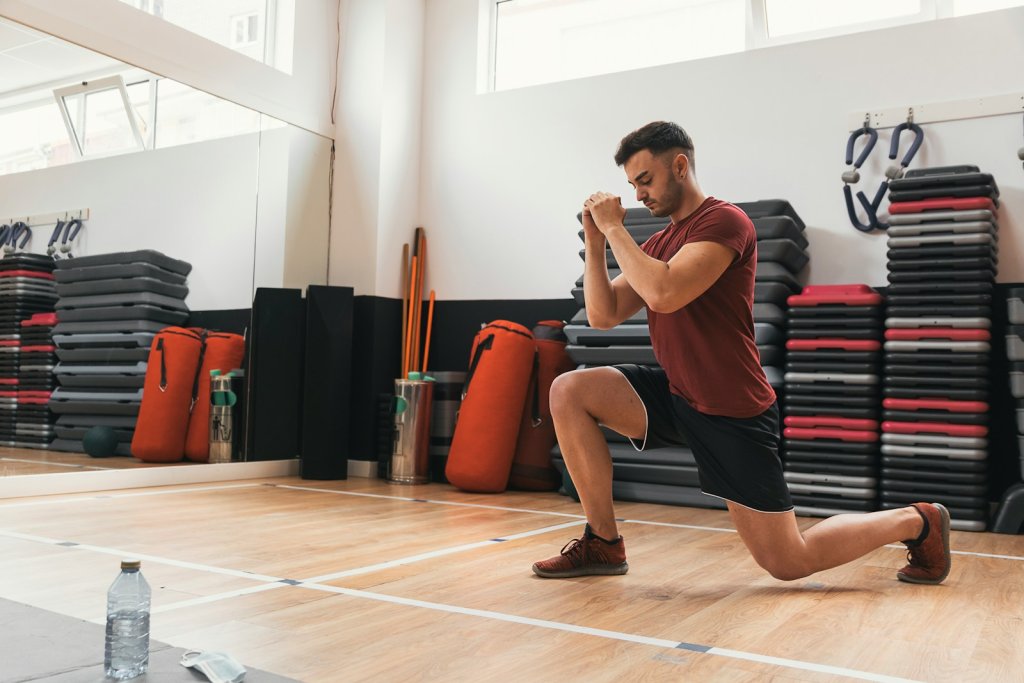
Most evidence-based programs emphasize:
- Strengthening the quadriceps, hips, and glutes
- Improving knee and hip control during movement
- Progressing gradually while managing running volume
What Is Runner’s Knee
Runner’s knee, clinically known as patellofemoral pain, describes pain around or behind the kneecap that worsens with running, stairs, squatting, or prolonged sitting. It is usually linked to how forces travel through the knee rather than structural damage.
Why Strengthening Exercises Help Runner’s Knee
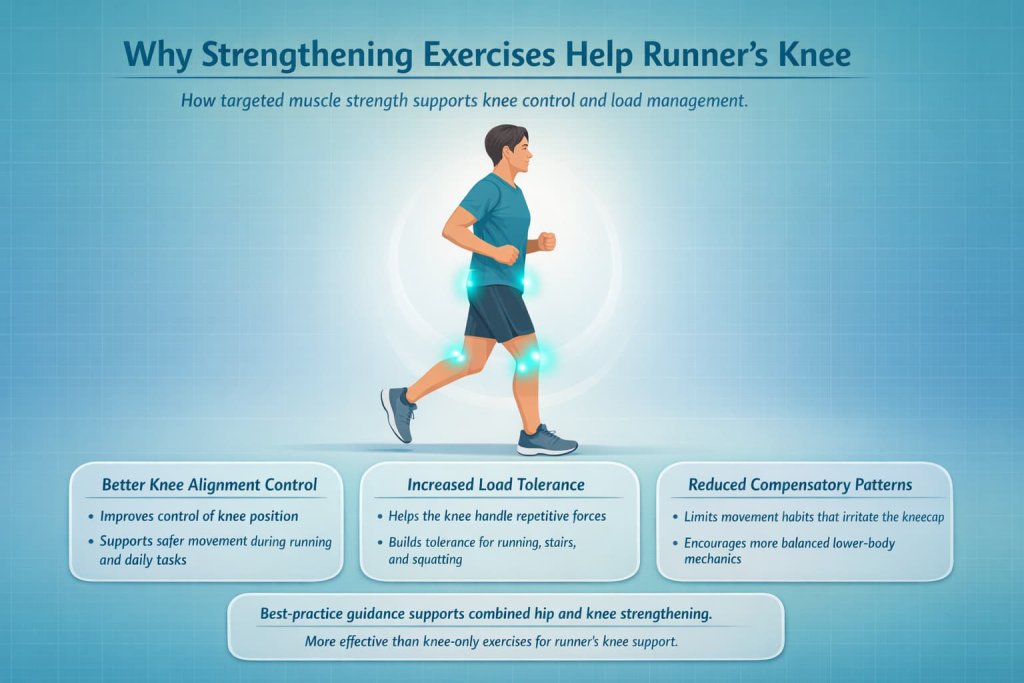
Strengthening exercises may help by:
- Improving control of knee alignment during running and daily tasks
- Increasing tolerance to load at the knee joint
- Reducing compensatory movement patterns that irritate the kneecap
Current best-practice guidance from the British Journal of Sports Medicine highlights that combining hip and knee strengthening is more effective than focusing on the knee alone.
12 Best Runner’s Knee Strengthening Exercises
Strengthening the muscles around your knees and hips plays a key role in managing runner’s knee and supporting safer movement. These exercises focus on improving stability, control, and load tolerance to help you return to running more comfortably.
1. Quad Sets
How to do it:
- Sit or lie with your leg fully extended and supported
- Tighten the front of your thigh by pressing the knee gently toward the floor
- Hold the contraction for 5–10 seconds
- Relax completely before repeating
Why it works:
Quad sets activate the quadriceps without moving the knee joint, making them especially useful during early stages of runner’s knee when bending the knee may feel uncomfortable.
Muscles worked:
Quadriceps.
Trainer Tip:
Think about “pulling the kneecap upward” with the thigh muscle rather than pushing the knee down aggressively.
2. Straight-Leg Raises
How to do it:
- Lie on your back with one knee bent and the other leg straight
- Tighten the thigh of the straight leg
- Lift the leg until it matches the height of the bent knee
- Lower slowly with control
Why it works:
This exercise strengthens the quadriceps while keeping the knee joint stable, helping build strength without excessive kneecap stress.
Muscles worked:
Quadriceps, hip flexors.
Trainer Tip:
If the knee bends while lifting, reduce the height and slow the movement.
3. Wall Sits
How to do it:
- Stand with your back against a wall and feet shoulder-width apart
- Slide down until knees are bent to a comfortable angle
- Hold the position while breathing normally
- Push through the heels to stand back up
Why it works:
Wall sits improve quadriceps endurance, which is important for running, downhill control, and stair tolerance.
Muscles worked:
Quadriceps, glutes.
Trainer Tip:
Knees should track in line with toes—avoid letting them collapse inward.
4. Step-Ups
How to do it:
- Stand facing a low step or platform
- Place one foot fully on the step
- Press through the heel to lift your body up
- Slowly lower back down with control
Why it works:
Step-ups mimic everyday and running-related movements, training knee control under load.
Muscles worked:
Quadriceps, glutes.
Trainer Tip:
Move slowly on the way down—this is where knee control matters most.
5. Glute Bridges
How to do it:
- Lie on your back with knees bent and feet flat on the floor
- Tighten your glutes and lift your hips upward
- Hold briefly at the top
- Lower slowly to the floor
Why it works:
Strong glutes help reduce excessive stress on the knee by improving hip control during running.
Muscles worked:
Glutes, hamstrings.
Trainer Tip:
Keep your ribs down and avoid arching your lower back as you lift.
6. Clamshells
How to do it:
- Lie on your side with hips and knees slightly bent
- Keep feet together while lifting the top knee
- Lower slowly without rotating your hips
Why it works:
Clamshells strengthen the gluteus medius, which helps control knee alignment during running and single-leg tasks.
Muscles worked:
Gluteus medius.
Trainer Tip:
Imagine your hips are stacked between two walls—no rolling forward or backward.
7. Side-Lying Leg Raises
How to do it:
- Lie on your side with bottom knee bent and top leg straight
- Lift the top leg upward slightly behind your body
- Lower slowly with control
Why it works:
This exercise builds lateral hip strength, which can help limit inward knee movement associated with runner’s knee.
Muscles worked:
Hip abductors.
Trainer Tip:
Small, controlled lifts are more effective than high swings.
8. Mini Squats
How to do it:
- Stand with feet shoulder-width apart
- Sit back slightly and bend knees to a shallow depth
- Press through heels to stand back up
Why it works:
Mini squats strengthen the hips and knees together while allowing you to stay within a pain-free range.
Muscles worked:
Quadriceps, glutes.
Trainer Tip:
Quality matters more than depth—stop before discomfort increases.
9. Reverse Lunges
How to do it:
- Stand tall with feet hip-width apart
- Step one foot backward into a lunge
- Lower under control, then return to standing
- Alternate sides
Why it works:
Reverse lunges reduce forward knee stress compared to forward lunges while still building lower-body strength.
Muscles worked:
Quadriceps, glutes, hamstrings.
Trainer Tip:
Keep your front knee aligned over your toes throughout the movement.
10. Hamstring Curls (Band or Machine)
How to do it:
- Secure a resistance band or position yourself at a machine
- Bend the knee slowly against resistance
- Lower back to the starting position with control
Why it works:
Balanced hamstring strength supports knee stability and complements quadriceps training.
Muscles worked:
Hamstrings.
Trainer Tip:
Avoid snapping the leg back—controlled lowering is key.
11. Calf Raises
How to do it:
- Stand tall with feet hip-width apart
- Rise onto the balls of your feet
- Pause briefly, then lower slowly
Why it works:
Strong calves help absorb impact during running and support smooth ankle-knee coordination.
Muscles worked:
Gastrocnemius, soleus.
Trainer Tip:
Use a wall or chair for balance so you can focus on control.
12. Single-Leg Balance Holds
How to do it:
- Stand on one leg with the knee slightly bent
- Maintain balance for 20–40 seconds
- Switch sides
Why it works:
Single-leg balance improves neuromuscular control and joint awareness, which are important for running mechanics.
Muscles worked:
Glutes, knee and ankle stabilizers.
Trainer Tip:
Progress gradually—only add unstable surfaces once basic balance feels steady.
How Often to Do Runner’s Knee Strengthening Exercises
Most rehabilitation programs recommend:
- 2–4 sessions per week
- 2–3 sets per exercise
- Gradual progression over 6–12 weeks
How to Warm Up Before Runner’s Knee Strengthening Exercises
Warming up before runner’s knee strengthening exercises helps prepare the muscles and joints for movement and may reduce unnecessary stress on the kneecap. A proper warm-up should be gentle, controlled, and completely pain-free.
A simple warm-up typically includes:
- Light cardiovascular activity such as brisk walking or easy cycling for 3–5 minutes to increase blood flow
- Gentle knee and hip mobility, including controlled knee bends or leg swings within a comfortable range
- Muscle activation drills for the quadriceps and hips, such as short quad sets or low-effort glute bridges
The goal is not to fatigue the muscles but to improve movement readiness and awareness before strengthening begins. If knee discomfort increases during the warm-up, intensity should be reduced or the session postponed.
Common Mistakes to Avoid During Runner’s Knee Exercises
Avoiding common mistakes is essential for keeping runner’s knee strengthening exercises safe and effective. Many setbacks occur due to how exercises are performed rather than which exercises are chosen.
Common mistakes include:
- Exercising through knee pain, especially sharp or worsening discomfort
- Skipping hip and glute strengthening, which can increase knee strain during running
- Using poor knee alignment, such as allowing the knee to collapse inward during squats or step-ups
- Progressing too quickly, adding resistance or volume before the knee has adapted
- Rushing movements, which reduces muscle control and joint stability
Focusing on slow, controlled execution and gradual progression supports safer strengthening and better long-term outcomes.
Who Can Benefit From Runner’s Knee Strengthening Exercises
These exercises may benefit:
- Recreational and competitive runners
- People with pain during stairs or squatting
- Individuals returning to running after knee discomfort
They are commonly used in sports medicine and physical therapy settings.
When to Stop and Seek Professional Guidance
Stop exercising and consult a qualified professional if:
- Knee pain worsens or becomes sharp
- Swelling or locking occurs
- Pain does not improve after several weeks of consistent exercise
Frequently Asked Questions
Can strengthening exercises cure runner’s knee?
Exercises do not “cure” runner’s knee but may help reduce symptoms and improve knee function when done consistently.
Should I stop running while doing these exercises?
Many runners reduce mileage temporarily while strengthening, then return gradually based on comfort.
How long before I see improvement?
Some people notice improvement within 4–6 weeks, while others may need longer.
Are hip exercises really necessary?
Yes. Research consistently shows hip strengthening supports better knee alignment and load control.
Can beginners do these exercises?
Most are beginner-friendly when performed with proper form and pain-free range.
Do I need equipment?
Most exercises use bodyweight; resistance bands can add progression later.
Conclusion
Runner’s knee strengthening exercises focus on building supportive strength around the hips and knees to help manage pain and support safer running. When practiced consistently and progressed gradually, they form the foundation of most evidence-based runner’s knee rehabilitation programs.
If symptoms persist, working with a qualified professional can help tailor exercises to your needs.
References
- Best practice guide for patellofemoral pain (BJSM, 2024)
- Patellofemoral pain: Clinical Practice Guidelines (JOSPT, 2019)
- Hip and knee strengthening vs knee-only strengthening for PFPS: systematic review and meta-analysis (PubMed, 2025)
- Quadriceps or hip exercises for patellofemoral pain? Randomised controlled equivalence trial (BJSM, 2023)
- Patellofemoral Pain Syndrome overview (AAOS OrthoInfo)
- Knee Conditioning Program (AAOS OrthoInfo)
- Patellofemoral pain syndrome: Diagnosis and treatment (Mayo Clinic)
- Exercises for patellofemoral knee pain (NHS inform)