
Chlorella vs spirulina differ mainly in their nutrient profiles, with chlorella offering more iron, vitamin B12, and chlorophyll, while spirulina provides more protein and B vitamins. Understanding these differences helps you choose the supplement that best supports your nutrition and wellness goals.
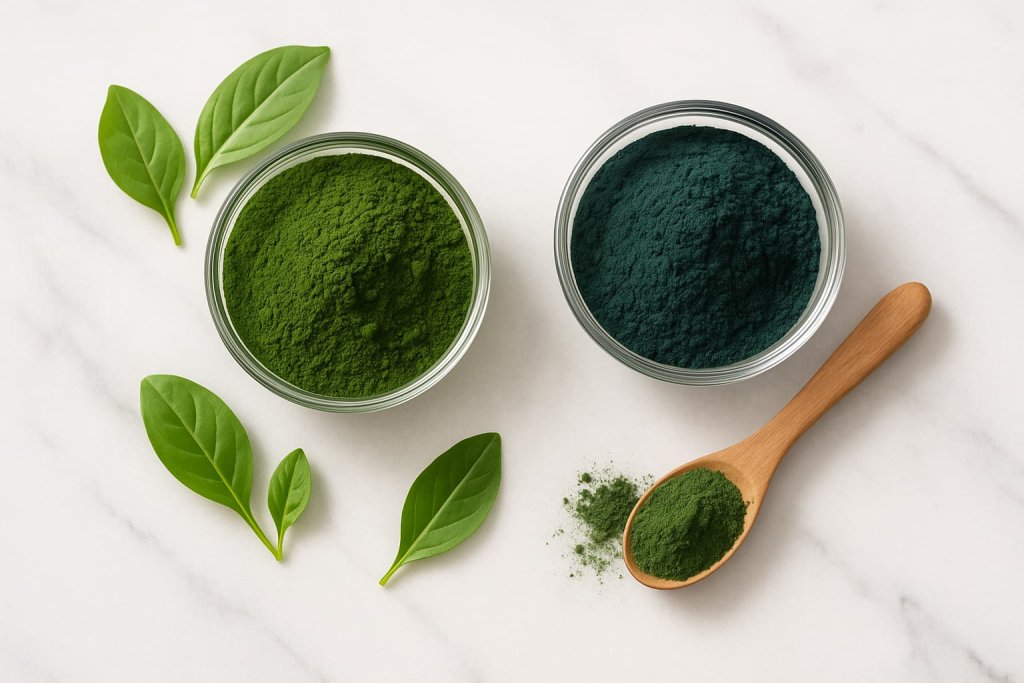
Both are nutrient-dense algae used for overall wellness, immune support, and antioxidant intake. They are considered dietary supplements—not medications—and reputable health organizations advise choosing high-quality, third-party-tested products. According to the National Institutes of Health Office of Dietary Supplements, supplement quality can vary, making careful selection essential for safety and effectiveness.
Below is a detailed, fully researched comparison focusing on nutrition, benefits, side effects, safety tips, and how to choose the right option.
What Is Chlorella?
Overview and Characteristics
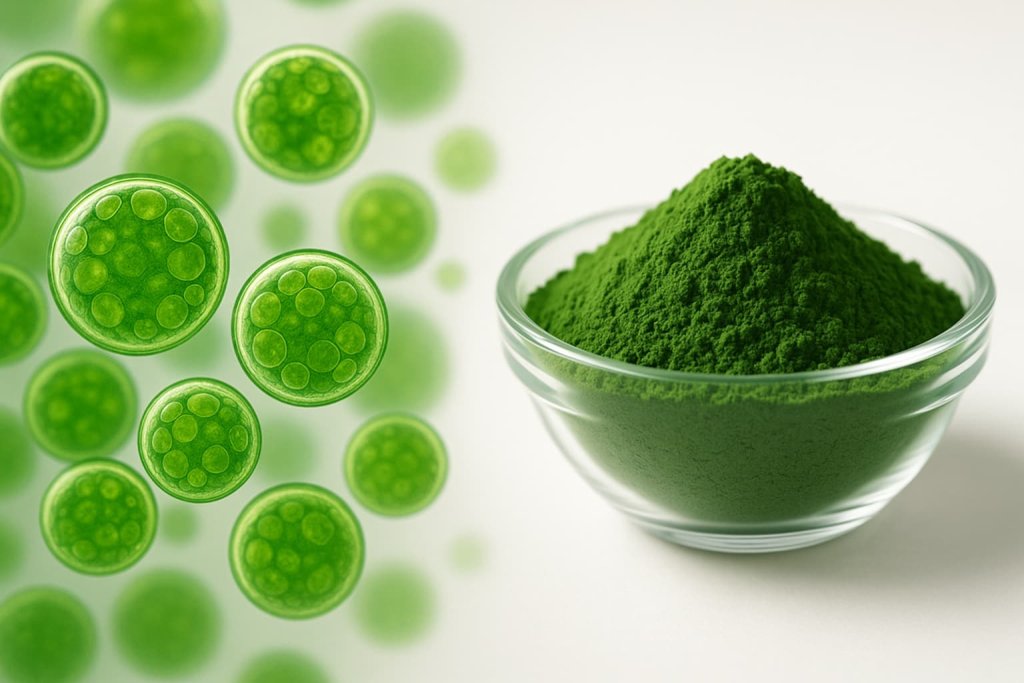
Chlorella is a freshwater green microalgae known for its dense nutrient profile and naturally high chlorophyll content. It is a single-celled organism that has been studied since the mid-20th century for its nutritional potential and rapid growth rate.
Because chlorella has a tough outer cell wall, most supplement manufacturers use a “cracked cell wall” process to make its nutrients more accessible. After harvesting, the algae are typically dried and processed into powder, tablets, or capsules, making it suitable for everyday supplementation.
Key Nutrients in Chlorella
Chlorella is often highlighted for its nutrient density. It is naturally rich in:
- Iron
- Folate
- Vitamin B12 (amount varies depending on strain and brand)
- Vitamin A (from carotenoids)
- Omega-3 fatty acids
- Chlorophyll
- Complete protein (roughly 50–60% by dry weight)
It also contains carotenoids and other antioxidant compounds that may help support the body’s normal defense against oxidative stress. Because it provides nutrients that can sometimes be limited in plant-based diets—such as iron, vitamin A precursors, and potentially B12—chlorella is frequently chosen by vegetarian and vegan consumers.
How Chlorella Is Commonly Used
Chlorella is used in several convenient forms:
- Powder: Added to smoothies, shakes, or mixed into foods.
- Tablets and capsules: A more controlled serving option for people who prefer not to use powders.
Human studies commonly use 2–10 grams per day, though amounts vary widely across products.
Individuals following plant-based diets often incorporate chlorella to support nutrient intake, particularly for iron, folate, vitamin A, and certain antioxidants.
What Is Spirulina?
Overview and Characteristics
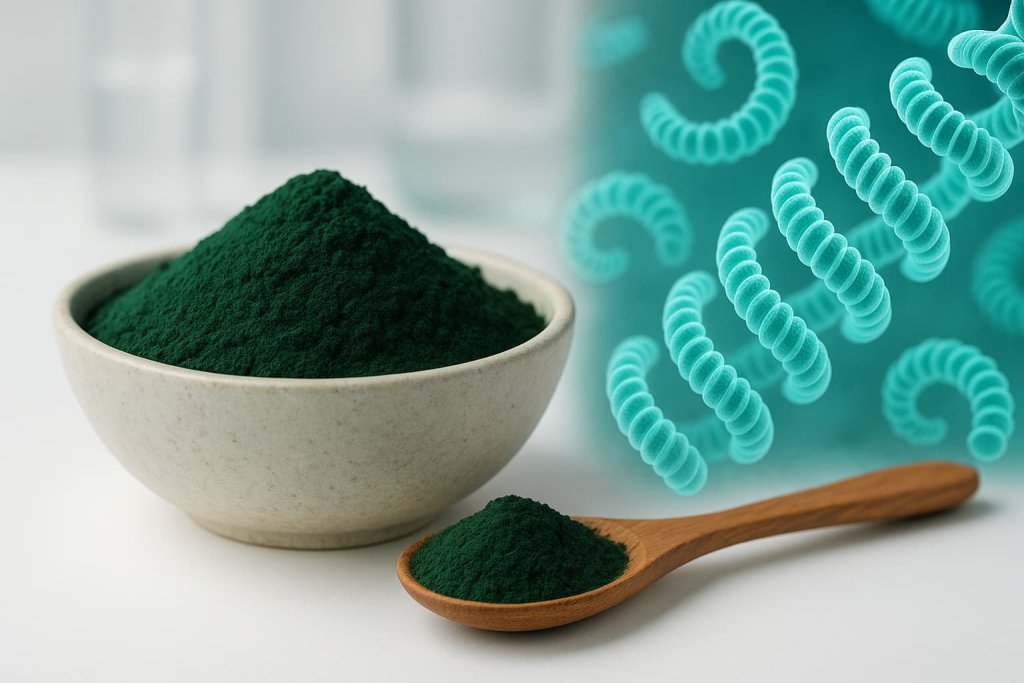
Spirulina is a blue-green algae (technically a cyanobacteria) known for its extremely high protein concentration and bright blue-green pigment. It naturally grows in alkaline lakes and is also cultivated in controlled ponds for supplement production.
Because spirulina does not have a thick cell wall like chlorella, its nutrients are naturally easier for the body to access, making it one of the most commonly used algae supplements worldwide.
Key Nutrients in Spirulina
Spirulina is considered one of the most concentrated natural sources of plant-based protein. It is rich in:
- Protein (often 55–70% by dry weight)
- B vitamins (especially B1, B2, and B3)
- Copper and iron
- Magnesium, potassium, and other trace minerals
- Phycocyanin, a naturally occurring antioxidant pigment unique to spirulina
Its blend of protein, B vitamins, and antioxidant pigments makes it popular among people looking to support energy metabolism and overall nutritional balance.
How Spirulina Is Commonly Used
Spirulina is widely available in:
- Powders: Mixed into smoothies, yogurt, or energy bowls.
- Tablets and capsules: Preferred by those who want precise servings.
Typical supplement amounts range from 1–8 grams per day, depending on the product and user preferences.
People who may benefit from spirulina include those seeking a plant-based protein source, individuals looking to support energy metabolism through B vitamins, and those aiming to incorporate antioxidant-rich foods into their diet.
Chlorella vs Spirulina Nutrition Comparison
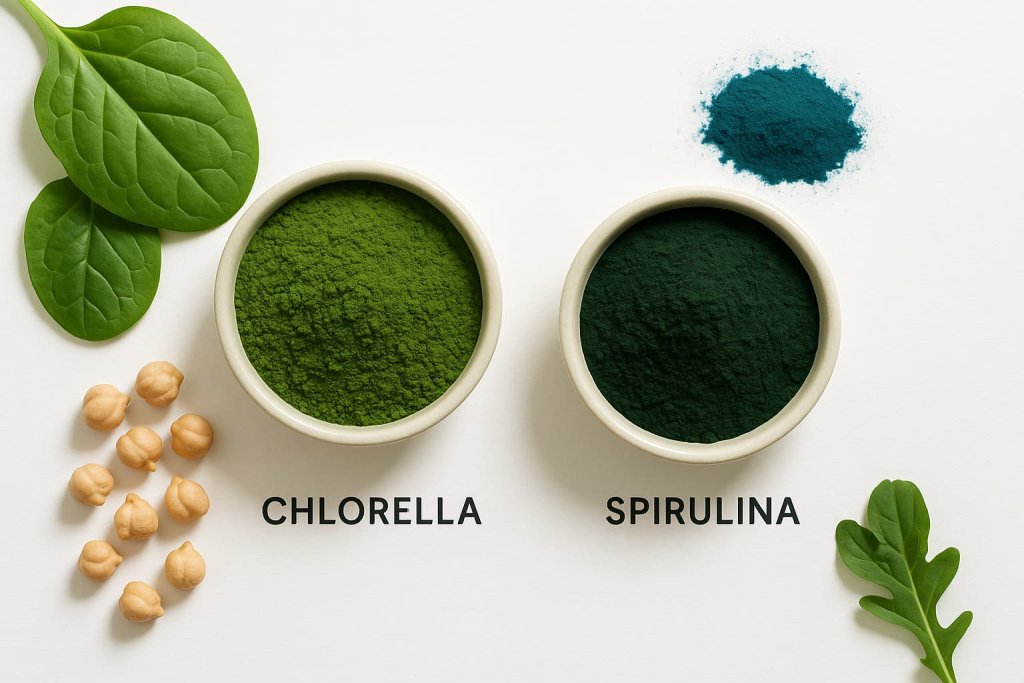
This section highlights the core nutritional differences between chlorella and spirulina using verified nutrient categories from authoritative institutions such as the U.S. Department of Agriculture (USDA) and the National Institutes of Health Office of Dietary Supplements (NIH ODS). Reviewing these differences helps you choose which algae better supports your specific nutrition goals.
Macronutrient Breakdown
Percent Protein Comparison
Both chlorella and spirulina are naturally high in protein, but spirulina typically contains more protein per gram.
- Spirulina generally provides 55–70% protein by dry weight, one of the highest plant-based protein densities.
- Chlorella usually offers around 50–60% protein by dry weight.
According to the Food and Agriculture Organization (FAO), spirulina’s high protein concentration and digestibility make it a notable nutrient source for plant-based diets. You can review this in the FAO’s documentation on microalgae nutrition:
FAO – Protein Quality and Microalgae Overview
Amino Acid Completeness
Both algae contain all nine essential amino acids, making them complete protein sources, although their amino acid profiles differ slightly. Spirulina is praised for its bioavailable amino acid composition, while chlorella contains a broader mix of supporting micronutrients.
Fat and Carbohydrate Differences
- Chlorella contains slightly more omega-3 fatty acids, which may support overall nutrient balance.
- Spirulina contains minimal fat but provides beneficial gamma-linolenic acid (GLA).
- Carbohydrate levels are moderate in both, with chlorella generally containing a bit more due to its cell wall structure.
For foundational macronutrient definitions and their roles, the USDA Nutrition Guide provides clear reference materials:
USDA – Nutrition and Food Composition Basics
Micronutrient Breakdown
Chlorella’s Key Micronutrients
Chlorella is often selected for nutrients that are especially relevant in plant-based diets. It is naturally rich in:
- Iron
- Folate
- Vitamin B12 (varies significantly by brand)
- Vitamin A (as carotenoids)
- Chlorophyll
The NIH Office of Dietary Supplements notes the importance of iron, folate, and vitamin A for immune and metabolic functions. Resource:
NIH ODS – Vitamins and Minerals
Key Micronutrients in Spirulina
Spirulina is naturally rich in a range of micronutrients that support overall nutrition:
- B vitamins (especially B1, B2, B3): Spirulina delivers substantial amounts of thiamin, riboflavin and niacin, which help support normal energy production and metabolic function.
- Copper and iron: These minerals play key roles in red blood cell formation, immune status and enzyme activity.
- Antioxidant pigments such as phycocyanin: Spirulina’s signature pigment, phycocyanin, is a blue-green biliprotein that supports normal antioxidant activity and nutrient protection.
The National Institutes of Health Office of Dietary Supplements (NIH-ODS) highlights that while algae-based supplements like spirulina contain these nutrients, the evidence is still being developed and quality varies widely. You can review their resources on dietary supplement ingredients: NIH ODS – Dietary Supplement Fact Sheets.
Quick Side-by-Side Nutrition Table
Below is a simplified comparison table designed for easy scanning and SEO snippet optimization:
| Nutrient Category | Chlorella | Spirulina |
|---|---|---|
| Protein (%) | 50–60% | 55–70% |
| Amino Acids | Complete profile | Complete profile |
| Iron | Higher | Moderate to high |
| Vitamin B12 | Present (varies by brand) | Very low |
| Folate | Higher | Lower |
| Vitamin A (Carotenoids) | Higher | Moderate |
| Chlorophyll | Very high | Moderate |
| B Vitamins (B1–B3) | Moderate | Higher |
| Copper | Moderate | Higher |
| Omega-3 Fatty Acids | Higher | Lower |
| Signature Antioxidant | Carotenoids | Phycocyanin |
Which Algae Is More Nutrient-Dense? (Direct Answer)
Both chlorella and spirulina are nutrient-dense, but they excel in different areas.
- Chlorella is generally more nutrient-dense for:
- Iron
- Folate
- Vitamin B12 (depending on the product)
- Chlorophyll
- Omega-3 fats
- Spirulina is more nutrient-dense for:
- Total protein
- B vitamins (B1, B2, B3)
- Copper
- Phycocyanin antioxidants
If your goal is to support iron intake, folate, and chlorophyll, chlorella is often the better choice.
If your goal is high-quality plant-based protein and B vitamins, spirulina generally offers more concentrated support.
For broader nutrient context, the NIH provides an excellent micronutrient reference library here:
NIH – Micronutrient Information Center
Potential Wellness Benefits of Chlorella
Chlorella is a nutrient-dense freshwater algae that contains chlorophyll, carotenoids, vitamins, minerals, and complete protein. While it is not a medical treatment, research suggests that several of its nutrients may support general wellness when included as part of a balanced diet. According to the National Institutes of Health Office of Dietary Supplements, nutrients such as iron, folate, vitamin A, and antioxidants play key roles in metabolic and immune function.
You can explore these nutrient functions at the NIH Office of Dietary Supplements.
1. Antioxidant Support from Chlorophyll and Carotenoids
Chlorella is naturally rich in chlorophyll and carotenoids, two important plant-based compounds known for their antioxidant activity. These nutrients help the body manage normal oxidative processes and may support long-term cellular health when included as part of a balanced diet.
The National Center for Complementary and Integrative Health (NCCIH) explains that phytochemicals with antioxidant properties may help the body regulate oxidative stress pathways, although research is ongoing and effects vary by individual.
You can learn more in the NCCIH overview:
NCCIH – Antioxidant Supplements: What You Need to Know
Chlorella’s deep green color comes from its naturally high chlorophyll concentration, while carotenoids such as lutein and beta-carotene provide additional antioxidant support. Together, these compounds contribute to chlorella’s reputation as a nutrient-dense algae that may help support the body’s natural defenses against everyday oxidative stress.
2. May Support Immune Function
Some preliminary human and animal research suggests that chlorella may support normal immune activity, potentially through its blend of vitamins, minerals, and antioxidant compounds. While these findings are encouraging, they remain early-stage and should not be interpreted as medical claims.
The NCCIH emphasizes that supplements may influence immune markers, but effects vary and should not replace medical care.
For more information, see the NCCIH resource on immune-related supplements.
Chlorella’s nutrient profile—including vitamin A, folate, and iron—also plays a recognized role in supporting immune system function according to the NIH ODS micronutrient fact sheets.
3. May Support Healthy Cholesterol Levels
Small clinical studies have explored how chlorella may help support healthy cholesterol markers in certain individuals. This may be related to its fiber content, omega-3 fatty acids, and antioxidant compounds that contribute to overall metabolic health.
The American Heart Association highlights that nutrient-dense foods containing fiber and plant-based antioxidants can support cardiovascular wellness when combined with an overall heart-healthy lifestyle.
Reference: American Heart Association – Healthy Eating Overview.
It is important to note that outcomes vary and chlorella is not a treatment for cholesterol conditions. Individuals managing cholesterol levels should work with a qualified healthcare professional.
4. Nutrients That Support Plant-Based Diets (Iron, Folate, A, B12)
Chlorella is frequently chosen by people following vegetarian or vegan diets because it is naturally rich in iron, folate, vitamin A precursors, and complete protein. Some chlorella products also contain vitamin B12, although the form and amount vary significantly by brand.
According to the NIH Office of Dietary Supplements, nutrients such as iron, folate, and vitamin A are essential for energy production, red blood cell health, and immune support. Learn more at:
NIH ODS – Iron Fact Sheet
NIH ODS – Folate Fact Sheet
NIH ODS – Vitamin A Fact Sheet
For individuals relying primarily on plant foods, chlorella may help support intake of these key nutrients as part of a balanced eating pattern.
Potential Wellness Benefits of Spirulina
Spirulina is a nutrient-dense blue-green algae known for its concentrated protein, antioxidant pigments, and essential micronutrients such as iron, copper, and B vitamins. Although spirulina is not a treatment for medical conditions, research suggests that its nutrient profile may support general wellness when used as part of a balanced diet.
The National Center for Complementary and Integrative Health (NCCIH) explains that dietary supplements—including algae-based supplements—can influence biological processes, but evidence varies and quality differs significantly among products. Their guidance emphasizes evaluating safety, purity, and transparency before choosing any supplement.
You can review their official recommendations here:
NCCIH – Using Dietary Supplements Wisely
Spirulina’s unique combination of complete protein, phycocyanin (a naturally occurring antioxidant pigment), and B vitamins contributes to its role in supporting nutrient intake and normal metabolic function. Its potential wellness effects are based on nutrient support—not on treating or healing illnesses.
1. Supports Protein Intake and Muscle Nutrition
Spirulina is exceptionally high in protein—often 55–70% by dry weight—making it one of the most protein-dense plant-based foods. This makes spirulina a popular choice among individuals looking for concentrated, plant-based protein options.
According to the Food and Agriculture Organization (FAO), spirulina contains a complete amino acid profile, meaning it provides all essential amino acids needed for muscle repair and metabolic processes.
You can review FAO’s evaluation of microalgae protein quality here:
FAO – Protein Quality and Microalgae.
Including high-quality protein foods, such as spirulina, may help support daily protein intake for individuals following plant-forward or low-calorie diets.
2. Antioxidant Support from Phycocyanin
Spirulina is naturally rich in phycocyanin, a blue antioxidant pigment unique to certain algae. Phycocyanin may support the body’s natural antioxidant defenses, helping manage normal oxidative processes.
The National Institutes of Health Office of Dietary Supplements (NIH ODS) explains that antioxidants in foods can support cellular health by helping the body respond to oxidative stress.
Explore antioxidant nutrient information at:
NIH ODS – Antioxidants Overview.
Phycocyanin is one of spirulina’s distinguishing features, contributing not only to its deep color but also to its potential wellness-supporting properties.
3. May Support Healthy Cholesterol Markers
Preliminary research suggests spirulina may help support healthy cholesterol levels in some individuals. This may be due to its combination of antioxidants, micronutrients, and nutrient-dense protein structure.
The American Heart Association (AHA) notes that nutrient-rich foods containing antioxidants and plant-based compounds can support overall cardiovascular wellness when combined with balanced diet and lifestyle habits.
You can explore their guidance here:
American Heart Association – Healthy Eating Recommendations.
These findings are early-stage and should be viewed as supportive—not as medical treatment for cholesterol-related conditions.
4. Supports Energy Metabolism (B Vitamins)
Spirulina provides several B vitamins, particularly vitamin B1 (thiamin), vitamin B2 (riboflavin), and vitamin B3 (niacin). These nutrients play essential roles in helping the body convert food into usable energy.
The U.S. Department of Agriculture (USDA) highlights B vitamins as key contributors to normal metabolic function and nervous system health.
See USDA nutrient resources at:
USDA – Human Nutrition & Food Safety.
Because spirulina is a concentrated source of these vitamins, adding it to a balanced diet may support daily energy metabolism requirements.
Side Effects and Safety Considerations
Because chlorella and spirulina are dietary supplements, not regulated medications, safety and quality can vary widely between brands. The U.S. Food and Drug Administration (FDA) emphasizes that supplements may carry risks, interact with medications, or contain contaminants if not properly tested. You can review this in the FDA – Dietary Supplements Overview.
The following sections outline key safety considerations to help consumers make informed decisions.
Common Digestive Side Effects
Some individuals may experience mild digestive symptoms when first introducing chlorella or spirulina into their routine. These temporary effects can vary depending on dose, sensitivity, and how quickly the supplement is introduced.
Possible digestive reactions include:
- Bloating or gas
- Nausea
- Mild stomach cramps
- Loose stools or changes in stool color (chlorella often causes a natural green tint due to chlorophyll)
These reactions may occur as the body adjusts to new nutrient intake. The National Center for Complementary and Integrative Health (NCCIH) explains that dietary supplements can cause side effects such as gastrointestinal discomfort, especially when taken in large amounts or without considering individual sensitivity.
You can review their official guidance here:
NCCIH – Using Dietary Supplements Wisely
Starting with smaller servings and choosing products tested for purity may help support better tolerance.
Possible Allergic Reactions
Although uncommon, allergic reactions have been reported with both chlorella and spirulina. Symptoms may include itching, rash, or respiratory discomfort.
The National Institutes of Health Office of Dietary Supplements (NIH ODS) explains that algae-based supplements can trigger allergic responses in sensitive individuals, especially those with known algae or mold allergies.
You can explore related allergen information here: NIH ODS – Fact Sheets.
Anyone experiencing unusual symptoms should stop using the product and contact a healthcare professional.
Contamination Risks (Microcystins, Heavy Metals)
Contamination is one of the most important YMYL safety issues with algae supplements.
Microcystins:
Among the most serious safety concerns for algae supplements like spirulina is the risk of contamination with toxins such as microcystins, which are produced by certain cyanobacteria (blue-green algae). Because spirulina grows in water environments where harmful algae blooms may also occur, supplements that are not properly tested may contain microcystins, which may affect liver health if ingested in significant quantities over time.
The World Health Organization provides authoritative guidance on microcystins, stating that these toxins are considered in their “Guidelines for Drinking-water Quality” and background documents on cyanobacterial toxins. You can view the relevant WHO materials here:
WHO – Microcystins Background Document for Drinking-Water Quality
In addition to microcystin risk, both chlorella and spirulina may accumulate heavy metals (such as lead, mercury or arsenic) depending on the water quality and harvesting conditions. Given these contamination risks, selecting products that have batch testing and third-party verification is critical for safety.
Heavy Metals:
Chlorella and spirulina can accumulate heavy metals such as lead, mercury, or arsenic depending on growing conditions. The FDA warns that dietary supplements contaminated with heavy metals may pose health risks, especially with long-term use.
See: FDA – Supplement Safety Information.
Why Third-Party Testing Matters
Because dietary supplements are not pre-approved by the U.S. Food and Drug Administration (FDA) before they are sold, independent third-party testing is an essential safeguard for consumers. Without this step, supplements may vary in purity, potency, and labeling accuracy.
Certifications from reputable testing bodies—such as USP, NSF International, and Informed Choice—provide additional assurance that a chlorella or spirulina product has been screened for contaminants, produced under safe manufacturing practices, and accurately labeled. Choosing verified products may help reduce the risk of exposure to microcystins, heavy metals, or undeclared additives.
The U.S. Pharmacopeia (USP) outlines the standards and testing procedures used in its verification process, including ingredient authentication, contaminant screening, and facility audits.
You can review these details here:
USP – Dietary Supplement Verification Program
Selecting algae supplements that carry a trusted verification mark supports a safer, more reliable supplement experience, especially for individuals prioritizing product purity and quality.
Medication Interactions
Both chlorella and spirulina contain nutrients and bioactive compounds that may interact with certain medications. Consumers should consult a healthcare professional before use, especially if they take:
Blood Thinners
Chlorella may contain vitamin K, which can interfere with blood-thinning medications such as warfarin. The NIH ODS Vitamin K Fact Sheet explains how vitamin K influences clotting.
Reference: NIH ODS – Vitamin K.
Immunosuppressants & Autoimmune Disorders
Because algae may influence immune activity, individuals taking immunosuppressant medications—or those with autoimmune conditions—should use caution. The NCCIH advises discussing supplement use with a clinician when immune-modulating effects are possible.
More info: NCCIH – Using Supplements Wisely.
PKU (Phenylketonuria)
Phenylketonuria (PKU) is a rare inherited metabolic disorder in which the body cannot adequately break down the amino acid phenylalanine. Because Spirulina naturally contains phenylalanine, using it is not advised for individuals with PKU.
The National Institute of Child Health and Human Development (NICHD) states that people with PKU must follow carefully monitored low-phenylalanine diets, avoid high-phenylalanine foods and supplements, and consult specialized metabolic professionals.
For full details see: NICHD – Phenylketonuria (PKU)
If you have PKU or care for someone who does, it is critical to review any supplement—including spirulina—with a healthcare provider to avoid unintended phenylalanine exposure.
Pregnancy and Breastfeeding Considerations
There is not enough high-quality research to confirm the safety of using algae supplements such as chlorella or spirulina during pregnancy or while breastfeeding. Because nutrient needs and physiological changes differ significantly in these life stages, caution is warranted.
The NIH ODS fact sheet on pregnancy explains that dietary supplements—including botanical, algae-based, or other special-purpose formulations—may pose risks or interactions, and consumer guidance emphasises the importance of consulting a qualified healthcare provider.
See the official NIH ODS resource:
NIH ODS – Dietary Supplements and Life Stages: Pregnancy
Given the absence of robust safety trials in pregnant or lactating populations, individuals in these groups should only use algae-based supplements under the supervision of a medical professional and in the context of overall prenatal nutrition.
How to Choose a High-Quality Algae Supplement (Safety Checklist)
Choosing a safe chlorella or spirulina supplement is essential, especially because algae products can vary significantly in purity and manufacturing quality. According to the U.S. Food and Drug Administration (FDA), dietary supplements are not pre-approved before entering the market, making consumer awareness and label verification critical.
Learn more at the FDA – Dietary Supplements Overview.
This safety checklist provides clear, research-backed steps to help you select high-quality, trustworthy algae products.
Look for Third-Party Testing (USP, NSF, Informed Choice)
Because dietary supplements are not pre-approved by the U.S. Food and Drug Administration (FDA) before hitting shelves, independent third-party testing is a critical layer of consumer protection. Products that carry recognized certification marks have been vetted for ingredient accuracy, purity, and manufacturing standards.
Here are reputable certification programs to look for:
- United States Pharmacopeia (USP) Verified – Ensures that the supplement: contains the ingredients listed on the label in declared amounts; does not contain harmful levels of specific contaminants; and is manufactured under sanitary, well-controlled conditions.
Reference: USP – Dietary Supplement Verification Program - NSF International Supplement Certification – Verifies conformity with standards such as NSF/ANSI 173 for dietary supplements, screening for contaminants like heavy metals and ensuring label claim accuracy.
Reference: NSF – Product and Ingredient Certification for Dietary Supplements - Informed Choice (by LGC Science) – Certified Dietary Supplements – A global quality assurance and testing regime designed especially for dietary supplements and sports nutrition. It confirms product batch testing for contaminants and banned substances.
Reference: Informed Choice – Certification Process
Choosing algae supplements such as chlorella or spirulina that carry any of these third-party marks may support safer long-term use by helping reduce the risk of contamination, mislabeling, or poor manufacturing practices.
Verify Microcystin and Heavy-Metal Testing
Microalgae such as chlorella and spirulina can naturally absorb substances from their growing environment. This makes contaminant testing essential, especially for products grown in open ponds or regions with inconsistent water quality.
Key contaminants to watch for include:
- Microcystins: Toxic compounds produced by harmful cyanobacteria that can contaminate algae.
- Heavy metals: Lead, mercury, arsenic and cadmium, which may accumulate in algae if water sources are polluted.
The World Health Organization (WHO) warns that microcystins are potent liver toxins and emphasizes the need for rigorous testing and monitoring in consumable products that may be exposed to cyanobacterial contamination.
You can review WHO’s official safety information here:
WHO – Microcystins (Chemical Hazards in Drinking-Water)
The U.S. Food and Drug Administration (FDA) also highlights the risk of heavy metals in dietary supplements and encourages consumers to choose products from manufacturers that test for contaminants and share transparent quality information.
For detailed safety guidance, see:
FDA – Dietary Supplement Products and Ingredients
Before purchasing any chlorella or spirulina product, confirm that the brand conducts independent lab testing for microcystins, lead, mercury and arsenic. Reviewing Certificates of Analysis (COAs) and choosing products with third-party certification may help reduce contamination risk and support long-term safe use.
Check for Clean, Minimal Ingredient Lists
A high-quality algae supplement should contain:
- Pure spirulina or chlorella
- Minimal additives
- No artificial colors or unnecessary fillers
The National Institutes of Health Office of Dietary Supplements (NIH ODS) recommends reviewing supplement labels closely and choosing products with simple, transparent ingredient lists.
Learn more: NIH ODS – Understanding Supplement Labels.
Avoid Supplements Making Medical Claims
Dietary supplements should not be advertised as treatments or cures for health conditions.
The FDA warns that any product claiming to “heal,” “treat,” or “cure” illnesses is violating federal regulations.
See official guidance:
FDA – Health Fraud Product Warning Signs.
Choose brands that use factual, balanced descriptions of nutritional content instead of exaggerated claims.
Safe Storage and Usage Instructions
Proper storage helps maintain purity and nutrient stability. Most algae supplements should be:
- Stored in a cool, dry place
- Kept away from direct sunlight
- Sealed tightly to avoid moisture contamination
The NCCIH states that improper storage can reduce supplement quality and increase contamination risk.
More information: NCCIH – Using Supplements Wisely.
Which Is Better for You?
Choosing between chlorella and spirulina depends on your goals, nutrient needs, and overall dietary patterns. Both offer wellness-supporting nutrients, but each has distinct advantages.
Choose Chlorella If You Want More Iron, B12, or Chlorophyll
Chlorella is naturally rich in iron, folate, chlorophyll, and vitamin A precursors. Some products also contain vitamin B12, though amounts vary by strain.
These nutrients are important for immune support, energy metabolism, and red blood cell formation, according to the NIH ODS – Iron and NIH ODS – Folate fact sheets.
Chlorella may be an appealing choice for people who want additional plant-based micronutrient intake.
Choose Spirulina If You Want Higher Protein and B Vitamins
Spirulina typically provides 55–70% protein by dry weight, making it extremely dense in plant-based protein. It is also naturally rich in vitamin B1, B2, B3, copper, and phycocyanin.
The U.S. Department of Agriculture (USDA) highlights the role of B vitamins in helping the body convert food into usable energy.
More details: USDA – Human Nutrition Resources.
This makes spirulina a common choice for individuals focusing on high-protein, nutrient-dense supplementation.
When to Consider Taking Both Together
Some people choose to take both algae sources to support a broader nutrient range—chlorella for chlorophyll and iron, spirulina for protein and B vitamins.
Combining them may support a diverse intake of antioxidants, amino acids, and essential nutrients.
However, anyone with medical conditions or on medication should consult a healthcare professional before combining supplements.
When to Avoid Both (Medical Considerations)
Certain individuals should avoid chlorella or spirulina, or seek professional medical guidance before using them, due to nutrient interactions, immune effects, or metabolic considerations.
You should avoid these supplements or speak with a healthcare provider if you:
- Take blood thinners (chlorella may contain vitamin K, which can affect clotting)
- Use immunosuppressant medications
- Have autoimmune conditions, since algae-based supplements may influence immune activity
- Have PKU (phenylketonuria) — spirulina naturally contains phenylalanine
- Are pregnant or breastfeeding without clinician approval, due to insufficient safety data
The National Center for Complementary and Integrative Health (NCCIH) advises that dietary supplements can interact with medications, affect immune function and may pose risks for vulnerable populations. Their guidance emphasizes reviewing supplement use with a qualified health professional.
See their official safety overview here:
NCCIH – Using Dietary Supplements Wisely
Because algae supplements are not pre-screened by the FDA and may vary widely in purity, individuals with medical conditions or complex medication regimens should exercise caution and rely on professional medical advice before using chlorella or spirulina.
Frequently Asked Questions (FAQs)
Is chlorella or spirulina better overall?
Neither is universally better. Chlorella is richer in iron, chlorophyll, and certain vitamins, while spirulina provides more protein and B vitamins.
Can you take both together?
Yes, some people combine them for broader nutrient coverage, but individuals with medical conditions should consult a clinician first.
Which is better for energy support?
Spirulina’s B vitamin content may support energy metabolism, according to the USDA.
Which is better for vegans or vegetarians?
Chlorella may support plant-based nutrient intake due to its iron, vitamin A precursors, and potential B12 content. Spirulina offers high-quality protein.
Are algae supplements safe to take daily?
Daily use may be safe for many individuals when choosing high-quality, third-party-tested products. Still, the FDA recommends discussing supplement use with a healthcare provider.
Does chlorella provide real vitamin B12?
Some forms do, but content varies by brand. Always check labels and third-party testing certificates.
How do I know if my product is safe or tested?
Look for certifications from USP, NSF, or Informed Choice, and review the manufacturer’s testing information.
Conclusion
Chlorella and spirulina are nutrient-dense algae supplements that offer different wellness-supporting benefits. Chlorella is often chosen for its iron, chlorophyll, and folate content, while spirulina is valued for its high protein density and B vitamins. Selecting a high-quality product with third-party testing is essential for safety, especially given contamination risks and supplement variability.
For personalized guidance—especially if you have medical conditions, take medications, or are pregnant or breastfeeding—consult a qualified healthcare professional.
This content is for informational purposes only and not medical advice.