
Pilates exercises at home are a low-impact, full-body workout that focuses on controlled movement, core engagement, breathing, and alignment—making them suitable for building strength and flexibility without equipment.
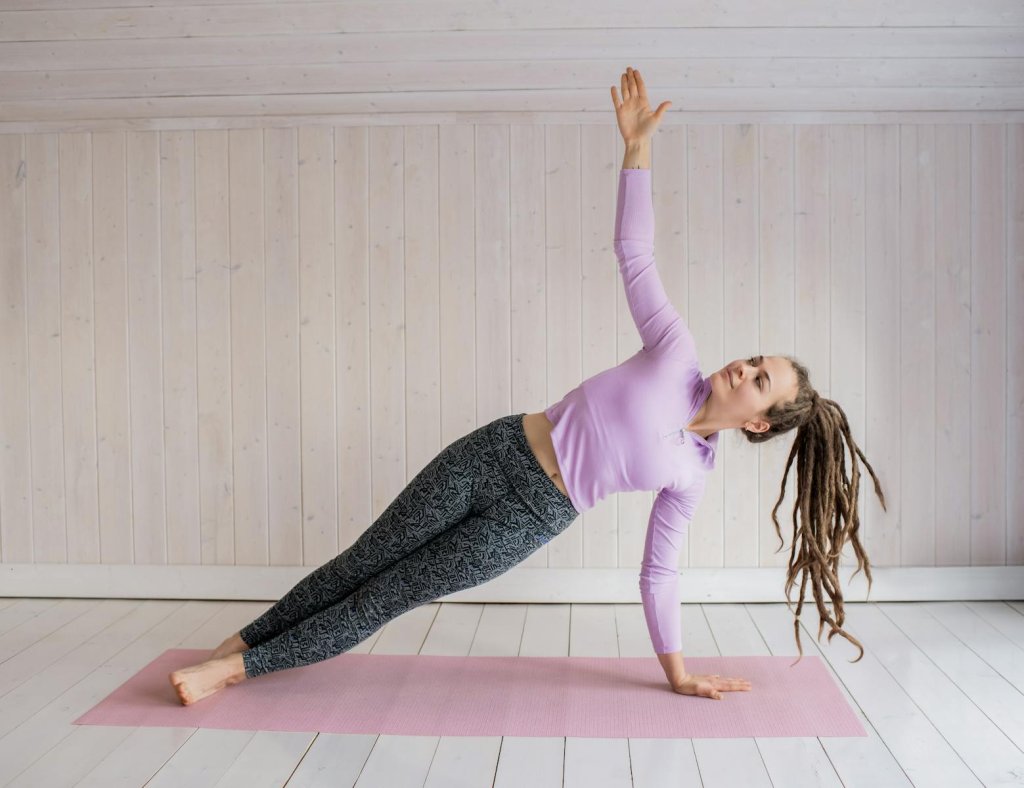
Understanding how Pilates works at home helps you train safely, stay consistent, and progress with confidence. With just a mat and a small space, you can improve posture, mobility, and overall body control while fitting sessions into a busy schedule.
This guide explains what at-home Pilates is, why it matters, how often to practice, and exactly how to perform 12 simple Pilates exercises at home, with clear form cues and safety guidance.
What Are Pilates Exercises at Home?
Pilates exercises at home are mat-based movements performed without large equipment, using body weight, controlled breathing, and precise alignment. The method emphasizes:
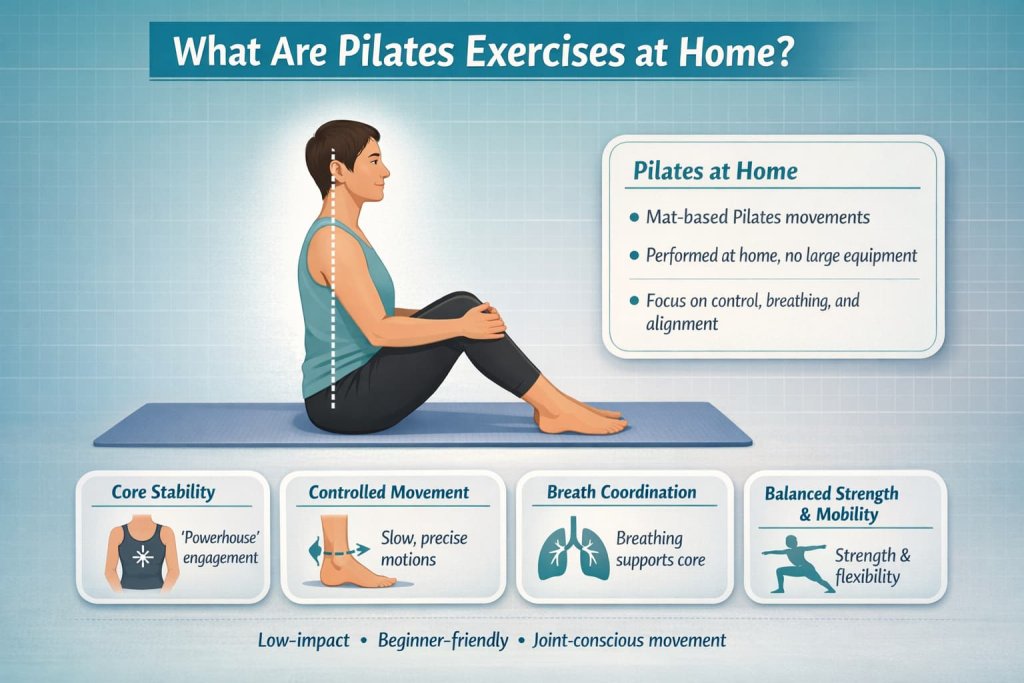
- Core stability (“powerhouse” engagement)
- Slow, controlled movement rather than speed
- Coordinated breathing
- Balanced strength and mobility
Unlike high-impact workouts, Pilates prioritizes quality of movement, making it a practical option for beginners, home exercisers, and people looking for joint-friendly training.
12 Best Pilates Exercises at Home
These Pilates exercises at home focus on controlled movement, core engagement, and proper alignment to support full-body strength and flexibility. They are beginner-friendly, low-impact, and can be performed with just a mat and a small amount of space.
1. Pelvic Tilt
A foundational Pilates movement that teaches neutral spine awareness and gentle core activation.
How to do it
- Lie on your back with knees bent and feet hip-width apart
- Place arms by your sides with shoulders relaxed
- Inhale to prepare and find a neutral spine
- Exhale and gently tilt the pelvis, flattening the lower back toward the mat
- Inhale to return slowly to neutral without arching
Why it works
This exercise builds awareness of pelvic positioning and helps you learn how to control spinal movement. It encourages gentle activation of deep core muscles that support posture and spinal stability.
Muscles worked
- Transverse abdominis
- Pelvic floor
- Lower abdominals
Trainer tip
Move slowly and subtly—this is about control, not force or range.
2. Pilates Breathing
Teaches coordinated breathing patterns that support core control during movement.
How to do it
- Lie on your back or sit upright with a tall spine
- Relax the shoulders and neck
- Inhale deeply into the sides and back of the rib cage
- Exhale slowly while gently engaging the abdominal muscles
- Maintain a steady rhythm without holding your breath
Why it works
Pilates breathing helps coordinate breath with muscle engagement, which supports better core activation and reduces unnecessary tension during exercise.
Muscles worked
- Diaphragm
- Transverse abdominis
Trainer tip
Think of expanding the ribs sideways like an umbrella opening, rather than lifting the chest.
3. Knee Folds
Introduces lower-abdominal engagement while maintaining pelvic stability.
How to do it
- Lie on your back with knees bent and feet on the mat
- Inhale to prepare in a neutral spine
- Exhale and lift one knee to tabletop position
- Inhale to lower the foot back down with control
- Alternate sides
Why it works
Knee folds challenge your ability to stabilize the pelvis while the legs move, reinforcing deep core control without excessive strain.
Muscles worked
- Lower abdominals
- Hip flexors
Trainer tip
If your pelvis rocks, slow the movement or lift the leg lower.
4. Heel Slides
Encourages controlled leg movement without stressing the spine.
How to do it
- Lie on your back with knees bent and feet flat
- Inhale to prepare and engage the core
- Exhale and slowly slide one heel away along the mat
- Inhale to return to the starting position
- Alternate sides
Why it works
Heel slides reinforce abdominal engagement while the legs extend, helping improve coordination and spinal control.
Muscles worked
- Abdominals
- Hip flexors
- Quadriceps
Trainer tip
Keep the pelvis completely still throughout the movement.
5. Toe Taps
Builds coordination between the core and hips in a supported position.
How to do it
- Lie on your back with both legs in tabletop position
- Inhale to prepare
- Exhale and lower one foot to lightly tap the mat
- Inhale to lift it back to tabletop
- Alternate sides
Why it works
Toe taps increase the challenge to the lower abdominals while maintaining spinal stability and controlled breathing.
Muscles worked
- Lower abdominals
- Hip flexors
Trainer tip
Keep the ribs drawn down and the neck relaxed.
6. Chest Lift (Modified)
A gentle introduction to upper-abdominal strengthening.
How to do it
- Lie on your back with knees bent
- Support the head lightly with your hands
- Inhale to prepare
- Exhale and lift head and shoulders just off the mat
- Inhale to lower with control
Why it works
This movement strengthens the abdominal muscles while limiting strain on the neck and spine when performed with proper control.
Muscles worked
- Rectus abdominis
- Transverse abdominis
Trainer tip
Think of lifting the rib cage forward rather than pulling the head.
7. Single Leg Stretch
A classic Pilates exercise that adds coordination and endurance.
How to do it
- Lift head and shoulders into a chest lift
- Bring both knees toward the chest
- Extend one leg while holding the other
- Switch legs smoothly with controlled breathing
Why it works
This exercise increases abdominal endurance and challenges core stability through alternating leg movements.
Muscles worked
- Abdominals
- Hip flexors
Trainer tip
Keep the movement smooth and shorten the leg reach if control is lost.
8. Spine Stretch Forward
Promotes spinal mobility and gentle hamstring flexibility.
How to do it
- Sit tall with legs extended and feet flexed
- Inhale to lengthen the spine
- Exhale and round forward one vertebra at a time
- Inhale to stack the spine back upright
Why it works
This movement encourages controlled spinal flexion while improving posture awareness and flexibility.
Muscles worked
- Spinal extensors
- Hamstrings
Trainer tip
Focus on lengthening the spine rather than touching the toes.
9. Seated Spine Twist
Improves rotational control and postural alignment.
How to do it
- Sit upright with legs extended or crossed
- Extend arms out to the sides
- Inhale to grow taller
- Exhale and rotate the torso
- Alternate sides
Why it works
Seated twists support spinal mobility while strengthening the muscles that stabilize rotation.
Muscles worked
- Obliques
- Spinal stabilizers
Trainer tip
Keep hips still and rotate only from the waist.
10. Side-Lying Leg Lift
Strengthens hip muscles while protecting the spine.
How to do it
- Lie on one side with the body in a straight line
- Support the head with the lower arm
- Lift the top leg slightly and lower with control
- Switch sides
Why it works
This exercise targets hip stabilizers essential for balance, posture, and gait.
Muscles worked
- Gluteus medius
- Hip abductors
Trainer tip
Keep toes facing forward to prevent hip rotation.
11. Swimming (Modified)
Builds endurance in the back body with controlled movement.
How to do it
- Lie face down with arms extended overhead
- Engage the core gently
- Lift opposite arm and leg
- Alternate sides slowly
Why it works
Swimming strengthens the posterior chain and improves coordination without excessive spinal loading.
Muscles worked
- Erector spinae
- Glutes
- Shoulders
Trainer tip
Lift only as high as you can maintain control and length.
12. Glute Bridge
Activates the hips while reinforcing neutral spine alignment.
How to do it
- Lie on your back with knees bent and feet flat
- Inhale to prepare
- Exhale and lift the hips by engaging the glutes
- Inhale to lower slowly
Why it works
Glute bridges strengthen the hips and support spinal stability, making them useful for posture and daily movement.
Muscles worked
- Glutes
- Hamstrings
- Core
Trainer tip
Press evenly through both feet and avoid arching the lower back.
How Often Should You Do Pilates at Home?
For most adults:
- 2–4 sessions per week works well for strength and flexibility
- Sessions can be 20–45 minutes, depending on experience and intensity
- Pilates pairs well with walking, cycling, or other light cardio on non-Pilates days
Consistency matters more than duration. Short, regular sessions are often more effective than occasional long workouts.
Why Pilates Exercises at Home Matter
Regular Pilates practice may help support:
- Improved core strength and trunk stability
- Better posture awareness and alignment
- Increased flexibility through controlled ranges of motion
- Balanced muscle activation between the front and back of the body
- Low-impact strength training that is easier to recover from
Public health organizations such as the Centers for Disease Control and Prevention and the World Health Organization recommend muscle-strengthening activities at least two days per week. Pilates can fit naturally into these guidelines when practiced consistently.
How to Prepare for Pilates Exercises at Home
Before starting:
- Use a non-slip mat on a firm surface
- Wear comfortable clothing that allows free movement
- Focus on slow nasal or rib-cage breathing
- Move within pain-free ranges and stop if discomfort increases
If you are pregnant, recently postpartum, recovering from surgery, or managing a medical condition, professional guidance is recommended before beginning.
Who Should Be Careful Before Starting Pilates at Home
Extra caution is advised if you:
- Have ongoing back, neck, or joint pain
- Are recovering from injury or surgery
- Experience dizziness or balance issues
In these cases, guidance from a qualified instructor or healthcare professional is recommended before starting a new routine.
Common Mistakes to Avoid During Pilates Exercises at Home
Practicing Pilates at home can be effective, but small technique errors may reduce benefits or increase discomfort. Being aware of common mistakes helps you move more safely and efficiently.
- Rushing through movements
Pilates is designed to be slow and controlled. Moving too quickly reduces muscle engagement and increases the risk of losing proper alignment. - Holding your breath
Breath control is central to Pilates. Holding your breath can increase tension and reduce core activation. - Over-arching or flattening the spine excessively
Forcing spinal positions may strain the back. Aim for a neutral spine unless the exercise specifically cues flexion or extension. - Using momentum instead of control
Swinging the legs or arms shifts work away from the core and stabilizing muscles. - Ignoring fatigue or form breakdown
Continuing when form deteriorates can reduce effectiveness and increase strain.
How Long It Takes to See Results From Pilates at Home
Results from Pilates vary depending on consistency, intensity, and individual factors. With regular practice, many people notice changes gradually over time.
- Within 2–3 weeks: Improved body awareness, posture control, and breathing coordination
- Within 4–6 weeks: Increased core strength and movement confidence
- Over time: Gradual improvements in flexibility, balance, and overall movement quality
Consistency matters more than workout length. Short, focused sessions practiced regularly tend to produce better long-term results than occasional longer workouts.
Frequently Asked Questions About Pilates Exercises at Home
Is Pilates at home good for beginners?
Yes. Many mat-based Pilates exercises are beginner-friendly when performed slowly with proper form.
Do I need equipment for Pilates at home?
No. A mat is sufficient for most home Pilates routines.
Can Pilates help with flexibility?
Regular practice may help support flexibility through controlled movement and joint mobility.
How long before I see results?
Many people notice improved body awareness within a few weeks, with strength and flexibility changes developing over time.
Is Pilates considered strength training?
Yes. Pilates uses body weight resistance to strengthen muscles, especially the core.
Can I do Pilates every day?
Light sessions can be done frequently, but most people benefit from 2–4 focused sessions per week.
Conclusion
Pilates exercises at home offer a practical, low-impact way to build strength, improve flexibility, and support better movement quality—without needing a gym. By focusing on controlled technique and consistent practice, you can create a sustainable routine that fits your lifestyle.
If you’re ready to start, choose a few movements from this list, practice them with care, and gradually build toward longer sessions as your confidence grows.
References
- Adult Physical Activity Guidelines (Adults) — CDC
- WHO Guidelines on Physical Activity and Sedentary Behaviour (2020) — WHO
- WHO 2020 Guidelines Paper (British Journal of Sports Medicine) — Bull et al., 2020
- Effects of Pilates on Body Posture: Systematic Review — ScienceDirect
- Pilates and Balance in Older Adults: Systematic Review and Meta-Analysis — PubMed Central (PMC)