
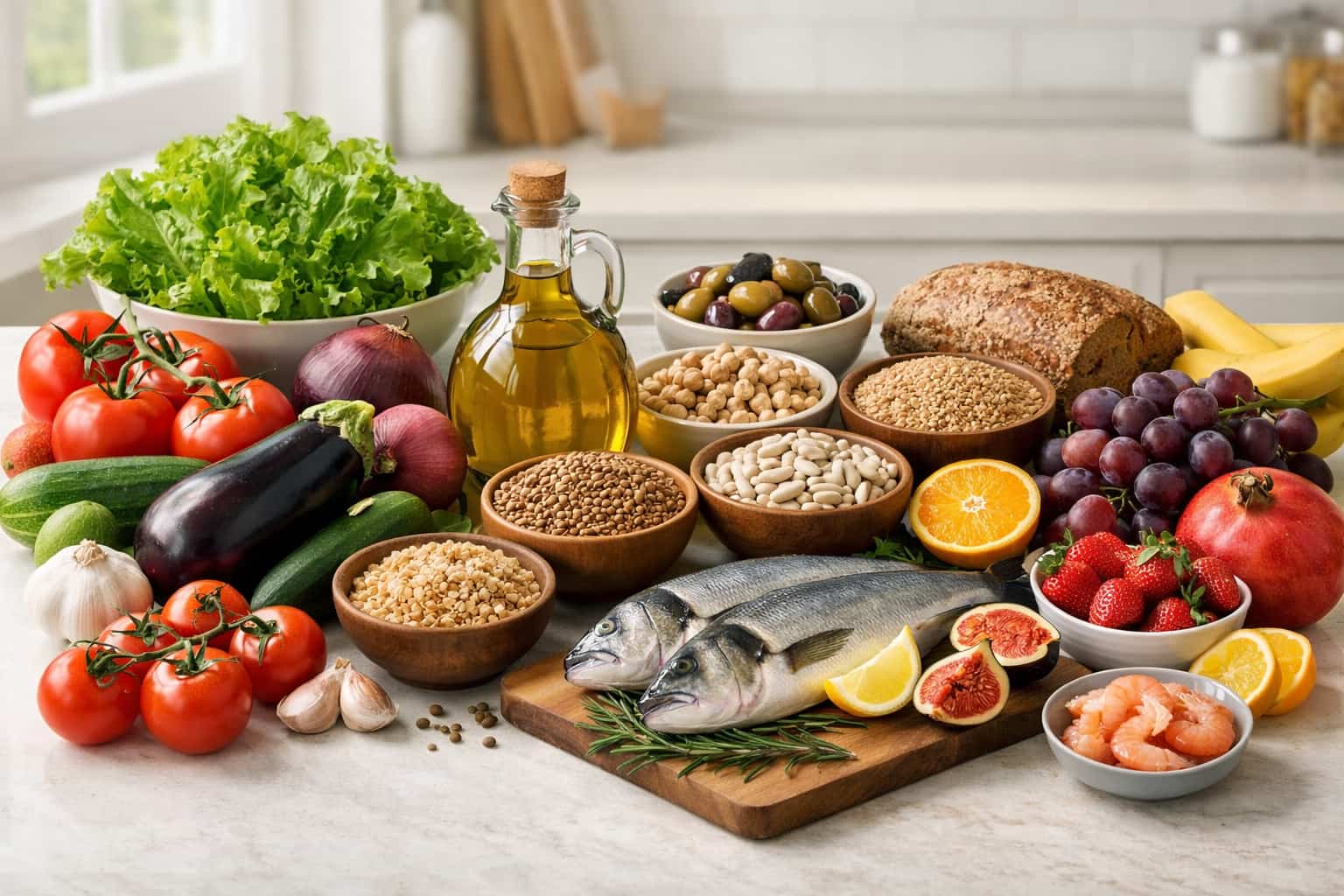
The Mediterranean diet is a flexible eating pattern that emphasizes plant-based foods, olive oil as a primary fat, regular fish and seafood, and limited highly processed foods and added sugars. Understanding this approach matters because it supports balanced nutrition, sustainable eating habits, and overall wellness without strict rules or elimination of entire food groups. According to the American Heart Association, Mediterranean-style eating aligns with long-term nutrition guidance that prioritizes whole, minimally processed foods.
This guide explains what the Mediterranean diet is, how it works in daily life, and how to apply it in a practical, nutrition-focused way.
What Is the Mediterranean Diet
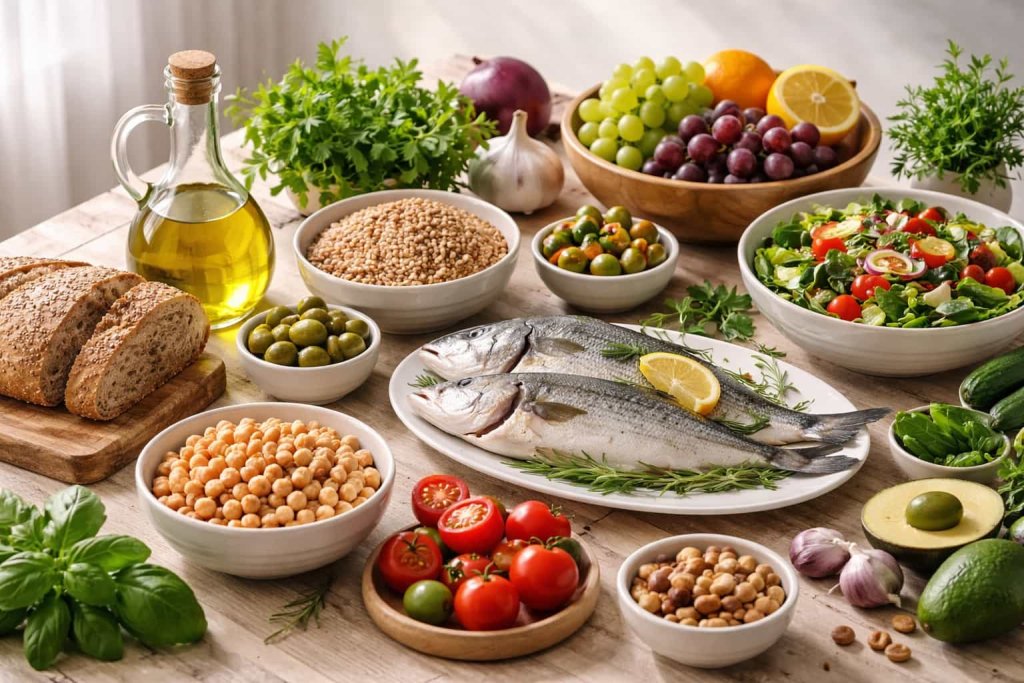
The Mediterranean diet is not a single, fixed meal plan. It is a dietary pattern inspired by traditional eating habits in countries surrounding the Mediterranean Sea. Food choices vary by region, but shared principles remain consistent.
According to NIH MedlinePlus, this eating pattern typically includes fruits, vegetables, whole grains, beans, nuts, olive oil, and fish, while red meat and sweets are eaten less often.
Rather than counting calories, the Mediterranean diet focuses on food quality, balance, and long-term habits.
Core Principles of the Mediterranean Diet
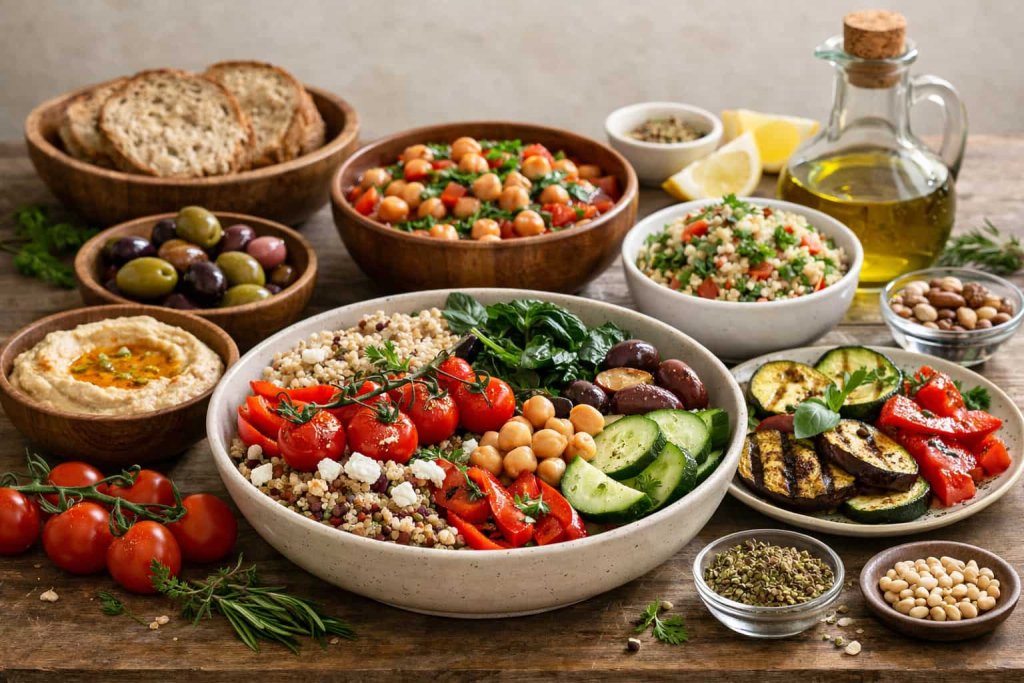
Emphasis on plant-based foods
Most meals center on vegetables, fruits, legumes, whole grains, nuts, and seeds. These foods are naturally rich in fiber and essential micronutrients, which may help support digestive health and overall nutrient intake.
Olive oil as the main fat source
Olive oil replaces butter and other solid fats in cooking and meal preparation. According to NIH MedlinePlus, olive oil is a primary fat in Mediterranean-style eating and is mostly composed of monounsaturated fats.
Regular fish and seafood intake
Fish and seafood are commonly eaten multiple times per week. The Oldways Mediterranean Diet Pyramid highlights fish and seafood as regular protein choices within the pattern.
Moderate intake of animal-based foods
Poultry, eggs, yogurt, and cheese are included in moderate amounts. Red and processed meats are eaten less frequently.
Limited added sugars and ultra-processed foods
Sugary drinks, sweets, refined grains, and highly processed snack foods are minimized. The U.S. Food and Drug Administration explains how the “Added Sugars” line on the Nutrition Facts label can help consumers make informed choices.
Mediterranean Diet Food Groups (Quick Reference)
| Eat more often | Include in moderation | Limit |
|---|---|---|
| Vegetables and fruits | Poultry and eggs | Processed meats |
| Beans and lentils | Yogurt and cheese | Sugary beverages |
| Whole grains | Red meat (less often) | Sweets and pastries |
| Nuts and seeds | Coffee or tea | Refined grains |
| Olive oil | Ultra-processed snacks | |
| Fish and seafood |
This structure reflects guidance from the American Heart Association and NIH MedlinePlus.
How to Build a Mediterranean-Style Plate
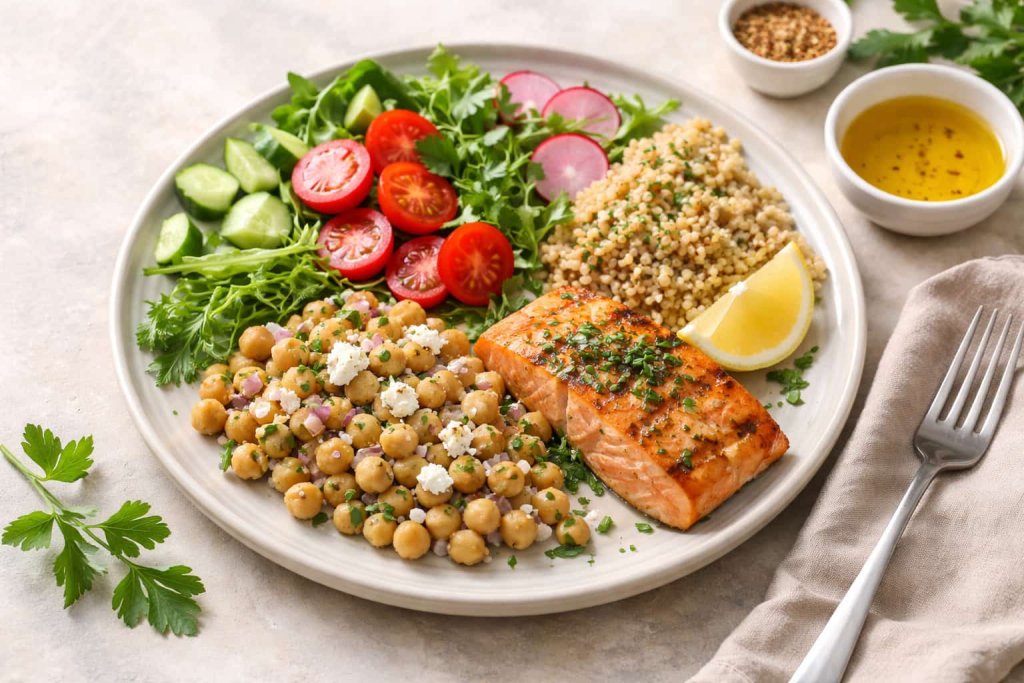
Fill half your plate with fruits and vegetables
Vegetables and fruits form the foundation of most meals. The USDA MyPlate guidance to make half your plate fruits and vegetables fits naturally with Mediterranean eating principles.
Choose fiber-rich carbohydrates
Whole grains, beans, and lentils provide steady energy and support digestive health.
Add a balanced protein source
Rotate proteins throughout the week:
- Fish and seafood
- Beans and lentils
- Eggs or poultry in moderate portions
Use olive oil, herbs, and spices for flavor
Olive oil, garlic, herbs, and spices enhance flavor and satisfaction without relying on heavy sauces or added sugars.
Mediterranean Diet for Common Dietary Preferences
Vegetarian Mediterranean diet
Focus on legumes, whole grains, nuts, seeds, vegetables, fruits, and olive oil, with eggs or dairy if desired.
Gluten-free Mediterranean diet
Naturally gluten-free foods such as beans, lentils, quinoa, brown rice, fruits, vegetables, fish, and eggs fit easily into this pattern.
Dairy-free Mediterranean diet
Rely on olive oil, nuts, seeds, and plant-based calcium-fortified alternatives while keeping meals plant-forward.
Does the Mediterranean Diet Really Work?

“Works” can mean different things. For most people, the Mediterranean diet works best as a sustainable way to improve overall diet quality, not as a quick fix.
Evidence from a major clinical trial
A large randomized trial published in the New England Journal of Medicine reported fewer major cardiovascular events in groups assigned to a Mediterranean diet supplemented with extra-virgin olive oil or nuts compared with a control diet (in a higher-risk population).
Why it can be effective in everyday life
Many people find it “works” because it’s:
- Flexible (not rigid rules)
- Built around satisfying foods (fiber + healthy fats + protein)
- Easier to maintain long term than restrictive diets
Mediterranean Diet Benefits for Nutrition and Overall Wellness
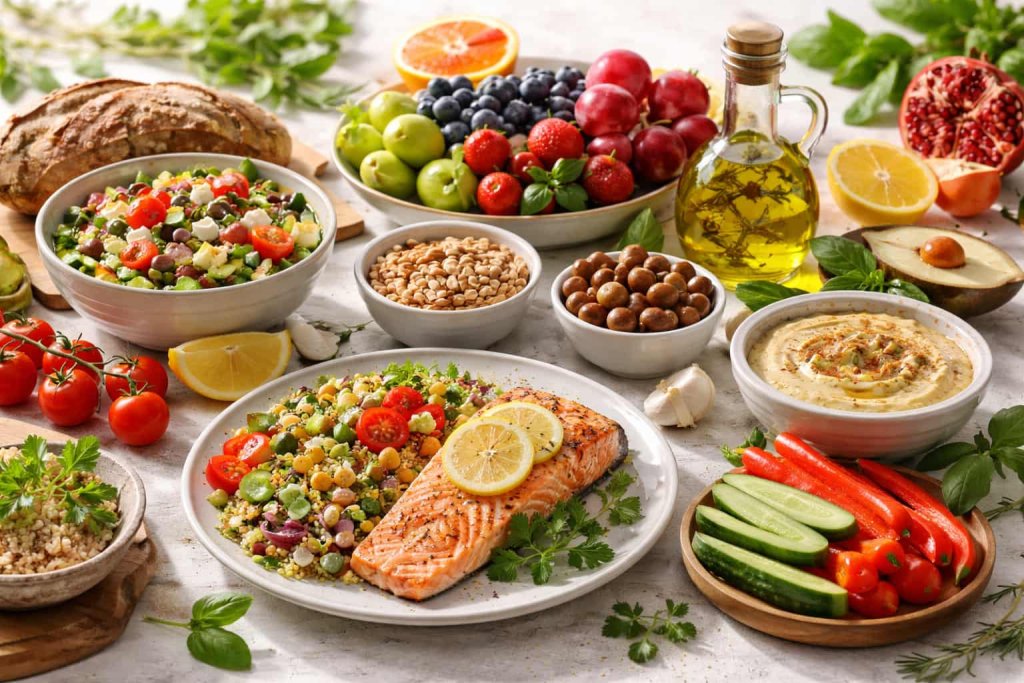
These benefits reflect what the pattern is designed to do nutritionally. Results vary by person, and consistency matters.
It may help support heart-healthy eating habits
Because it emphasizes vegetables, whole grains, legumes, nuts, fish, and unsaturated fats, it’s often recommended as a heart-supportive pattern. See the overview from the American Heart Association.
It supports higher fiber intake
Beans, lentils, vegetables, fruit, and whole grains increase fiber naturally. Higher-fiber patterns may help support digestive comfort and steady energy for many people.
It may help support steadier blood sugar patterns
Mediterranean meals often combine fiber-rich carbs with protein and healthy fats, which can support more balanced meals. The general pattern is summarized by NIH MedlinePlus.
It can improve overall diet quality
Many Mediterranean-style swaps (whole grains instead of refined grains, nuts/fruit instead of sweets, fish/beans instead of processed meats) reduce reliance on ultra-processed foods.
Mediterranean Diet and Weight Loss
The Mediterranean diet can support weight management for some people, but it isn’t automatically “low calorie.”
What usually determines results:
- Portion size (especially with olive oil, nuts, cheese)
- Snack choices (whole foods vs. ultra-processed)
- Consistency over time
If weight change is a goal, think “Mediterranean pattern + mindful portions,” not “unlimited healthy foods.”
Mediterranean Diet Side Effects and Downsides
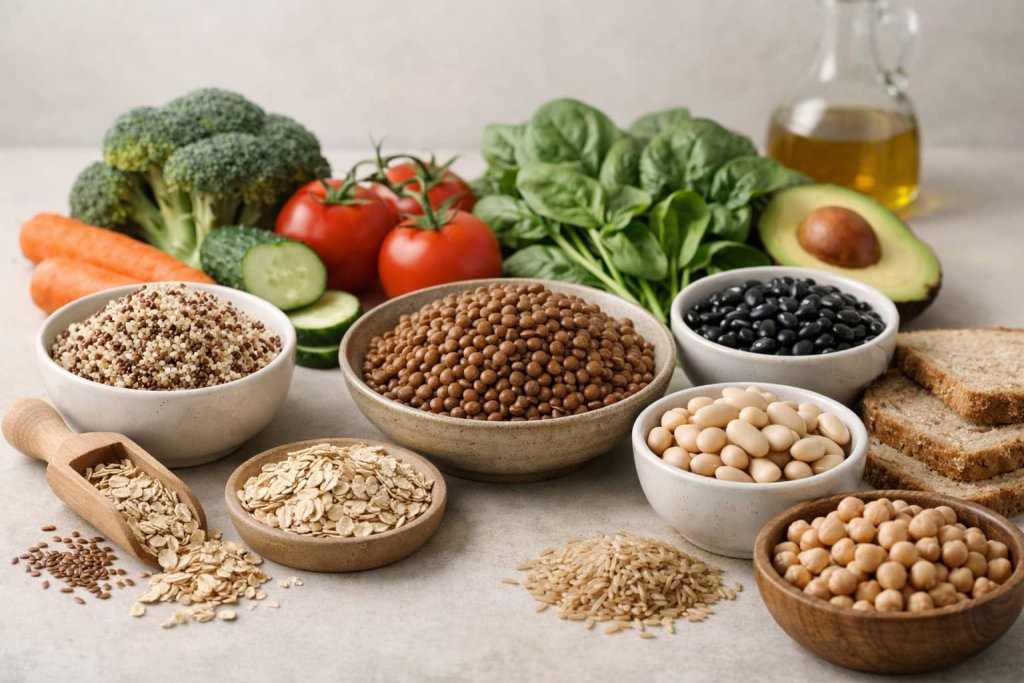
Most people don’t experience “side effects” like a medication, but these issues can happen, especially at the start.
Digestive changes (bloating or gas)
If you suddenly increase beans, lentils, vegetables, and whole grains, you may notice gas or bloating at first. A gradual fiber increase and enough fluids can help.
Weight gain from oversized portions
Olive oil, nuts, seeds, and cheese are nutrient-dense but calorie-dense. The diet may not “work” as intended if these foods are added on top of existing intake instead of replacing less nutritious foods.
Allergies or intolerances
- Nut allergies may limit a common staple
- Fish/shellfish allergies may require alternate proteins
- Lactose intolerance may require dairy adjustments
Cost concerns
Fresh fish and produce can be expensive in some areas. Budget-friendly Mediterranean staples include beans, lentils, oats, canned fish, frozen vegetables, and seasonal produce.
Who Should Be Extra Careful

If you have a medical condition that affects nutrition needs (for example, kidney disease) or you’re on medication, personalized guidance is important.
Fish choices and mercury considerations
If you eat fish often, choosing lower-mercury options may be helpful. The U.S. Food and Drug Administration provides consumer guidance on selecting fish and seafood.
How to Start the Mediterranean Diet Without Feeling Overwhelmed
Use simple swaps
- Use olive oil instead of butter when appropriate
- Choose whole grains more often than refined grains
- Replace processed meats with beans, fish, or poultry more often
- Make fruit + nuts a common snack (if appropriate for you)
Build a Mediterranean grocery list
- Vegetables: leafy greens, tomatoes, peppers, onions
- Fruits: berries, citrus, apples
- Pantry: beans, lentils, oats, brown rice, canned tomatoes
- Fats: olive oil, nuts, seeds
- Proteins: canned salmon/sardines/tuna, frozen fish, eggs, plain yogurt
Use labels to reduce added sugars
Check “Added Sugars” on packaged foods using the explanation from the U.S. Food and Drug Administration.
Frequently Asked Questions
What is the Mediterranean diet in simple terms?
It is a plant-forward eating pattern that uses olive oil often, includes fish regularly, and limits added sugars and highly processed foods.
Is the Mediterranean diet low carb?
No. It includes carbohydrates primarily from whole grains, fruits, vegetables, and legumes rather than refined sources.
Do you have to eat fish?
Fish is common, but beans, lentils, eggs, and poultry can also fit within the pattern.
Is olive oil required?
Olive oil is traditional, but the main principle is choosing healthier unsaturated fats more often.
Can the Mediterranean diet fit a budget?
Yes. Beans, lentils, oats, frozen vegetables, and canned fish are affordable staples.
Conclusion
The Mediterranean diet is best viewed as a flexible, whole-food eating pattern that emphasizes plants, healthy fats, and balanced meals. Rather than strict rules, it encourages sustainable habits that may help support nutrition quality and overall wellness over time. Starting with one meal or one simple swap can make this approach practical and achievable.
This content is for informational purposes only and not medical advice.