
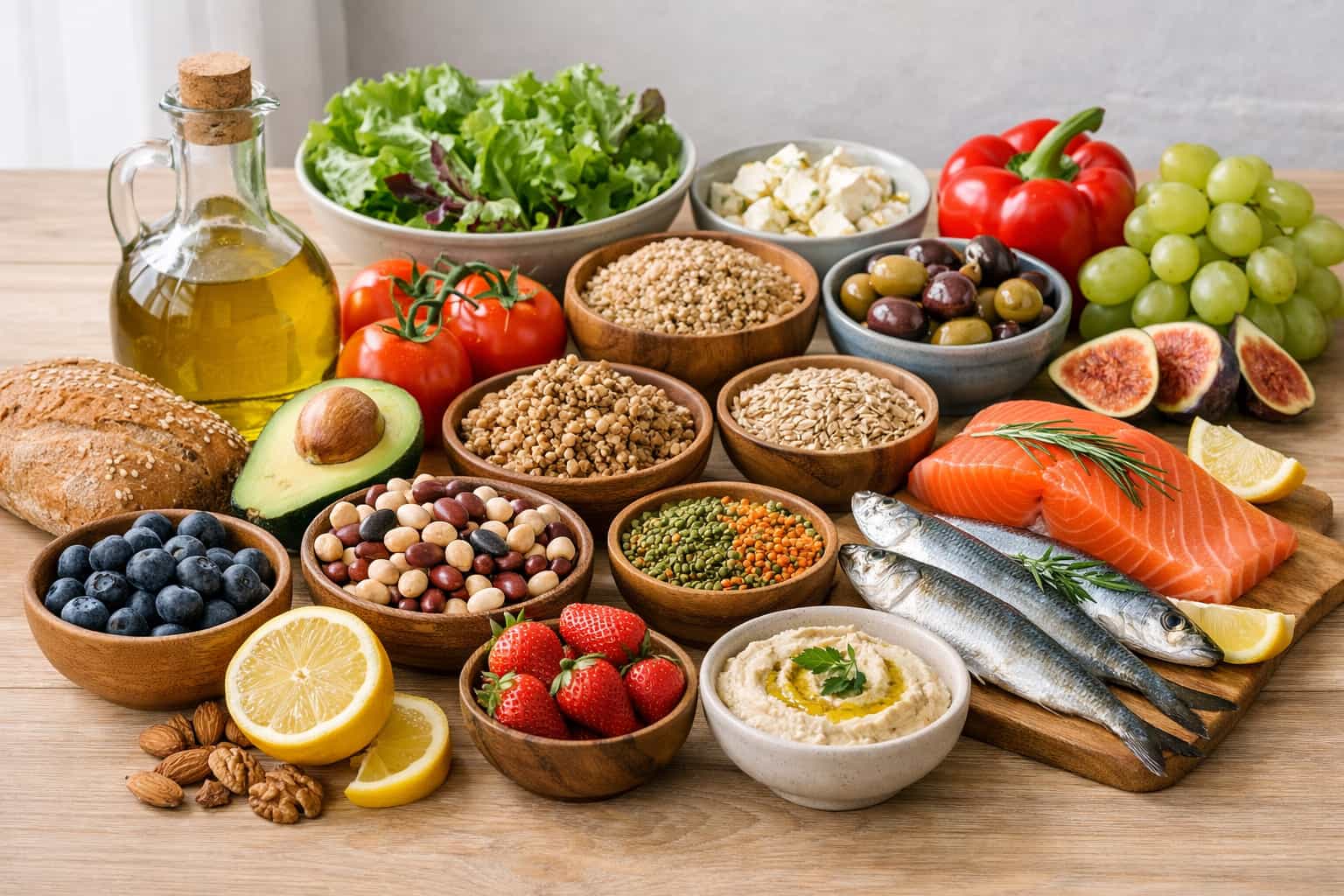
A Mediterranean diet food list emphasizes vegetables, fruits, whole grains, beans, nuts, olive oil, and seafood—while limiting sweets, refined grains, and processed meats. This way of eating matters for nutrition and overall wellness because it prioritizes nutrient-dense, minimally processed foods that support balanced, sustainable meals over time. Guidance from the National Institutes of Health – MedlinePlus, the American Heart Association, and DietaryGuidelines.gov consistently highlights these core food groups.
Below is a clear, evidence-based Mediterranean diet food list with a practical table you can use for grocery shopping and meal planning.
What Defines a Mediterranean Diet Food List
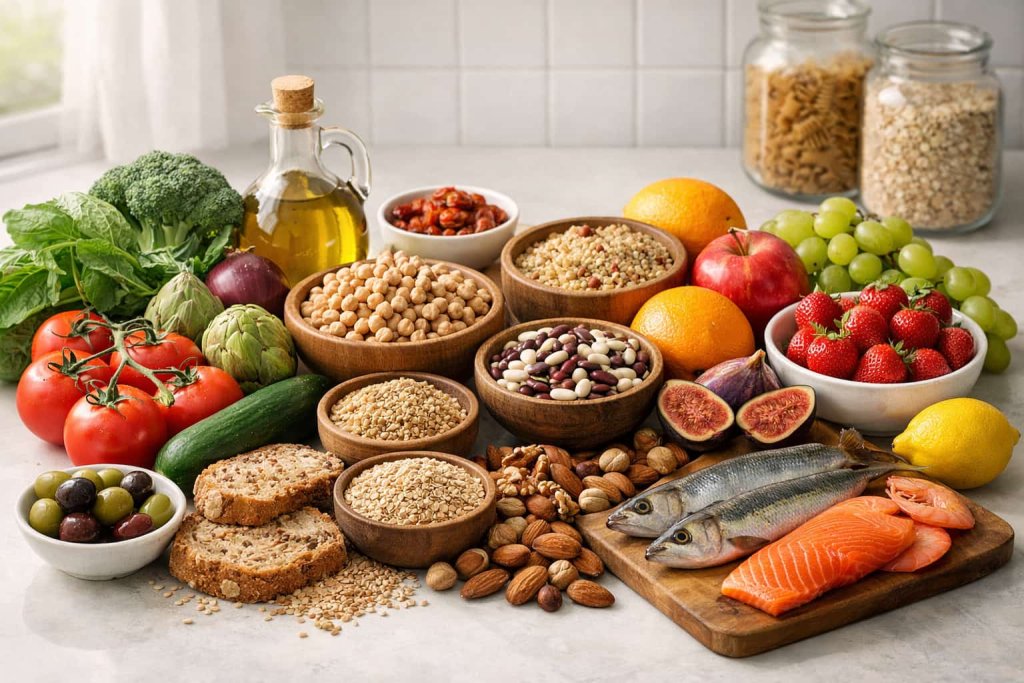
A Mediterranean diet food list is best understood as a pattern of eating, not a rigid meal plan. It emphasizes food quality, balance, and consistency, drawing from traditional Mediterranean regions and supported by modern nutrition guidance from the National Institutes of Health – MedlinePlus and healthy dietary pattern principles outlined by DietaryGuidelines.gov.
Key characteristics of a Mediterranean diet food list include:
- Plant-forward meals built around vegetables and fruits
Vegetables and fruits form the foundation of most meals. Vegetables are commonly eaten at lunch and dinner, while fruits are included daily as snacks or simple desserts. This approach increases fiber and nutrient intake while reducing reliance on ultra-processed foods. - Olive oil as the primary added fat
Olive oil replaces butter, margarine, and refined oils. It is used for cooking, dressings, and finishing meals, adding flavor while fitting within balanced fat intake patterns. - Regular intake of fish and seafood
Fish and seafood—such as salmon, sardines, tuna, and shellfish—are encouraged regularly. They are typically eaten more often than red meat, helping diversify protein choices across the week. - Frequent use of beans, lentils, nuts, and seeds
Legumes, nuts, and seeds are staple foods rather than occasional additions. They provide plant-based protein, fiber, and unsaturated fats and are commonly used in soups, salads, grain bowls, and snacks. - Dairy, eggs, and poultry in moderate amounts
The Mediterranean diet food list includes animal foods, but in smaller portions. Plain yogurt, modest amounts of cheese, eggs, and poultry are used as complements to plant-based meals rather than the main focus. - Red meat, sweets, and ultra-processed foods less often
Red meat, sugary desserts, refined grains, and heavily processed foods are limited. They are not forbidden but are eaten occasionally instead of daily.
Together, these principles create a flexible, sustainable framework that prioritizes whole foods, variety, and long-term dietary habits rather than strict rules or elimination.
Mediterranean Diet Food List Table
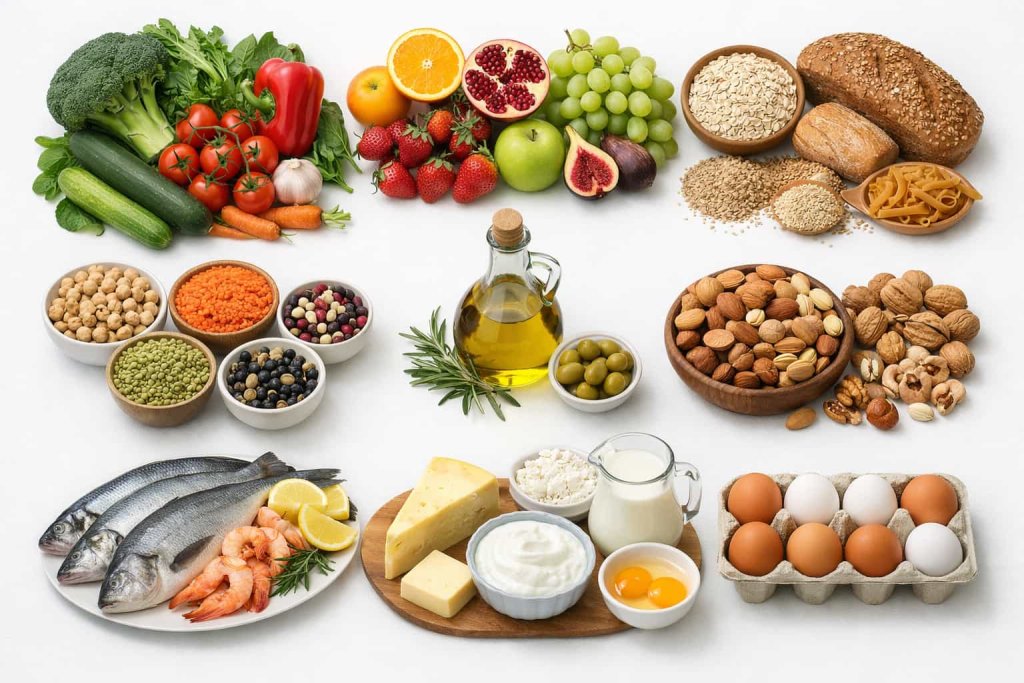
The table below expands the Mediterranean diet food list into a practical, evidence-based reference you can use for grocery shopping, meal planning, and everyday decision-making. It reflects the core Mediterranean eating pattern consistently described by the National Institutes of Health – MedlinePlus, the American Heart Association, and the principles outlined in DietaryGuidelines.gov.
This approach emphasizes whole, minimally processed foods that support balanced nutrition and overall wellness.
Mediterranean Diet Food List Table (Detailed)
| Food group | Role in the Mediterranean diet | Best foods to choose | Frequency guidance | Practical portion guidance | Shopping and label tips |
|---|---|---|---|---|---|
| Vegetables | Foundation of most meals; rich in fiber, vitamins, and minerals | Leafy greens, tomatoes, peppers, broccoli, zucchini, eggplant, onions, carrots; plain frozen vegetables | At most meals | Fill about half your plate | Choose fresh or frozen without sauces; compare sodium on canned options |
| Fruits | Daily source of natural sweetness and nutrients | Berries, apples, oranges, grapes, pears, melons; frozen fruit without added sugar | Daily | 1 whole fruit or a handful of berries | Whole fruit is preferred over juice for fiber |
| Whole grains | Primary carbohydrate source; supports steady energy | Oats, brown rice, barley, bulgur, farro, whole-wheat pasta and bread | Daily | About a fist-sized portion per meal | Look for “100% whole grain” or “whole” as the first ingredient |
| Legumes | Key plant protein and fiber source | Lentils, chickpeas, black beans, kidney beans, white beans, split peas | Several times per week (or more) | About ½–1 cup cooked | Choose low- or no-salt-added canned beans; rinse to reduce sodium |
| Nuts and seeds | Nutrient-dense fats, fiber, and plant compounds | Almonds, walnuts, pistachios, chia seeds, flaxseed, sesame seeds | Regularly, in small amounts | Small handful or 1–2 tablespoons | Select unsalted or lightly salted varieties |
| Olive oil and olives | Main added fat; replaces butter and refined oils | Extra-virgin olive oil, olives | Regularly | 1–2 tablespoons per meal as needed | Store away from heat and light; use extra-virgin for flavor |
| Fish and seafood | Preferred animal protein; replaces red meat more often | Salmon, sardines, trout, tuna, shrimp, shellfish | Regularly | Palm-sized portion | Compare sodium in canned fish; choose simple ingredient lists |
| Dairy (mostly fermented) | Adds calcium and protein in smaller amounts | Plain yogurt, kefir, small portions of cheese | In moderation | Yogurt: ~¾–1 cup; cheese: ~1–2 oz | Choose plain yogurt; compare added sugars |
| Poultry and eggs | Secondary animal protein options | Eggs, chicken, turkey | In moderation | Eggs: 1–2; poultry: palm-sized portion | Avoid heavily processed or breaded products |
| Red and processed meats | Limited foods in the pattern | Beef, pork, lamb; processed meats | Occasionally | Smaller portions, less often | Processed meats are typically higher in sodium and additives |
| Sweets and sugary drinks | Not a regular part of the diet | Pastries, candy, sweetened drinks | Limit | Small portions, infrequently | Check “Added Sugars” on the Nutrition Facts label |
This frequency-based structure aligns with Mediterranean diet descriptions from the National Institutes of Health – MedlinePlus and the American Heart Association.
How to Use the Mediterranean Diet Food List Table Effectively

1. Plan meals around the “most often” foods
Start meals with vegetables, whole grains, or legumes, then add fish, eggs, or poultry as needed. This plant-forward structure reflects Mediterranean dietary patterns highlighted by DietaryGuidelines.gov.
2. Rotate proteins across the week
Instead of relying on one protein source, rotate beans, fish, eggs, and poultry. This supports dietary variety and aligns with Mediterranean guidance from the National Institutes of Health – MedlinePlus.
3. Use olive oil intentionally
Olive oil is a staple, but portions still matter. Using small amounts consistently fits the Mediterranean approach described by the American Heart Association.
Label Checks That Support Mediterranean Choices
Sodium awareness
Packaged foods such as canned beans, soups, and seafood can contribute significant sodium. The World Health Organization recommends limiting salt intake to about 5 g per day (roughly 2,000 mg sodium).
Added sugars awareness
For foods like yogurt, cereal, and sauces, the U.S. Food and Drug Administration explains how “Added Sugars” appear on the Nutrition Facts label, making it easier to compare options and choose lower-sugar products.
Key Takeaway
The Mediterranean diet food list table is not a strict rulebook—it is a flexible framework. By choosing vegetables, fruits, whole grains, legumes, olive oil, and seafood most often, and limiting highly processed foods and sweets, you can build meals that support nutrition and overall wellness in a realistic, sustainable way.
Core Foods to Prioritize on a Mediterranean Diet
1. Vegetables and Fruits
Vegetables and fruits form the foundation of the Mediterranean diet food list. They are naturally rich in fiber, vitamins, minerals, and plant compounds that support overall nutrition. Aim to include vegetables at most meals and fruit daily, fresh or frozen.
2. Whole Grains
Whole grains such as oats, brown rice, and whole-wheat pasta provide complex carbohydrates and fiber. Choosing whole grains more often than refined grains aligns with guidance from DietaryGuidelines.gov.
3. Legumes, Nuts, and Seeds
Beans, lentils, nuts, and seeds are central Mediterranean staples. They may help support fullness and dietary variety when used in place of some animal proteins, as noted by National Institutes of Health – MedlinePlus.
4. Olive Oil
Olive oil is the primary fat source in Mediterranean-style eating. It is used for cooking, dressings, and finishing meals, instead of butter or highly refined fats, according to the American Heart Association.
5. Fish and Seafood
Fish and seafood are encouraged regularly and often replace red meat. Common options include salmon, sardines, and tuna, which fit the Mediterranean pattern described by National Institutes of Health – MedlinePlus.
Foods to Eat Regularly in Moderation

Fish and Seafood
Fish and seafood are an important part of a Mediterranean diet food list, typically eaten regularly but in balanced portions. Common choices include salmon, sardines, trout, tuna, and shellfish. These foods are often used in place of red meat and rotate with plant-based proteins like beans and lentils. Guidance summarized by the National Institutes of Health – MedlinePlus describes fish and seafood as preferred animal proteins within Mediterranean-style eating patterns. Preparation methods matter—grilling, baking, or sautéing in olive oil are commonly emphasized over frying.
Dairy Foods
Dairy foods appear in the Mediterranean diet in moderate amounts, with an emphasis on fermented options such as plain yogurt and small portions of cheese. Dairy is typically used to complement meals rather than serve as the main component. Choosing plain, minimally processed options helps limit added sugars and excess sodium. According to the American Heart Association, moderate dairy intake can fit within Mediterranean-style eating when balanced with plant-forward foods.
Eggs and Poultry
Eggs and poultry are included regularly but not daily for everyone. Eggs are often used in simple meals with vegetables, while poultry is eaten more often than red meat but less frequently than fish or plant proteins. Portions tend to be modest, keeping vegetables, whole grains, and legumes as the foundation of meals. This moderate approach aligns with the balanced dietary pattern described by the National Institutes of Health – MedlinePlus.
Foods to Limit in a Mediterranean Diet Food List
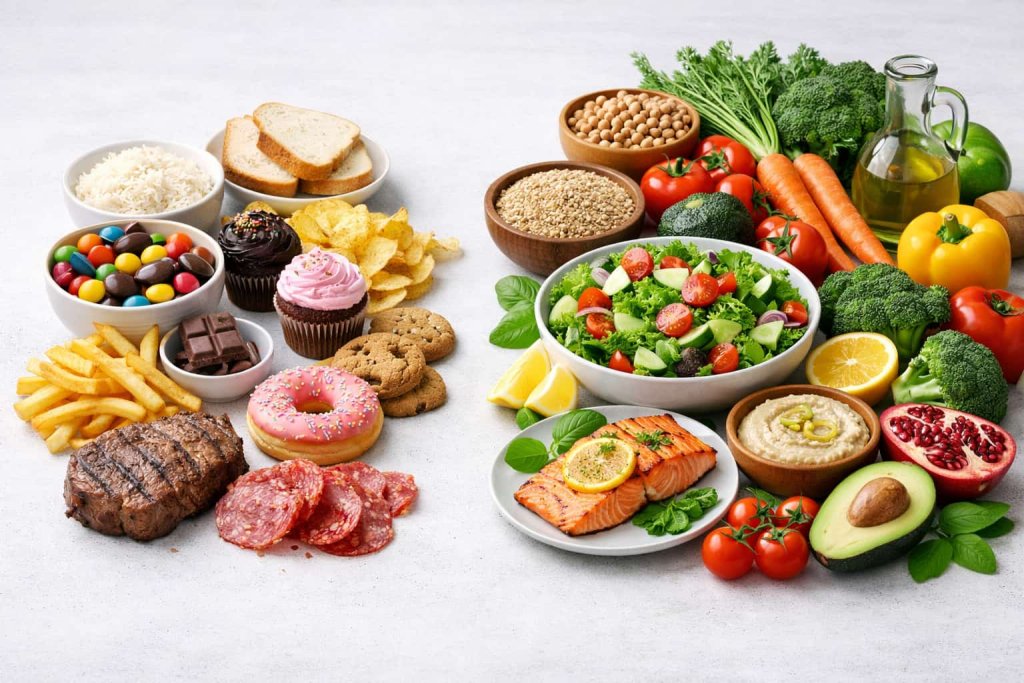
Foods in this category are not forbidden, but they are eaten less often to support balanced nutrition and overall wellness. This guidance reflects Mediterranean-style eating patterns described by the National Institutes of Health – MedlinePlus and aligns with healthy dietary pattern principles outlined by DietaryGuidelines.gov.
- Red meat
Beef, pork, and lamb are typically eaten occasionally rather than daily, with smaller portions compared to plant proteins or fish. - Processed meats
Foods such as bacon, sausage, hot dogs, and deli meats are limited due to higher sodium and processing levels. - Sweets and desserts
Pastries, cakes, cookies, and candy are treated as occasional foods, with fruit commonly used instead for everyday sweetness. - Sugar-sweetened beverages
Soft drinks, sweetened teas, and flavored drinks are minimized; water is the primary beverage. - Refined grains
White bread, refined pasta, and many baked goods are limited in favor of whole-grain options. - Ultra-processed snack foods
Chips, packaged snack mixes, and convenience foods are eaten less often due to lower nutrient density. - Highly refined cooking fats
Butter, shortening, and refined vegetable oils are used less frequently than olive oil.
This “limit, not eliminate” approach supports flexibility while keeping the overall focus on whole, minimally processed foods.
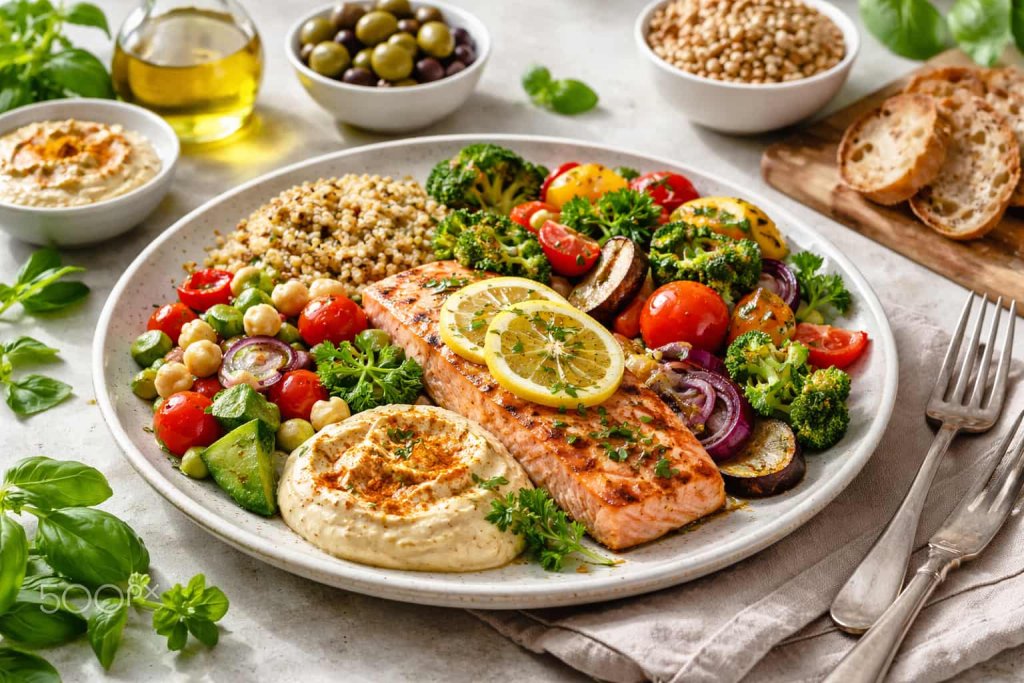
How to Build a Mediterranean-Style Plate
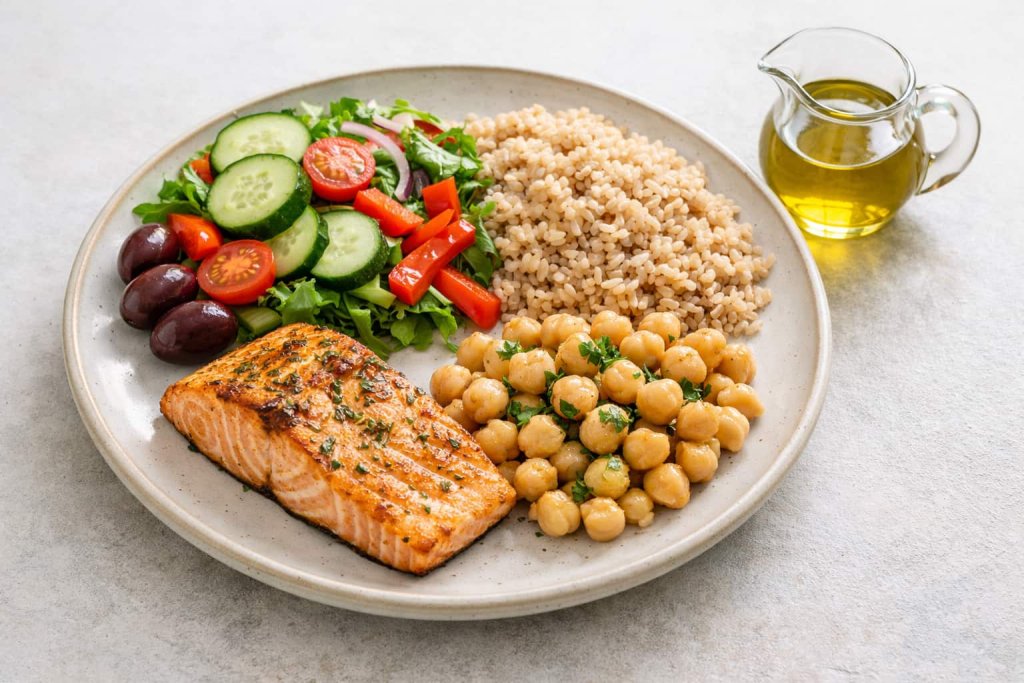
Building a Mediterranean-style plate is about balance and proportion, not strict measurements or calorie counting. This approach helps translate the Mediterranean diet food list into practical, everyday meals and reflects guidance summarized by the National Institutes of Health – MedlinePlus and healthy dietary pattern principles outlined by DietaryGuidelines.gov.
Use the following plate framework as a simple visual guide:
- Half of the plate: vegetables (and some fruit)
Fill about half your plate with a variety of vegetables, both cooked and raw. Leafy greens, tomatoes, peppers, squash, broccoli, and other vegetables form the foundation of the meal. Fruit can be included on the plate or eaten separately as a snack or dessert. - One quarter of the plate: whole grains or starchy vegetables
Choose whole grains such as brown rice, whole-wheat pasta, barley, farro, or oats. Potatoes and other starchy vegetables can also fit here. These foods provide energy and fiber when eaten in balanced portions. - One quarter of the plate: protein foods
Rotate protein sources across the week. Common options include beans and lentils, fish or seafood, eggs, and poultry. Plant-based proteins and seafood are often used more frequently than red meat. - Added fats and flavor: olive oil, herbs, and spices
Use olive oil as the primary added fat for cooking and dressings. Herbs, spices, garlic, and citrus add flavor without relying on heavy sauces.
This plate-based approach keeps meals flexible, plant-forward, and consistent with Mediterranean-style eating patterns.
How to Use the Mediterranean Diet Food List for Meal Planning

Using a Mediterranean diet food list for meal planning helps turn nutrition guidance into consistent, realistic daily habits. The goal is not perfection, but building meals around whole foods more often, as described by the National Institutes of Health – MedlinePlus.
Grocery Shopping Tips
Planning starts at the grocery store. A Mediterranean-style cart is typically built around the perimeter, where fresh foods are found.
- Start with vegetables and fruits (fresh or frozen, without added sauces or sugar)
- Choose whole grains such as oats, brown rice, and whole-wheat pasta
- Add legumes like lentils, chickpeas, and beans (canned or dry)
- Select fish or seafood, plus eggs or poultry for rotation
- Keep olive oil, herbs, and spices on hand for simple flavor
Shopping this way naturally limits ultra-processed foods while supporting balanced meals.
Simple Meal-Building Formula
A repeatable formula makes Mediterranean-style eating easier to maintain:
- Choose a vegetable base (roasted vegetables, salad, soup)
- Add a fiber-rich carbohydrate (whole grain or beans)
- Include a protein source (beans, fish, eggs, or poultry)
- Finish with olive oil, herbs, or citrus for flavor
This approach supports variety without requiring detailed tracking or complex recipes.
Nutrition Label Tips That Support Mediterranean Choices
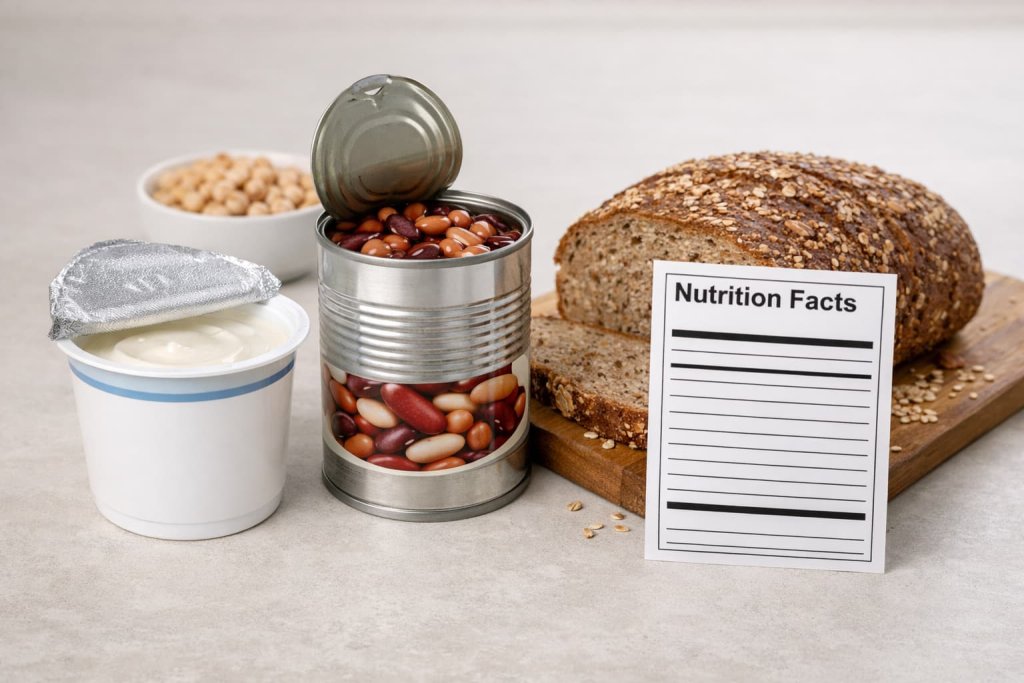
While Mediterranean eating emphasizes whole foods, packaged items such as yogurt, canned beans, and bread can still fit when labels are checked carefully.
Sodium Awareness
Packaged foods can contribute significant sodium. The World Health Organization recommends limiting salt intake to about 5 grams per day (roughly 2,000 mg sodium).
Helpful strategies include:
- Choosing “no salt added” or “low sodium” options
- Rinsing canned beans and vegetables
- Comparing similar products before buying
Added Sugars Awareness
The U.S. Food and Drug Administration requires “Added Sugars” to be listed on Nutrition Facts labels. Checking this line helps when choosing:
- Yogurt (plain vs. sweetened)
- Breakfast cereals
- Sauces and packaged snacks
Choosing lower–added sugar options supports Mediterranean-style eating while keeping meals practical and flexible.
Frequently Asked Questions
What foods are allowed on a Mediterranean diet food list?
Most foods are allowed, with emphasis on vegetables, fruits, whole grains, beans, olive oil, and seafood, and less frequent intake of sweets and processed meats, according to the National Institutes of Health – MedlinePlus.
Is rice allowed on the Mediterranean diet?
Yes. Whole grains such as brown rice fit well within the Mediterranean pattern.
Are eggs part of the Mediterranean diet?
Yes, eggs are typically included in moderation alongside other protein sources.
Do I need to drink wine on a Mediterranean diet?
No. Wine is optional and not required, as noted by the American Heart Association.
How can beginners start the Mediterranean diet?
Start by switching to olive oil as your main fat and adding more vegetables, beans, and fish to meals you already enjoy.
Conclusion
A Mediterranean diet food list is best viewed as a flexible framework rather than a strict set of rules. By centering meals on vegetables, fruits, whole grains, beans, olive oil, and seafood—and limiting highly processed foods—you can build meals that support nutrition and overall wellness in a practical, sustainable way.