
Resistance band leg exercises for seniors are one of the safest and most effective ways to build strength, improve balance, and support mobility at home. These exercises use light, controlled resistance that is gentle on the joints—making them ideal for older adults, beginners, and anyone with limited equipment.
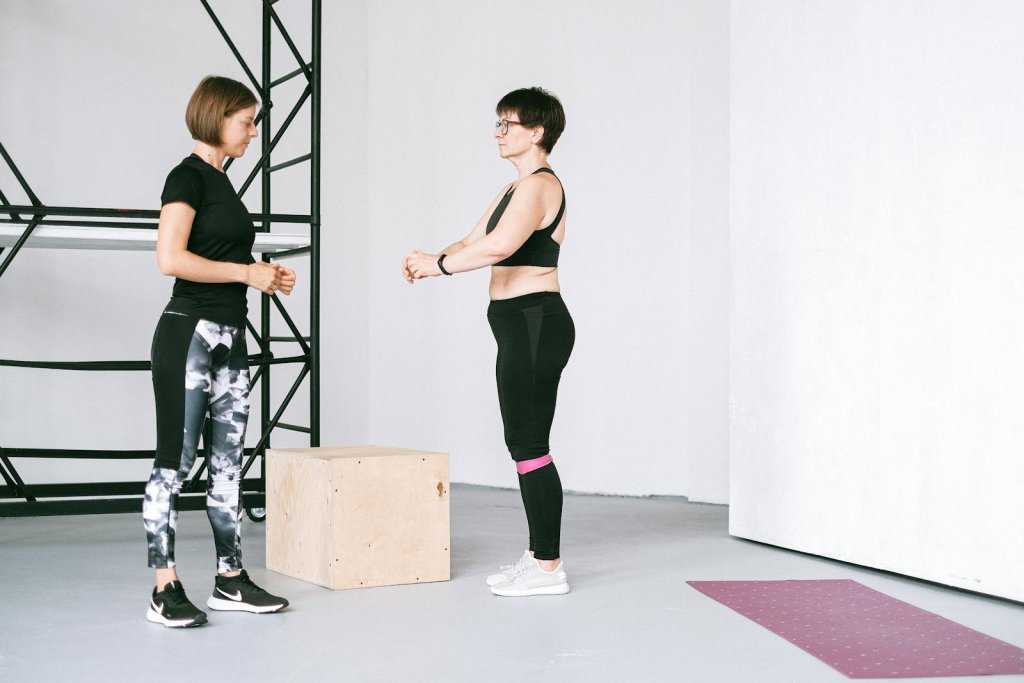
Understanding how these exercises work is important because stronger legs help with walking, climbing stairs, standing from a chair, and reducing fall risk. In this guide, you’ll learn the best beginner-friendly movements, how to do them safely, and how often seniors should train.
10 Best Resistance Band Leg Exercises for Seniors
Below are the 10 best resistance band leg exercises for seniors to safely build strength, balance, and mobility. Each move is beginner-friendly, low-impact, and easy to do at home with minimal equipment.
1. Seated Leg Extension with Band
Why it works:
This movement strengthens the quadriceps, which are essential for everyday tasks like standing up from a chair, climbing stairs, and stabilizing the knees during walking. For seniors, stronger quads directly support better mobility and reduce the strain placed on the joints.
Muscles worked:
Quadriceps, hip flexors.
How to do it:
- Sit tall on a sturdy chair with feet flat on the floor.
- Loop the resistance band securely around both feet.
- Keep one foot firmly planted to anchor the band.
- Slowly extend the opposite leg forward until it’s nearly straight.
- Pause briefly and feel the quad engage.
- Lower the leg under control back to the starting position.
- Repeat for all reps, then switch sides.
Trainer Tip:
Avoid leaning backward. Maintain a tall, upright posture so your quads—not your lower back—do the work.
2. Seated Hamstring Curl
Why it works:
This exercise strengthens the hamstrings, which help stabilize the knees and provide power during walking. Strong hamstrings also reduce imbalance between the front and back of the legs—a common issue in older adults.
Muscles worked:
Hamstrings, glutes.
How to do it:
- Sit straight in a sturdy chair with the band around both ankles.
- Keep one foot planted to anchor the band.
- Slide the other foot backward underneath the chair against band resistance.
- Pause for a moment as the hamstring contracts.
- Return to the starting position slowly.
- Repeat, then switch legs.
Trainer Tip:
Hold the chair sides lightly for stability and avoid rounding the back.
3. Seated or Standing Band Marches
Why it works:
Strengthens the hip flexors, improves coordination, and supports balance—especially important for lifting the legs while stepping or climbing stairs.
Muscles worked:
Hip flexors, quadriceps, core.
How to do it:
- Place the band around your feet or thighs.
- Sit tall or stand with support from a chair or wall.
- Lift one knee toward your chest in a marching motion.
- Lower slowly and switch sides.
- Continue alternating legs in a steady rhythm.
Trainer Tip:
If standing feels unsteady, perform this exercise seated until your balance improves.
4. Banded Sit-to-Stand (Chair Squat)
Why it works:
This functional movement strengthens the entire lower body and directly improves the ability to stand up, sit down, and move around safely.
Muscles worked:
Quads, glutes, hamstrings.
How to do it:
- Place the band above your knees.
- Sit with feet shoulder-width apart.
- Press knees slightly outward to maintain band tension.
- Stand up with control, then slowly sit back down.
- Repeat for the desired number of reps.
Trainer Tip:
If this feels difficult, start with a higher chair or add cushions to raise the seat.
5. Standing Hip Abduction (Side Leg Raises)
Why it works:
Targets the hip abductors, which are crucial for balance and lateral stability. These muscles help prevent side-to-side wobbling during walking.
Muscles worked:
Gluteus medius, outer thighs.
How to do it:
- Loop the band around your ankles.
- Hold a chair or countertop for balance.
- Lift one leg out to the side while keeping toes pointed forward.
- Pause briefly, then return with control.
- Switch sides.
Trainer Tip:
Avoid leaning your torso—keep your upper body tall to ensure the hip muscles work properly.
6. Standing Hip Extension
Why it works:
Strengthens the glutes and hamstrings, which are essential for walking power, climbing steps, and maintaining upright posture.
Muscles worked:
Glutes, hamstrings, lower back stabilizers.
How to do it:
- Place the band around your ankles.
- Hold a chair for support.
- Gently kick one leg backward without arching your back.
- Pause to feel the glute engage.
- Return slowly and switch legs.
Trainer Tip:
Keep your core tight and avoid swinging the leg—slow, controlled movement builds strength safely.
7. Banded Lateral Steps
Why it works:
Strengthens the hip stabilizers and glutes, helping reduce fall risk by improving side-to-side stability.
Muscles worked:
Glutes, abductors, thighs.
How to do it:
- Place the band around your thighs or ankles.
- Bend knees slightly and maintain good posture.
- Step sideways with one foot, then bring the other foot in gently.
- Walk 10–15 steps in one direction, then return.
Trainer Tip:
Smaller, controlled steps maintain tension and activate the right muscles more effectively than wider, fast steps.
8. Mini Banded Squats
Why it works:
Provides a safe, joint-friendly way to strengthen the lower body while avoiding deep squat positions that may strain older knees.
Muscles worked:
Glutes, quads, hamstrings.
How to do it:
- Loop the band above your knees.
- Hold a chair or countertop for support.
- Lower into a mini squat—only as far as comfortable.
- Keep knees pressed outward.
- Stand back up slowly.
Trainer Tip:
Imagine sitting back slightly to avoid letting your knees drift forward too much.
9. Banded Calf Raises
Why it works:
Strengthens the calves and ankle stabilizers, which are essential for walking speed, balance, and reducing trip risk.
Muscles worked:
Calves, ankles, foot stabilizers.
How to do it:
- Stand tall and hold a chair for support.
- Loop the band around your feet.
- Lift your heels off the ground, pressing into the band.
- Pause at the top, then lower with control.
Trainer Tip:
Focus on slow movements—rushing reduces effectiveness and can affect balance.
10. Glute Bridge with Resistance Band
Why it works:
Strengthens the glutes and hamstrings while providing core stability, all in a low-impact, lying-down position that’s easy on the back.
Muscles worked:
Glutes, hamstrings, core.
How to do it:
- Lie on your back with knees bent and feet hip-width apart.
- Loop the band above your knees.
- Press knees slightly outward to keep tension.
- Lift hips upward until your body forms a straight line from shoulders to knees.
- Pause, then lower slowly.
Trainer Tip:
Lift using your glutes—not your lower back—to avoid strain.
Why Resistance Band Leg Exercises for Seniors Matter
Resistance band leg workouts matter because they provide safe, low-impact resistance that strengthens key leg muscles without putting stress on fragile joints. Seniors benefit from slow, controlled movements that target the quads, hamstrings, glutes, hips, and calves—muscles essential for balance, stability, and fall prevention.
Key Benefits (Bullet Points)
- Strengthen major lower-body muscles used for daily activities
- Support better balance and coordination
- Improve mobility and walking speed
- Reduce fall risk when combined with regular balance training
- Provide a joint-friendly way to build strength
- Allow seated or supported variations for safety
- Inexpensive, portable, and easy to use at home
How Often Should Seniors Do Resistance Band Leg Exercises?
- 2–3 days per week of band training
- 10–15 reps per exercise, 1–3 sets
- Rest 1 day between sessions
- Start with light resistance and progress gradually
- Use chair or wall support for balance-based moves
Safety Tips for Seniors
- Stop immediately if you feel sharp pain or dizziness.
- Avoid holding your breath—breathe steadily through each movement.
- Ensure your band is not worn or frayed.
- Use a chair, wall, or countertop for support during standing exercises.
- Consult a healthcare professional if you have chronic health conditions or mobility limitations.
FAQ
1. Are resistance band leg exercises safe for seniors?
Yes—when done slowly and with proper support, they provide low-impact strength training suitable for older adults.
2. How many times per week should seniors work their legs?
Most guidelines recommend 2–3 sessions per week with rest days in between.
3. What color resistance band should a senior start with?
Light bands (yellow or green, depending on brand) are typically best for beginners.
4. Can seniors do these exercises if they have arthritis?
Most can, as long as movements are pain-free and controlled. Always follow medical advice.
5. Do resistance bands help with balance?
Yes—many banded leg exercises strengthen the hips, which play a major role in stability.
6. Can I do these exercises while seated?
Absolutely. Many of the best senior-friendly moves can be performed safely in a chair.
7. How long before I notice improvements?
Most seniors notice better strength and confidence within 4–8 weeks of consistent training.
Conclusion
Resistance band leg exercises offer seniors a safe, simple, and powerful way to build strength, improve balance, and stay independent. With just a few minutes of training a few times a week, older adults can support mobility, confidence, and day-to-day function.
Start with light bands, follow the steps carefully, and progress at your own pace for the best results.
References
- World Health Organization – WHO Guidelines on Physical Activity and Sedentary Behaviour (2020)
- Centers for Disease Control and Prevention (CDC) – Physical Activity Guidelines for Older Adults
- National Institute on Aging (NIA) – Exercise and Physical Activity: Getting Fit for Life
- Chodzko-Zajko WJ, et al. – American College of Sports Medicine Position Stand: Exercise and Physical Activity for Older Adults (2009)
- Fragala MS, et al. – Resistance Training for Older Adults: NSCA Position Statement (2019)
- Martins WR, et al. – Elastic Resistance Training to Increase Muscle Strength in the Elderly: A Systematic Review with Meta-Analysis (2013)
- Meng Y, et al. – Effects of Elastic Band Resistance Training on Lower Limb Strength and Balance in Older Adults: Systematic Review and Meta-Analysis (2025)
- Sadaqa M, et al. – Effectiveness of Exercise Interventions on Fall Prevention in Community-Dwelling Older Adults: Systematic Review and Meta-Analysis (2023)