
Lower body exercises are strength-training movements that target the glutes, quadriceps, hamstrings, calves, and supporting hip muscles—and they are one of the most effective ways to build strength, improve mobility, and support everyday function.
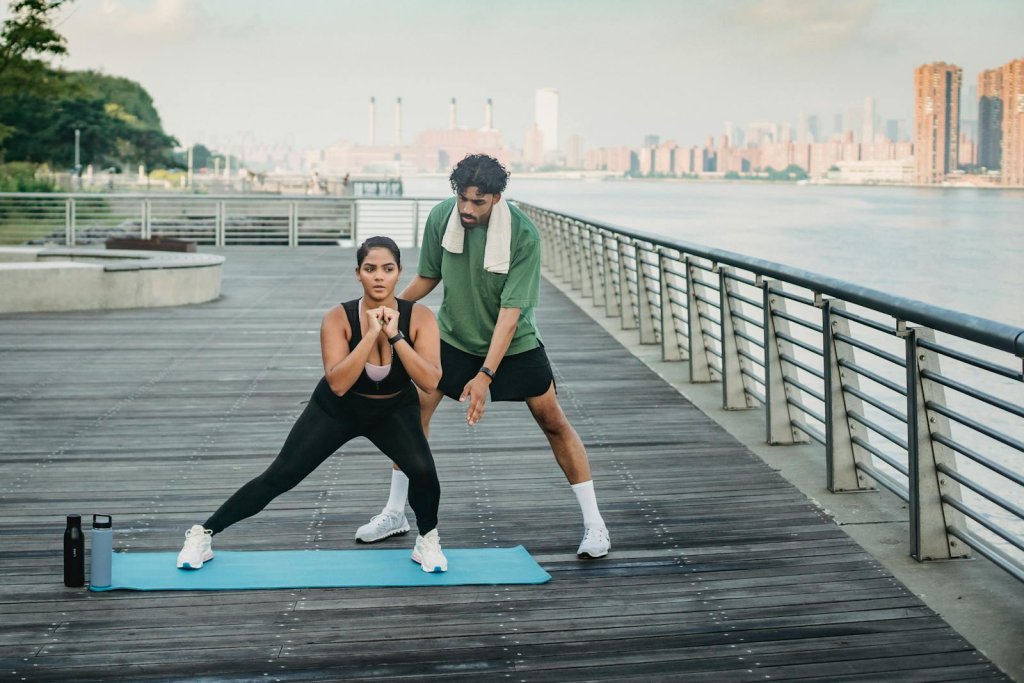
Training your lower body matters because these muscles power walking, climbing stairs, lifting objects, and maintaining balance as you age. When done consistently and progressively, lower body exercises can support muscle tone, joint stability, bone health, and overall fitness.
What Are Lower Body Exercises?
Lower body exercises are movements designed to strengthen the muscles below the waist, primarily by training key movement patterns such as squatting, hinging, lunging, stepping, and hip extension.
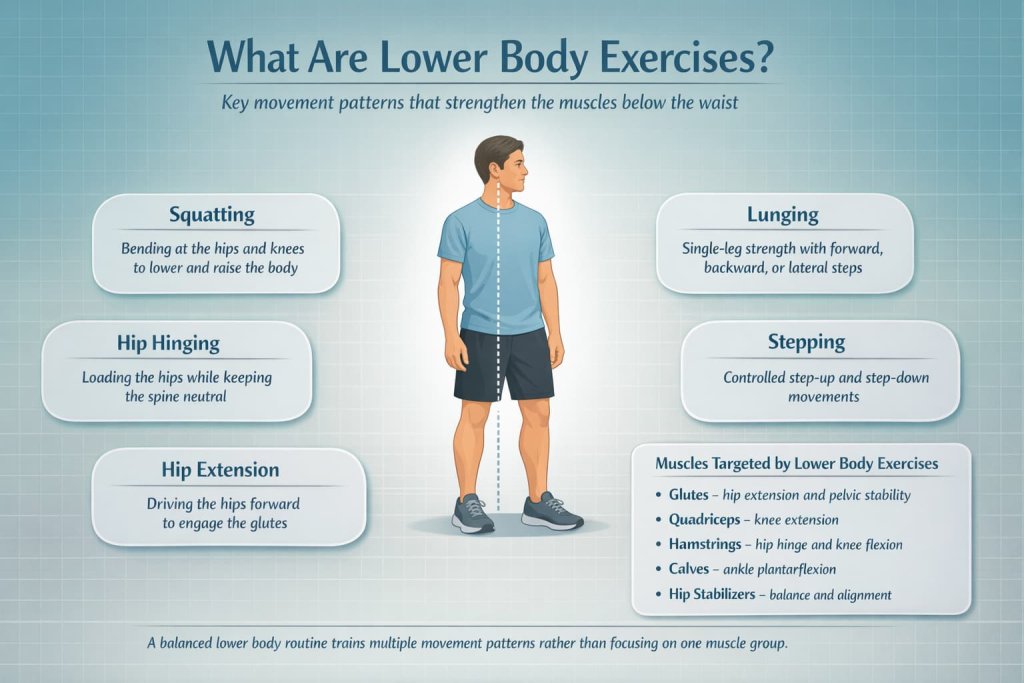
They typically target:
- Glutes (hip extension, stability)
- Quadriceps (knee extension)
- Hamstrings (hip hinge, knee flexion)
- Calves (ankle plantarflexion)
- Hip stabilizers (balance and alignment)
A well-designed lower body routine balances all of these patterns rather than over-focusing on one muscle group.
12 Best Lower Body Exercises That Build Strong, Toned Legs Fast
Below are 12 of the most effective lower body exercises, covering all major movement patterns for balanced development.
1. Squats
How to do it:
- Stand with feet shoulder-width apart and toes slightly turned out
- Brace your core and keep your chest tall
- Push your hips back and bend your knees to lower down
- Descend until thighs are at least parallel to the floor (as mobility allows)
- Drive through your heels to stand back up
Why it works:
Squats train multiple large muscle groups at once while reinforcing proper hip and knee mechanics. Because the movement mimics sitting and standing, it transfers directly to daily activities and builds overall lower-body strength efficiently.
Muscles worked:
Quadriceps, gluteus maximus, hamstrings, adductors, core stabilizers
Trainer Tip:
Think “sit between your heels,” not “straight down,” to keep pressure off the knees and maximize glute engagement.
2. Romanian Deadlifts
How to do it:
- Stand tall holding weights in front of your thighs
- Keep knees slightly bent and spine neutral
- Push hips straight back while lowering the weights along your legs
- Lower until you feel a stretch in the hamstrings
- Drive hips forward to return to standing
Why it works:
Romanian deadlifts emphasize the hip hinge pattern, strengthening the posterior chain without excessive knee stress. They help improve lifting mechanics and reduce over-reliance on the lower back.
Muscles worked:
Hamstrings, glutes, erector spinae, adductors
Trainer Tip:
If you feel this mostly in your lower back, reduce the weight and focus on pushing the hips back further.
3. Reverse Lunges
How to do it:
- Stand upright with feet hip-width apart
- Step one foot backward into a lunge position
- Lower until both knees bend comfortably
- Push through the front heel to return to standing
- Alternate sides
Why it works:
Reverse lunges reduce forward knee stress while building single-leg strength and balance. The backward step allows better control and is often more comfortable for sensitive knees.
Muscles worked:
Glutes, quadriceps, hamstrings, calves, core stabilizers
Trainer Tip:
Keep your front shin mostly vertical to reduce knee strain and increase glute involvement.
4. Walking Lunges
How to do it:
- Step forward into a deep lunge
- Lower under control until the back knee nearly touches the floor
- Push through the front foot and step forward into the next lunge
- Continue alternating steps
Why it works:
Walking lunges increase time under tension and challenge coordination, making them effective for muscle development and functional movement patterns like walking and climbing.
Muscles worked:
Quadriceps, glutes, hamstrings, calves, hip stabilizers
Trainer Tip:
Move slowly and deliberately—momentum reduces effectiveness and balance control.
5. Bulgarian Split Squats
How to do it:
- Place your rear foot on a bench or elevated surface
- Stand tall with front foot planted firmly
- Lower straight down by bending the front knee
- Push through the front heel to stand back up
- Complete all reps before switching sides
Why it works:
This unilateral exercise heavily loads the front leg, exposing strength imbalances while placing high demand on the glutes and quads. It’s one of the most effective leg-strength builders.
Muscles worked:
Glutes, quadriceps, hamstrings, adductors
Trainer Tip:
If balance is an issue, shorten your stance or hold onto a stable surface lightly.
6. Step-Ups
How to do it:
- Stand in front of a sturdy box or bench
- Place one foot fully on the platform
- Drive through that foot to step up
- Bring the other foot up under control
- Step back down and repeat
Why it works:
Step-ups mimic stair climbing and reinforce single-leg strength, hip stability, and coordination. They are highly functional and joint-friendly when performed with control.
Muscles worked:
Glutes, quadriceps, hamstrings, calves
Trainer Tip:
Avoid pushing off with the trailing foot—let the working leg do the work.
7. Hip Thrusts
How to do it:
- Sit with your upper back against a bench
- Place feet flat on the floor, knees bent
- Brace your core and drive hips upward
- Squeeze glutes at the top with hips fully extended
- Lower under control
Why it works:
Hip thrusts load the glutes in their strongest position, allowing high muscle activation with relatively low spinal stress. This makes them excellent for building glute strength and power.
Muscles worked:
Gluteus maximus, hamstrings, adductors
Trainer Tip:
Stop the lift when hips are fully extended—overarching reduces glute engagement.
8. Glute Bridges
How to do it:
- Lie on your back with knees bent and feet flat
- Brace your core and press feet into the floor
- Lift hips until your body forms a straight line
- Squeeze glutes briefly at the top
- Lower slowly
Why it works:
Glute bridges reinforce hip extension and glute activation in a low-load, beginner-friendly way. They are ideal for learning proper muscle engagement before progressing to heavier lifts.
Muscles worked:
Glutes, hamstrings, core stabilizers
Trainer Tip:
If you feel this in your lower back, bring your feet slightly closer to your hips.
9. Lateral Lunges
How to do it:
- Stand tall with feet together
- Step one foot out to the side
- Sit back into the stepping hip
- Keep the opposite leg straight
- Push back to the starting position
Why it works:
Lateral lunges strengthen the muscles often neglected in straight-line movements. They improve side-to-side strength and mobility, which supports joint health and injury prevention.
Muscles worked:
Adductors, glutes, quadriceps, hamstrings
Trainer Tip:
Move slowly into depth—mobility improves with controlled range, not speed.
10. Single-Leg Romanian Deadlifts
How to do it:
- Stand on one leg holding weight in the opposite hand
- Hinge at the hips while extending the free leg behind you
- Keep hips level and spine neutral
- Lower until you feel hamstring tension
- Return to standing
Why it works:
This exercise combines balance training with posterior-chain strength, improving coordination and correcting side-to-side weaknesses.
Muscles worked:
Hamstrings, glutes, core stabilizers
Trainer Tip:
Use a wall or dowel lightly for balance if needed—form comes before load.
11. Calf Raises
How to do it:
- Stand tall with feet hip-width apart
- Press through the balls of your feet
- Lift heels as high as possible
- Pause briefly at the top
- Lower slowly
Why it works:
Calf raises strengthen muscles essential for walking, running, and ankle stability. Direct calf work supports lower-leg endurance and joint resilience.
Muscles worked:
Gastrocnemius, soleus
Trainer Tip:
Perform some sets with straight knees and some with bent knees to target both calf muscles.
12. Box Squats or Sit-to-Stands
How to do it:
- Stand in front of a chair or box
- Sit back slowly until lightly touching the surface
- Keep chest tall and feet planted
- Drive through heels to stand back up
- Repeat with control
Why it works:
This movement teaches proper squat mechanics and builds leg strength safely. It’s especially effective for beginners, seniors, or anyone rebuilding confidence with squats.
Muscles worked:
Quadriceps, glutes, hamstrings
Trainer Tip:
Control the descent—most strength and joint benefits come from the lowering phase.
How Often Should You Do Lower Body Exercises?
Most evidence-based guidelines align on the following:
- 2–3 lower body sessions per week for most adults
- At least 48 hours of recovery between hard sessions for the same muscle groups
- 2–4 sets per exercise, depending on experience
- 8–12 repetitions for general strength and muscle development
Beginners can start with fewer exercises and lighter loads, focusing on movement quality before increasing intensity.
Sample Lower Body Workout Structure
Here’s a simple, balanced session using the exercises above:
- Squats – 3 × 8–10
- Romanian deadlifts – 3 × 8–10
- Reverse lunges – 3 × 10 per side
- Hip thrusts or glute bridges – 3 × 10–12
- Calf raises – 3 × 12–15
Rest 60–90 seconds between sets and focus on controlled movement.
Common Mistakes to Avoid
- Using weights that are too heavy for proper form
- Skipping warm-ups before heavy lower body work
- Neglecting single-leg exercises
- Rushing repetitions instead of controlling tempo
- Training lower body hard on consecutive days without recovery
Proper technique and recovery are essential for long-term progress.
How Lower Body Exercises Build Strong, Toned Legs
Lower body exercises build strength and muscle tone by placing controlled resistance on the largest muscles in the body. Over time, this leads to stronger, more defined legs when training is consistent and progressive.
They work by:
- Increasing muscle strength through progressive overload
- Activating multiple muscle groups in compound movements
- Improving neuromuscular coordination and movement efficiency
- Raising overall training demand, which supports muscle definition
“Toned” legs result from stronger muscles combined with overall fat loss, not spot reduction. Consistent training and recovery are key.
Who Should Be Careful With Lower Body Exercises
Lower body exercises are generally safe, but some people should progress more cautiously or use modifications.
Extra care is recommended if you:
- Are new to exercise or returning after a long break
- Have hip, knee, or ankle discomfort
- Experience balance or mobility limitations
- Are an older adult starting strength training
- Are recovering from a recent lower-body injury
Starting with bodyweight movements, limiting range of motion, and progressing gradually can help improve safety and confidence.
Safety and Progression Tips
- Start with bodyweight or light resistance
- Increase load gradually as strength improves
- Maintain neutral spine and controlled joint alignment
- Stop if you feel sharp pain (not muscle effort)
- Consider professional guidance if you’re new or returning after injury
FAQs About Lower Body Exercises
What are the best lower body exercises for beginners?
Squats, glute bridges, step-ups, and sit-to-stands are beginner-friendly and easy to scale.
Can lower body exercises help with weight management?
They may help by increasing muscle mass and supporting overall energy expenditure when combined with aerobic activity.
How long does it take to see results from lower body workouts?
Many people notice strength improvements within 3–4 weeks, with visible changes taking longer depending on consistency and nutrition.
Should I train lower body or upper body first?
If legs are your priority, train lower body first when energy levels are highest.
Are machines or free weights better?
Both can be effective. Free weights train coordination and stabilizers, while machines can help isolate muscles safely.
Do I need to work calves separately?
Yes. Calves often require direct training because they don’t get fully challenged during squats and lunges.
Conclusion
Lower body exercises are a cornerstone of effective strength training. By combining squats, hinges, lunges, bridges, and calf work, you can build strong, toned legs that support daily movement, athletic performance, and long-term health. Start with proper form, train consistently at least twice per week, and progress gradually for sustainable results.
References
- CDC — Adult Physical Activity Guidelines (Adults)
- WHO — Physical Activity Recommendations
- ACSM Position Stand — Progression Models in Resistance Training (PubMed)
- NHS — How to Improve Strength and Flexibility
- Mayo Clinic — Strength Training: Get Stronger, Leaner, Healthier
- Harvard Health — Strength Training Builds More Than Muscles
- ACE Exercise Library — Glute Bridge
- Systematic Review (PMC) — Gluteus Maximus Activation During Common Strength Exercises