
The best leg day exercises are the ones that target all major lower-body muscles—quads, hamstrings, glutes, and calves—using a mix of squats, deadlifts, lunges, hip hinges, and isolation movements. These movements build strength, improve balance, increase definition, and support everyday functional ability.
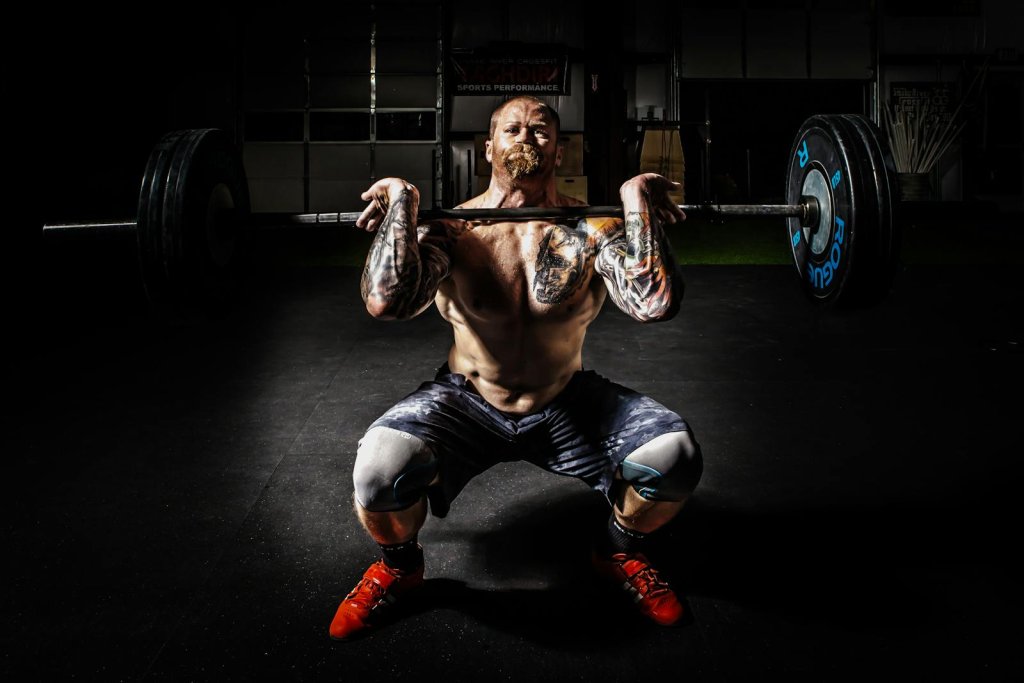
Understanding proper leg training is important because lower-body strength affects posture, mobility, athletic performance, and long-term health. According to the CDC and ACSM, adults should perform muscle-strengthening activities for all major muscle groups—including the legs—at least 2 days per week. These exercises can be done at home or in the gym using bodyweight, dumbbells, kettlebells, or machines.
In this guide, you’ll learn the 22 best leg day exercises, plus programming tips, warm-up, common mistakes, and safety guidelines.
Benefits of Effective Leg Day Training
Training your legs two or more days per week may support:
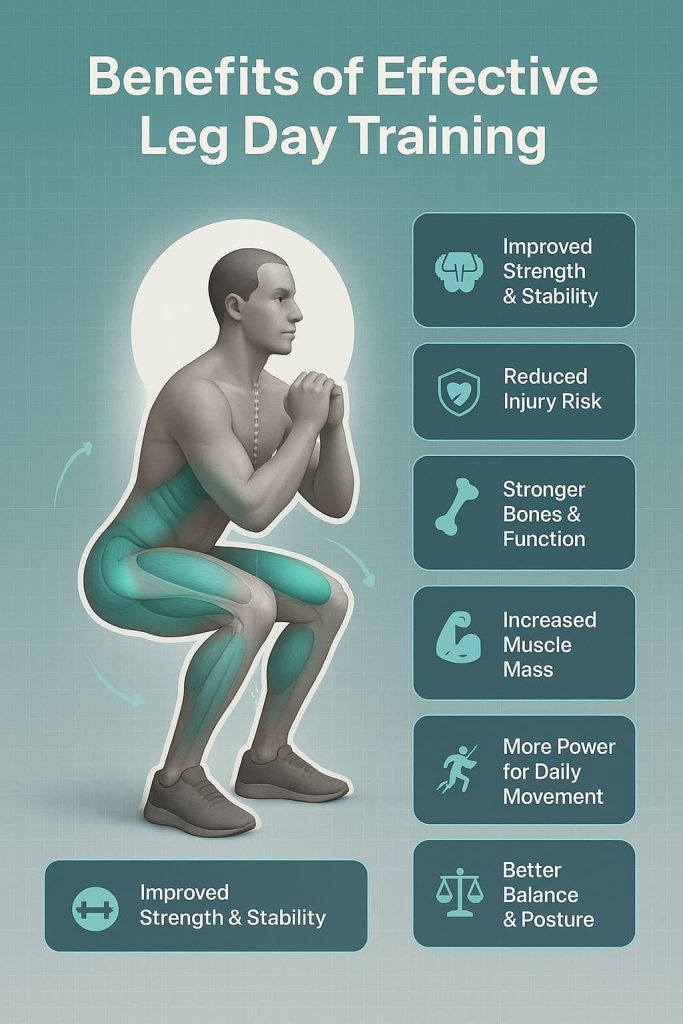
- Improved lower-body strength and stability
- Reduced injury risk through balanced muscle development
- Stronger bones and improved movement function
- Increased muscle mass (supported by numerous hypertrophy studies)
- Lower-body power needed for sports, walking, lifting, and daily tasks
- Better balance and posture
How to Warm Up Before Leg Day
A warm-up boosts blood flow, improves mobility, and prepares joints for heavy compound lifts.
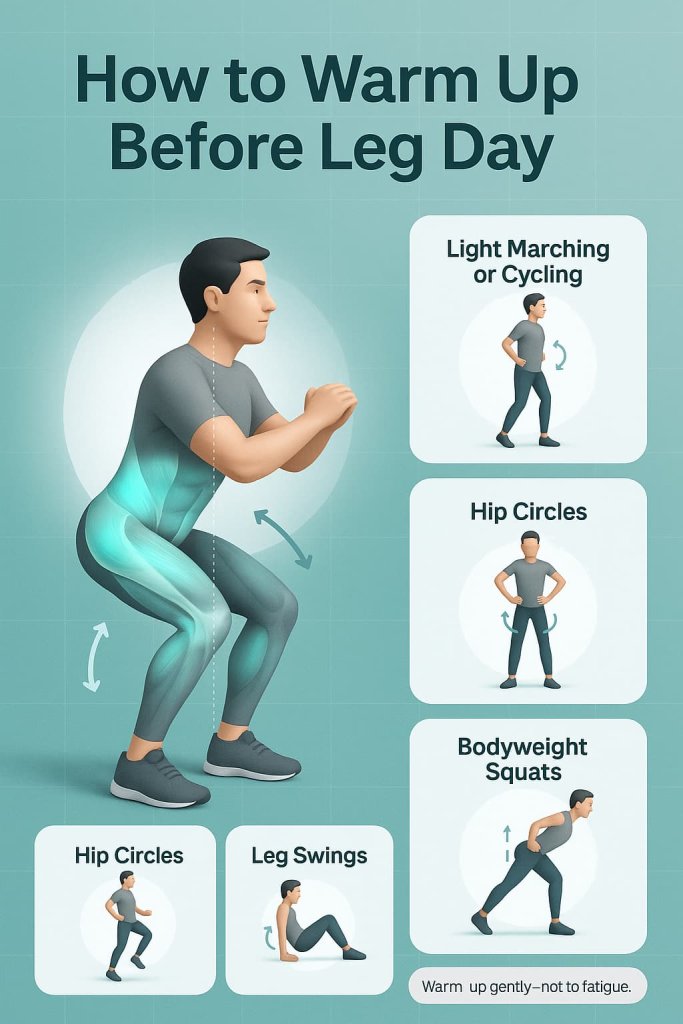
3–5 Minute Warm-Up:
- Light marching or cycling — 30–45 seconds
- Hip circles — 10 per direction
- Leg swings — 10 each side
- Bodyweight squats — 10 reps
- Glute bridges — 10–12 reps
Tip: Warm up gently—not to fatigue.
22 Best Leg Day Exercises for Strength, Muscle, and Definition
Below are the 22 best evidence-supported exercises organized by movement pattern.
Best Squat Exercises
1. Back Squat
Why it works:
The back squat is one of the most effective compound lifts for building total lower-body strength. It loads the quads and glutes heavily while also challenging core stability and improving athletic power.
Muscles worked:
Quads, glutes, hamstrings, core, lower back.
How to do it:
- Stand with feet shoulder-width apart.
- Position the barbell across your upper back.
- Brace your core and sit your hips back into a squat.
- Lower until thighs are parallel or below.
- Drive through your heels to stand tall.
Trainer Tip:
Keep your chest lifted and knees tracking over your toes to avoid excessive forward lean.
2. Front Squat
Why it works:
Placing the bar in the front rack shifts the load forward, increasing quad activation and improving posture and core engagement.
Muscles worked:
Quads, upper back, glutes, core.
How to do it:
- Hold the barbell in a front-rack position on your shoulders.
- Stand tall with elbows lifted.
- Sit straight down into a squat.
- Push through the mid-foot to rise.
- Keep your torso upright throughout.
Trainer Tip:
Lift your elbows high—this keeps the bar secure and your torso vertical.
3. Goblet Squat
Why it works:
A beginner-friendly squat that teaches proper depth, bracing, and knee alignment while building quad and glute strength.
Muscles worked:
Quads, glutes, core, upper back.
How to do it:
- Hold a dumbbell or kettlebell at chest level.
- Stand with feet shoulder-width apart.
- Push hips back and lower into a controlled squat.
- Drive through your heels to stand tall.
Trainer Tip:
Use your elbows to gently push knees outward to improve squat depth.
4. Bulgarian Split Squat
Why it works:
This unilateral movement isolates each leg, increases glute activation, and enhances balance, mobility, and symmetry.
Muscles worked:
Glutes, quads, hamstrings, core.
How to do it:
- Stand a few feet in front of a bench.
- Place one foot behind you on the bench.
- Lower into a lunge on the front leg.
- Push through the front heel to rise.
Trainer Tip:
Lean slightly forward to maximize glute engagement.
5. Sumo Squat
Why it works:
The wide stance shifts emphasis to the inner thighs and glutes while maintaining quad activation.
Muscles worked:
Adductors, glutes, quads, hamstrings.
How to do it:
- Stand with a wide stance and toes slightly turned out.
- Hold a dumbbell or kettlebell.
- Sit hips back and lower straight down.
- Push through your heels to stand tall.
Trainer Tip:
Keep knees aligned over toes to protect the inner thigh and groin.
Best Deadlift & Hinge Exercises
6. Barbell Deadlift
Why it works:
A foundational lift that builds maximal posterior-chain strength, improving power, posture, and overall lower-body development.
Muscles worked:
Hamstrings, glutes, lower back, upper back, core.
How to do it:
- Stand with feet hip-width apart.
- Grip the bar just outside your legs.
- Hinge your hips back and brace your core.
- Drive through your feet to lift the bar.
- Lower it with control by pushing hips back.
Trainer Tip:
Think “push the floor away” instead of “pull the bar up” to keep form tight.
7. Romanian Deadlift (RDL)
Why it works:
Targets the hamstrings and glutes with a strong hip hinge, ideal for muscle definition and strength.
Muscles worked:
Hamstrings, glutes, lower back.
How to do it:
- Stand with barbell or dumbbells in hand.
- Keep a soft knee bend.
- Hinge at the hips, lowering weight toward mid-shin.
- Squeeze glutes to return to standing.
Trainer Tip:
Maintain a neutral spine—your back should stay flat, not rounded.
8. Kettlebell Swing
Why it works:
An explosive hinge that builds power, conditioning, and hip drive without heavy loads.
Muscles worked:
Hamstrings, glutes, lower back, core.
How to do it:
- Stand with kettlebell on the floor.
- Hinge, grab the handle, and hike it back.
- Thrust hips forward to swing the kettlebell to chest height.
- Let it fall back into the hinge.
Trainer Tip:
The power comes from your hips—not your arms.
9. Single-Leg Romanian Deadlift
Why it works:
Improves balance, hip stability, and muscular symmetry while intensively targeting the hamstrings.
Muscles worked:
Hamstrings, glutes, calves, core.
How to do it:
- Hold a dumbbell in one hand.
- Stand on the opposite leg.
- Hinge forward while lifting the back leg.
- Return to standing with control.
Trainer Tip:
Keep hips square—don’t let the free hip rotate outward.
Best Lunge Variations
10. Walking Lunge
Why it works:
A dynamic, functional movement that improves stride power, stability, and overall lower-body development.
Muscles worked:
Quads, glutes, hamstrings, core.
How to do it:
- Step forward into a lunge.
- Lower your back knee toward the floor.
- Push off the front foot and step forward into the next lunge.
- Continue alternating legs.
Trainer Tip:
Keep your torso upright and step far enough to avoid knee collapse.
11. Reverse Lunge
Why it works:
Reduces knee stress while heavily engaging the glutes, making it ideal for beginners or those with knee sensitivity.
Muscles worked:
Glutes, quads, hamstrings.
How to do it:
- Step backward with one leg.
- Lower into a lunge.
- Push through the front heel to return to standing.
- Alternate sides.
Trainer Tip:
Leaning slightly forward increases glute involvement.
12. Lateral Lunge
Why it works:
Strengthens the inner thighs, hips, and glute medius while improving lateral movement capacity.
Muscles worked:
Adductors, glutes, quads, hamstrings.
How to do it:
- Step out wide to one side.
- Sit hips back into the stepping leg.
- Push off to return to standing.
- Switch sides.
Trainer Tip:
Keep the non-working leg straight to maximize adductor stretch.
13. Curtsy Lunge
Why it works:
Emphasizes the glute medius and hip stabilizers, enhancing shape, symmetry, and pelvic stability.
Muscles worked:
Glute medius, glutes, quads, hamstrings.
How to do it:
- Step one leg diagonally behind the other.
- Lower into a controlled curtsy position.
- Push through the front heel to rise.
Trainer Tip:
Avoid twisting your torso—keep hips facing forward.
Best Step & Split Movements
14. Step-Up
Why it works:
A functional unilateral movement that improves everyday strength for climbing stairs, standing, and sports performance.
Muscles worked:
Quads, glutes, hamstrings, calves.
How to do it:
- Stand in front of a bench or step.
- Step up with one foot.
- Drive through the heel to rise.
- Step down with control.
- Alternate legs.
Trainer Tip:
Use a bench height that allows a 90-degree knee angle for best mechanics.
15. Split Squat
Why it works:
A stable split stance strengthens each leg individually, improves balance, and isolates quads and glutes.
Muscles worked:
Quads, glutes, hamstrings, core.
How to do it:
- Step one foot forward and one back.
- Lower straight down into a lunge.
- Push through the front heel to stand.
- Switch sides.
Trainer Tip:
Keep your torso upright to ensure proper loading of the front leg.
Best Hip Thrust & Glute Exercises
16. Barbell Hip Thrust
Why it works:
One of the strongest glute-builders, providing high activation and direct hip-extension loading.
Muscles worked:
Glutes, hamstrings, core.
How to do it:
- Sit with your upper back on a bench.
- Roll a barbell over your hips.
- Drive hips upward until fully extended.
- Lower with control.
Trainer Tip:
Tuck your chin slightly to keep your ribs down and protect your lower back.
17. Glute Bridge
Why it works:
A beginner-friendly hip-extension exercise that strengthens the glutes and improves pelvic stability.
Muscles worked:
Glutes, hamstrings, core.
How to do it:
- Lie on your back with knees bent.
- Drive through your heels to lift your hips.
- Squeeze glutes at the top.
- Lower slowly.
Trainer Tip:
Push knees slightly outward to improve glute activation.
18. Frog Pump
Why it works:
A high-rep glute activation movement that isolates the glutes without loading the lower back.
Muscles worked:
Glutes (especially glute max and medius).
How to do it:
- Lie on your back with soles of feet together.
- Let knees fall outward.
- Drive hips upward.
- Lower with control and repeat.
Trainer Tip:
Keep your lower back neutral—avoid arching.
Best Hamstring Isolation Exercises
19. Leg Curl (Machine or Band)
Why it works:
Isolates the hamstrings through knee flexion, improving strength and stability.
Muscles worked:
Hamstrings (all heads).
How to do it:
- Position legs in curl machine or attach band.
- Curl the heels toward your glutes.
- Lower slowly to starting position.
Trainer Tip:
Control the eccentric (lowering phase) for better hamstring growth.
20. Nordic Hamstring Curl
Why it works:
One of the highest-activation hamstring exercises, excellent for strength, hypertrophy, and injury prevention.
Muscles worked:
Hamstrings, glutes, core.
How to do it:
- Kneel with ankles anchored.
- Slowly lower your torso forward.
- Catch yourself and push back up.
Trainer Tip:
Start with partial range or use assistance bands if you’re a beginner.
Best Quad Isolation Exercises
21. Leg Extension
Why it works:
Provides direct quad isolation and helps build definition and strength at the knee joint.
Muscles worked:
Quadriceps (all heads).
How to do it:
- Sit on a leg extension machine.
- Extend knees until legs are straight.
- Lower with control.
Trainer Tip:
Pause for 1–2 seconds at the top to maximize quad contraction.
Best Calf Exercise
22. Standing Calf Raise
Why it works:
Strengthens the calves, improves ankle stability, and enhances lower-leg aesthetics and movement mechanics.
Muscles worked:
Gastrocnemius, soleus, ankles, stabilizers.
How to do it:
- Stand with feet hip-width apart.
- Rise onto your toes.
- Lower slowly under control.
- Repeat for high reps.
Trainer Tip:
Perform both straight-leg and bent-knee variations to target all calf fibers.
How to Structure Your Leg Day Workout
1. Start With Compounds
Choose 1–2:
- Squat variation
- Deadlift/RDL variation
2. Add Unilateral Movements
Choose 1–2:
- Lunges
- Step-ups
- Single-leg RDL
3. Finish With Isolations
Choose 2–3:
- Leg extension
- Leg curl
- Hip adduction/abduction
- Calf raises
Sets, Reps, and Weekly Volume (Evidence-Based)
According to ACSM and multiple hypertrophy studies:
- Reps: 6–12 for strength & hypertrophy
- Volume: 10–20 sets per muscle group weekly
- Rest: 60–120 seconds between sets
- Progression: add reps, add load, increase sets, or slow the tempo
Tip: Train close to failure (last 2–3 reps challenging).
Sample Leg Day Workout (Beginner to Advanced)
Beginner
- Goblet squat — 3×10
- Glute bridge — 3×12
- Reverse lunge — 3×8 each leg
- Leg curl (band) — 3×12
- Calf raise — 3×15
Intermediate
- Back squat or front squat — 4×6–8
- Romanian deadlift — 3×8
- Bulgarian split squat — 3×8 each side
- Leg extension — 3×12
- Hip thrust — 3×10
Advanced
- Barbell back squat — 5×5
- Barbell RDL — 4×6
- Walking lunges — 3×12 each
- Hip thrust — 4×8
- Nordic curl — 3×6
- Calf raise — 4×15
Common Mistakes to Avoid
- Rounding the lower back during squats or deadlifts
- Using too much weight too soon
- Letting knees collapse inward
- Partial range of motion
- Ignoring single-leg exercises
- Skipping warm-ups or cool-downs
- Training legs only once a week
Safety Guidelines for Leg Day Training
Safe leg training protects your knees, hips, and lower back while helping you get better results. These simple guidelines keep your workouts effective, joint-friendly, and appropriate for all fitness levels.
- Warm up for 3–5 minutes to prepare your muscles and joints.
- Focus on form first, then gradually increase weight or intensity.
- Stop immediately if you feel sharp or unusual pain in any movement.
- Keep a neutral spine during deadlift and hinge exercises.
- Make sure your knees track in line with your toes in squats and lunges.
- Use stable surfaces for single-leg exercises; hold onto support if needed.
- Adjust depth based on your comfort and mobility—don’t force range.
- Wear flat, supportive footwear to maintain stability.
- Modify movements if you have hip, knee, or back issues.
- Allow 48–72 hours of recovery between hard leg sessions.
Who Should Avoid or Modify These Exercises
Modify or avoid high-load movements if you have:
- Recent knee, hip, or lower-back injuries
- Poor balance (use supported variations)
- Joint pain during squats or lunges
- Osteoarthritis flare-ups (use low-impact, slow-tempo training)
Always consult a qualified healthcare provider if you have medical conditions or pain.
FAQs
1. How many times per week should I train legs?
At least 2 days per week, following CDC and ACSM guidelines.
2. What’s the best leg exercise for beginners?
Goblet squats and glute bridges—safe, simple, and effective.
3. Are squats enough for leg day?
No. Add hinges, lunges, and isolations for full development.
4. How long should leg day take?
30–60 minutes depending on sets, rest periods, and exercise count.
5. Should I do cardio before or after leg day?
Light cardio is good as a warm-up; do longer cardio after strength training.
6. What’s the best exercise for glutes?
Hip thrusts, RDLs, and Bulgarian split squats.
7. Do I need machines for leg day?
No. You can build strong legs with bodyweight, dumbbells, or resistance bands.
Conclusion
Training your legs consistently is one of the best ways to build strength, muscle definition, athletic power, and long-term mobility. These 22 exercises offer a complete roadmap to sculpting strong and functional legs—whether you train at home or in the gym. Start with the basics, progress gradually, and maintain good form for best results.
Take action today:
Choose 5–7 exercises from this list and build your next powerful leg day workout.
References
- Schoenfeld BJ et al. – Loading Recommendations for Muscle Strength, Hypertrophy, and Local Endurance (Sports, 2021)
Reviews rep ranges and loading schemes (e.g., 6–12 reps for hypertrophy) and how they affect outcomes.
https://pmc.ncbi.nlm.nih.gov/articles/PMC7927075/ - Neto WK et al. – The Impact of Resistance Training on Gluteus Maximus Hypertrophy: A Systematic Review and Meta-Analysis (2025)
Supports your choices of squats, hip thrusts, lunges, and step-ups as top glute/leg hypertrophy exercises.
https://pmc.ncbi.nlm.nih.gov/articles/PMC12018462/ - IUSCA Journal – Addition of the Barbell Hip Thrust Elicits Greater Increases in Gluteus Maximus Hypertrophy
Shows that adding hip thrusts to a leg program can enhance glute growth beyond squats and deadlifts alone.
https://journal.iusca.org/index.php/Journal/article/download/284/409/5000 - Wilk M et al. – The Influence of Movement Tempo During Resistance Training on Muscular Strength and Hypertrophy (Front Physiol, 2021)
Supports your point that a range of tempos works, as long as effort and control are high.
https://pmc.ncbi.nlm.nih.gov/articles/PMC8310485/