
Theraband exercises for seniors are a safe, low-impact way to build strength and improve balance using light, elastic resistance. These exercises are especially helpful for older adults because they allow gradual loading, controlled movement, and easy adjustment—key factors for staying active while protecting joints.
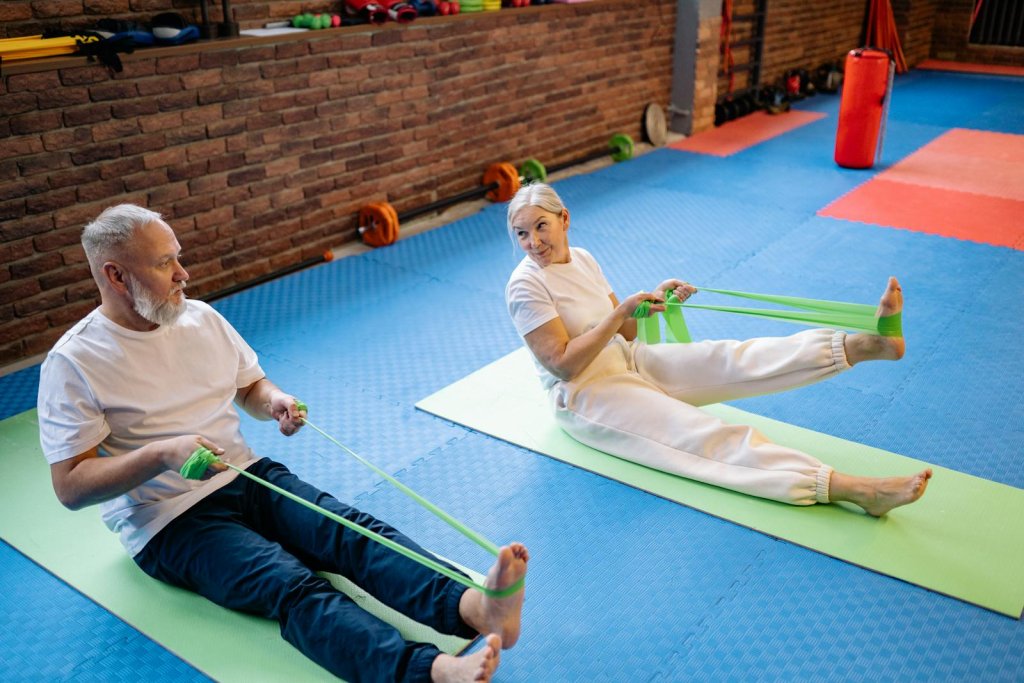
Understanding how to use Therabands correctly matters because strength and balance are closely linked to daily function, fall prevention, and long-term independence.
Below is a clear, senior-friendly guide to the 10 best Theraband exercises, along with safety tips, progression advice, and frequently asked questions.
What Are Theraband Exercises for Seniors?
Theraband exercises for seniors are low-impact strength and balance movements that use elastic resistance bands instead of weights. The bands provide smooth, progressive tension, making them easier on aging joints while still building functional strength.
Key features of Theraband exercises:
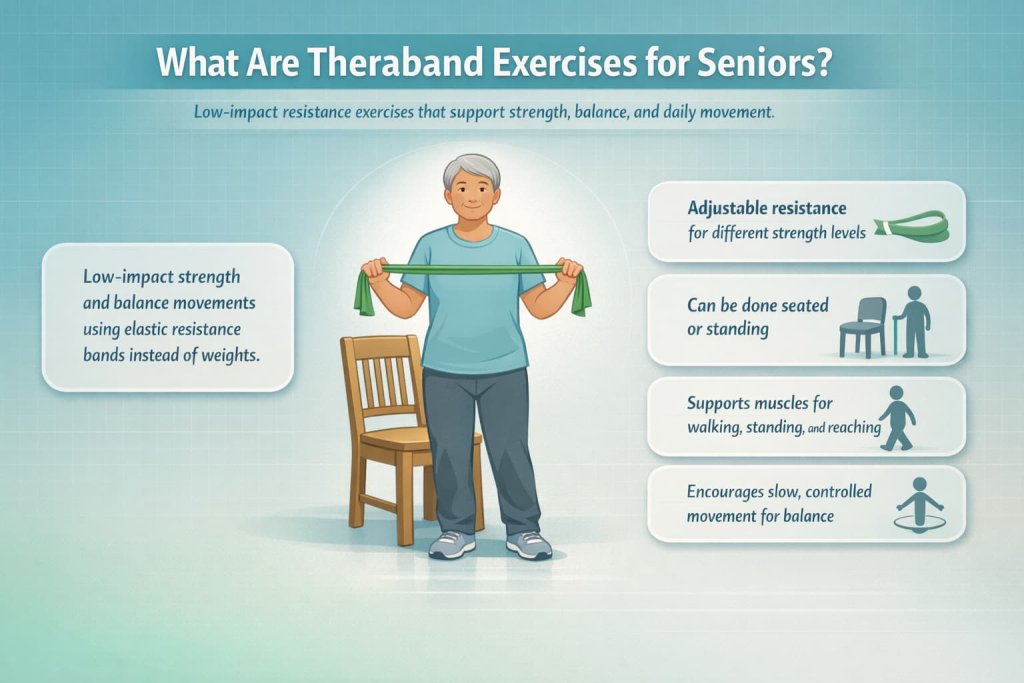
- Adjustable resistance for different strength levels
- Can be done seated or standing
- Support muscles used for walking, standing, and reaching
- Encourage slow, controlled movement for better balance
10 Best Theraband Exercises for Seniors
Well-selected Theraband exercises may help seniors build strength, improve balance, and support safe daily movement when performed with proper form and appropriate resistance. These low-impact exercises are easy to modify, making them suitable for different fitness levels and home-based routines.
1. Seated Row
How to do it:
- Sit tall on a chair or the floor with your chest lifted
- Extend your legs or keep feet flat on the floor
- Loop the band securely around both feet
- Hold the band with palms facing inward
- Pull elbows back alongside your body
- Squeeze the shoulder blades together gently
- Slowly return to the starting position with control
Why it works:
The seated row strengthens the upper back muscles that help keep the shoulders upright and the spine aligned. This support is essential for posture, walking confidence, and reducing rounded shoulders that often develop with age.
Muscles worked:
Upper back (rhomboids, middle trapezius), latissimus dorsi, rear shoulders, biceps, and core stabilizers.
Trainer Tip:
Avoid shrugging your shoulders upward. Think about pulling the elbows back and down to keep tension where it belongs—between the shoulder blades.
2. Chest Press
How to do it:
- Sit or stand with the band anchored securely behind you
- Hold the band at chest height with elbows bent
- Keep wrists straight and core gently engaged
- Press both hands forward until arms are extended
- Pause briefly, then return slowly to the start
Why it works:
This movement builds pushing strength needed for everyday tasks such as standing up from a chair, pushing doors open, or bracing during transitions.
Muscles worked:
Chest (pectorals), shoulders (anterior deltoids), triceps, and core.
Trainer Tip:
Keep your rib cage down and avoid arching the lower back as you press. Light resistance with slow control is more effective than heavy tension.
3. Biceps Curl
How to do it:
- Sit or stand on the center of the band
- Hold the ends with palms facing forward
- Keep elbows close to your sides
- Curl hands toward your shoulders
- Lower slowly until arms are fully extended
Why it works:
Biceps strength supports daily activities like lifting groceries, carrying bags, and pulling objects toward the body.
Muscles worked:
Biceps brachii, forearms, and grip muscles.
Trainer Tip:
Move slowly on the way down. The controlled lowering phase helps improve strength without stressing the elbows.
4. Triceps Extension
How to do it:
- Hold one end of the band overhead with one hand
- Bend the opposite elbow, gripping the lower end
- Extend the lower arm downward until the elbow straightens
- Pause briefly, then return with control
Why it works:
Strong triceps help with pushing movements, reaching overhead, and stabilizing the arms during balance challenges.
Muscles worked:
Triceps brachii and shoulder stabilizers.
Trainer Tip:
Keep your upper arm steady and close to your head. The movement should come only from the elbow joint.
5. Seated Leg Extension
How to do it:
- Sit upright in a chair with both feet flat
- Loop the band around one ankle
- Anchor the other end under the chair leg
- Straighten the knee slowly
- Lower the foot back down with control
Why it works:
This exercise strengthens the quadriceps, which are essential for standing up, walking, and climbing stairs safely.
Muscles worked:
Quadriceps, hip flexors, and knee stabilizers.
Trainer Tip:
Straighten the leg only as far as comfortable. Pain-free range of motion is more important than height.
6. Standing Hip Abduction
How to do it:
- Loop the band around both ankles
- Stand tall and hold a chair or wall for support
- Shift weight onto one leg
- Move the opposite leg out to the side
- Return slowly and switch sides
Why it works:
Hip abduction strengthens muscles that stabilize the pelvis, helping improve balance and reduce fall risk during walking.
Muscles worked:
Gluteus medius, hip stabilizers, and core.
Trainer Tip:
Keep toes facing forward and avoid leaning sideways. Small, controlled movements are most effective.
7. Hamstring Curl
How to do it:
- Anchor the band securely in front of you
- Loop it around one ankle
- Stand tall while holding support
- Bend the knee, bringing the heel toward your body
- Slowly return to the starting position
Why it works:
Hamstring strength supports walking mechanics and helps protect the knees during everyday movement.
Muscles worked:
Hamstrings, glutes, and lower-leg stabilizers.
Trainer Tip:
Focus on smooth motion rather than speed. If balance feels challenging, perform this exercise seated.
8. Calf Press (Seated)
How to do it:
- Sit upright with legs extended
- Loop the band around the ball of one foot
- Hold the ends securely
- Press the toes forward away from you
- Slowly return to neutral
Why it works:
Strong calves are essential for balance, walking speed, and preventing shuffling gait patterns.
Muscles worked:
Calf muscles (gastrocnemius and soleus), ankle stabilizers.
Trainer Tip:
Keep the knee relaxed and focus on ankle movement only. Avoid snapping the band back.
9. Standing Pallof Press
How to do it:
- Anchor the band at chest height
- Stand sideways to the anchor point
- Hold the band close to your chest
- Press arms straight forward
- Hold briefly, then return slowly
Why it works:
This anti-rotation exercise strengthens the core muscles that help maintain posture and balance during daily activities.
Muscles worked:
Deep core muscles, obliques, shoulders, and hips.
Trainer Tip:
Stand tall and resist twisting. The goal is stability, not movement.
10. Overhead Shoulder Press (Light Resistance)
How to do it:
- Sit or stand on the band
- Hold the ends at shoulder height
- Press arms upward gently
- Stop before locking the elbows
- Lower slowly with control
Why it works:
This exercise supports overhead reach, shoulder mobility, and upper-body coordination when performed with light resistance.
Muscles worked:
Shoulders (deltoids), triceps, upper back, and core.
Trainer Tip:
Use very light resistance and pain-free range. If overhead movement feels uncomfortable, stop below shoulder height.
Why Theraband Exercises Are Ideal for Seniors
Therabands provide smooth, joint-friendly resistance that increases gradually through a movement rather than all at once. This makes them especially suitable for aging joints and tendons.
Key benefits include:
- Adjustable resistance without heavy weights
- Improved muscle activation through controlled movement
- Support for balance, posture, and daily tasks
- Easy use at home, seated or standing
According to guidance summarized by the CDC and the National Health Service, older adults benefit most from strength training performed consistently with manageable resistance and good technique.
How Often Should Seniors Do Theraband Exercises?
Most older adults benefit from:
- 2–3 strength sessions per week
- 1–2 sets of 10–15 repetitions per exercise
- Rest days between sessions
This approach aligns with recommendations from the CDC and the American College of Sports Medicine, which emphasize gradual progression over intensity.
Safety Guidelines Before You Start
Before beginning any Theraband routine:
- Choose light resistance (often tan or yellow for beginners)
- Move slowly and with control—no jerking
- Breathe normally; avoid holding your breath
- Stop if you feel sharp pain or dizziness
- Secure the band properly to prevent snapping
Who Should Be Cautious
Use extra care or seek professional guidance if you:
- Have recent surgery or joint replacement
- Experience uncontrolled pain during exercise
- Have severe balance limitations
- Are recovering from injury
Common Mistakes Seniors Should Avoid With Resistance Bands
Resistance bands are safe when used correctly, but a few common errors can reduce benefits or increase discomfort.
Mistakes to avoid:
- Using a band that is too strong
- Moving too quickly or with jerky motion
- Holding your breath during exercises
- Poor band anchoring or worn bands
- Locking elbows or knees at the end of movements
- Continuing through sharp pain or dizziness
Keeping movements controlled, resistance light, and posture upright helps make Theraband exercises safer and more effective for seniors.
Frequently Asked Questions
Are Theraband exercises safe for seniors?
Yes, when performed with light resistance, controlled movement, and proper setup.
What color Theraband should seniors start with?
Most beginners start with tan or yellow, progressing gradually as strength improves.
Can Theraband exercises improve balance?
They may help by strengthening the muscles that support posture and joint control.
Can these exercises be done seated?
Yes. Many Theraband exercises are easily modified for seated positions.
How long should a session last?
Most routines take 20–30 minutes, depending on rest and number of exercises.
Are resistance bands better than weights for seniors?
Bands offer smoother resistance and easier adjustment, which many seniors find more comfortable.
Conclusion
Theraband exercises for seniors offer a practical, effective way to build strength, improve balance, and support independence—without the need for heavy equipment. With consistent practice and gradual progression, these exercises can become a sustainable part of healthy aging.
If you’re new to resistance training or managing a health condition, consider consulting a qualified professional before starting.
References
- CDC: Older Adult Physical Activity Guidelines (65+)
- NHS: Physical Activity Guidelines for Older Adults (65+)
- WHO: Physical Activity Recommendations
- Physical Activity Guidelines for Americans (Piercy et al., 2018 – PubMed)
- Elastic Band Training in Older Adults: Systematic Review & Meta-analysis (2025 – PubMed)
- TheraBand: Resistance Band & Tubing Instruction Manual (PDF)
- NSCA Position Statement: Resistance Training for Older Adults (2019 – PDF)