
Seated resistance band exercises for seniors are one of the safest and most effective ways to build strength at home without stressing the joints. Because the movements are done in a chair, they support balance, protect the spine, and allow older adults to train safely even with limited mobility.
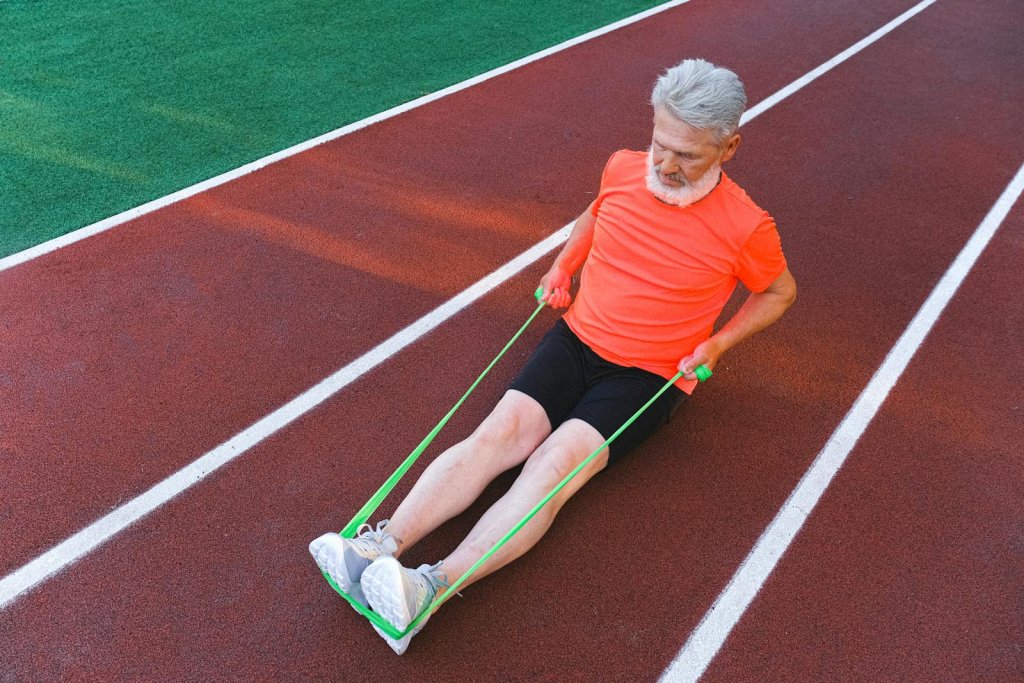
Strength training is essential for healthy aging. It helps maintain muscle, protect joints, reduce fall risk, and improve daily function. Seated resistance band exercises make this accessible for adults over 60 who want a simple, low-impact routine they can do at home or in care settings.
In this guide, you’ll learn the best seated resistance band exercises, how to do them correctly, safety tips, recommended weekly training guidelines, and answers to common questions.
Why Seated Resistance Band Exercises for Seniors Matter
Seated resistance band exercises matter for seniors because they offer a safe, joint-friendly, and highly accessible way to build strength without needing to stand, balance, or use heavy equipment. As adults age, muscle loss (sarcopenia), joint stiffness, and limited mobility become more common. Performing resistance training in a seated position helps seniors strengthen key muscles used for daily activities while minimizing fall risk.
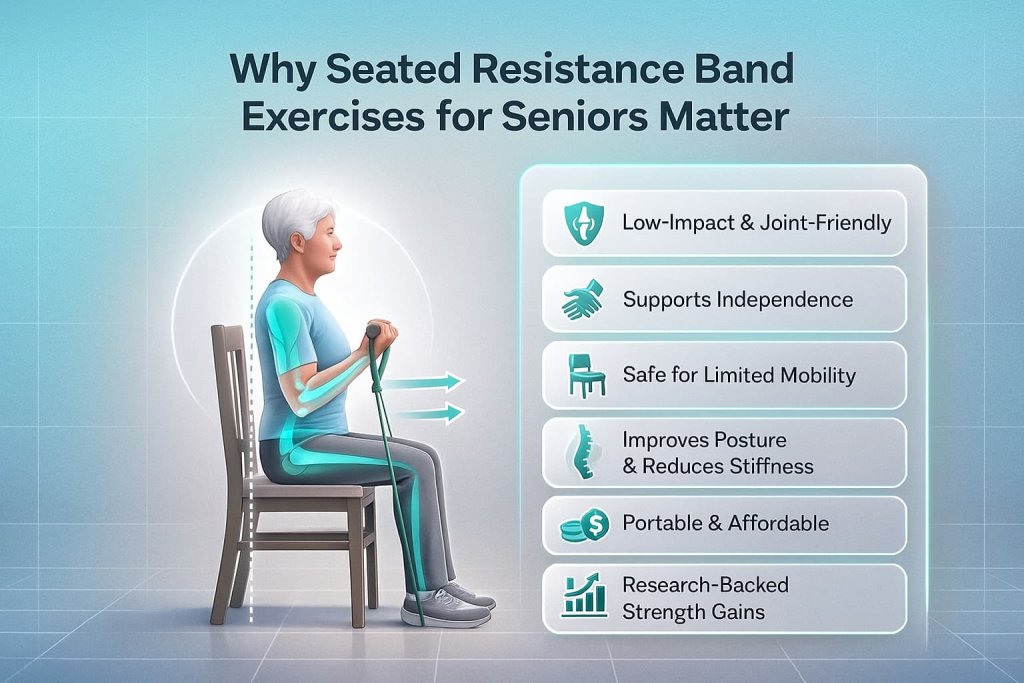
Key reasons they matter:
- Low-impact and joint-friendly: Bands provide smooth resistance that doesn’t overload sensitive knees, hips, or shoulders.
- Helps maintain independence: Stronger arms and legs make standing, walking, carrying, and self-care easier.
- Safer for limited mobility: A sturdy chair gives stability for seniors who cannot stand for long or have balance concerns.
- Improves posture and reduces stiffness: Targets upper-back and core muscles weakened by prolonged sitting.
- Affordable, portable, and home-friendly: No need for machines or weights — ideal for home or assisted-living settings.
- Backed by senior-fitness research: Resistance band programs improve strength, function, and confidence in older adults when performed consistently.
The 10 Best Seated Resistance Band Exercises for Seniors
These seated resistance band exercises are designed to help seniors build strength, stability, and confidence safely from a chair. Each movement is joint-friendly, easy to follow, and supports everyday activities like standing, walking, lifting, and reaching.
1. Seated Biceps Curl
Why it works:
This exercise strengthens the biceps and improves the ability to bend the elbows smoothly—an essential movement for daily tasks like lifting groceries, pulling objects closer, or picking up items from a table. The controlled seated position reduces momentum and improves muscle engagement.
Muscles worked:
Biceps, forearms
How to do it:
- Sit tall with feet flat on the floor.
- Place the resistance band securely under both feet and hold the ends firmly.
- Keep your elbows tucked close to your waist to avoid swinging.
- Curl your hands toward your shoulders, squeezing the biceps at the top.
- Slowly lower your hands to the starting position, keeping tension on the band.
Trainer Tip:
Move slowly—avoid swinging your elbows or leaning back. Slow reps activate your arm muscles more and reduce strain on the joints.
2. Seated Row With Band
Why it works:
This is one of the best seated exercises for improving posture. It strengthens the upper back and helps counter rounded shoulders caused by long hours of sitting. Strong back muscles support spine stability and make pulling actions easier in daily life.
Muscles worked:
Upper back, shoulders, biceps
How to do it:
- Loop the band around both feet and sit tall.
- Hold the ends with arms extended in front of you.
- Pull your elbows straight back toward your waist.
- Squeeze your shoulder blades together.
- Return to the starting position with control.
Trainer Tip:
Keep your chest lifted and imagine “proud chest posture.” Avoid letting your shoulders creep upward.
3. Seated Chest Press
Why it works:
This exercise improves pushing strength—important for tasks like pushing doors open, moving shopping carts, and supporting yourself when rising from a chair. Seated pressing helps seniors strengthen the chest while keeping balance safe.
Muscles worked:
Chest, shoulders, triceps
How to do it:
- Wrap the band behind the chair back or around your torso.
- Hold the band handles or ends at chest height.
- Press your arms forward until your elbows straighten comfortably.
- Slowly return to the starting position.
Trainer Tip:
Keep your wrists straight (not bent backward) and avoid locking your elbows at the end of each press.
4. Seated Shoulder Press
Why it works:
Strengthens the shoulders and upper back, helping seniors safely reach overhead for items in cabinets or maintain strong shoulders for daily tasks like dressing or grooming.
Muscles worked:
Shoulders, upper back
How to do it:
- Sit tall and place the band under your hips or feet.
- Hold the band ends at shoulder height.
- Press your arms upward until they reach a comfortable height.
- Slowly lower back down.
Trainer Tip:
If you feel discomfort pressing overhead, switch to lateral raises instead—overhead movements may aggravate sensitive shoulders.
5. Seated Lateral Raise
Why it works:
Targets the side shoulders, which are essential for lifting objects sideways, improving posture, and preventing shoulder stiffness. This isolation movement strengthens shoulder stabilizers in a safe, seated position.
Muscles worked:
Side shoulders (deltoids)
How to do it:
- Sit tall with the band under your thighs.
- Hold the ends at your sides with elbows slightly bent.
- Raise your arms outward until they reach shoulder height.
- Lower slowly with control.
Trainer Tip:
Do not shrug your shoulders upward—keep your neck relaxed and focus on lifting from the shoulders.
6. Seated Triceps Extension
Why it works:
Strengthens the back of the arms, which is important for pushing actions, stabilizing the arms, and assisting with rising from chairs. Helps reduce “arm weakness” that often appears with age.
Muscles worked:
Triceps (back of arms)
How to do it:
- Anchor the band under one hip or foot.
- Hold the band in one hand behind your head.
- Extend your arm upward until straight.
- Lower with control and switch sides.
Trainer Tip:
Keep your elbow pointing directly upward—not out to the side—to protect your shoulder and target the triceps effectively.
7. Seated Knee Extension
Why it works:
Excellent for improving thigh strength needed for standing, walking, climbing steps, and supporting balance. Helps strengthen the quadriceps without putting pressure on the knees.
Muscles worked:
Quadriceps
How to do it:
- Wrap the band around your ankle and the chair leg, or anchor it under your foot.
- Straighten one knee, lifting your foot forward.
- Slowly bend the knee to return.
- Repeat on the other side.
Trainer Tip:
Sit tall and avoid leaning backward as you lift—this keeps the work on the quadriceps instead of the lower back.
8. Seated Hip Abduction (Thigh Opening)
Why it works:
Targets the hip muscles and glutes that keep your pelvis stable while walking. Strong hips reduce fall risk and improve balance, especially for seniors with weak or tight outer hip muscles.
Muscles worked:
Hip abductors, glutes
How to do it:
- Loop a band around both thighs, just above the knees.
- Sit tall with feet flat on the floor.
- Press your knees outward against the band.
- Slowly bring them back to the center.
Trainer Tip:
Keep the movement small and stay in control. You should feel the outer hips working—not your lower back.
9. Seated Marching With Band
Why it works:
Strengthens hip flexors, quads, and the core—muscles essential for safe walking and stepping. This exercise helps seniors lift their feet higher, reducing the risk of tripping.
Muscles worked:
Hip flexors, quadriceps, core
How to do it:
- Place the band under both feet and hold the ends.
- Lift one knee upward against the band’s resistance.
- Lower slowly and switch legs.
- Alternate in a steady rhythm.
Trainer Tip:
Engage your core lightly to prevent rocking back and forth during the movement.
10. Seated Core Pull-Down (Band Front Pull)
Why it works:
Strengthens the upper back and deep core muscles that support posture and protect the spine. This movement teaches stability, which is crucial for seniors to maintain upright posture and reduce fall risk.
Muscles worked:
Core, upper back, lats
How to do it:
- Anchor the band in front of you (door anchor, heavy table leg, or sturdy object).
- Hold the band with both arms overhead.
- Pull your hands downward toward your chest.
- Slowly return to the starting point.
Trainer Tip:
Avoid rounding your back—keep your chest lifted and spine neutral for safe core activation.
How Often Should Seniors Do Seated Resistance Band Exercises?
- 2 days per week minimum for full-body strength training
- 8–12 reps per exercise (up to 15 for endurance)
- 1–3 sets depending on ability
- Rest 1–2 minutes between sets
- Progress gradually by increasing tension or reps
Sample Seated Resistance Band Routine for Seniors
A simple full-body routine:
- Seated Row – 10–12 reps
- Seated Chest Press – 10–12 reps
- Seated Biceps Curl – 10–12 reps
- Seated Knee Extension – 10–12 reps
- Seated Hip Abduction – 10–12 reps
- Seated Marching – 10 reps each leg
Repeat 1–2 times depending on comfort.
Safety Tips for Seniors Using Resistance Bands
To keep workouts safe and comfortable:
- Use a sturdy, stable chair without wheels
- Check bands for cracks or tears before each use
- Move slowly—no jerking or snapping
- Keep breathing—avoid holding your breath
- Stop if you feel sharp pain or dizziness
- Choose light or medium bands to start
- Avoid exercises overhead if you have shoulder instability
Who Should Avoid or Modify These Exercises?
While seated resistance band exercises are safe for most older adults, certain individuals should proceed with caution or consult a healthcare professional before starting.
Seniors who should avoid or modify these exercises include:
- Those with recent surgeries (hip, knee, shoulder, spine, or abdominal) unless cleared by a doctor.
- Anyone with uncontrolled high blood pressure, dizziness, or frequent shortness of breath.
- Individuals with severe osteoporosis who may need to avoid bending, twisting, or heavy resistance.
- Those experiencing active pain, swelling, or inflammation in the joints being trained.
- People with balance issues, vertigo, or neurological conditions who may require supervision.
- Seniors with cardiac conditions, pacemakers, or arrhythmias should get medical advice before starting resistance training.
- Anyone recovering from injury may need lighter resistance or alternative movements.
General safety guidance:
- Start with light resistance and increase gradually.
- Stop immediately if sharp pain, dizziness, or unusual discomfort occurs.
- Medical clearance is recommended for seniors with chronic health conditions or mobility limitations.
FAQ (Frequently Asked Questions)
1. Are seated resistance band exercises safe for seniors with arthritis?
Yes—bands provide smooth resistance and are joint-friendly. Always avoid painful movements.
2. Can seniors build muscle while seated?
Yes. Research shows chair-based band training improves strength and functional ability in older adults.
3. How long should a seated workout take?
About 15–20 minutes for a full routine.
4. What color band is best for beginners?
Light or medium resistance bands are safest for older adults starting out.
5. Can seated exercises help with balance?
Indirectly yes—strengthening legs and core improves stability even if performed sitting.
6. Do seniors need to warm up before seated band training?
Yes. Try 2–3 minutes of gentle marching, shoulder rolls, and arm circles.
7. How many days per week should seniors do these exercises?
Most adults over 60 benefit from 2–3 days per week.
Conclusion
Seated resistance band exercises offer seniors a safe, simple, and highly effective way to strengthen their muscles without standing or using heavy equipment. With just a chair and a band, older adults can improve daily strength, posture, mobility, and confidence.
Start with light tension, progress gradually, and stay consistent—your body will thank you.
Ready to begin? Try the sample routine above and build strength safely from the comfort of your chair.
References
- Efendi F, Tonapa SI, Has EMM, et al. (2023).
Effects of chair-based resistance band exercise on physical functioning, sleep quality, and depression of older adults in long-term care facilities: Systematic review and meta-analysis. - Stojanović MDM, et al. (2021).
Effects of chair-based, low-load elastic band resistance training on functional fitness and metabolic biomarkers in older women. - Gao Y, et al. (2025).
The effect of chair-based exercise on physical functioning in postmenopausal women: a meta-analysis. - Fragala MS, et al. (2019).
Resistance Training for Older Adults: Position Statement From the National Strength and Conditioning Association. - National Strength and Conditioning Association (NSCA).
Resistance Training for Older Adults – Position Statement Overview & Resources. - Lee PG, Jackson EA, Richardson CR. (2017).
Exercise Prescriptions in Older Adults. American Family Physician. - American College of Sports Medicine (ACSM).
Physical Activity Guidelines & Resources for Older Adults.