
Seated resistance band exercises are one of the safest and most effective ways to build full-body strength directly from a chair. They allow you to train major muscles—arms, shoulders, back, core, and legs—without needing to stand, balance, or use heavy equipment.
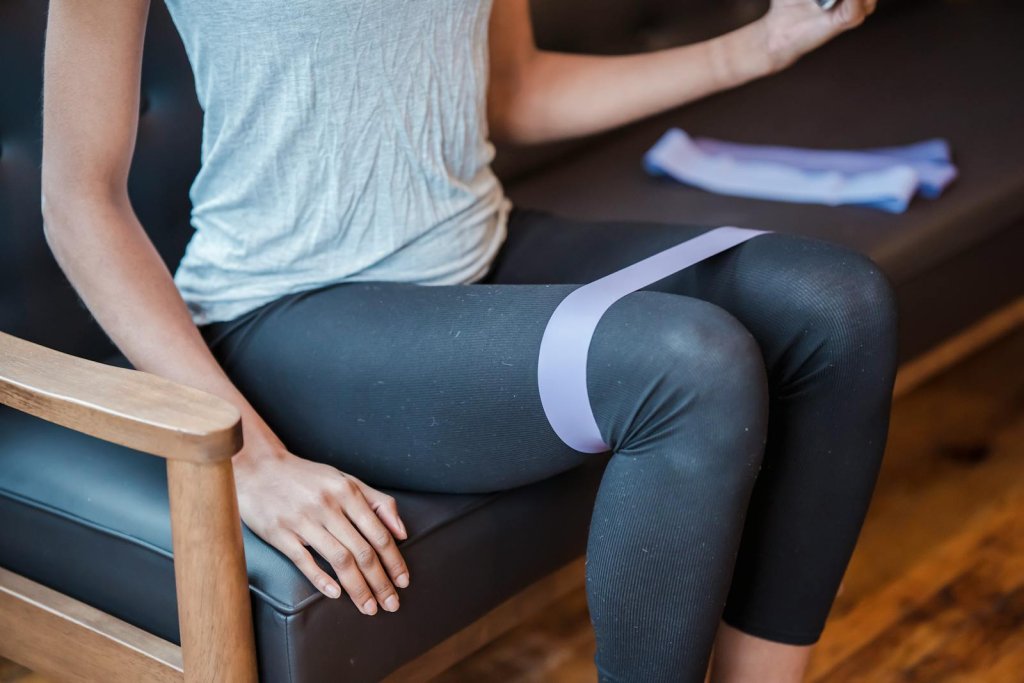
This makes them ideal for beginners, older adults, people with limited mobility, or anyone looking for simple home-friendly strength training.
Below, you’ll find the 10 best seated resistance band exercises, step-by-step form cues, benefits, safety notes, and common questions.
10 Best Seated Resistance Band Exercises (Step-by-Step)
Push the band forward to work your chest and arms. Great for building upper-body strength from a chair.
1. Seated Chest Press
Why it works:
This exercise strengthens the chest, shoulders, and triceps while helping you maintain an upright posture. Because the resistance band wraps around your back, it provides consistent forward tension that mimics a machine chest press but in a joint-friendly, seated position.
Muscles worked:
Chest (pectoralis major), anterior shoulders (front deltoids), triceps.
How to do it:
- Sit tall in a sturdy chair with feet flat on the floor.
- Loop the band securely behind your upper back.
- Hold the handles at chest level with elbows bent and wrists neutral.
- Press both arms forward until they are fully extended but not locked.
- Slowly return to the starting position, keeping elbows slightly angled outward.
Trainer Tip:
Imagine lengthening your spine upward as you press. Avoid shrugging—your shoulders should stay relaxed and down.
2. Seated Row
Why it works:
Strengthens the upper back muscles responsible for good posture and shoulder alignment. This helps counteract forward rounding from sitting or screen time.
Muscles worked:
Rhomboids, middle traps, rear delts, biceps.
How to do it:
- Sit tall and loop the band around the middle of both feet.
- Hold the handles with palms facing each other, arms extended.
- Pull the handles toward your ribcage, keeping elbows close to your body.
- Squeeze your shoulder blades together at the end of the movement.
- Return slowly to full arm extension.
Trainer Tip:
Pull from your back, not your hands—think “elbows back, chest proud.”
3. Seated Biceps Curl
Why it works:
Builds arm strength for daily tasks like carrying grocery bags or lifting objects. The seated position ensures stability and isolates the biceps.
Muscles worked:
Biceps, forearms.
How to do it:
- Sit tall and anchor the band securely under your feet.
- Hold each handle with palms facing up.
- Curl your hands toward your shoulders while keeping elbows tucked at your sides.
- Lower the handles slowly, maintaining tension in the band.
Trainer Tip:
Keep your elbows glued to your ribs. If they swing forward, the biceps lose tension.
4. Seated Triceps Extension
Why it works:
Targets the triceps to improve arm definition, pushing strength, and elbow stability. The seated position protects your lower back and helps maintain control.
Muscles worked:
Triceps (all three heads).
How to do it:
- Sit upright and hold one band handle overhead with your elbow bent.
- Hold the opposite end of the band behind your lower back for resistance.
- Straighten your top arm fully without arching your spine.
- Lower slowly back to the starting position.
Trainer Tip:
Brace your core throughout the movement to prevent leaning or arching.
5. Seated Shoulder Press
Why it works:
Improves overhead strength, shoulder stability, and mobility. Ideal for daily tasks like reaching overhead shelves.
Muscles worked:
Shoulders (deltoids), upper traps, triceps.
How to do it:
- Anchor the band securely under the chair or your feet.
- Hold the handles at shoulder height with elbows bent.
- Press the handles upward in a smooth, controlled motion.
- Lower the handles slowly to shoulder height.
Trainer Tip:
If mobility is limited, press slightly forward instead of directly overhead to reduce shoulder strain.
6. Seated Lateral Raise
Why it works:
Strengthens the side of the shoulders, which improves posture, arm stability, and shoulder joint health.
Muscles worked:
Medial deltoids, upper traps.
How to do it:
- Sit tall and anchor the band under your thighs.
- Hold the handles with palms facing down.
- Lift both arms out to your sides until they reach shoulder height.
- Lower with control, avoiding sudden drops.
Trainer Tip:
Maintain a soft bend in your elbows—this reduces stress on the elbow joint and keeps tension on the deltoids.
7. Seated Leg Press
Why it works:
Strengthens quads and glutes, making everyday movements like standing, walking, and climbing stairs easier. Great for lower-body training when standing is difficult.
Muscles worked:
Quads, glutes, hamstrings.
How to do it:
- Sit upright and loop the band around both feet.
- Hold the handles securely at your sides.
- Press one leg forward until it is fully extended.
- Slowly return to the starting position and switch sides.
Trainer Tip:
Keep your knee aligned with your toes—don’t let it rotate inward or outward.
8. Seated Knee Extension
Why it works:
Isolates the quadriceps to strengthen the muscles needed for balance, stepping, and standing.
Muscles worked:
Quadriceps.
How to do it:
- Sit tall and loop the band around your ankle.
- Anchor the other end around your chair leg or under your opposite foot.
- Extend your working leg forward until straight.
- Lower slowly back to the bend.
Trainer Tip:
Go slow—this exercise is most effective when performed with controlled tempo.
9. Seated Hip Abduction
Why it works:
Strengthens the outer hips and glutes, improving balance, pelvic stability, and walking efficiency.
Muscles worked:
Gluteus medius, outer thighs.
How to do it:
- Place the band just above your knees.
- Sit upright with feet hip-width apart.
- Slowly open your knees outward against resistance.
- Bring them back together with control.
Trainer Tip:
Keep your chest lifted and avoid leaning backward, which reduces hip activation.
10. Seated Core Twist with Band
Why it works:
Strengthens the obliques and deep core muscles, improving rotation control and spinal stability.
Muscles worked:
Obliques, transverse abdominis, deep core stabilizers.
How to do it:
- Anchor the band to your side (or hold one end stable).
- Sit upright with both feet flat on the floor.
- Hold the band with both hands and rotate your torso away from the anchor point.
- Return slowly and repeat on the other side.
Trainer Tip:
Keep your hips completely still—only your upper body should rotate.
How Often Should You Do Seated Resistance Band Exercises?
Following ACSM and U.S. guidelines:
- 2–3 days per week
- 1–3 sets per exercise
- 8–15 reps per set
- Rest 24–48 hours between strength sessions
Progress gradually by increasing band resistance or adding reps.
Who Should Avoid or Modify These Exercises
Seated resistance band exercises are generally safe, but certain people should proceed with caution or get medical clearance first.
Avoid or modify if you have:
- Recent surgery in the shoulders, hips, back, or knees
- Uncontrolled high blood pressure, dizziness, or unstable cardiovascular conditions
- Severe balance issues even when seated
- Nerve pain, tingling, or numbness during movement
- Active joint inflammation (flare-ups from arthritis or injury)
- Band snap risk due to poor grip or hand weakness—choose lighter bands or loops
Always consult a healthcare provider if you’re uncertain about your capabilities, have chronic medical conditions, or experience pain during exercise.
Safety Tips
- Use a stable, non-rolling chair.
- Check bands for tears or cracks before each workout.
- Start with light resistance, especially if you’re new or have joint issues.
- Move slowly and control both the lifting and lowering phases.
- Stop if you feel sharp or unusual pain.
- Consult a healthcare professional if you have medical concerns.
Frequently Asked Questions (FAQ)
1. Are seated resistance band exercises effective?
Yes. Research-backed guidelines show band training builds strength similarly to free weights when done with proper resistance.
2. Can seniors do these exercises safely?
Yes. Chair-based band exercises are ideal for older adults because they reduce fall risk and joint stress.
3. How long should a seated band workout take?
10–20 minutes is enough for most people.
4. What resistance band should beginners use?
Start with a light to medium band and increase resistance as the last 2–3 reps become easier.
5. Can these exercises help with posture?
Yes—rowing, shoulder raises, and core twists are especially helpful for posture correction.
6. Do I need special equipment?
Just a stable chair and a simple loop or tube resistance band.
7. Can I do these exercises daily?
You can do light mobility or posture exercises daily, but strength work needs rest days.
Conclusion
Seated resistance band exercises offer a powerful, joint-friendly way to build strength at home—no standing, no machines, and no gym required. Whether you’re a beginner, older adult, or someone looking for a safe strength routine, these chair-based exercises help you improve mobility, muscle strength, posture, and daily function.
Start with 2–3 short sessions per week and gradually increase resistance as your strength improves.
References
- Martins WR et al. Elastic Resistance Training to Increase Muscle Strength in Older Adults (Systematic Review)
- Lopes JSS et al. Effects of Training with Elastic Resistance Versus Conventional Devices on Muscular Strength (Meta-analysis)
- Li A et al. Effects of Elastic Band Resistance Training on the Physical and Mental Health of Elderly Individuals (PLOS ONE, 2024)
- Klempel N et al. The Effect of Chair-Based Exercise on Physical Function in Older Adults (Systematic Review & Meta-analysis)
- Cleveland Clinic – How Effective Are Resistance Bands for Strength Training?