
Sciatica exercises to relieve pain focus on gentle mobility, stretching, and stability movements that may help reduce nerve irritation and improve daily movement tolerance. When done correctly, these exercises can support recovery, encourage healthy movement, and help you stay active without worsening symptoms.
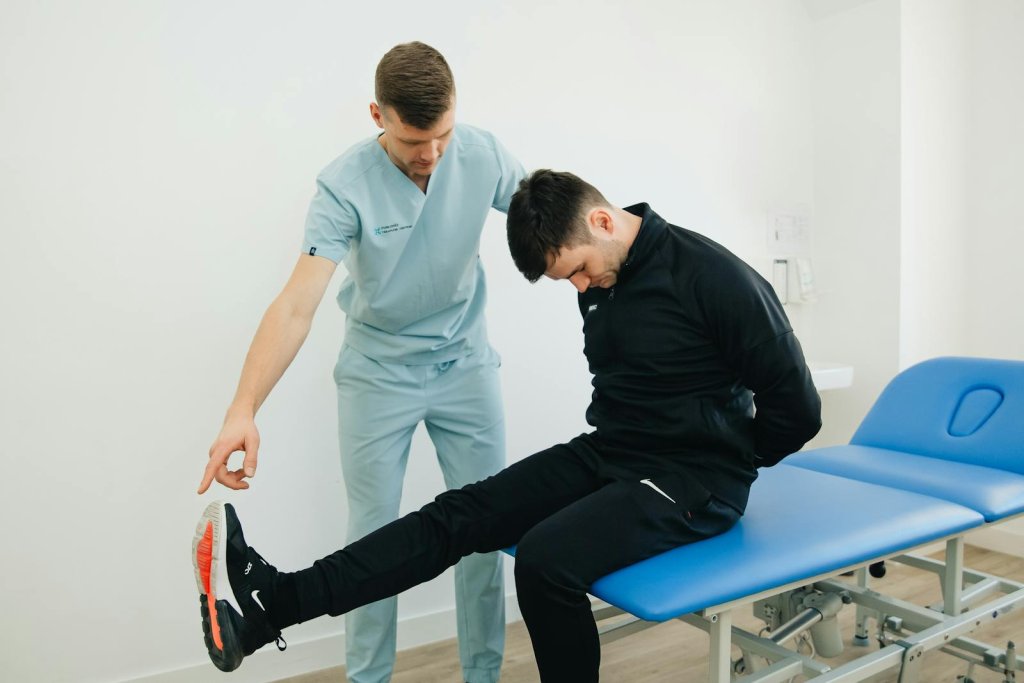
Understanding how and why these exercises work is important because sciatica often improves with conservative care.
Below is a clear, evidence-informed guide designed to be safe, practical, and easy to follow.
What Are Sciatica Exercises to Relieve Pain?
Sciatica exercises to relieve pain are controlled movements that target muscles and joints around the lower back, hips, and legs—areas that commonly influence sciatic nerve irritation.
The goal is not to stretch the nerve aggressively, but to:
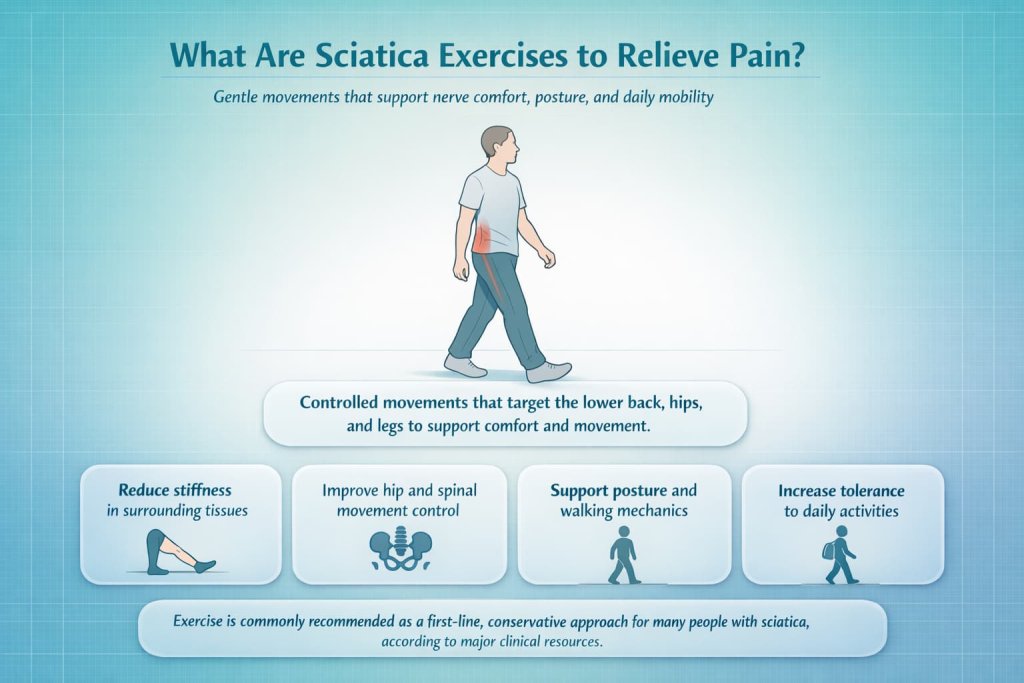
- Reduce stiffness in surrounding tissues
- Improve hip and spinal movement control
- Support posture and walking mechanics
- Increase tolerance to daily activities
Clinical resources from the Mayo Clinic and Cleveland Clinic consistently describe exercise as a first-line approach for many people with sciatica.
8 Best Sciatica Exercises to Relieve Pain
These 8 sciatica exercises focus on gentle movement, stretching, and stability to help reduce discomfort and improve daily mobility. They are designed to be safe, easy to follow, and suitable for at-home practice when performed within a comfortable range.
1. Knee-to-Chest Stretch
How to do it:
- Lie on your back with both knees bent and feet flat on the floor
- Slowly bring one knee toward your chest, using your hands for gentle support
- Keep the opposite foot relaxed on the floor
- Hold for 10–30 seconds, then switch sides
- Move smoothly and avoid pulling aggressively
Why it works:
This stretch gently mobilizes the lumbar spine and surrounding tissues. By reducing stiffness in the lower back, it may help decrease mechanical stress that can contribute to sciatic nerve irritation.
Muscles worked:
Lower back muscles, gluteals, hip extensors
Trainer Tip:
If pulling the knee causes discomfort, place a towel behind the thigh instead of the shin for better control.
2. Seated Hamstring Stretch
How to do it:
- Sit upright near the edge of a chair
- Extend one leg straight with the heel resting on the floor
- Keep your spine tall and hinge forward slightly at the hips
- Stop when you feel a gentle stretch, not pain
- Hold briefly, then switch legs
Why it works:
Tight hamstrings can alter pelvic position and increase tension through the lower back. Improving hamstring flexibility may help reduce stress transmitted along the sciatic pathway.
Muscles worked:
Hamstrings, calf muscles, posterior hip tissues
Trainer Tip:
Think “chest forward” rather than “head down” to maintain proper spinal alignment during the stretch.
3. Piriformis Stretch (Figure-4)
How to do it:
- Lie on your back with both knees bent
- Cross one ankle over the opposite knee, forming a figure-4 shape
- Gently draw the uncrossed leg toward your chest
- Hold within a comfortable range, then switch sides
Why it works:
The piriformis muscle lies close to the sciatic nerve. Reducing tension in this deep hip muscle may help decrease local irritation and improve hip mobility.
Muscles worked:
Piriformis, gluteus maximus, deep hip rotators
Trainer Tip:
If the stretch feels too intense, keep the foot on the floor instead of lifting the leg.
4. Pelvic Tilt
How to do it:
- Lie on your back with knees bent and feet hip-width apart
- Gently tighten your abdominal muscles
- Flatten your lower back into the floor by tilting the pelvis
- Hold briefly, then relax and repeat
Why it works:
Pelvic tilts promote controlled spinal movement and improve awareness of neutral spine positioning. This can help reduce unnecessary strain during daily activities.
Muscles worked:
Abdominals, lower back stabilizers, pelvic floor
Trainer Tip:
Avoid holding your breath—slow, steady breathing helps keep the movement relaxed and controlled.
5. Sciatic Nerve Slider
How to do it:
- Sit tall on a chair with both feet flat on the floor
- Slowly extend one knee while gently lifting the toes upward
- Lower the foot back to the starting position
- Perform controlled, pain-free repetitions before switching sides
Why it works:
Nerve sliders encourage gentle movement of the sciatic nerve relative to surrounding tissues. This may help improve nerve tolerance without overstretching.
Muscles worked:
Hamstrings, ankle dorsiflexors, neural tissues (mobilization)
Trainer Tip:
This exercise should feel smooth and easy—if symptoms increase, reduce the range or slow the movement.
6. Glute Bridge
How to do it:
- Lie on your back with knees bent and feet flat on the floor
- Place arms at your sides for support
- Press through your heels and lift your hips slightly
- Pause briefly, then lower with control
Why it works:
Strong glute muscles help support the pelvis and reduce excessive load on the lower back during standing, walking, and lifting tasks.
Muscles worked:
Gluteus maximus, hamstrings, core stabilizers
Trainer Tip:
Keep your ribs down and avoid arching your lower back at the top of the movement.
7. Standing Hip Flexor Stretch
How to do it:
- Stand in a split stance with one foot forward
- Bend the front knee slightly while keeping the back leg extended
- Gently shift your weight forward
- Keep your torso upright and hips facing forward
Why it works:
Tight hip flexors can pull the pelvis forward, increasing lumbar stress. Stretching these muscles may help restore better posture and movement balance.
Muscles worked:
Hip flexors (iliopsoas, rectus femoris), quadriceps
Trainer Tip:
A small movement is enough—avoid lunging deeply or arching your lower back.
8. Cat–Cow Mobility Exercise
How to do it:
- Start on hands and knees with a neutral spine
- Slowly round your back upward (cat position)
- Then gently extend the spine, lifting the chest slightly (cow position)
- Move slowly between positions within a comfortable range
Why it works:
This controlled spinal motion supports flexibility, circulation, and awareness of spinal movement, which may help reduce stiffness associated with sciatica.
Muscles worked:
Spinal extensors, abdominals, hip stabilizers
Trainer Tip:
Move with your breath—exhale as you round, inhale as you extend—to keep the motion smooth and relaxed.
How Sciatica Exercises Help Relieve Pain and Nerve Tension
Sciatica exercises help relieve pain and nerve tension by improving how the spine, hips, and legs move together under control. Rather than targeting the sciatic nerve directly, these exercises focus on the surrounding muscles and joints that influence nerve comfort.
When performed consistently and within a comfortable range, sciatica exercises may help by:
- Reducing stiffness in the lower back and hips that can increase nerve sensitivity
- Improving posture and load distribution during sitting, standing, and walking
- Supporting smoother movement of the nerve relative to nearby tissues
- Increasing confidence to stay active, which many guidelines encourage
Clinical guidance from sources such as the Mayo Clinic and NHS commonly emphasizes gentle movement and activity as part of conservative sciatica management, rather than prolonged rest.
How to Perform Sciatica Exercises Safely
Safety is essential when using sciatica exercises to relieve pain. The goal is controlled, symptom-guided movement—not pushing through discomfort.
General safety principles include:
- Move slowly and deliberately, avoiding sudden or jerky motions
- Stay within a pain-free or low-discomfort range at all times
- Stop the exercise if sharp pain travels down the leg
- Breathe steadily and avoid holding your breath
- Start with fewer repetitions and progress gradually
If symptoms flare during or after an exercise, reduce the range of motion or pause that movement temporarily. Consistency and control matter more than intensity.
Common Mistakes During Sciatica Exercises
Avoiding common mistakes can help prevent symptom flare-ups and improve results.
The most frequent errors include:
- Stretching too aggressively, especially during nerve-related movements
- Forcing positions that cause sharp or radiating leg pain
- Moving too quickly through exercises without control
- Holding stretches while tense or breath-holding
- Doing too many exercises at once instead of progressing gradually
Sciatica exercises should feel supportive and manageable. Discomfort that increases during or after exercise is a sign to modify or stop the movement.
When to Seek Medical or Physical Therapy Guidance
While many people improve with conservative care, some situations require professional evaluation before continuing exercise.
Seek medical or physical therapy guidance if you experience:
- Progressive or significant leg weakness
- Loss of bowel or bladder control
- Numbness in the groin or saddle area
- Severe or worsening pain that does not improve
- Symptoms that persist despite consistent, gentle exercise
Healthcare professionals can assess whether your symptoms are appropriate for self-guided exercise and provide individualized guidance when needed.
Frequently Asked Questions
1. How often should I do sciatica exercises to relieve pain?
Many programs recommend gentle exercises once or twice daily, depending on tolerance and symptom response.
2. Can sciatica exercises make pain worse?
If done too aggressively or with poor form, symptoms may flare. Exercises should feel controlled—not painful.
3. Are sciatica exercises better than bed rest?
Yes. Most guidelines discourage prolonged bed rest and encourage staying active within limits.
4. How long does it take to see improvement?
Some people notice relief within days; others may need several weeks of consistent practice.
5. Should I stretch the sciatic nerve directly?
No. Experts recommend nerve gliding, not aggressive nerve stretching.
6. Can seniors safely do these exercises?
Many can, but modifications and medical clearance are recommended for older adults or those with other conditions.
Conclusion
Sciatica exercises to relieve pain are a cornerstone of conservative, evidence-based care. When performed gently and consistently, they may help reduce nerve tension, improve movement confidence, and support everyday comfort.
If symptoms persist or worsen, consult a qualified healthcare professional to ensure safe, personalized guidance.
This content is for informational purposes only and not medical advice.