
Weight-bearing exercises help stimulate bone tissue and may slow bone loss in people with osteoporosis. These exercises work against gravity while you stay upright, encouraging bones to adapt and maintain strength.
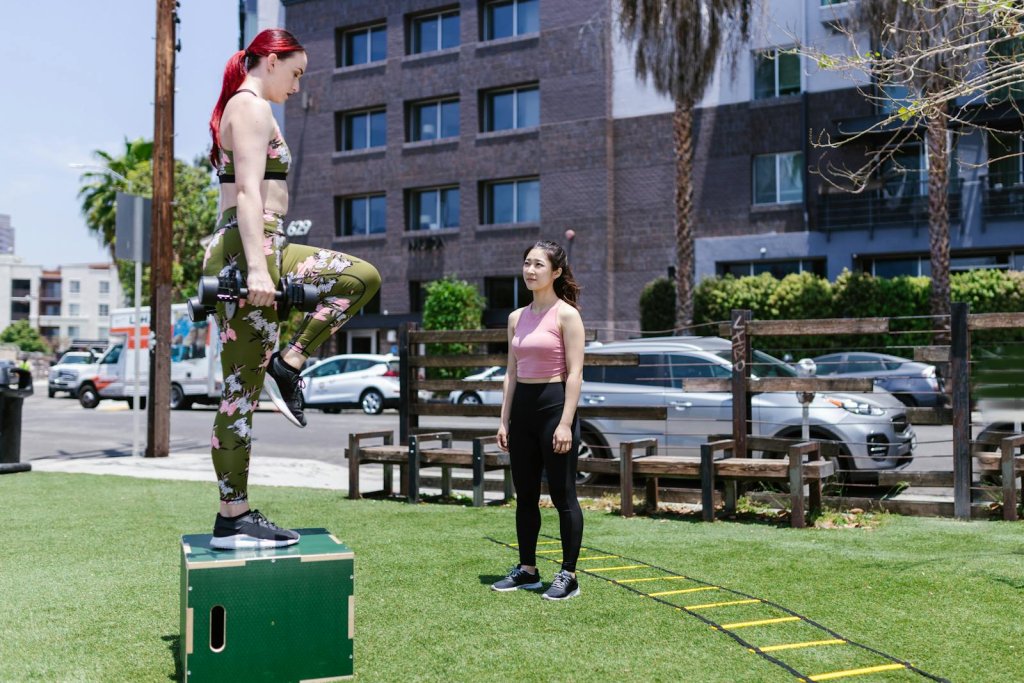
Understanding how to choose the right type—and how to perform them safely—is essential for protecting bone health and reducing fracture risk.
What Are Weight-Bearing Exercises for Osteoporosis?
Weight-bearing exercises are movements performed while standing or moving on your feet, so your bones support your body weight against gravity. This mechanical loading sends signals to bone tissue that may help maintain bone density.
They are commonly divided into:
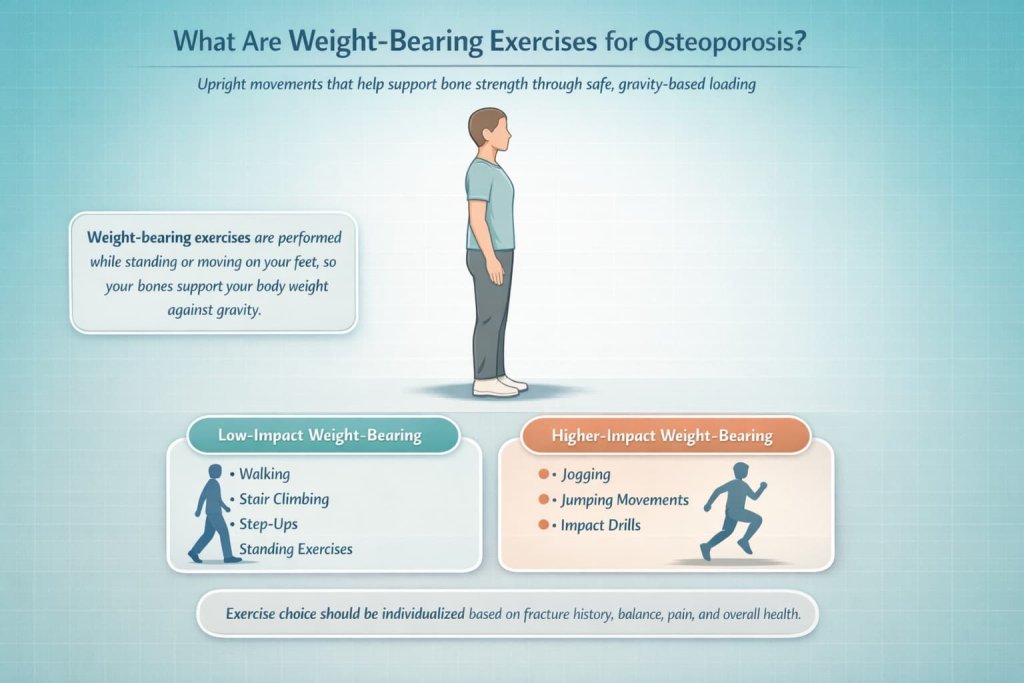
- Low-impact weight-bearing exercises (generally safer for osteoporosis)
- Higher-impact weight-bearing exercises (may not be appropriate for everyone with osteoporosis)
Clinical guidance stresses that exercise selection should be individualized based on fracture history, balance, pain, and overall health status.
Why Weight-Bearing Exercises Matter for Osteoporosis
Bone tissue responds to regular, controlled stress. Without sufficient loading, bone remodeling can shift toward loss rather than maintenance.
Weight-bearing exercises may help:
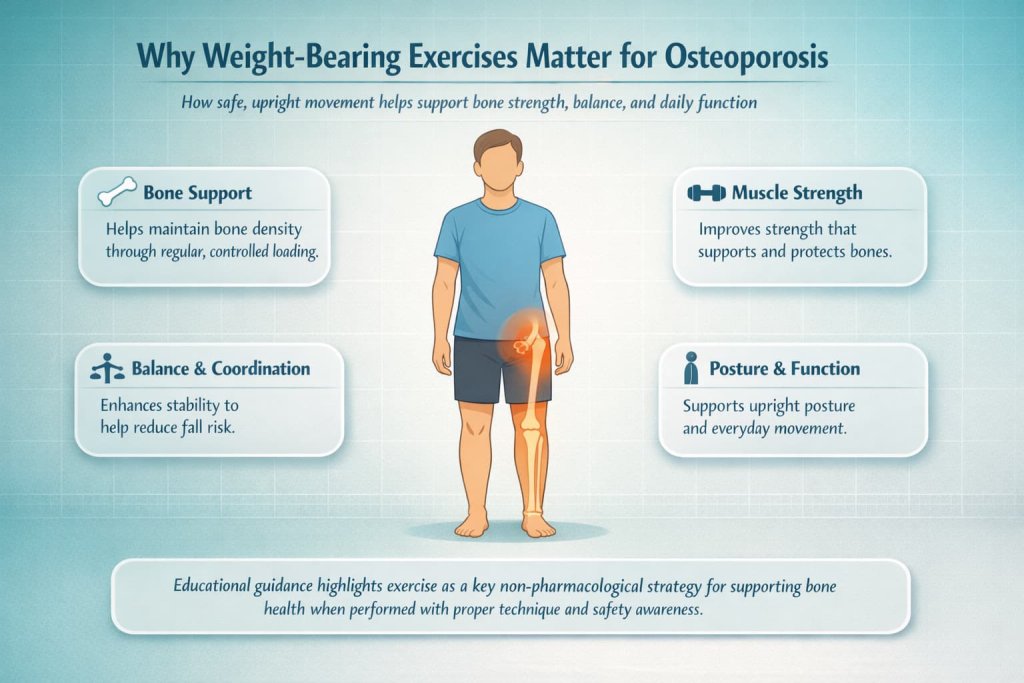
- Support bone density maintenance
- Improve muscle strength that protects bones
- Enhance balance and coordination to reduce fall risk
- Support posture and daily functional movement
According to educational guidance from the Mayo Clinic, exercise is a key non-pharmacological strategy for supporting bone health—when performed with proper technique and safety awareness.
8 Best Weight-Bearing Exercises for Osteoporosis
These weight-bearing exercises focus on safe, upright movements that apply gentle stress to bones through daily functional patterns. They are designed to support bone strength, balance, and mobility while minimizing fracture risk for people with osteoporosis.
1. Brisk Walking
How to do it:
- Stand tall with your head up and shoulders relaxed
- Walk at a pace that slightly increases breathing but still allows conversation
- Roll through the foot from heel to toe with each step
- Start with 10–15 minutes and gradually build toward 30 minutes
Why it works:
Brisk walking applies repeated, low-impact loading through the hips, legs, and spine. This gentle mechanical stress may help maintain bone density while also supporting cardiovascular health and daily mobility.
Trainer Tip:
Focus on posture—avoid slouching or shuffling. Walking taller increases bone-loading benefits through the spine and hips.
2. Stair Climbing
How to do it:
- Use a staircase or step platform with a sturdy handrail
- Step up with the whole foot placed firmly on each step
- Push through the heel to rise, then step down under control
- Perform 1–3 flights or short step intervals as tolerated
Why it works:
Stair climbing increases weight-bearing load through the hips and legs more than flat walking. This added challenge may stimulate bone tissue while also improving leg strength and functional endurance.
Trainer Tip:
Always use the handrail if balance feels uncertain. Control matters more than speed for bone safety.
3. Standing Heel Raises
How to do it:
- Stand upright near a wall or chair for support
- Slowly rise onto the balls of your feet
- Pause briefly at the top
- Lower heels back down with control
- Perform 8–15 repetitions
Why it works:
Heel raises load the bones of the feet, ankles, and lower legs while also training balance. This type of loading is commonly included in fall-prevention and bone-health programs.
Trainer Tip:
Move slowly—avoid bouncing. Controlled tempo improves bone loading and balance benefits.
4. Sit-to-Stand from a Chair
How to do it:
- Sit on a sturdy chair with feet flat and hip-width apart
- Lean slightly forward from the hips, keeping the spine neutral
- Press through your heels to stand up
- Slowly lower back down to the chair
- Perform 8–12 repetitions
Why it works:
This movement loads the hips and thighs in a functional, everyday pattern. Regular practice may support bone health while improving strength needed for daily activities.
Trainer Tip:
Avoid rounding the back. Think “chest tall” to reduce spinal stress.
5. Step-Ups
How to do it:
- Stand in front of a low step or platform
- Step one foot fully onto the step
- Push through the heel to stand up
- Step back down under control
- Alternate sides for 6–10 repetitions per leg
Why it works:
Step-ups challenge single-leg strength and coordination while applying weight-bearing load through the hips. This helps prepare the body for stairs and uneven surfaces.
Trainer Tip:
Keep the step height low if balance or knee comfort is limited. Height can be increased gradually.
6. Low-Impact Aerobics
How to do it:
- Choose a low-impact routine that keeps one foot on the ground
- Perform upright movements such as side steps, knee lifts, or gentle reaches
- Maintain steady breathing and posture
- Exercise for 15–30 minutes as tolerated
Why it works:
Low-impact aerobics combine weight-bearing movement with rhythm and coordination. This supports bone loading without excessive joint stress.
Trainer Tip:
Avoid jumping or fast twisting motions. Choose routines labeled “low impact” or “bone-safe.”
7. Standing Marches
How to do it:
- Stand upright near a counter or rail
- Lift one knee toward hip height
- Lower it slowly and switch sides
- Continue alternating in a controlled rhythm
- Perform 10–20 marches total
Why it works:
Standing marches load the hips while training balance and coordination. They also reinforce upright posture and controlled leg movement.
Trainer Tip:
Lift only as high as you can while staying stable. Balance quality matters more than height.
8. Elliptical or Step Machine
How to do it:
- Stand upright on the machine with hands lightly on handles
- Move through a smooth stepping pattern
- Adjust resistance to a comfortable level
- Start with 5–10 minutes and progress gradually
Why it works:
These machines provide continuous weight-bearing movement while minimizing joint impact. This makes them a practical option for people who cannot tolerate higher-impact activities.
Trainer Tip:
Maintain upright posture—avoid leaning heavily on the handles, which reduces bone-loading benefits.
How Often Should You Do Weight-Bearing Exercises?
Educational resources from the Bone Health & Osteoporosis Foundation commonly suggest:
- Weight-bearing activity on most days of the week
- About 30 minutes per day, which can be broken into shorter sessions
- Strength training at least two days per week
- Balance and posture exercises added regularly
Individual needs may vary, so programs should be personalized.
Safety Guidelines Before You Start
If you have osteoporosis or low bone density, keep these safety principles in mind:
- Avoid deep forward bending and twisting at the spine
- Move through controlled, comfortable ranges
- Prioritize posture and alignment over intensity
- Use support (rails, walls, chairs) when balance is uncertain
- Consult a healthcare professional if you have had fractures or significant pain
The National Institute of Arthritis and Musculoskeletal and Skin Diseases highlights that safe exercise selection is especially important for people with vertebral osteoporosis.
Who Should Be Extra Cautious or Seek Medical Guidance
Weight-bearing exercises can be helpful, but some individuals should take extra care or seek professional advice before starting.
You should consult a healthcare professional if you:
- Have severe osteoporosis or very low bone density
- Have a history of spinal, hip, or wrist fractures
- Experience ongoing back pain, height loss, or spinal changes
- Have balance problems or recent falls
- Are new to exercise or returning after a long break
Organizations such as the Mayo Clinic recommend individualized exercise planning when fracture risk is higher.
Weight-Bearing vs Muscle-Strengthening Exercises
Both exercise types play different but complementary roles in osteoporosis care.
Weight-bearing exercises:
- Performed upright against gravity
- Load bones through standing and movement
- Examples include walking, stair climbing, and step-ups
Muscle-strengthening exercises:
- Use resistance to create muscle force
- Load bones through muscle contractions
- Examples include resistance bands, weights, or body-weight exercises
Guidance from the Bone Health & Osteoporosis Foundation supports combining both for better bone and movement support.
Common Mistakes to Avoid With Osteoporosis
Avoiding unsafe movement patterns helps reduce fracture risk.
Common mistakes include:
- Bending forward or rounding the spine
- Twisting forcefully at the waist
- Choosing high-impact exercises without screening
- Moving too fast or without control
- Ignoring posture and alignment
Safer exercise focuses on controlled movement, upright posture, and gradual progression.
Frequently Asked Questions
Are weight-bearing exercises safe if I already have osteoporosis?
Yes, when appropriately selected and modified. Low-impact options are commonly recommended.
Do weight-bearing exercises increase bone density?
They may help slow bone loss and support bone maintenance, but results vary between individuals.
Should I avoid running with osteoporosis?
Running is higher impact and may not be appropriate for everyone with osteoporosis. Screening is advised.
Can I do weight-bearing exercises at home?
Yes. Many effective options—walking, chair stands, heel raises—require minimal equipment.
Are resistance exercises also important?
Yes. Strength training complements weight-bearing exercise by loading bones through muscle contractions.
How long does it take to see benefits?
Bone adaptations occur slowly. Consistency over months is more important than intensity.
Conclusion
Weight-bearing exercises play an important role in osteoporosis-friendly fitness when chosen wisely and performed safely. By focusing on upright, controlled movements and combining them with strength and balance training, many people can support bone health and daily function over time.
If you’re unsure where to begin, consider speaking with a healthcare professional or trained exercise specialist to build a program that matches your needs and confidence level.
This content is for informational purposes only and not medical advice.
References
- Bone Health & Osteoporosis Foundation (BHOF): Weight-Bearing and Muscle-Strengthening Exercises
- BHOF: Exercise for Your Bone Health (PDF)
- BHOF: Protecting Your Spine
- International Osteoporosis Foundation (IOF): Exercise Brochure (PDF)
- IOF: Exercise for Individuals With Osteoporosis
- Mayo Clinic: Exercising With Osteoporosis—Stay Active the Safe Way
- NIAMS: Exercise for Your Bone Health
- CDC: Physical Activity Guidelines for Older Adults