
Mindfulness exercises for stress relief are simple, evidence-based practices that help calm the nervous system by bringing your attention back to the present moment. When practiced consistently, they may reduce perceived stress, improve emotional regulation, and support overall mental well-being. Understanding how these exercises work—and how to do them correctly—can help you manage daily stress more effectively and safely.
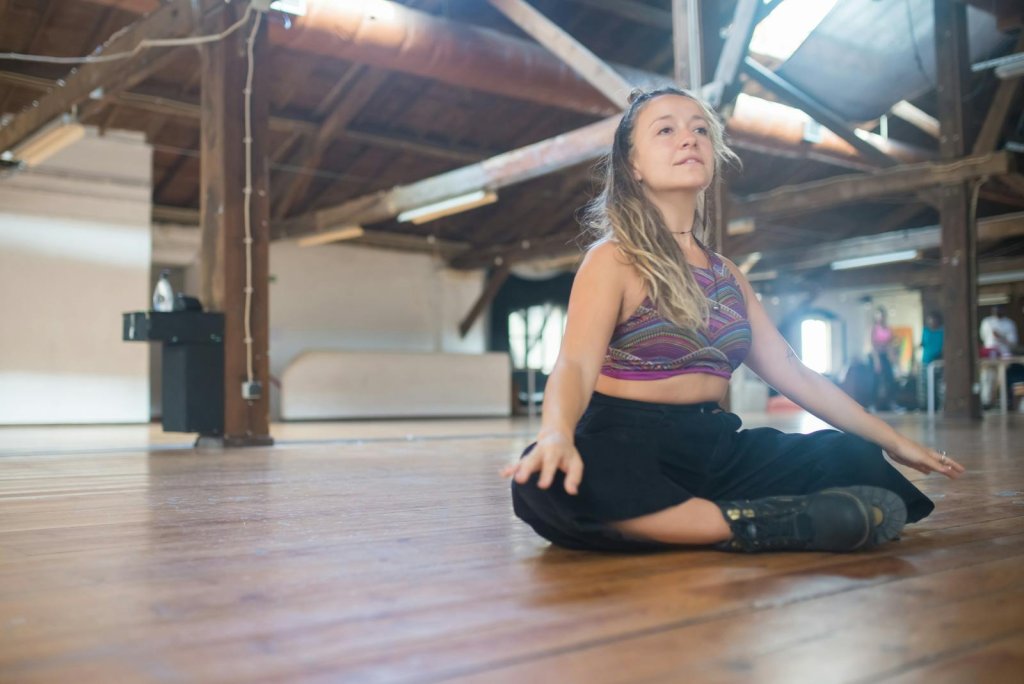
Below is a clear, practical guide to the 10 most effective mindfulness exercises for stress relief, based on guidance from trusted health organizations and mindfulness research programs.
What Are Mindfulness Exercises for Stress Relief?
Mindfulness exercises are practices that train you to notice thoughts, emotions, and body sensations without judgment. Instead of trying to eliminate stress, mindfulness teaches awareness and response control, which may help reduce stress reactivity over time.
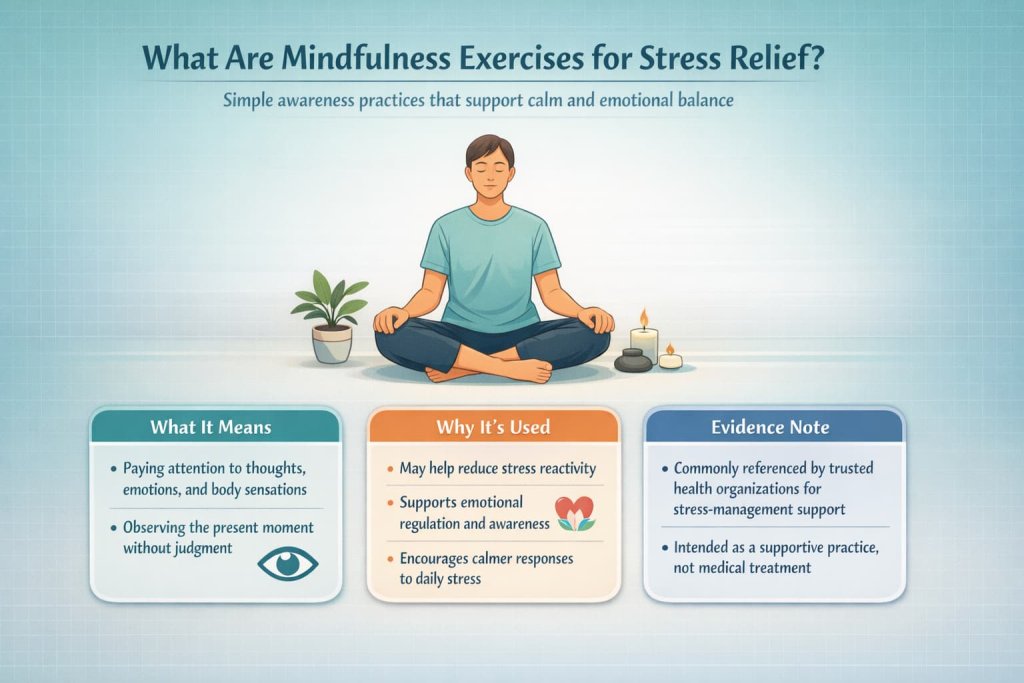
According to guidance from organizations like the Mayo Clinic, the American Psychological Association (APA), and the National Institutes of Health (NCCIH), mindfulness practices are commonly used to support stress management and emotional balance when practiced regularly.
How Mindfulness Helps Reduce Stress
Stress activates the body’s “fight-or-flight” response. Mindfulness exercises may help by:
- Encouraging slower, deeper breathing
- Reducing rumination and repetitive negative thinking
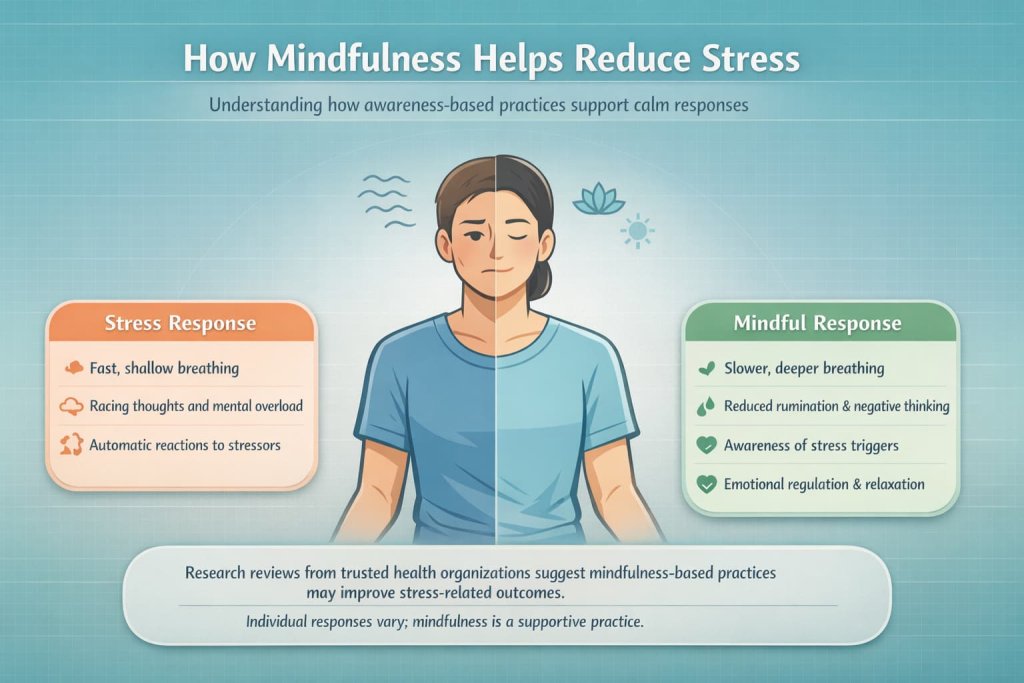
- Improving awareness of stress triggers
- Supporting emotional regulation
- Promoting relaxation responses in the body
Research reviews published by APA and NCCIH note that mindfulness-based practices can improve stress-related outcomes for many people, although individual responses vary.
10 Mindfulness Exercises for Stress Relief
These mindfulness exercises for stress relief focus on simple, practical techniques that help bring attention back to the present moment. When practiced consistently, they may support calmness, emotional balance, and everyday stress management.
1. Mindful Breathing
Mindful breathing focuses attention on the natural rhythm of your breath.
How to do it:
- Sit or lie in a comfortable, supported position
- Inhale slowly through your nose, allowing the chest and abdomen to expand
- Exhale gently through your mouth or nose without forcing the breath
- Notice the sensation of air moving in and out of the body
- When the mind wanders, gently return attention to the breath
Why it works:
Slow, intentional breathing helps shift the nervous system toward a calmer state. By anchoring attention to the breath, this exercise reduces mental distraction and supports relaxation during stressful moments.
Trainer Tip:
Avoid controlling the breath too aggressively—let it feel natural and unforced for best results.
2. Body Scan Meditation
The body scan involves paying attention to physical sensations throughout the body.
How to do it:
- Lie down or sit comfortably with minimal distractions
- Bring attention to your feet and toes
- Slowly move awareness upward through the legs, torso, arms, neck, and head
- Notice sensations such as tension, warmth, or relaxation
- Observe without trying to change anything
Why it works:
This practice builds awareness of where stress is held in the body and encourages relaxation through attention alone. It may help reduce physical tension linked to mental stress.
Trainer Tip:
If you fall asleep during body scans, try practicing in a seated position instead.
3. Mindful Walking
Mindful walking brings awareness to movement, posture, and balance.
How to do it:
- Walk slowly in a quiet, safe space
- Pay attention to how each foot contacts the ground
- Notice posture, arm swing, and breathing rhythm
- Gently return focus if your thoughts drift
Why it works:
Mindful walking combines movement with present-moment awareness, making it especially helpful for people who struggle with seated meditation.
Trainer Tip:
This can be done indoors or outdoors—focus on sensation rather than speed or distance.
4. Mindful Eating (Single-Bite Practice)
Mindful eating trains awareness during everyday activities.
How to do it:
- Take one bite of food
- Notice taste, texture, temperature, and aroma
- Chew slowly and deliberately
- Avoid multitasking or distractions during the bite
Why it works:
This exercise interrupts automatic eating habits and strengthens attention control, which can carry over into stress management.
Trainer Tip:
Start with just one mindful bite per meal to keep the practice realistic and sustainable.
5. Five-Senses Grounding Exercise
This grounding technique focuses attention on sensory input.
How to do it:
- Identify 5 things you can see
- Notice 4 things you can physically feel
- Listen for 3 distinct sounds
- Identify 2 smells
- Notice 1 taste
Why it works:
Engaging the senses helps shift attention away from racing thoughts and anchors the mind in the present moment.
Trainer Tip:
This exercise is especially helpful during acute stress or anxious moments.
6. Guided Imagery
Guided imagery uses visualization to encourage relaxation.
How to do it:
- Sit or lie comfortably and close your eyes
- Imagine a calm, safe place
- Engage all senses—sight, sound, smell, and touch
- Breathe slowly while maintaining the image
Why it works:
Mental imagery can influence physiological relaxation responses, helping the body and mind unwind.
Trainer Tip:
Choose imagery that feels personally calming—there’s no “right” scene.
7. Mindful Check-In
A mindful check-in is a brief awareness reset.
How to do it:
- Pause for one minute
- Ask yourself, “What am I feeling right now?”
- Notice physical sensations and emotions
- Take a few slow, steady breaths
Why it works:
This short practice builds emotional awareness and prevents stress from building unnoticed throughout the day.
Trainer Tip:
Use reminders (phone alarms or routine breaks) to practice consistently.
8. Mindful Stretching or Gentle Movement
Mindfulness can be practiced during slow movement.
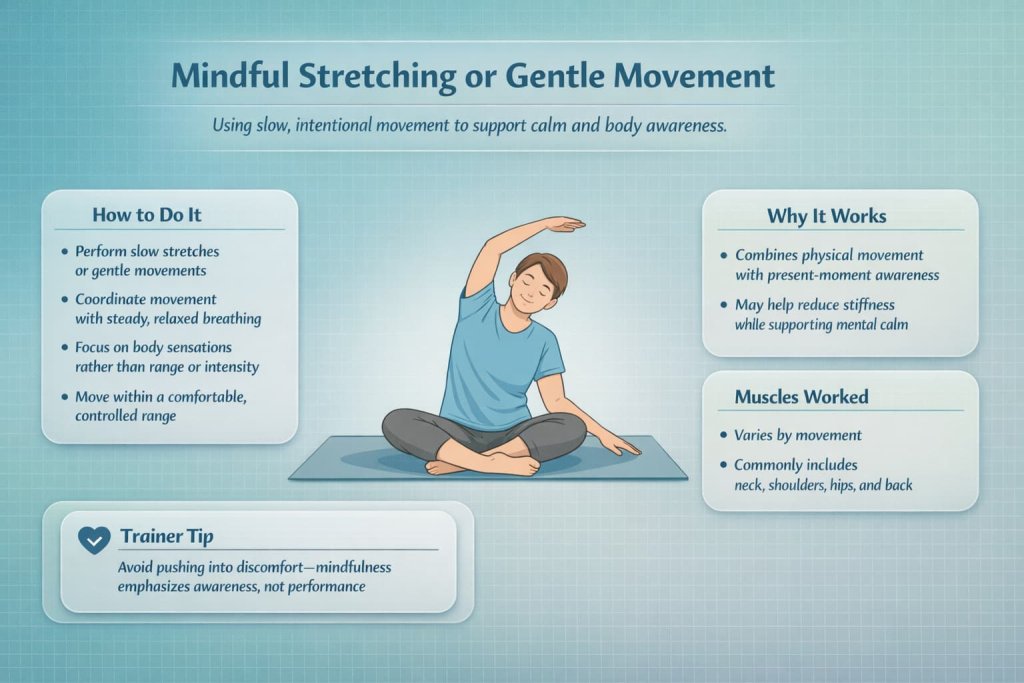
How to do it:
- Perform slow stretches or gentle movements
- Coordinate movement with steady breathing
- Focus on sensations rather than range or intensity
- Move within a comfortable, controlled range
Why it works:
Combining movement with awareness may help reduce physical stiffness while promoting mental calm.
Trainer Tip:
Avoid pushing into discomfort—mindfulness emphasizes awareness, not performance.
9. Noting Thoughts and Emotions
This practice involves observing mental activity without engagement.
How to do it:
- Sit quietly in a comfortable position
- When a thought arises, label it (e.g., “worry,” “planning”)
- Allow it to pass without judgment
- Return attention to the present moment
Why it works:
Labeling thoughts helps reduce emotional reactivity and creates distance from stress-inducing thinking patterns.
Trainer Tip:
Keep labels simple—overanalyzing defeats the purpose of the exercise.
10. Loving-Kindness Awareness
This practice focuses on cultivating positive emotional states.
How to do it:
- Sit comfortably and breathe naturally
- Silently repeat phrases such as “May I feel calm”
- Gradually extend these phrases to others
- Maintain a gentle, non-forced tone
Why it works:
Loving-kindness practices may support emotional regulation and resilience by fostering positive emotional awareness.
Trainer Tip:
If this practice feels awkward at first, keep sessions short and focus on sincerity rather than perfection.
How Often Should You Practice Mindfulness for Stress Relief?
For most people, mindfulness is most effective when practiced consistently rather than for long durations. Authoritative health guidance commonly recommends starting small and building gradually.
A practical, sustainable approach includes:
- 5–10 minutes per session, once or twice daily
- 3–5 days per week to begin
- Gradually increasing duration only if it feels comfortable
Short, regular practices may help reinforce awareness and stress regulation without becoming overwhelming. Mindfulness can also be practiced informally—such as during walking, eating, or brief check-ins throughout the day. Consistency matters more than intensity.
Who Should Use Caution With Mindfulness Exercises?
Mindfulness exercises are generally considered low risk, but some individuals may experience emotional discomfort, especially during longer or silent practices.
You should consider professional guidance if you:
- Experience severe anxiety or trauma-related symptoms
- Feel overwhelmed during mindfulness practices
- Have a diagnosed mental health condition
Common Mistakes to Avoid With Mindfulness Exercises
Avoiding common pitfalls helps keep mindfulness safe, realistic, and beneficial.
Frequent mistakes include:
- Expecting immediate results and becoming discouraged
- Forcing the breath instead of letting it flow naturally
- Judging thoughts or emotions rather than observing them
- Practicing too long too soon, leading to frustration or fatigue
- Using mindfulness to suppress emotions instead of acknowledging them
Mindfulness is a skill that develops over time. Gentle attention and patience are key—there is no “perfect” session.
When to Seek Professional Support for Stress
Mindfulness exercises are supportive tools, not substitutes for professional care. You should consider seeking qualified support if stress:
- Persists for weeks or months despite self-care efforts
- Interferes with sleep, work, relationships, or daily functioning
- Feels overwhelming, distressing, or unmanageable
- Is accompanied by intense anxiety, panic, or emotional distress
A licensed healthcare or mental health professional can help determine appropriate support options. Mindfulness may still be used alongside professional guidance when appropriate.
Frequently Asked Questions (FAQs)
1. Do mindfulness exercises really help with stress?
Research from organizations like APA and NCCIH suggests mindfulness may help reduce perceived stress for many people, though results vary.
2. How long does it take to feel results?
Some people notice short-term calming effects, while longer-term benefits often require consistent practice over weeks.
3. Can beginners practice mindfulness?
Yes. Most mindfulness exercises for stress relief are beginner-friendly and require no special equipment.
4. Is mindfulness the same as meditation?
Mindfulness is a skill. Meditation is one structured way to practice mindfulness, but mindfulness can also be practiced during daily activities.
5. Can mindfulness replace therapy?
No. Mindfulness can support well-being but should not replace professional mental-health care.
6. What’s the easiest mindfulness exercise to start with?
Mindful breathing is widely recommended as the simplest starting point.
Conclusion
Mindfulness exercises for stress relief offer a practical, accessible way to support emotional balance and calm in everyday life. By starting small and practicing consistently, you may build greater awareness and resilience over time. Choose one or two exercises that feel manageable and integrate them into your daily routine.
References
- Meditation and mindfulness: Effectiveness and safety (NIH NCCIH)
- Mindfulness (NHS)
- Body Scan Meditation (Greater Good in Action, UC Berkeley)
- Walking Meditation (Greater Good in Action, UC Berkeley)
- Loving-Kindness Meditation (Greater Good in Action, UC Berkeley)
- Mindful Eating (Harvard T.H. Chan School of Public Health – The Nutrition Source)