
The best hip hinge exercises for beginners are the ones that teach you how to push your hips back while keeping your spine neutral and your knees slightly bent.
This movement pattern strengthens your glutes, hamstrings, and lower back — the key muscles of your posterior chain.
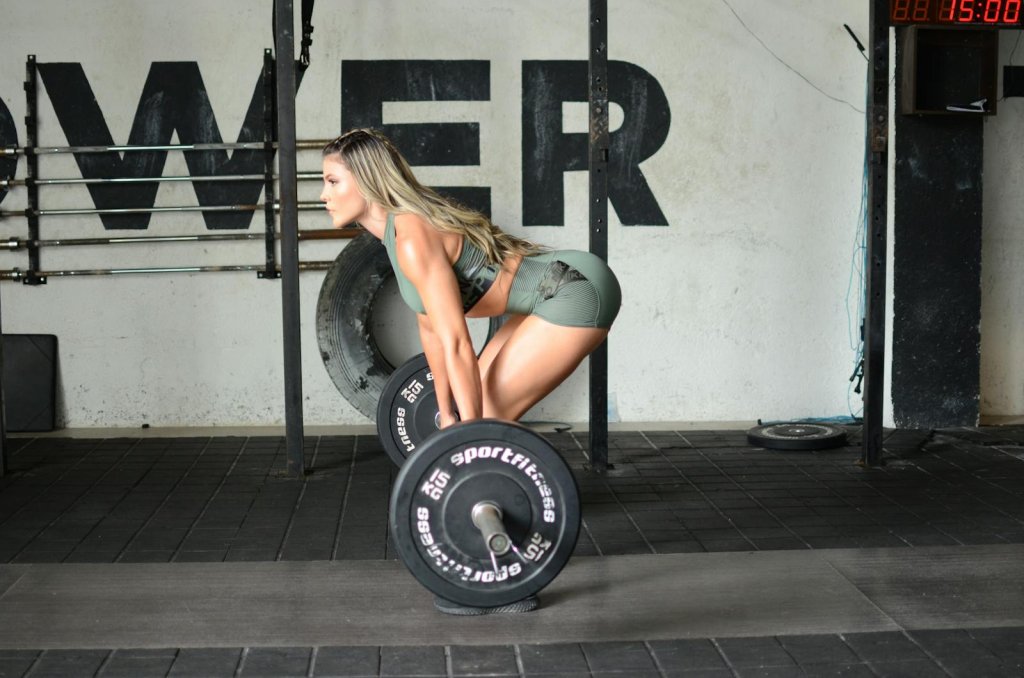
Learning the hip hinge is important because it improves how you bend, lift, and move in daily life. A strong, well-practiced hinge supports safe lifting mechanics, enhances athletic performance, and reduces unnecessary stress on the lower back. Beginners can start with simple drills to learn form, then gradually progress to weighted movements.
What Is a Hip Hinge? (Beginner Definition)
A hip hinge is a movement pattern where you bend at the hips while keeping your spine neutral and only a slight bend in your knees. Unlike a squat, the hinge shifts load to the glutes and hamstrings, not the quads.
Key characteristics of a proper hip hinge:
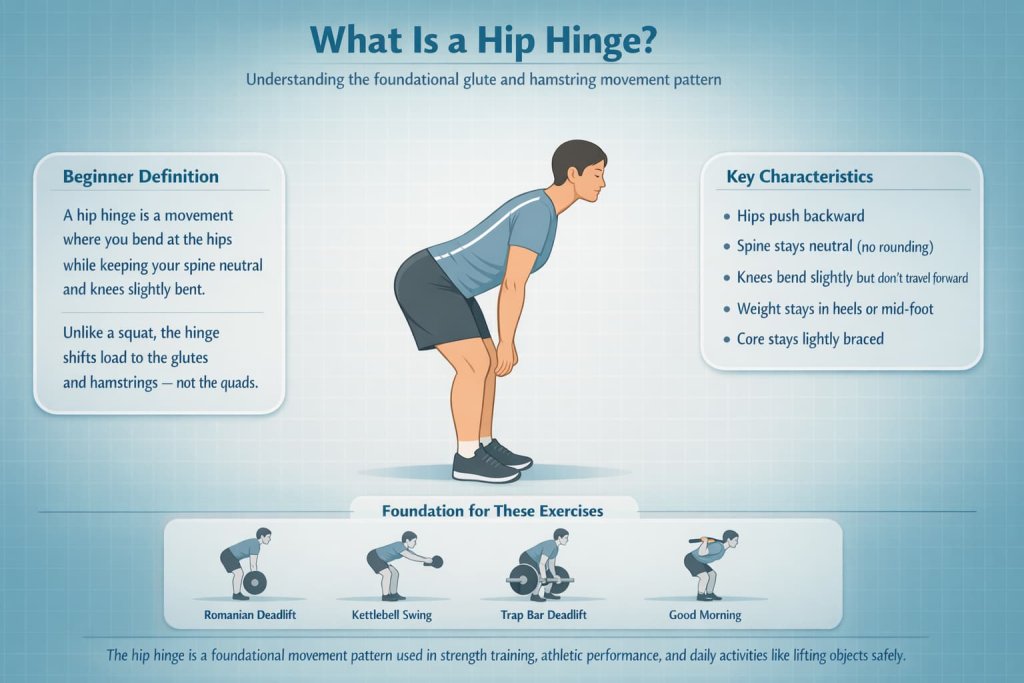
- Hips push backward
- Spine stays neutral (no rounding)
- Knees bend slightly but do not travel forward
- Weight stays in the heels or mid-foot
- Core stays lightly braced
This movement is the foundation of exercises like Romanian deadlifts, kettlebell swings, trap bar deadlifts, and good mornings.
13 Best Hip Hinge Exercises for Beginners
Teaches you how to push your hips back while keeping your spine neutral. Perfect first step for beginners learning hinge mechanics.
1. Wall Hip Hinge Drill
Simple and effective patterning exercise.
Why it works:
Teaches proper hip-back movement without bending the knees too much.
Muscles worked:
Glutes, hamstrings, spinal stabilizers.
How to do it:
- Stand 4–6 inches in front of a wall.
- Push your hips backward until your glutes lightly touch the wall.
- Keep your spine neutral and ribs gently down.
- Return to standing.
Trainer Tip:
If you fall backward, step farther from the wall.
2. Dowel Hip Hinge
Uses a stick for real-time posture feedback.
Why it works:
Improves awareness of spinal alignment during hinging.
Muscles worked:
Glutes, hamstrings, deep core.
How to do it:
- Hold a dowel along your back touching head, upper back, and tailbone.
- Hinge by pushing hips back while keeping all three points connected.
- Stand back up.
Trainer Tip:
If the dowel lifts off your low back, reset and shorten your range.
3. Tall Kneeling Hip Hinge
A beginner-friendly regression.
Why it works:
Limits knee movement so you can focus on hip action.
Muscles worked:
Glutes, hamstrings, core.
How to do it:
- Kneel tall with knees hip-width apart.
- Push hips back while keeping spine long.
- Return to upright with glutes engaged.
Trainer Tip:
Squeeze your glutes gently at the top for stability.
4. Bodyweight Good Morning
Classic hinge pattern with no equipment.
Why it works:
Builds endurance and reinforces hip-back movement.
Muscles worked:
Glutes, hamstrings, spinal erectors.
How to do it:
- Stand tall, hands behind head.
- Hinge by pushing hips back.
- Keep shins vertical and spine neutral.
- Return to standing.
Trainer Tip:
Don’t arch the neck — keep your gaze down and forward.
5. Glute Bridge
Great for beginners learning hip-driven movement.
Why it works:
Helps activate glutes, essential for proper hinging.
Muscles worked:
Glutes, hamstrings, core.
How to do it:
- Lie on your back with knees bent.
- Push through heels and lift hips.
- Lower under control.
Trainer Tip:
Avoid pushing through toes — drive through heels.
6. Hip Thrust (Bodyweight)
Advanced version of the glute bridge.
Why it works:
Teaches forceful hip extension used in hinge lifts.
Muscles worked:
Glutes (especially glute max), hamstrings.
How to do it:
- Sit with upper back on a bench.
- Drive hips upward with heels.
- Lower slowly.
Trainer Tip:
Keep ribs down to avoid lower-back arching.
7. Kettlebell Hip Hinge Drill
Teaches picking up weight safely.
Why it works:
Provides light resistance while reinforcing hinge technique.
Muscles worked:
Glutes, hamstrings, erector spinae.
How to do it:
- Place kettlebell between your feet.
- Hinge to grip the handle with a flat back.
- Push hips forward to stand tall.
Trainer Tip:
Think “hips back, hips forward” — not “squat down.”
8. Dumbbell Romanian Deadlift
Foundation exercise for hinge progression.
Why it works:
Strengthens the posterior chain under light load.
Muscles worked:
Glutes, hamstrings, lower back.
How to do it:
- Hold dumbbells in front of thighs.
- Hinge until dumbbells reach knee level.
- Stand tall with glutes engaged.
Trainer Tip:
Keep dumbbells close to your legs to protect your back.
9. Kettlebell Romanian Deadlift
Similar to dumbbells but beginner-friendly.
Why it works:
Handle positioning makes it easier to maintain balance.
Muscles worked:
Glutes, hamstrings, spinal stabilizers.
How to do it:
- Hold kettlebell with both hands.
- Hinge with a flat back.
- Drive hips forward to stand.
Trainer Tip:
Stop before your back rounds — depth will improve naturally.
10. Resistance Band Pull-Through
Great lightweight beginner hinge.
Why it works:
Teaches hip extension with constant tension.
Muscles worked:
Glutes, hamstrings, core.
How to do it:
- Face away from a low cable/band anchor.
- Hold the handle/band between legs.
- Hinge backward, then drive hips forward.
Trainer Tip:
Keep shoulders down and avoid leaning back too far.
11. Cable Pull-Through
The machine version of the band pull-through.
Why it works:
Provides controlled resistance through a full hinge motion.
Muscles worked:
Glutes, hamstrings, erector spinae.
How to do it:
- Stand facing away from cable.
- Hinge as cable pulls hands back.
- Extend hips to stand tall.
Trainer Tip:
Control the eccentric (lowering) phase — don’t let the cable pull you.
12. Trap Bar Deadlift from Blocks
A beginner-friendly deadlift variation.
Why it works:
Higher handles reduce the range of motion and make hinging easier.
Muscles worked:
Glutes, hamstrings, quads, back.
How to do it:
- Stand inside the trap bar.
- Push hips back and grip handles.
- Stand tall with hips and knees extending.
Trainer Tip:
Keep shins nearly vertical throughout the lift.
13. Staggered-Stance RDL
Intro to single-leg hinge work.
Why it works:
Improves balance, stability, and unilateral hip strength.
Muscles worked:
Glutes, hamstrings, deep core.
How to do it:
- Step back slightly with one foot.
- Hinge over the front leg.
- Return to standing, keeping hips square.
Trainer Tip:
Move slowly — balance is part of the exercise.
How Many Hip Hinge Exercises Should Beginners Do?
General guidelines from ACSM and other strength organizations suggest:
- 2–3 days per week of resistance training
- 1–3 sets per exercise for beginners
- 8–12 reps for strength
- 10–15 reps for lighter practice work
- 24–48 hours rest between sessions
A simple beginner template:
- Choose 2–3 hinge exercises from the list
- Perform 1–2 sets each
- Train hinge movements 2–3 times per week
These are general fitness recommendations, not medical prescriptions.
Common Hip Hinge Mistakes to Avoid
- Letting knees travel forward like a squat
- Rounding the lower back
- Looking up excessively (neck strain)
- Letting weight shift into toes
- Lowering too deep before mastering form
- Using heavy weight too soon
- Bending at the waist instead of the hips
Fixing these early helps you learn perfect technique safely.
FAQ (People Also Ask)
1. Is the hip hinge safe for beginners?
Yes — when taught with proper form and light progressions. Start with wall or dowel drills.
2. Can hip hinge exercises help with posture?
They may support better glute and hamstring strength, which helps maintain upright posture.
3. How do I know if I’m doing a hip hinge correctly?
Your hips should move back first, your spine stays neutral, and you feel tension in the hamstrings — not the low back.
4. Should beginners start with bodyweight or weights?
Always begin with bodyweight drills before adding dumbbells, kettlebells, or cables.
5. Are hip hinge exercises good for lower-back health?
They help strengthen the muscles that support the spine, but they are not medical treatment for back pain.
6. How deep should I hinge?
Only hinge as far as you can while keeping a flat, neutral spine.
7. Can older adults learn the hip hinge?
Yes — with proper regressions like wall hinges, dowel hinges, and raised deadlift variations.
Conclusion
Hip hinge exercises are essential for building strong glutes, hamstrings, and safe lifting mechanics. By starting with beginner-friendly drills and progressing gradually, you can develop better movement control and confidence in your workouts. Practice consistently, focus on form, and you’ll master the hinge pattern quickly and safely.