
Kyphosis exercises for seniors can help improve upright posture by strengthening the upper-back posture muscles, improving shoulder-blade control, and reinforcing safer spinal alignment habits.
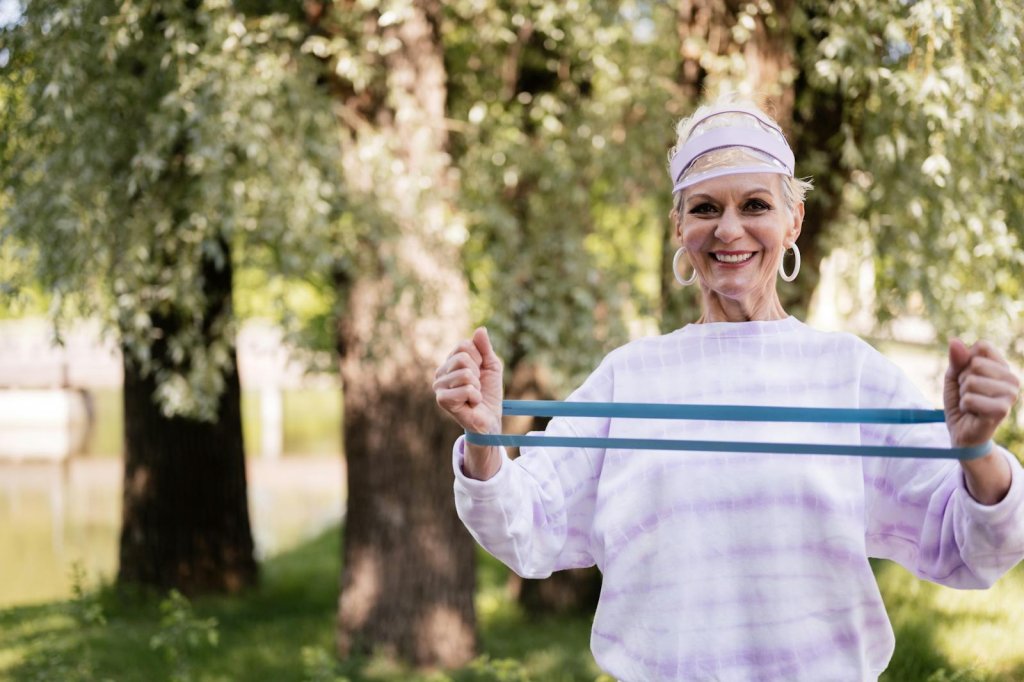
If you’re dealing with a rounded upper back or “hunched” posture, the right mix of gentle extension-focused strength, mobility, and balance training can support better daily movement and comfort over time.
Below are senior-friendly options you can do at home with minimal equipment, along with important safety guidance.
What Is Kyphosis in Seniors?
Kyphosis is a forward rounding of the upper back that becomes more common with age. In seniors, it often develops gradually due to changes in muscle strength, posture habits, and spinal structure.
Common contributing factors include:
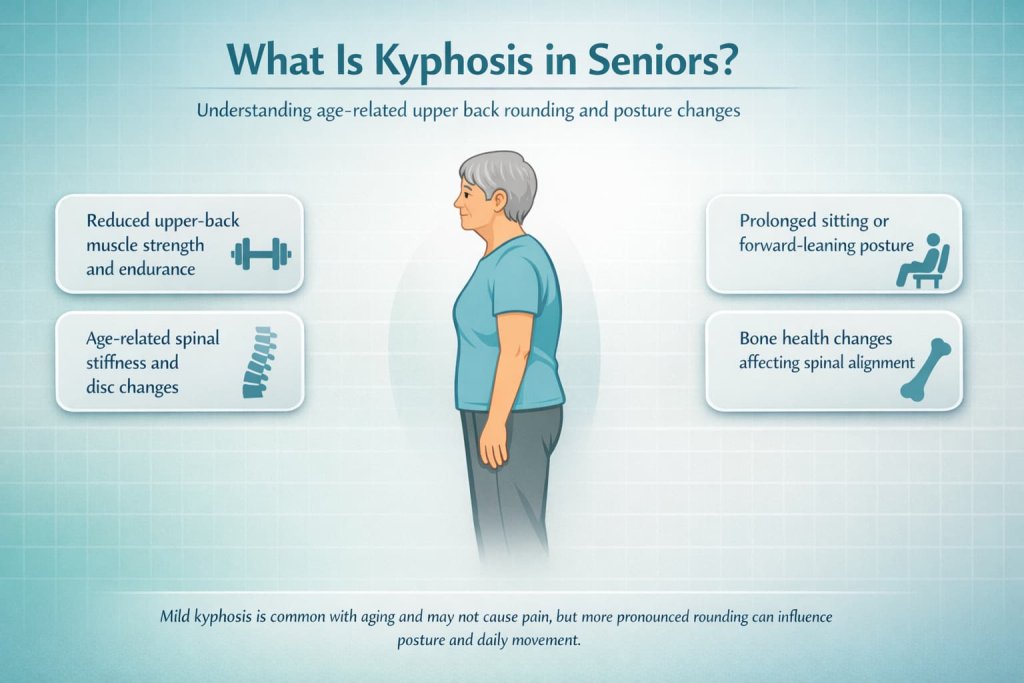
- Reduced upper-back muscle strength and endurance
- Age-related spinal stiffness and disc changes
- Long periods of sitting or forward-leaning posture
- Bone health changes that affect spinal alignment
Mild kyphosis is common and may not cause pain, but more pronounced rounding can affect posture and daily movement.
7 Best kyphosis exercises for seniors
Kyphosis exercises for seniors focus on strengthening the upper back, improving posture awareness, and supporting safer spinal alignment. These gentle, senior-friendly movements are designed to help older adults stand taller, move more comfortably, and maintain daily function.
1. Wall Posture Reset
How to do it
- Stand with your back against a wall, heels about 6–12 inches away
- Let the back of your head, upper back, and hips lightly touch the wall
- Gently lengthen upward through the crown of your head
- Lightly tuck your chin as if making a double chin, without forcing
- Keep ribs stacked over hips and avoid arching the lower back
- Hold for 20–40 seconds while breathing slowly
- Repeat 2–4 times
Why it works
This exercise provides immediate postural feedback, helping seniors feel what proper alignment actually is. It reinforces upright posture by teaching the body how to stack the head, ribcage, and pelvis efficiently against gravity.
Muscles worked
Upper-back extensors, deep neck flexors, spinal stabilizers, postural core muscles.
Trainer Tip
If full wall contact is uncomfortable, focus on gentle lengthening and alignment rather than pressing into the wall.
2. Seated Thoracic Extension Over a Chair Back
How to do it
- Sit tall on a sturdy chair with feet flat on the floor
- Place your hands lightly behind your head or across your chest
- Keep your lower back neutral and stable
- Slowly extend your upper back over the chair back
- Pause for 2–3 seconds in the open position
- Return to upright posture with control
- Perform 6–10 repetitions for 2 sets
Why it works
Kyphosis often involves stiffness in the thoracic spine. This movement gently restores upper-back extension without placing excessive stress on the lower spine or requiring floor work.
Muscles worked
Thoracic spine extensors, spinal mobility tissues, upper-back postural muscles.
Trainer Tip
Think “open the chest” rather than “bend backward” to keep the movement controlled and safe.
3. Band Pull-Aparts
How to do it
- Hold a light resistance band at shoulder height with arms straight
- Keep shoulders relaxed and neck long
- Pull the band apart by squeezing your shoulder blades together
- Pause for 1 second at the end position
- Slowly return to the starting position
- Perform 8–15 repetitions for 2–3 sets
Why it works
Band pull-aparts strengthen the muscles that oppose rounded shoulders, which commonly accompany kyphosis. Improving scapular control helps reduce forward shoulder posture.
Muscles worked
Mid-trapezius, rhomboids, rear deltoids, shoulder stabilizers.
Trainer Tip
If you feel neck tension, use a lighter band and reduce the range slightly.
4. Wall Angels
How to do it
- Stand with your back, head, and hips against a wall
- Bring arms into a comfortable goalpost position
- Keep ribs gently down and chin neutral
- Slowly slide arms upward, then back down
- Maintain smooth, controlled movement
- Perform 6–10 repetitions for 2–3 sets
Why it works
Wall angels improve shoulder mobility while reinforcing upright posture. The wall provides support and feedback, making this a safe and effective drill for seniors.
Muscles worked
Upper-back stabilizers, shoulder external rotators, postural muscles.
Trainer Tip
If arms lift off the wall, allow a small gap and prioritize control over range.
5. Supported “Y” Raise
How to do it
- Stand and lightly support yourself using a countertop or chair
- Hinge slightly at the hips while keeping your back long
- Raise arms into a Y shape with thumbs pointing upward
- Keep shoulders relaxed and away from the ears
- Lower arms slowly with control
- Perform 6–12 repetitions for 2–3 sets
Why it works
The Y raise targets the lower trapezius, a key muscle for maintaining upright posture and counteracting upper-back rounding.
Muscles worked
Lower trapezius, mid-back stabilizers, rear shoulder support muscles.
Trainer Tip
Start with bodyweight only; this exercise is about control, not load.
6. Scapular Retraction Hold
How to do it
- Sit or stand tall with arms relaxed by your sides
- Gently draw shoulder blades together and slightly downward
- Keep neck relaxed and chest tall
- Hold the position for 10–20 seconds
- Breathe normally throughout
- Repeat 4–6 times
Why it works
This isometric hold builds endurance in the muscles responsible for maintaining proper shoulder position, which is essential for sustained posture correction.
Muscles worked
Rhomboids, mid-trapezius, upper-back postural stabilizers.
Trainer Tip
The contraction should feel subtle and sustainable, not strained.
7. Sit-to-Stand With Tall Posture
How to do it
- Sit at the edge of a sturdy chair with feet hip-width apart
- Set a tall posture before moving
- Push through your feet to stand up slowly
- Sit back down with control, keeping posture upright
- Perform 6–12 repetitions for 2–3 sets
Why it works
This functional movement reinforces posture during a daily activity while strengthening the legs and trunk, which helps seniors maintain independence.
Muscles worked
Quadriceps, glutes, trunk stabilizers, postural muscles.
Trainer Tip
If balance is limited, lightly use armrests or place a stable surface nearby.
What seniors should know about kyphosis
Kyphosis refers to an increased forward curve of the upper back (thoracic spine). Mild kyphosis may cause few symptoms, but more pronounced kyphosis can contribute to discomfort, visible posture changes, and in severe cases may affect breathing. Educational resources from the American Academy of Orthopaedic Surgeons explain that age-related changes in bone, muscle strength, and posture habits often play a role.
For many older adults, the most practical exercise focus is to:
- Strengthen upper-back extensor muscles that help keep the torso upright
- Improve shoulder-blade positioning to reduce rounded shoulders
- Reinforce posture habits that carry over to walking, standing, and daily tasks
- Avoid movements that increase fracture risk when bone density is reduced
Safety first for kyphosis exercises for seniors
If you’re older and unsure about bone density or fracture risk, it’s best to take a conservative, spine-safe approach.
Quick safety checklist
- Avoid repeated, loaded forward-bending of the spine if osteoporosis or fracture risk is present, as advised by the Bone Health and Osteoporosis Foundation
- Keep movements slow and controlled
- Stop if you feel sharp pain, dizziness, or neurological symptoms
- Use stable support such as a chair or wall for balance
- Focus on “tall posture” with ribs stacked over hips
Who should be cautious
- Seniors with diagnosed osteoporosis, prior spine fractures, or high fracture risk should follow guidance from the International Osteoporosis Foundation
- Anyone with worsening pain, rapid posture changes, or breathing difficulty should seek medical evaluation
Why exercise can help improve kyphosis in older adults
A well-known clinical trial led by researchers at the University of California San Francisco demonstrated that a six-month program focused on spine strengthening and posture training led to improvements in measured kyphosis and posture appearance in older adults. This supports the idea that posture is not purely structural and can respond to targeted exercise.
While posture does not change overnight, consistent training can improve:
- Upper-back strength endurance
- Shoulder positioning
- Awareness and control of upright posture during daily activities
Common mistakes to avoid
- Focusing only on stretching while neglecting strength
- Shrugging shoulders during upper-back exercises
- Over-arching the lower back to appear upright
- Performing repeated toe-touches or sit-ups when osteoporosis risk is present, which the Bone Health and Osteoporosis Foundation advises against
Simple weekly plan for seniors
A practical starting plan is 3 sessions per week:
- Wall posture reset
- Band pull-aparts
- Wall angels
- Sit-to-stand with posture
- One thoracic mobility exercise
This structure aligns with physical activity guidance commonly recommended for older adults.
Are Kyphosis Exercises Safe for Seniors?
Kyphosis exercises are generally safe for seniors when they focus on controlled strengthening, posture awareness, and gentle mobility rather than forceful movements.
Important safety considerations include:
- Moving slowly and with control
- Using support such as a wall or chair when needed
- Avoiding exercises that cause pain or discomfort
- Being cautious with forward-bending movements if bone density is low
Seniors with osteoporosis, prior spinal fractures, or balance concerns should seek professional guidance before starting a new exercise routine.
When to seek professional guidance
Consult a healthcare professional or physical therapist if:
- Posture worsens rapidly
- Pain, weakness, or neurological symptoms appear
- There is a history of spinal fracture or severe osteoporosis
- Breathing feels restricted in upright positions, which the American Academy of Orthopaedic Surgeons notes can occur in severe kyphosis
Frequently asked questions
Can kyphosis exercises really help seniors improve posture?
Yes. Research shows that targeted strength and posture training can improve kyphosis measures and posture control in older adults when practiced consistently.
How often should seniors do kyphosis exercises?
Two to four sessions per week for strength exercises, plus brief daily posture practice, is a realistic and effective approach.
Are kyphosis exercises safe with osteoporosis?
They can be safe when spine-neutral and extension-focused, but forward-bending movements should be limited as advised by the International Osteoporosis Foundation.
How long does it take to see results?
Posture awareness often improves within weeks, while visible changes usually require consistent training over several months.
Conclusion
Kyphosis exercises for seniors are most effective when they combine upper-back strengthening, shoulder-blade control, and simple posture habits practiced consistently. Start with safe, supported movements, progress gradually, and prioritize quality over intensity. Seniors with osteoporosis, fracture history, or significant symptoms should seek individualized guidance before advancing exercises.
This content is for informational purposes only and not medical advice.
References
- American Academy of Orthopaedic Surgeons OrthoInfo
- Mayo Clinic Kyphosis Diagnosis and Treatment
- Cleveland Clinic Kyphosis Overview
- PubMed Central Spine Strengthening and Posture Training Trial (Hyperkyphosis)
- PubMed Central Systematic Review: Exercise for Age-Related Hyperkyphosis
- Bone Health and Osteoporosis Foundation Protecting Your Spine
- International Osteoporosis Foundation Exercise Guidance for Osteoporosis
- CDC Physical Activity Guidelines for Older Adults