
Hip extension exercises are some of the most effective ways to strengthen your glutes and support your lower back. Strong hip extensors help improve posture, reduce stress on the spine, and enhance power during walking, lifting, and daily activities. Including hip extension exercises in your routine is important because they build glute strength, improve mobility, and support overall lower-body stability.
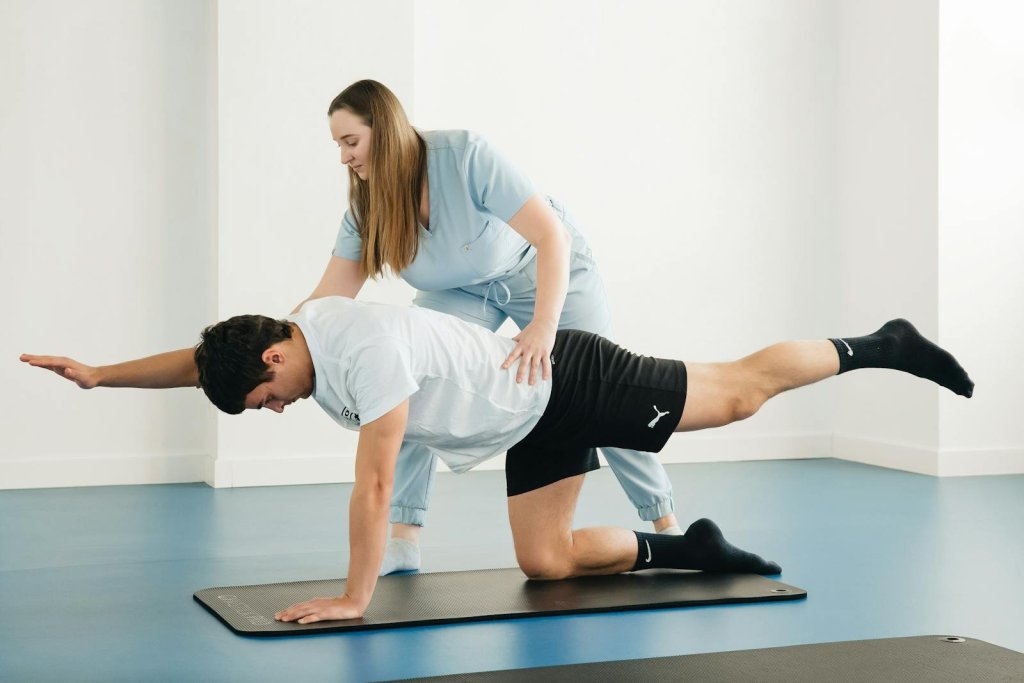
Most people benefit from simple movements like bridges, hip thrusts, deadlifts, and step-ups. These exercises target major muscles, enhance alignment, and help you move more efficiently.
What Are Hip Extension Exercises?
Hip extension exercises are movements that drive the leg backward behind the body, powered mainly by the gluteus maximus and hamstrings. These exercises help you stand tall, stabilize your pelvis, and maintain proper alignment during everyday movements.
Benefits of Hip Extension Exercises
Strengthening the hip extensors may help:
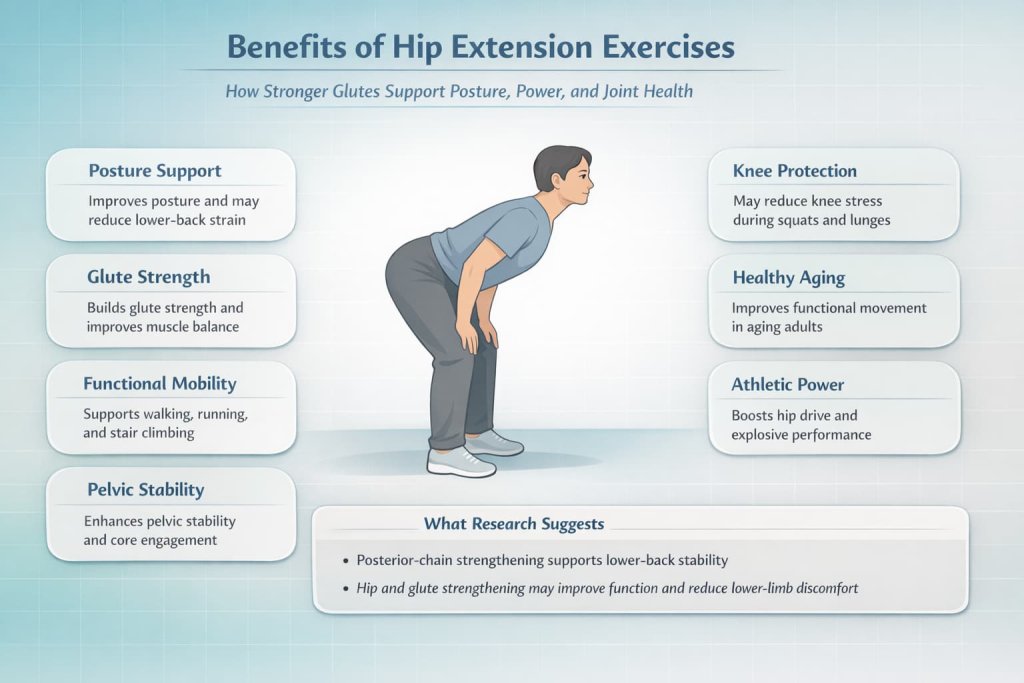
- Improve posture and reduce lower-back strain
- Improve glute strength and muscle balance
- Support better walking, running, and stair climbing
- Enhance pelvic stability and core engagement
- Reduce knee stress during squats and lunges
- Improve functional movement in aging adults
- Boost athletic power and hip drive
Research notes:
Clinical guidelines suggest posterior-chain strengthening can improve low-back support, while studies show hip and glute strengthening may reduce pain and improve function in people with lower-limb issues.
10 Best Hip Extension Exercises
These ten hip extension exercises strengthen your glutes, support your lower back, and improve overall movement efficiency. Each one targets the posterior chain to help you build stability, power, and better posture in everyday activities.
1. Glute Bridge
Simple and effective for activating your glutes.
Why it works:
This exercise isolates the gluteus maximus while minimizing strain on the lower back. It teaches proper hip extension mechanics, strengthens the posterior chain, and helps counteract hip flexor tightness from prolonged sitting.
Muscles worked:
Glutes (primary), hamstrings, deep core stabilizers.
How to do it:
- Lie on your back with knees bent and feet flat.
- Brace your core and press your lower back gently into the floor.
- Push through your heels and lift your hips toward the ceiling.
- Squeeze your glutes at the top without arching your spine.
- Lower slowly with control.
Trainer Tip:
Drive through your heels, not your toes. Keep ribs down to prevent lower-back overextension.
2. Hip Thrust
A more powerful version of the bridge with greater glute activation.
Why it works:
The elevated position increases hip extension range, making it one of the most effective exercises for glute strength and hypertrophy. It heavily recruits the gluteus maximus while stabilizing the pelvis.
Muscles worked:
Gluteus maximus (primary), hamstrings, core.
How to do it:
- Sit with your upper back resting against a bench.
- Feet hip-width apart and grounded.
- Drive hips upward by pushing through your heels.
- Pause and squeeze the glutes at the top.
- Lower your hips slowly.
Trainer Tip:
Tuck your chin toward your chest to keep your spine neutral and avoid excessive lumbar extension.
3. Romanian Deadlift (RDL)
A key strength movement for the entire posterior chain.
Why it works:
RDLs train the hip hinge pattern, improving functional lifting mechanics. They place strong tension on the hamstrings and glutes, helping build strength and stability throughout the back of the body.
Muscles worked:
Hamstrings, glutes, lower back, core stabilizers.
How to do it:
- Stand holding dumbbells or a barbell in front of your thighs.
- Hinge at your hips while keeping your spine long.
- Push hips back as the weights travel down your legs.
- Drive hips forward to return to standing.
Trainer Tip:
Keep the weights close to your shins—this protects your lower back and improves hinge efficiency.
4. Reverse Lunge
Builds single-leg strength and hip extension control.
Why it works:
Stepping backward emphasizes the glutes more than forward lunges. It challenges stability, improves hip drive, and promotes better muscle balance between legs.
Muscles worked:
Glutes, hamstrings, quads, core.
How to do it:
- Step one foot back and lower into a lunge.
- Keep torso upright and hips square.
- Push through the front heel to return to standing.
- Alternate legs.
Trainer Tip:
Avoid leaning too far forward—keep the movement slow and controlled to engage the glutes fully.
5. Back Extension (Floor or Machine)
Strengthens the lower back and posterior chain.
Why it works:
Back extensions train the spinal erectors along with the glutes and hamstrings. They help improve posture, stability, and hip extension mechanics—especially beneficial for people with weak lower-back muscles.
Muscles worked:
Lower back (erector spinae), glutes, hamstrings.
How to do it:
- Lie face down or use a back-extension bench.
- Brace your core and lift your chest slightly off the surface.
- Keep your neck neutral and avoid overarching.
- Lower yourself slowly.
Trainer Tip:
Lift only to a comfortable height—focus on tension, not height or speed.
6. Bird Dog
A spine-safe hip extension movement.
Why it works:
This exercise trains controlled hip extension while stabilizing the core. It improves coordination between the glutes and back muscles while promoting a neutral spine.
Muscles worked:
Glutes, lower back, core, shoulder stabilizers.
How to do it:
- Begin on hands and knees.
- Extend one leg straight back while reaching opposite arm forward.
- Keep hips level and spine neutral.
- Return and switch sides.
Trainer Tip:
Imagine balancing a glass of water on your lower back to avoid rotating your pelvis.
7. Step-Up
A functional movement for everyday strength and balance.
Why it works:
Step-ups mimic real-life movements like climbing stairs. Driving through the heel during the ascent improves hip extension strength and single-leg balance.
Muscles worked:
Glutes, hamstrings, quads, calves, core.
How to do it:
- Step onto a box or bench with one foot.
- Push through your heel to stand tall on the platform.
- Step down slowly.
- Alternate legs.
Trainer Tip:
Keep your knee aligned with your toes to reduce joint stress and improve movement quality.
8. Single-Leg Glute Bridge
A unilateral version of the bridge that increases difficulty.
Why it works:
Training one side at a time improves pelvic stability, glute recruitment, and balance. It’s especially helpful for addressing strength imbalances.
Muscles worked:
Glutes, hamstrings, core.
How to do it:
- Lie on your back with one leg extended.
- Push through the heel of your grounded leg to lift your hips.
- Keep hips level and squeeze glutes at the top.
- Switch sides.
Trainer Tip:
Keep your extended leg in line with your torso—don’t let it drift upward.
9. Cable Kickback or Band Kickback
Provides constant resistance throughout the hip extension range.
Why it works:
The resistance curve emphasizes the glutes at full extension, improving activation and control. It isolates the glutes more than compound movements.
Muscles worked:
Gluteus maximus (primary), hamstrings.
How to do it:
- Attach ankle strap/cable or loop band around your foot.
- Kick your leg backward slowly while keeping hips squared.
- Pause briefly at full extension.
- Return with control.
Trainer Tip:
Keep your torso still—avoid arching your back or swinging your leg.
10. Single-Leg Romanian Deadlift
Excellent for balance, stability, and unilateral hip strength.
Why it works:
This movement challenges balance while loading the glutes and hamstrings. It improves coordination, hip stability, and functional strength on each leg independently.
Muscles worked:
Glutes, hamstrings, core, ankle stabilizers.
How to do it:
- Hold a dumbbell in the opposite hand of the working leg.
- Hinge forward while lifting the back leg straight behind you.
- Maintain a neutral spine and slight knee bend.
- Return to standing.
Trainer Tip:
Pick a spot on the floor a few feet ahead to help maintain balance throughout the movement.
How Often Should You Do Hip Extension Exercises?
Strength Training:
- 2–3 days per week
- 1–3 sets per exercise
- 8–12 reps for strength
- 12–15 reps for endurance
- Rest 24–48 hours between sessions
Mobility/Flexibility:
- 2–3 days per week minimum
- 15–60 second holds
- 2–4 repetitions per stretch
Safety Tips
- Avoid excessive arching during hip lifts
- Keep movements slow and controlled
- Use a lighter band or weight if form breaks
- Stop if pain (not muscle fatigue) occurs
- If you have chronic hip or back pain, consult a physical therapist
FAQs
1. Are hip extension exercises good for lower-back support?
Yes. Strengthening the glutes and posterior chain helps reduce load on the lumbar spine.
2. Do I need equipment for hip extension exercises?
Not necessarily. Many effective exercises like bridges, bird dogs, and reverse lunges can be done without equipment.
3. How long until I see results?
Most people notice better strength and stability within 3–6 weeks of consistent training.
4. Are hip extension exercises safe for beginners?
Yes, especially movements like bridges and bird dog. Start slow and progress gradually.
5. Can hip extension exercises help knee pain?
Strengthening the glutes may improve knee alignment and reduce stress, which can support knee comfort in daily movement.
6. Should I combine hip extension exercises with glute abduction?
Yes. Adding abduction work (bands, clamshells) may enhance alignment and improve glute activation.
Conclusion
Hip extension exercises are essential for strong glutes, better posture, and overall stability. Whether you’re a beginner or advanced, these 10 movements can help strengthen your lower body and support a healthier spine.
Start with basic bridges and bird dog, then progress to hip thrusts and RDL variations. Consistency is key—add these exercises to your routine 2–3 times per week for noticeable results.
Ready to build stronger hips and a more powerful lower body? Start with 2–3 of these exercises today and progress gradually.
References
- The effectiveness of hip interventions in patients with low back pain: a systematic review – Ceballos-Laita et al., 2023
- Effect of Hip Muscle Strengthening Exercises on Pain and Disability in People With Low Back Pain: A Systematic Review – Santamaría et al., 2023
- Hip biomechanics in patients with low back pain: what do we know? A systematic review – Pizol et al., 2024
- Hip and knee strengthening is more effective than knee strengthening alone for reducing pain and improving activity in people with patellofemoral pain: a systematic review with meta-analysis – Nascimento et al., 2018
- Effectiveness of hip muscle strengthening in patellofemoral pain syndrome patients: a systematic review – Santos et al., 2015
- Gluteus Maximus Activation During Common Strength and Hypertrophy Exercises: A Systematic Review – Neto et al., 2020
- Quantity and Quality of Exercise for Developing and Maintaining Fitness in Adults (ACSM Position Stand) – Garber et al., 2011
- ACSM Position Stands and Pronouncements – American College of Sports Medicine