
Costochondritis exercises are gentle breathing, posture, and upper-body mobility moves that may help reduce chest wall stiffness and make everyday movement more comfortable. Costochondritis pain can feel alarming because it’s located in the chest, but it often comes from irritated rib cartilage and surrounding chest wall tissues rather than the heart.

Clinical guidance commonly emphasizes rest from aggravating activity, symptom control, and—when appropriate—gentle stretching or physical therapy-style movement as you improve, according to the Mayo Clinic.
Below is a safe, practical routine you can use to support rib mobility, posture, and breathing mechanics—without aggressive chest loading.
What Costochondritis Is
Costochondritis is inflammation or irritation where your ribs connect to your breastbone (sternum). Pain is often localized, tender to touch, and may worsen with movement, deep breathing, coughing, or lifting.
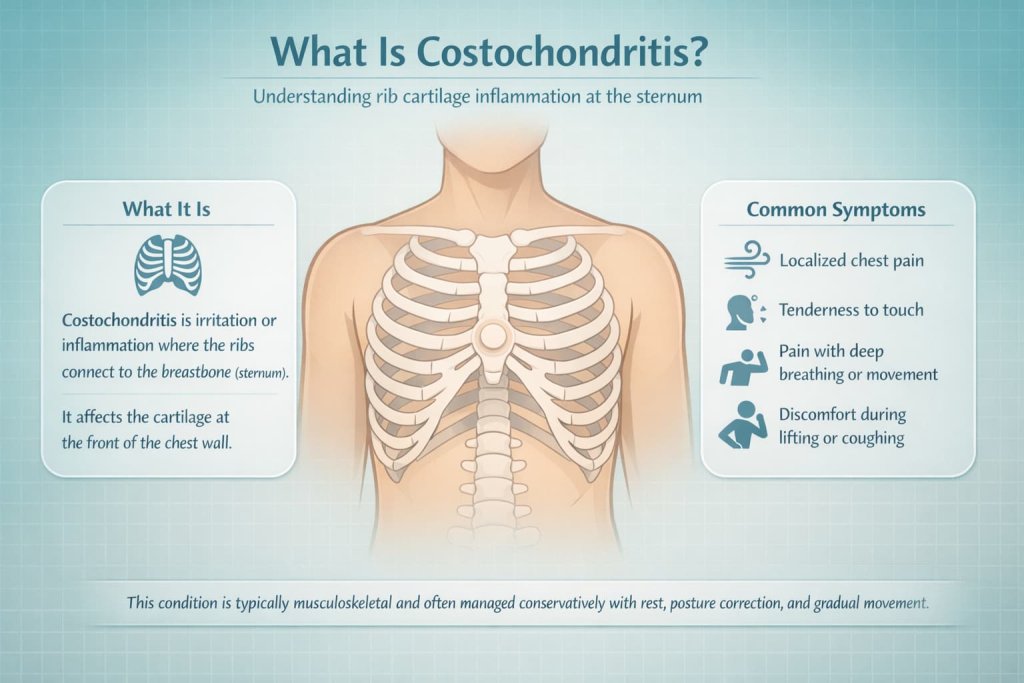
The clinical overview from the NCBI Bookshelf (StatPearls) explains that this condition is typically musculoskeletal and commonly managed conservatively.
When to Seek Medical Care for Chest Pain
Chest pain should never be ignored. Even if you suspect costochondritis, serious causes must be ruled out first. The Mayo Clinic recommends urgent evaluation if symptoms could be heart-related.
Seek emergency care if chest pain:
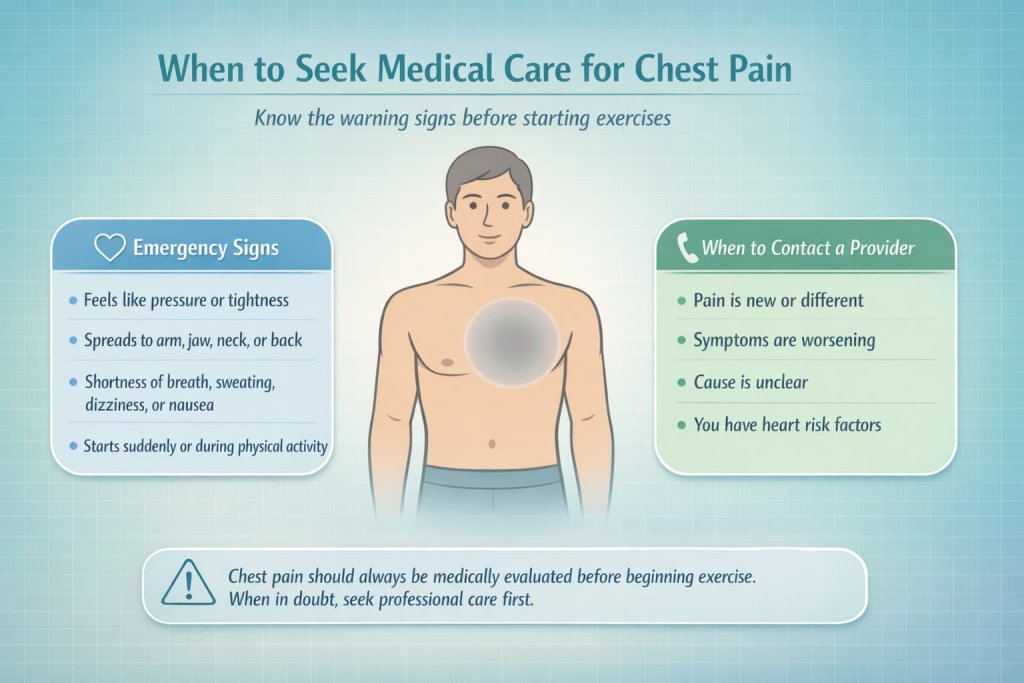
- Feels like pressure or tightness
- Spreads to the arm, jaw, neck, or back
- Comes with shortness of breath, sweating, dizziness, or nausea
- Starts suddenly or during exertion
If pain is new, worsening, or unclear, contact a healthcare provider before starting exercises.
7 Best Costochondritis Exercises
Perform these once daily or every other day. Move slowly and breathe normally.
1) Diaphragmatic Breathing with Rib Expansion
How to do it:
- Lie on your back with knees bent
- Place one hand on your belly and one on your upper chest
- Inhale through your nose and let your belly rise
- Allow your ribs to gently widen
- Exhale slowly through pursed lips
- Perform 5–8 slow breaths
Why it works: Gentle breathing can reduce protective rib tension and improve comfortable airflow without overusing the upper chest. It encourages better rib expansion and may decrease unnecessary chest wall strain.
Muscles worked: Diaphragm, deep core stabilizers, intercostals.
Trainer Tip: Focus on “low and wide” breathing rather than lifting your shoulders.
2) Seated Thoracic Extension Over a Chair
How to do it:
- Sit tall with a chair back at mid-shoulder blade level
- Interlace fingers behind your head
- Gently lean back over the chair while inhaling
- Return to neutral while exhaling
- Perform 6–10 reps
Why it works: Upper-back stiffness can increase strain through the ribs and sternum. Improving thoracic mobility supports better posture and may reduce stress on irritated chest wall tissues.
Muscles worked: Thoracic extensors, spinal stabilizers.
Trainer Tip: Avoid arching the lower back; keep the movement centered in your upper spine.
3) Scapular Retraction Set
How to do it:
- Sit or stand tall
- Gently pull shoulder blades back and slightly downward
- Hold for 3 seconds
- Relax and repeat 8–12 times
Why it works: Forward-shoulder posture may increase chest wall tension. This movement supports balanced shoulder alignment and reduces excess strain across the front of the chest.
Muscles worked: Rhomboids, mid/lower trapezius.
Trainer Tip: Keep the movement subtle and controlled—avoid shrugging your shoulders upward.
4) Doorway Pec Stretch (Gentle Range)
How to do it:
- Place forearms on a doorway frame at shoulder height
- Step forward slightly
- Lean gently until you feel a mild stretch
- Hold 15–25 seconds
- Repeat twice
Why it works: Tight chest muscles can pull the rib cage forward. Gentle stretching may help reduce stiffness and improve posture without overloading sensitive rib joints.
Muscles worked: Pectoralis major and minor.
Trainer Tip: Stop immediately if you feel sharp sternum pain. The stretch should feel mild, not intense.
5) Side-Lying “Open Book” Rotation
How to do it:
- Lie on your side with knees bent
- Extend arms straight in front
- Rotate your top arm open toward the floor behind you
- Pause briefly
- Return slowly
- Perform 6–8 reps per side
Why it works: Improves rib and upper-back rotation needed for daily activities like reaching and turning, which may help distribute movement more evenly across the thoracic spine.
Muscles worked: Thoracic rotators, upper-back stabilizers.
Trainer Tip: Move smoothly without forcing range; comfort and control matter more than depth.
6) Wall Angels (Partial Range)
How to do it:
- Stand with your back against a wall
- Keep ribs down and core lightly engaged
- Slide arms upward a few inches
- Lower slowly
- Perform 6–10 reps
Why it works: Encourages upright posture and controlled shoulder mechanics, helping reduce forward chest tension that may aggravate symptoms.
Muscles worked: Upper back, shoulder stabilizers.
Trainer Tip: Reduce the range of motion if it increases chest discomfort.
7) Light Band Pull-Aparts
How to do it:
- Hold a light resistance band at chest height
- Pull hands apart slowly
- Pause briefly
- Return with control
- Perform 8–12 reps
Why it works: Strengthening the upper back balances front-of-chest tension and supports better shoulder positioning during daily movement.
Muscles worked: Rear deltoids, rhomboids, mid trapezius.
Trainer Tip: Keep shoulders relaxed and avoid shrugging; focus on controlled tension rather than speed.
How Costochondritis Exercises Fit Into Recovery
Costochondritis is often self-limited and improves over time. Conservative care commonly includes:
- Avoiding activities that flare symptoms
- Using heat or ice for comfort
- Gradually returning to movement
Public guidance from NHS Inform highlights pacing and gentle activity rather than complete long-term rest.
A helpful rule: aim for mild discomfort at most, never sharp or stabbing pain.
Important Safety Note About Chest Pain
Chest pain should always be taken seriously. The Mayo Clinic advises seeking urgent medical care if pain is new, severe, or accompanied by shortness of breath, fainting, sweating, pressure-like discomfort, or symptoms spreading to the jaw or arm—especially if you have heart risk factors.
If you have already been medically evaluated and told it is costochondritis, the exercises below are intended to support gradual, comfortable movement.
Sample Weekly Plan
- 3–5 days per week: Breathing plus one mobility exercise
- 2–3 days per week: Add one light strengthening movement
- Daily: Posture reset for 30–60 seconds
Gradually increase range and repetitions as comfort improves.
Common Mistakes to Avoid
- Aggressive chest stretching
- Heavy pressing exercises too early
- Deep twisting under load
- Slouched sitting for long periods
- Holding your breath during movement
When to Seek Professional Guidance
Consult a healthcare professional if:
- Pain is new, severe, or changing
- You experience shortness of breath or faintness
- Symptoms persist despite conservative care
The clinical review from the NCBI Bookshelf (StatPearls) notes that proper evaluation is important to rule out other causes before confirming costochondritis.
FAQ
Are costochondritis exercises safe?
They can be when performed gently and after medical evaluation.
What exercises should I avoid?
Heavy chest loading, dips, bench pressing, and high-intensity twisting may aggravate symptoms early on.
Should I rest completely?
Short-term rest from aggravating activities helps, but gradual reintroduction of movement is generally encouraged.
How often should I do these exercises?
Start with 10–15 minutes, 3–5 times per week.
Can stretching help costochondritis?
Gentle stretching is commonly included in conservative management strategies.
When should I see a physical therapist?
If symptoms persist, recur, or limit daily activity.
Conclusion
Costochondritis exercises work best when they are gentle, consistent, and paired with smart pacing. Start with breathing and upper-back mobility, then add light strengthening as symptoms improve. Always prioritize safety and seek medical guidance if chest pain changes or worsens.
This content is for informational purposes only and not medical advice.