
A power clean is a barbell lift where you pull the weight from the floor and catch it on your shoulders in a strong front rack position without dropping into a full squat.
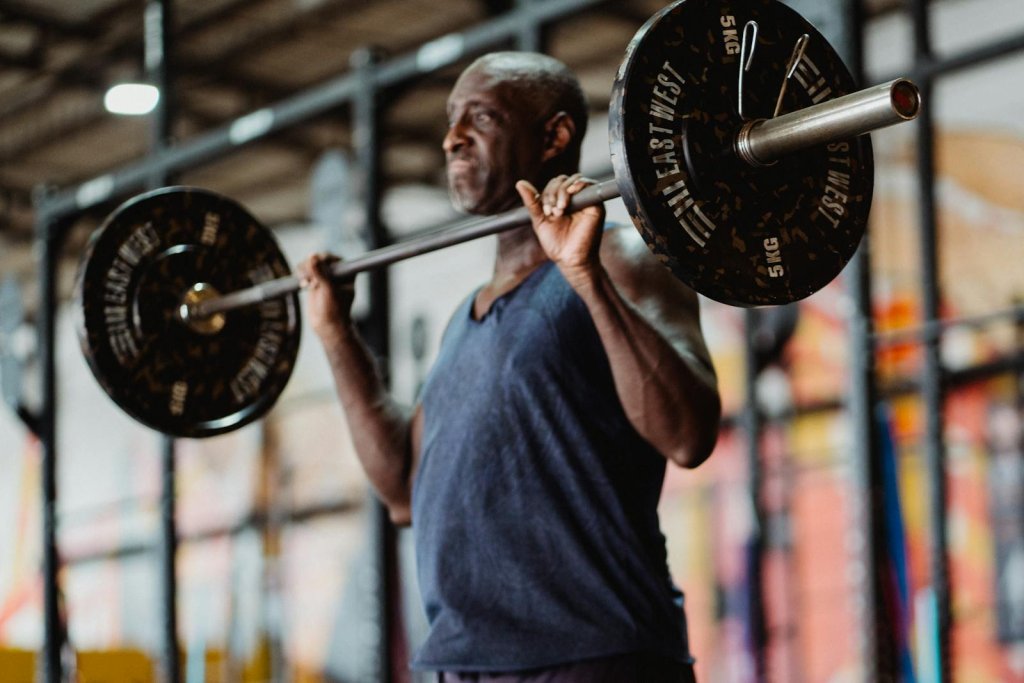
It’s one of the most effective ways to train explosive, full-body power when you learn the right setup, bar path, and fast turnover. The National Strength and Conditioning Association (NSCA) highlights the power clean family for developing explosive power (rate of force development), which is why it’s widely used in athletic strength programs.
What Is a Power Clean?
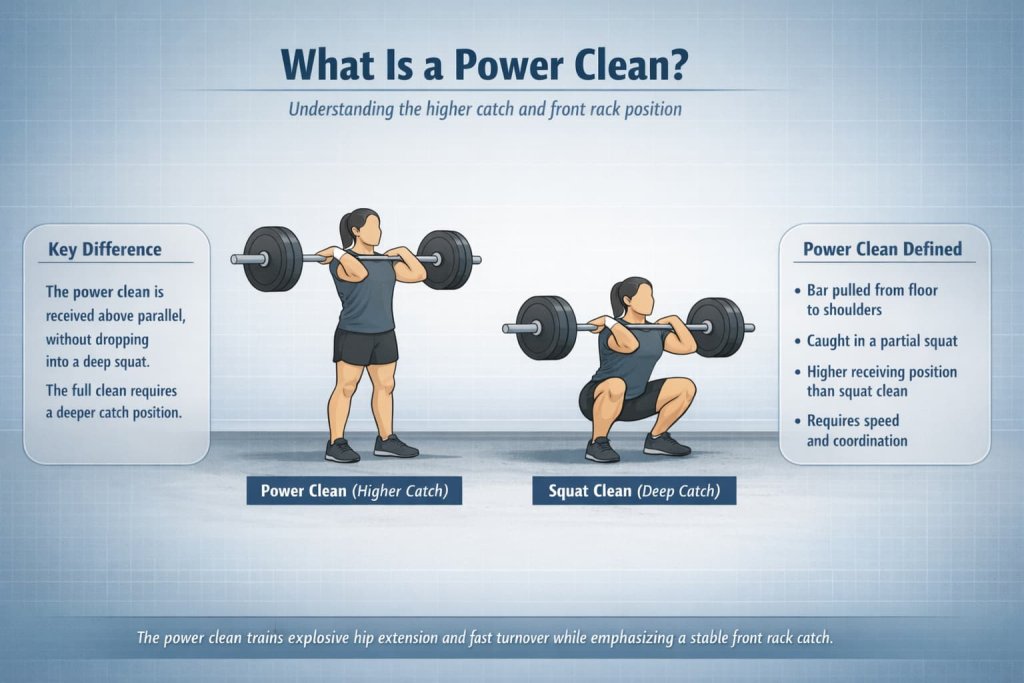
A power clean is a variation of the clean where the bar finishes on the shoulders (front rack) with a shoulder-width grip, and the catch happens higher than a full squat clean. The key distinction is receiving the bar without dropping into a deep squat.
How to Do a Power Clean Step by Step
Phase 1: First Pull (Floor to Knee)
- Push the floor away
- Maintain a strong back angle
- Keep the bar close
- Knees shift back slightly as the bar rises
Phase 2: Transition (Knee to Power Position)
- Bring the bar to mid-thigh
- Stay balanced over mid-foot
- Maintain tension and bar proximity
Phase 3: Second Pull and Extension
- Drive powerfully through hips and knees
- Fully extend before pulling under
- Shrug as the bar accelerates upward
Phase 4: Pull Under and Catch
- Pull yourself under the bar quickly
- Rotate elbows through fast
- Catch in a partial squat
- Stand tall to complete the rep
Why Power Cleans Build Explosive Strength
Power cleans train explosive extension through the hips, knees, and ankles (often called “triple extension”), then demand fast coordination to pull under and secure the bar. The NSCA describes these lifts as powerful vertical force developers, while Catalyst Athletics emphasizes improvements in timing, coordination, and bar speed.
Muscles Worked in the Power Clean
Power cleans are a true full-body lift. Primary muscles involved include:
- Glutes, quadriceps, hamstrings, calves
- Spinal erectors and core stabilizers
- Traps, upper back, shoulders, and forearms
Coaching resources consistently stress pushing through the floor, keeping the bar close, and receiving the weight in a stable front rack.
Power Clean Setup Checklist
Before every rep:
- Bar over mid-foot
- Feet hip-width apart
- Shoulder-width grip
- Chest tall, back neutral
- Shoulders slightly over the bar
- Arms straight and relaxed
- Brace your core before lifting
ACE Fitness reinforces keeping a strong back position and guiding the bar vertically close to the body.
Best Power Clean Cues That Work
These cues are consistently supported in coaching literature:
- “Push the floor” instead of pulling with arms
- “Keep the bar close”
- “Fast elbows” in the catch
- “Meet the bar” rather than letting it crash
If learning from the floor feels too complex, the NSCA explains that hang power clean variations are often less technically demanding.
Common Power Clean Mistakes and Fixes
Pulling With the Arms Too Early
Focus on leg drive first. Arms connect the movement; they do not initiate it.
Letting the Bar Drift Forward
Keep your lats engaged and guide the bar vertically.
Unstable Catch
Land in a balanced stance and control the weight before standing.
Slow Elbows
Practice lighter reps focusing on fast turnover and improved front rack mobility.
Power Clean Progressions for Beginners
If the full lift feels overwhelming, start simpler:
- Hang power clean
- High pulls
- Front rack holds
The NSCA outlines structured progressions to safely build technique before increasing load.
How to Program Power Cleans
For strength and power:
- 3–6 sets
- 1–3 reps per set
- 2–3 minutes rest
- Moderate to heavy loads with perfect speed
- 1–2 times per week
Keep reps low so technique stays sharp and explosive.
Safety Guidelines
Power cleans are technical and fast. Be cautious if you have:
- Wrist or shoulder discomfort in the rack position
- Back pain during pulling
- Limited mobility preventing safe catch mechanics
Reduce load, modify variations, or work with a qualified coach if needed.
Who Should Avoid or Modify the Power Clean?
The power clean is fast and technical, so it’s not ideal for everyone.
Avoid or modify it if you:
- Have shoulder, wrist, or lower back pain
- Lack front rack mobility
- Are new to lifting without coaching
- Are recovering from injury or surgery
Alternatives: hang power cleans, clean high pulls, or trap bar jumps. Always prioritize safe, pain-free movement.
FAQs About the Power Clean
Is a power clean the same as a clean?
No. A power clean is received higher, without a full squat.
Power clean vs hang power clean?
Hang variations reduce complexity and are often easier for beginners.
Do I need lifting shoes?
They can improve stability, but flat, stable shoes work well for most lifters.
What grip width should I use?
A shoulder-width grip is standard.
How heavy should beginners lift?
Start light enough to maintain clean positions and smooth turnover.
Are power cleans good for muscle growth?
They primarily develop power and coordination but can support strength gains when paired with foundational lifts.
Conclusion
The power clean is one of the most efficient lifts for building explosive strength and athletic performance. Focus on setup, bar path, powerful extension, and a fast, stable catch. Use smart progressions, keep reps explosive, and increase load only when technique stays consistent.