
Bungee exercise is a low-impact, full-body workout that uses bungee cords (and often a harness or handles) to support part of your body weight while you move, bounce, squat, and lunge with less joint stress. It’s popular because it blends cardio and strength in a way that feels playful, but it still counts as real training when the class is coached and properly set up. For safety, it’s important to follow studio rules for harness fit, rigging, and class readiness.
If you’re new, start with a beginner session, learn the basic moves, and ask for modifications so you can build confidence without overdoing it.
What Is Bungee Exercise?
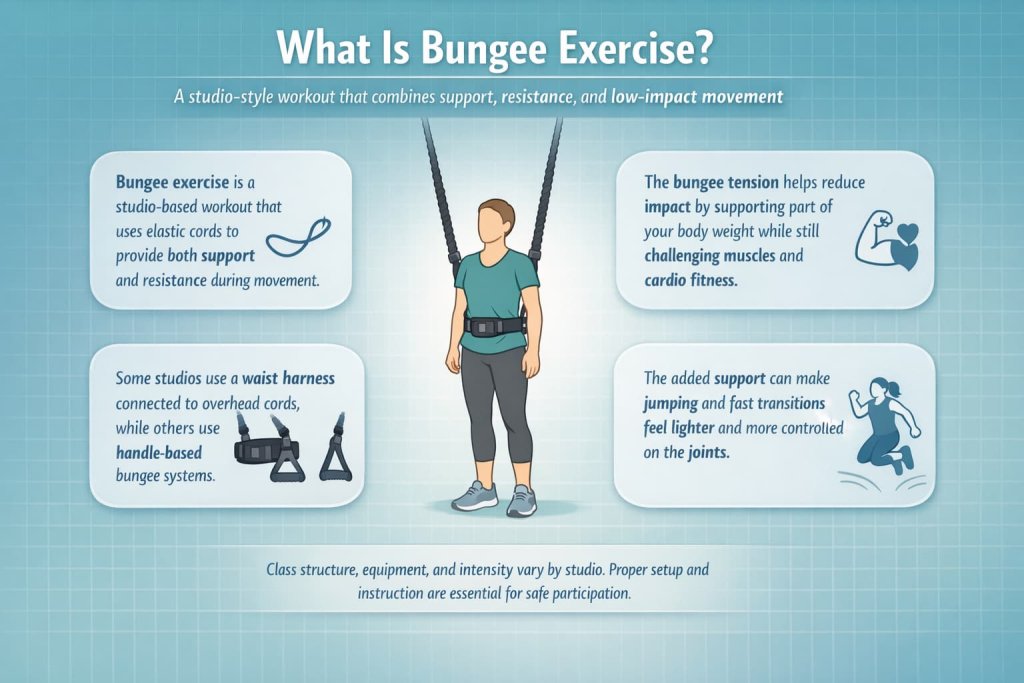
Bungee exercise (often called bungee fitness) is a studio-style workout that uses elastic bungee cords to create both support and resistance. Depending on the studio, you may wear a harness connected to overhead cords or use bungee cords with handles.
Either way, the cord tension helps you feel “lighter,” which can make jumping patterns and fast transitions feel easier on the joints while still challenging your muscles and heart rate. A mainstream overview of how these classes work, including harness-based and handle-based formats.
How a Bungee Fitness Class Works
Most beginner-friendly bungee exercise classes follow a simple flow.
Setup and safety check
The instructor assists with cord selection and harness fitting, if used, and explains how to control bounce, land softly, and maintain a stable core.
Warm-up
Light bouncing, marching, mobility drills, and breathing cues are used to prepare the body.
Main workout
Classes typically include cardio-based bounce sequences, strength-focused movements such as squats and lunges, and core stability work that emphasizes control and balance.
Cool-down
Sessions usually end with slower movements and stretching to help reduce tension and heart rate.
Coaching quality matters. Small technique cues—such as keeping the ribs stacked over the hips and landing with soft knees—can significantly improve safety and effectiveness.
Benefits of Bungee Exercise
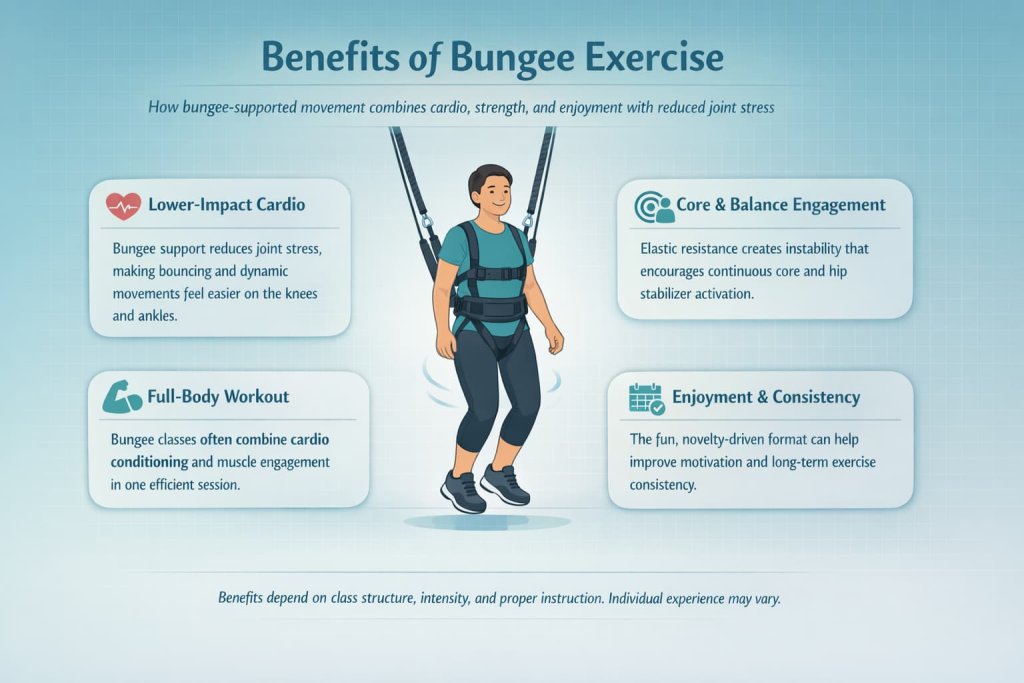
Bungee exercise can be a practical option for people who want an energetic workout with reduced joint stress.
Lower-impact cardio option
Because the bungee cord provides partial body-weight support, bouncing and jumping patterns may feel easier on the knees and ankles compared with traditional plyometric exercises.
Core and balance challenge
The elastic resistance creates instability, which requires continuous engagement of the core and hip stabilizers.
Full-body training in one session
With proper programming, bungee workouts combine cardiovascular conditioning and muscular engagement in a single class format.
Enjoyment and consistency
Enjoyable workouts are often easier to maintain long term. Many participants report that the novelty and fun factor of bungee exercise helps them stay consistent with regular physical activity.
How Intense Is Bungee Exercise?
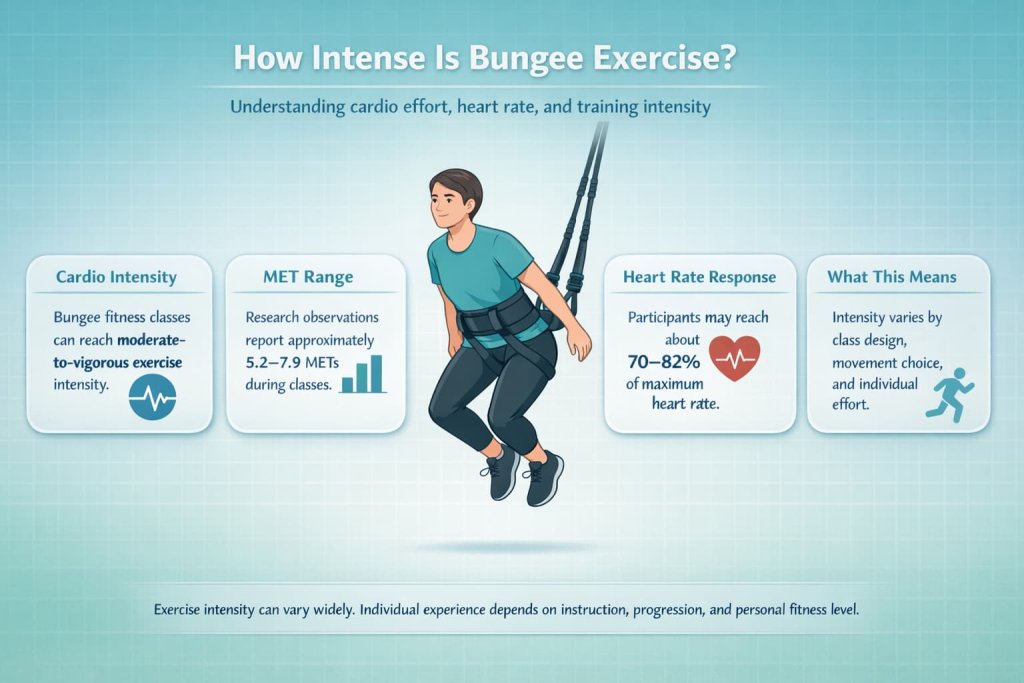
Bungee exercise is not just light movement. Research published through Adelphi University found that bungee fitness classes can reach moderate-to-vigorous intensity, with participants exercising at approximately 5.2–7.9 METs and 70–82 percent of maximum heart rate.
This suggests that many bungee workouts can meaningfully contribute to cardiovascular fitness, depending on class design and individual effort.
Is Bungee Exercise Good for Weight Loss?
Bungee exercise may help support weight management by increasing overall activity levels and providing a cardiovascular stimulus that can contribute to energy expenditure. Because many classes also include strength-based movements, they may help support muscle maintenance alongside aerobic training.
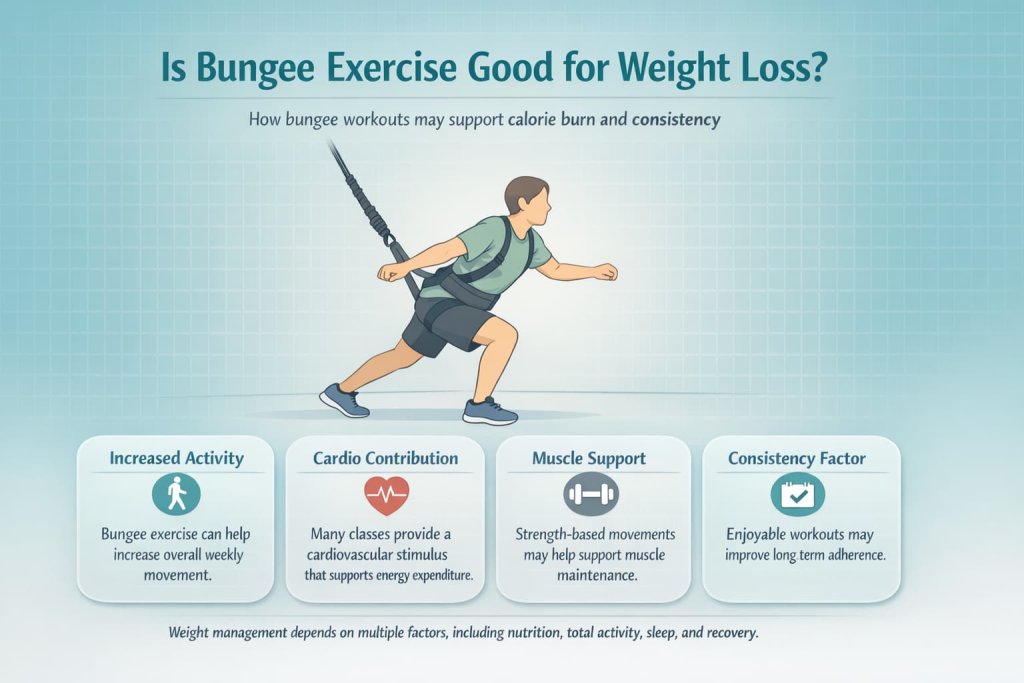
As with any workout, weight loss outcomes depend on overall lifestyle factors, including nutrition, total activity volume, sleep, and recovery.
Who Should Avoid Bungee Exercise or Get Clearance First
Bungee exercise has studio-specific safety rules that should always be followed.
Pregnancy
Many studios list pregnancy as a restriction for participation due to harness pressure and dynamic movement patterns.
Weight thresholds
Studios commonly set minimum and maximum weight ranges based on equipment specifications and building requirements.
Medical considerations
Some studios advise caution or require clearance for individuals with recent surgery, balance disorders, or certain cardiovascular or orthopedic conditions. Policies vary, so checking your local studio’s guidelines is essential.
Bungee Exercise Safety Checklist
Before attending your first class:
- Choose a studio with clear safety procedures and beginner instruction
- Start with an introductory class
- Inform the instructor of joint issues or balance concerns
- Focus on controlled landings and posture
- Progress intensity gradually
- Stop if you experience pain, dizziness, or unusual symptoms
Why Bungee Exercise Is Considered Low-Impact
Bungee exercise is considered low-impact because the bungee cords support part of your body weight, reducing the amount of force placed on the joints during movement. The elastic tension helps soften landings and slow transitions, which can make dynamic exercises feel more controlled than traditional jumping workouts.
Key reasons it’s considered low-impact include:
- Partial body-weight support from the bungee cords
- Reduced joint loading at the knees, hips, and ankles
- Slower, more controlled landings
- Less ground-reaction force compared with floor-based jumping
Low-impact does not mean low effort. Workout intensity still depends on class design, movement range, and individual control.
Who Is Bungee Exercise Best For?
Bungee exercise can suit a wide range of fitness levels when classes are properly coached and progressed.
It may be a good option for:
- Beginners looking for a guided, studio-based workout
- People who prefer low-impact cardio alternatives
- Individuals returning to exercise after time away
- Those who enjoy group fitness and structured routines
- Anyone seeking a fun, full-body workout with variety
Class level, instruction quality, and personal comfort should always guide participation decisions.
How Often Should You Do Bungee Exercise?
Many participants attend bungee exercise classes two to three times per week. This can be combined with walking or traditional strength training on other days.
General physical activity recommendations for adults, such as achieving 150 minutes of moderate-intensity activity per week and performing muscle-strengthening activities on two or more days, are outlined by the Centers for Disease Control and Prevention and the World Health Organization.
Frequently Asked Questions
Is bungee exercise good for beginners?
Yes, provided the studio offers beginner instruction and proper setup guidance.
Do you have to wear a harness?
Not always. Some formats use handles instead of a harness, which changes how resistance and support are applied.
Is bungee exercise hard on your knees?
It is generally considered lower-impact than traditional jumping, but technique and coaching are important for joint comfort.
How intense is bungee fitness?
Intensity can range from moderate to vigorous, depending on class structure and participant effort.
Is there a weight limit?
Most studios set weight limits based on equipment safety requirements, which vary by location.
Can I do bungee exercise during pregnancy?
Many studios restrict participation during pregnancy, and professional medical guidance is recommended.
How much do bungee classes cost?
Pricing models include single-class passes and monthly memberships, with costs varying widely by studio and region.
Conclusion
Bungee exercise offers a unique combination of fun, cardiovascular challenge, and reduced joint impact. For people who struggle with traditional high-impact workouts, it can be an engaging alternative that still delivers meaningful physical activity. Starting with a beginner class and following studio safety guidelines is the best way to get the most out of this workout style.