
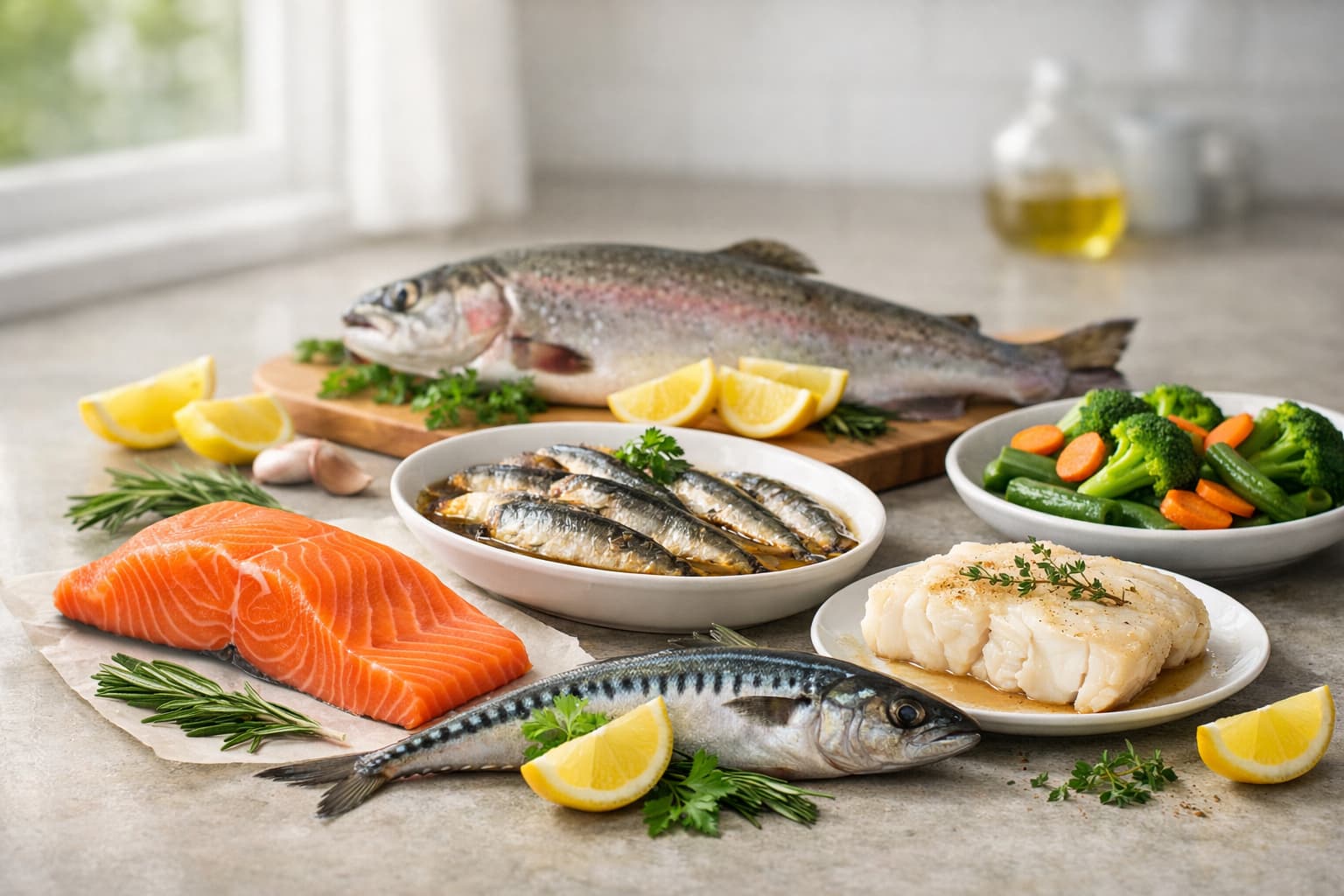
The healthiest fish for most people are lower-mercury options that also provide plenty of omega-3s, such as salmon, sardines, trout, herring, anchovies, and Atlantic mackerel. According to the FDA, fish can be part of a healthy eating pattern, and choosing a variety of lower-mercury seafood helps you get important nutrients while limiting mercury exposure.
Knowing which fish to choose matters because “healthy” does not just mean high in protein. The best options also fit current guidance on omega-3 fats, mercury, portion size, and how often to eat seafood. The good news is that you do not need expensive fish or complicated rules. A few smart choices each week can go a long way.
What makes a fish one of the healthiest choices?
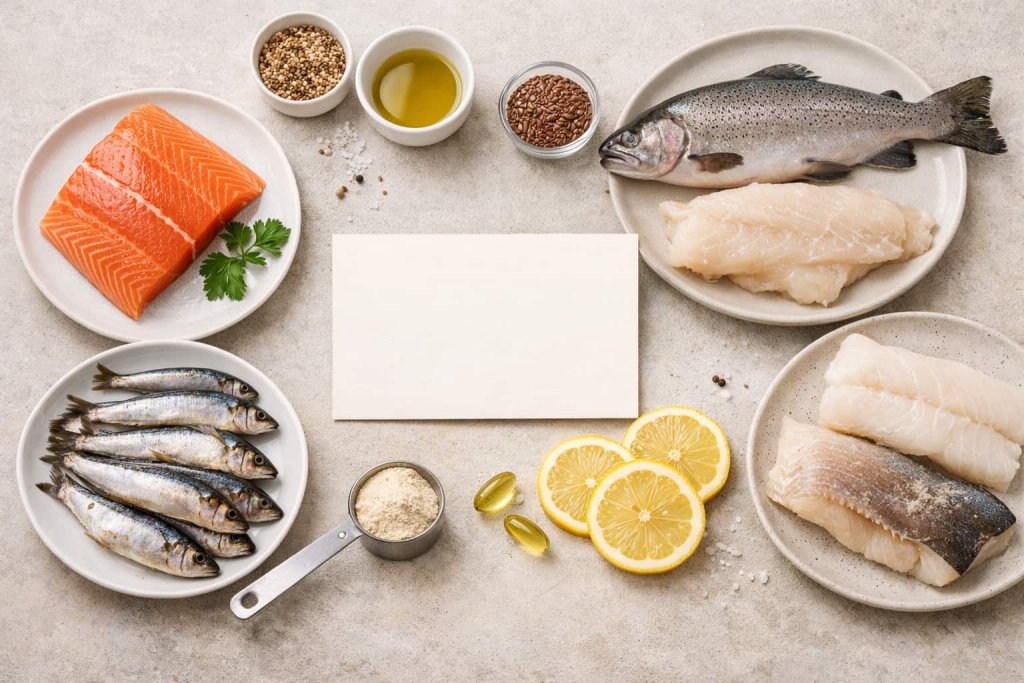
A healthy fish usually checks most of these boxes:
- High in protein
- Rich in EPA and DHA omega-3 fatty acids
- Lower in saturated fat than many meat options
- Naturally provides nutrients such as vitamin D, selenium, vitamin B12, iodine, iron, zinc, and choline, depending on the type of fish
- Lower in mercury
The American Heart Association recommends eating 2 servings of fish per week, especially fatty fish. The FDA says the Dietary Guidelines recommendation is at least 8 ounces of seafood per week for most adults on a 2,000-calorie eating pattern, while people who are pregnant or breastfeeding should aim for 8 to 12 ounces per week from lower-mercury choices. The NIH Office of Dietary Supplements notes that EPA and DHA are found in fish and other seafood, which is one reason fish stands out nutritionally. USDA MyPlate also includes seafood in the protein foods group and highlights seafood as part of a healthy routine.
Quick comparison of healthy fish choices
| Fish | Main strength | Mercury note | Best for |
|---|---|---|---|
| Salmon | High in omega-3s, protein, vitamin D | Lower-mercury choice | Overall health, heart-friendly meals |
| Sardines | Very high in omega-3s, convenient, budget-friendly | Lower-mercury choice | Easy pantry staple |
| Trout | Good omega-3s, mild taste, vitamin D | Lower-mercury choice | Beginners and family meals |
| Herring | Rich in omega-3s | Generally a better lower-mercury option than large predatory fish | Heart-healthy eating |
| Anchovies | Omega-3-rich and flavorful | Lower-mercury choice | Small portions, sauces, salads |
| Atlantic mackerel | High in omega-3s | Choose Atlantic mackerel, not king mackerel | Oily fish lovers |
| Pollock | Lean protein, mild flavor | Lower-mercury choice | Budget meals, fish tacos, baked dishes |
| Cod | Lean protein, versatile | Lower-mercury choice | Mild everyday fish |
| Canned light tuna | Convenient, protein-rich | Better routine tuna choice | Salads, sandwiches, quick lunches |
Healthiest fish overall
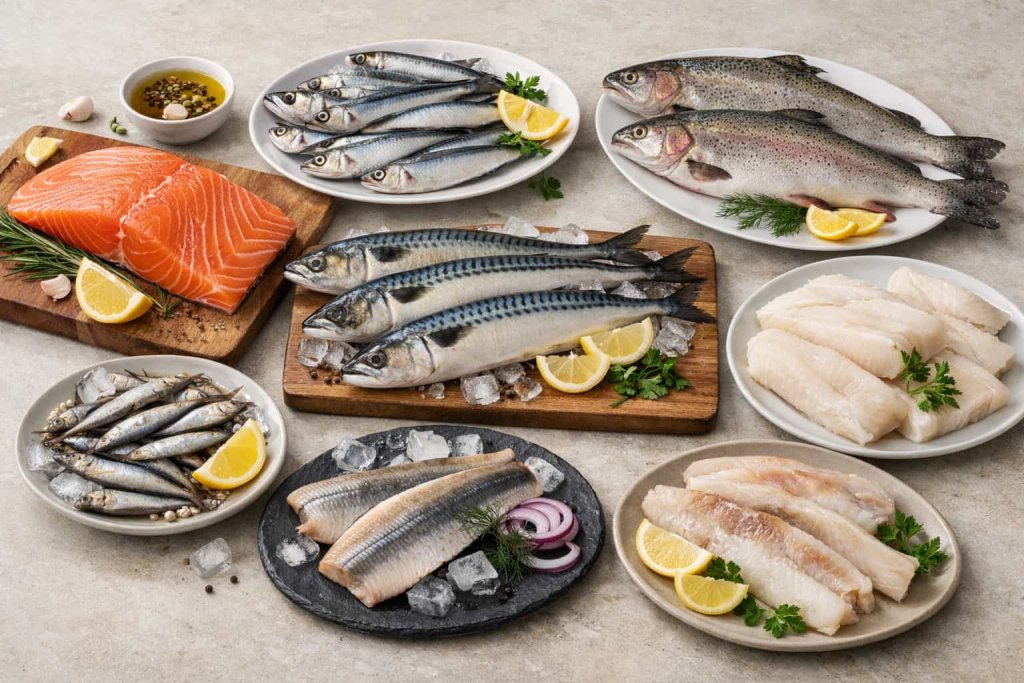
Salmon
Salmon is one of the best all-around fish choices because it combines strong omega-3 content with high-quality protein and generally fits lower-mercury advice. FDA fish guidance places salmon in the Best Choices category, meaning it is a practical option for regular meals within recommended portions. Salmon is also a natural source of vitamin D, which USDA MyPlate highlights for some seafood options.
Why it stands out:
- Rich in EPA and DHA
- Good source of protein
- Lower-mercury option
- Easy to use fresh, frozen, or canned
Sardines
Sardines are one of the most nutrient-dense fish you can eat. They are small, oily fish, which usually means strong omega-3 content and relatively low mercury. FDA data also lists sardines among lower-mercury choices, making them a smart option for frequent seafood eaters.
Why they stand out:
- High in omega-3s
- Typically low in mercury
- Budget-friendly
- Convenient in canned form
Trout
Trout is a strong pick for people who want a mild flavor and solid nutrition without choosing a very oily-tasting fish. FDA guidance includes freshwater trout among Best Choices, and USDA notes trout as a natural source of vitamin D.
Why it stands out:
- Good omega-3 profile
- Lower-mercury option
- Mild taste for beginners
- Works well baked, grilled, or pan-seared
Herring
Herring is another fatty fish the American Heart Association highlights as a source of omega-3s. It may not be as common in every kitchen as salmon, but it is one of the healthiest fish choices when available.
Why it stands out:
- High in omega-3s
- Strong heart-healthy profile
- Often available pickled, canned, or fresh
Anchovies
Anchovies are small but nutritionally powerful. The American Heart Association includes anchovies among fatty fish high in omega-3s, and the FDA chart places anchovy in the Best Choices category.
Why they stand out:
- Very high omega-3 value for a small serving
- Lower-mercury option
- Easy to use in pasta, salads, and sauces
Atlantic mackerel
Atlantic mackerel is a healthy choice, but the exact type matters. The FDA chart lists Atlantic mackerel among Best Choices, while king mackerel is in Choices to Avoid because of high mercury.
Why it stands out:
- Rich in omega-3s
- Highly satisfying and protein-rich
- Good choice when you specifically buy Atlantic mackerel
Pollock and cod
Pollock and cod are leaner than salmon or sardines, so they are not the top picks for omega-3s. Still, they are healthy fish because they provide high-quality protein, tend to be mild and versatile, and commonly fit lower-mercury patterns. FDA materials list both pollock and cod among Best Choices.
Why they stand out:
- Lean protein
- Mild taste
- Easy for family meals
- Good for people who do not enjoy oily fish
Best fish for omega-3s
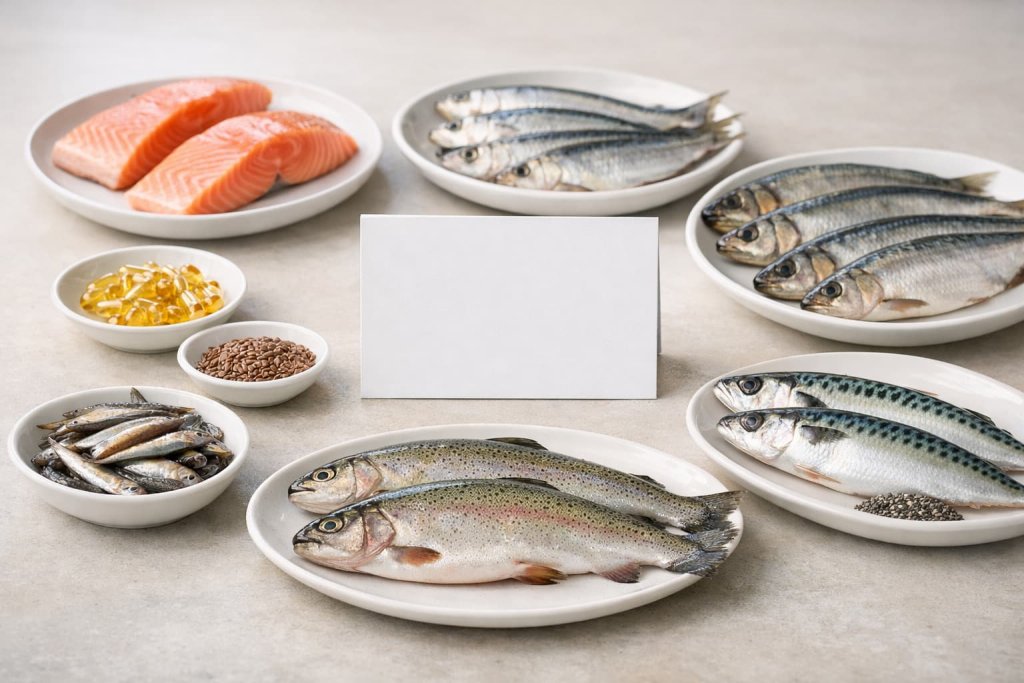
If your main goal is more EPA and DHA, fatty fish usually come out on top. The American Heart Association specifically identifies fatty fish such as anchovies, herring, mackerel, salmon, and sardines as high in omega-3 fatty acids.
Top omega-3 choices include:
- Salmon
- Sardines
- Herring
- Anchovies
- Atlantic mackerel
- Trout
These fish can be especially useful if you are trying to replace foods higher in saturated fat with a seafood option that supports an overall heart-healthy eating pattern.
Lowest-mercury fish that are still healthy
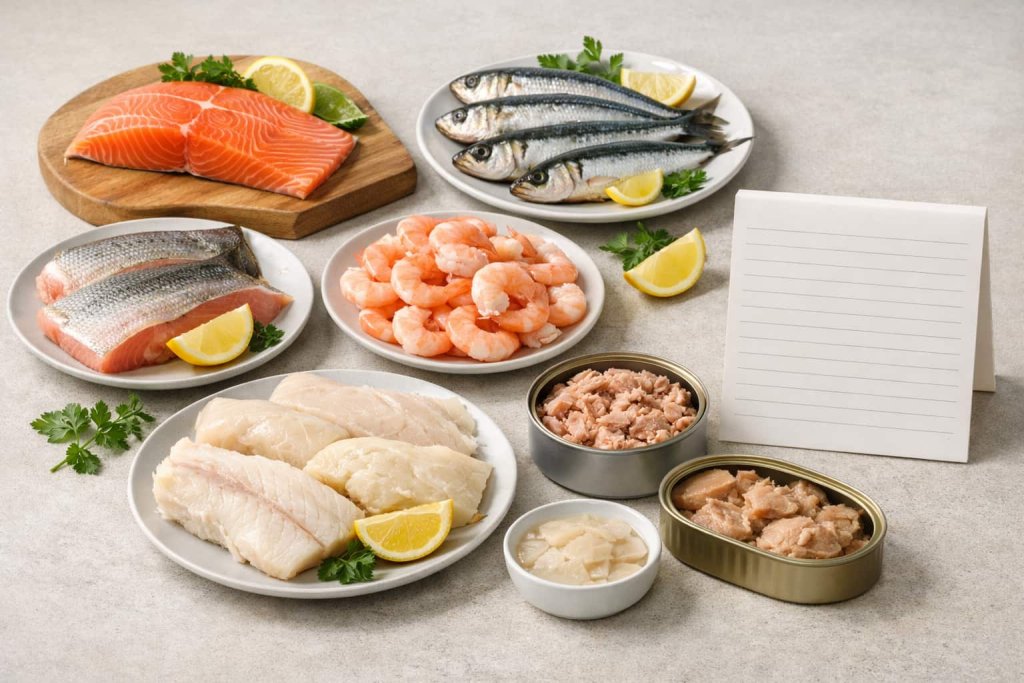
Mercury is one of the biggest reasons a fish may be less ideal for regular use. The FDA explains that nearly all fish and shellfish contain trace amounts of methylmercury, but levels vary a lot by species. Smaller fish and shorter-lived fish often test lower than larger predatory species.
Some of the most practical lower-mercury healthy choices include:
- Salmon
- Sardines
- Trout
- Anchovies
- Pollock
- Cod
- Haddock
- Shrimp
- Canned light tuna
The FDA also says variety matters. If you eat fish often, rotating among several lower-mercury types is smarter than relying on one fish all the time.
Fish to limit or avoid
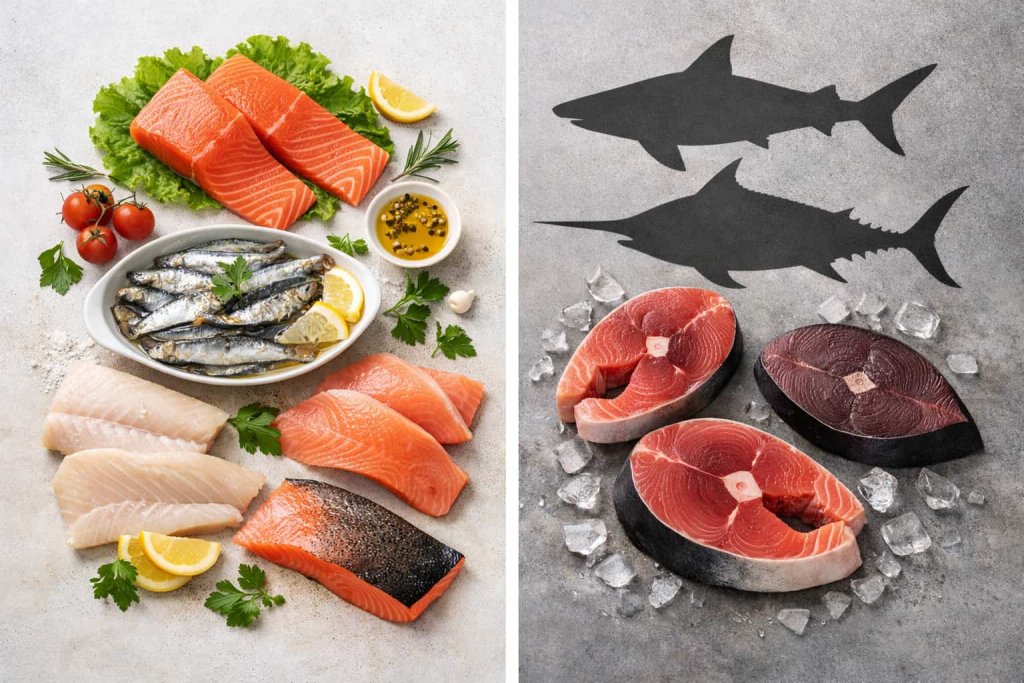
Some fish are nutritious but not ideal for frequent meals because mercury levels can be much higher. FDA advice says to avoid fish in the Choices to Avoid category, especially during pregnancy and childhood.
Fish the FDA lists in Choices to Avoid include:
- King mackerel
- Marlin
- Orange roughy
- Shark
- Swordfish
- Tilefish from the Gulf of Mexico
- Bigeye tuna
This is one reason broad advice like “eat more fish” can be incomplete. The healthiest fish are not just nutritious. They also fit lower-mercury guidance.
Is tuna one of the healthiest fish?
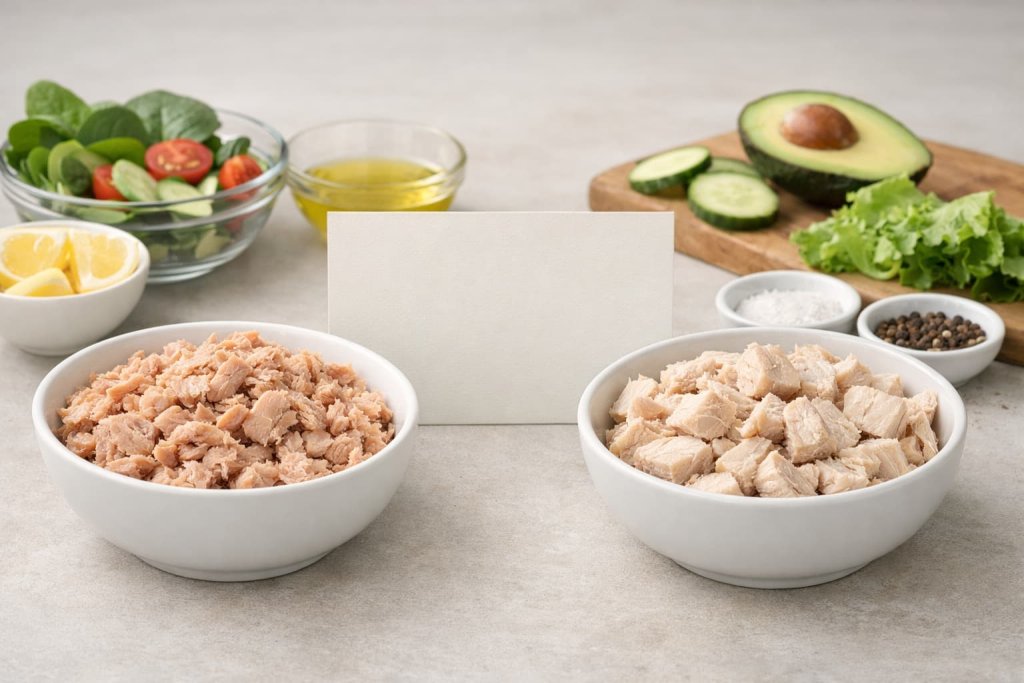
Tuna can be healthy, but the type matters.
The FDA makes an important distinction:
- Canned light tuna is a Best Choice
- Albacore or white tuna is a Good Choice
- Bigeye tuna is a Choice to Avoid
That means tuna is not automatically the healthiest fish for frequent meals. Canned light tuna is usually the better routine option if mercury is a concern, while albacore is better used more carefully.
Is wild fish healthier than farmed fish?
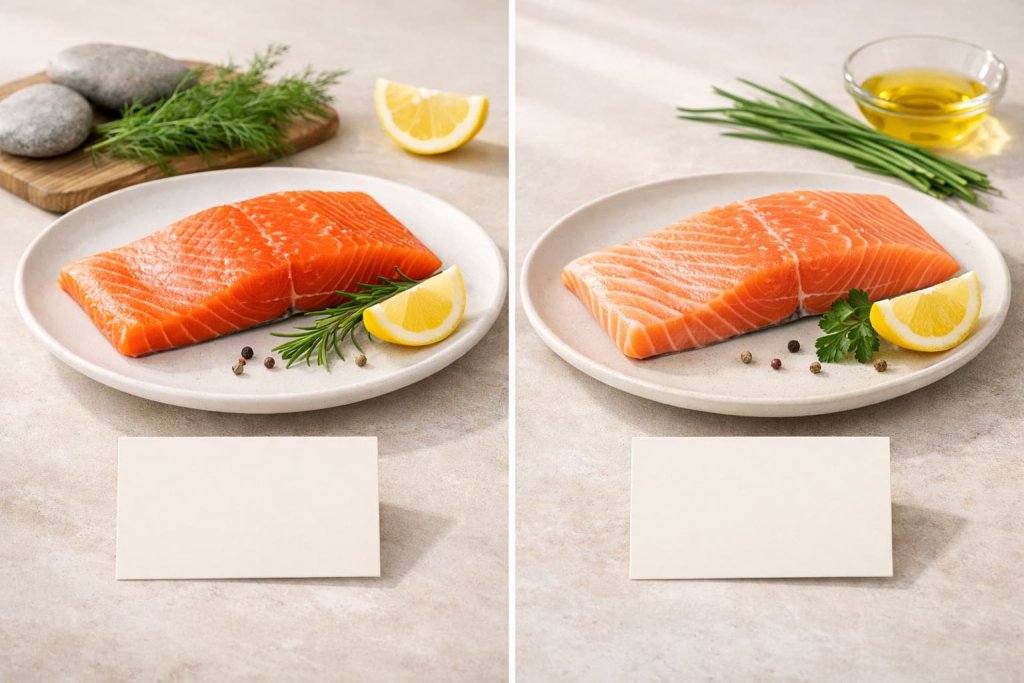
Not always. Both wild and farmed fish can fit into a healthy diet. The better choice often depends on the specific species, nutrient profile, cost, availability, and how the fish is raised or sourced.
In practical terms:
- Wild fish is sometimes leaner and may have a slightly different fat profile
- Farmed fish can still provide plenty of protein and omega-3s
- For most readers, the bigger priorities are choosing a fish that is lower in mercury, eating it regularly in reasonable portions, and preparing it in a healthy way
For example, both wild and farmed salmon can be nutritious choices. Instead of treating one as automatically “good” and the other as “bad,” it is more useful to focus on the type of fish, how often you eat it, and what you eat with it.
Healthiest fish during pregnancy and breastfeeding
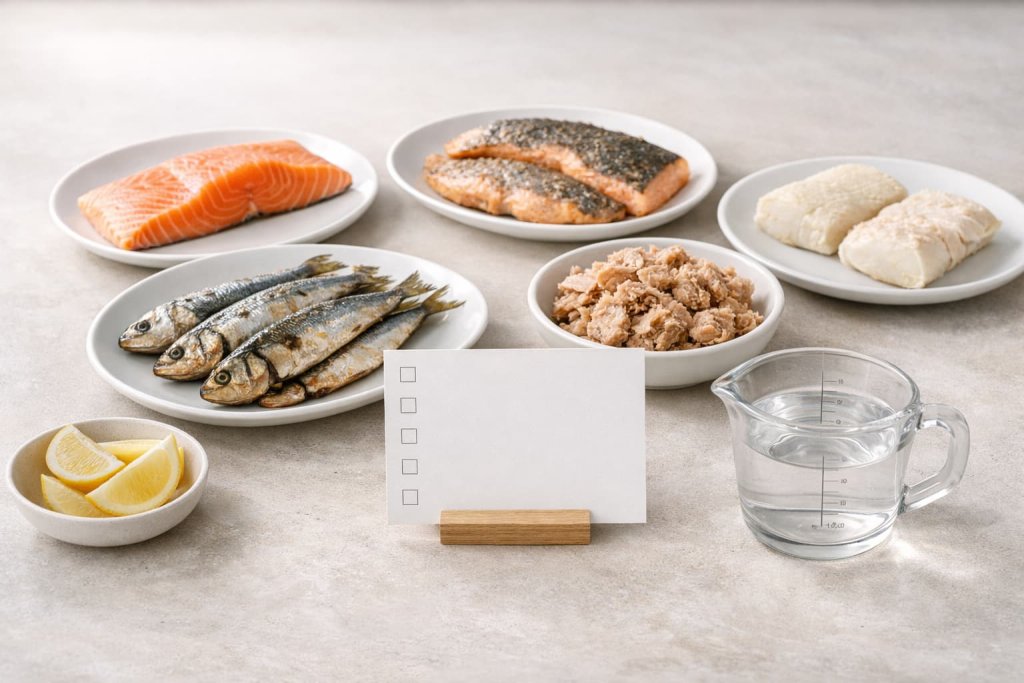
Fish can be especially valuable during pregnancy because it provides protein and nutrients including omega-3 fats, iodine, iron, zinc, choline, and vitamin D, depending on the species. FDA guidance says people who are pregnant or breastfeeding should eat 8 to 12 ounces per week of a variety of fish that are lower in mercury.
Good options include:
- Salmon
- Sardines
- Trout
- Anchovies
- Pollock
- Cod
- Canned light tuna
- Haddock
- Shrimp
FDA guidance also says:
- Choose 2 to 3 servings per week from the Best Choices list
- Or choose 1 serving per week from the Good Choices list
- Avoid fish in the Choices to Avoid category
Who should be more careful with fish choices?
People who are pregnant or breastfeeding
They should follow the FDA lower-mercury chart carefully and avoid high-mercury species.
Children
FDA guidance says children should eat fish too, but in smaller portions based on age. The advice recommends 2 servings a week from the Best Choices list, with portion sizes increasing as children grow.
People who eat fish very often
If you eat more than 3 servings in a week, the FDA says to stick with fish in the Best Choices category and vary the species.
People eating self-caught fish
FDA guidance says to check local or EPA fish advisories. If there is no advisory, eat only one serving of that fish and no other fish that week.
How to choose the healthiest fish at the store
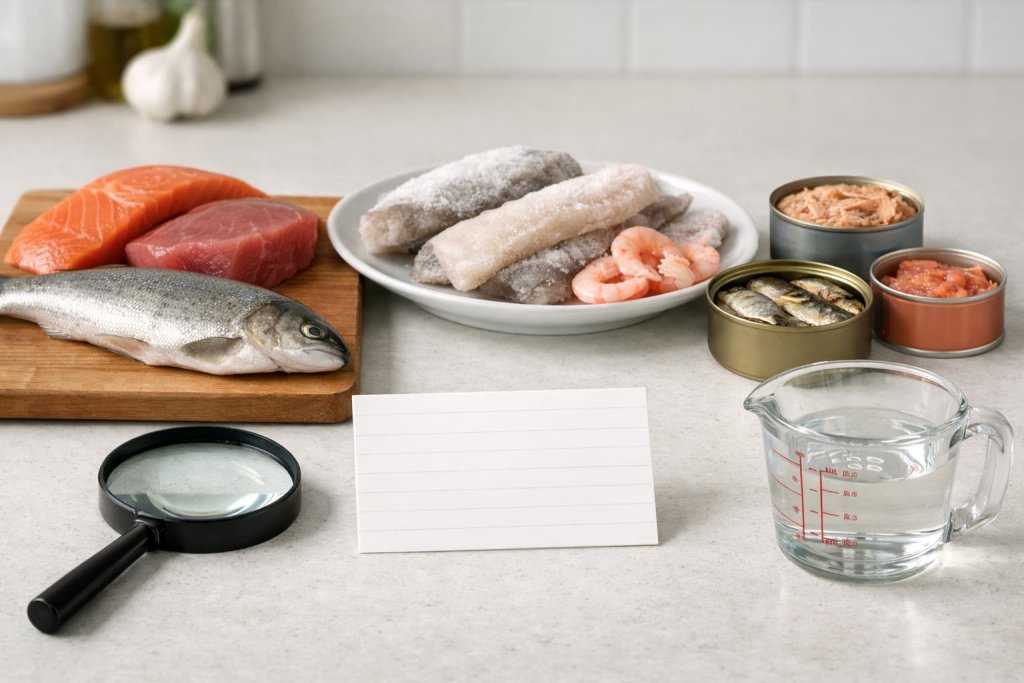
Pick the species, not just the label
“Fish” is too broad to be useful. Look for the exact type:
- Choose Atlantic mackerel, not king mackerel
- Choose canned light tuna more often than albacore
- Choose fish listed by the FDA as Best Choices
Use frozen and canned fish strategically
Frozen fish can be just as nutritious as fresh fish, and canned fish can make healthy eating much easier.
Smart picks include:
- Canned salmon
- Sardines
- Canned light tuna
- Frozen salmon fillets
- Frozen pollock or cod
Check canned fish for sodium and added ingredients

Canned fish can be one of the easiest ways to eat more seafood, but labels still matter. Some products are packed with a lot of sodium, flavored sauces, or extra oils that may not fit your goals.
A smarter approach:
- Choose fish packed in water or simple olive oil when possible
- Compare sodium per serving across brands
- Look for short ingredient lists
- Be careful with heavily seasoned, smoked, or sauce-packed options if you want a simpler everyday choice
Canned salmon, sardines, and canned light tuna can all be healthy picks. The healthiest option is usually the one with the simplest ingredients and a reasonable sodium level for your needs.
Watch how it is prepared
Even a very healthy fish can become less healthy when it is heavily breaded, deep-fried, or covered in salty sauces. Healthier cooking methods include:
- Baking
- Grilling
- Broiling
- Steaming
- Pan-searing with a small amount of oil
Simple ways to eat more healthy fish
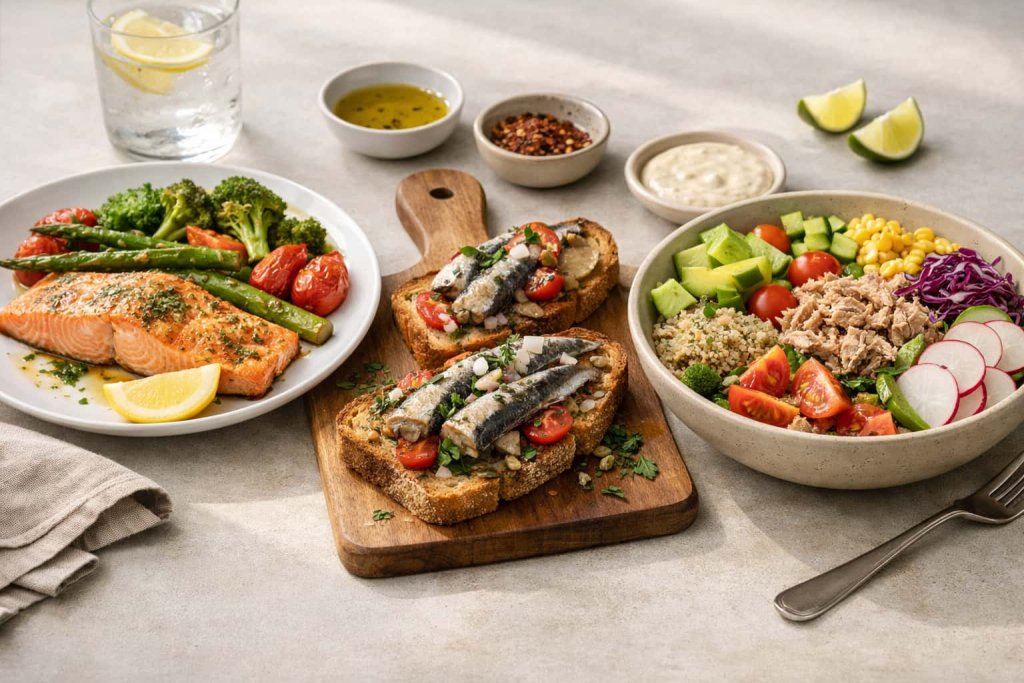
You do not need restaurant-style meals to benefit from fish. A few simple ideas:
- Add canned salmon or sardines to toast or grain bowls
- Use baked salmon with rice and vegetables
- Make fish tacos with grilled cod or pollock
- Add canned light tuna to salads or sandwiches
- Serve trout with potatoes and a green vegetable
A useful target is two seafood meals each week, built around lower-mercury options.
How much fish is one serving?
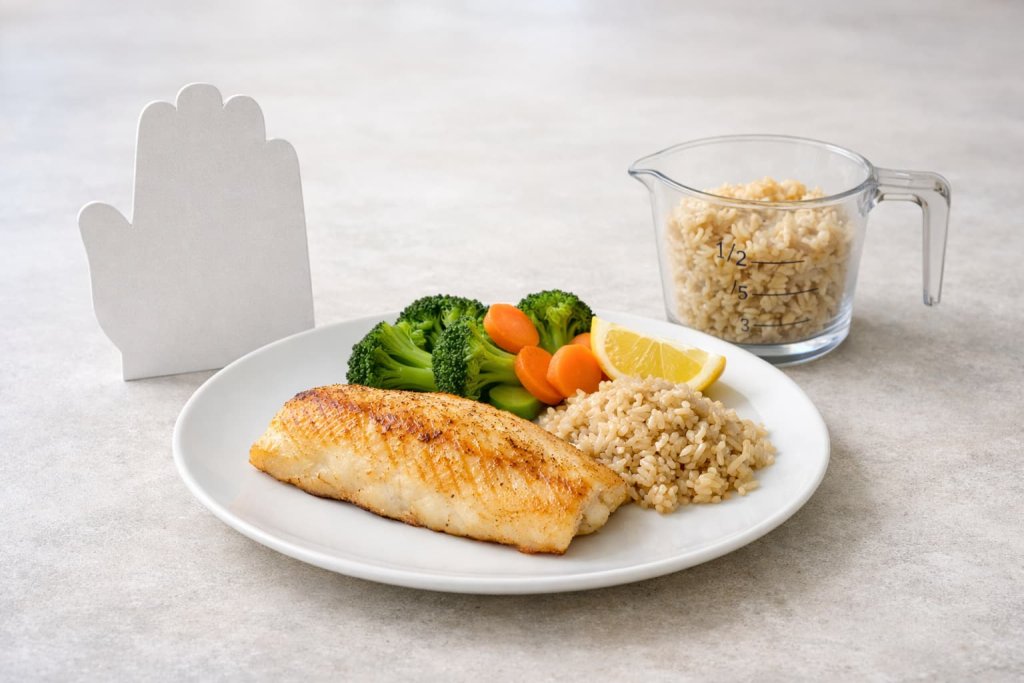
For most adults, a typical serving of fish is about 4 ounces cooked, or roughly the size of the palm of your hand. That means the common recommendation of about 8 ounces of seafood per week usually works out to around 2 average servings weekly.
This simple guide can help:
- 1 serving for many adults: about 4 ounces cooked
- 2 servings per week: about 8 ounces total
- Children need smaller portions based on age
- People who are pregnant or breastfeeding should follow lower-mercury guidance and weekly serving advice carefully
Thinking in servings instead of just ounces makes meal planning much easier.
A simple list of the healthiest fish to eat more often
For most adults, these are the best fish to center in a healthy routine:
- Salmon
- Sardines
- Trout
- Herring
- Anchovies
- Atlantic mackerel
- Pollock
- Cod
- Haddock
- Canned light tuna
If you want the shortest version of the answer, start with salmon, sardines, trout, and pollock, then rotate other lower-mercury choices through the week.
Best fish choices by goal
If you want the quickest way to choose, use this simple guide:
- Best overall: salmon, sardines, trout
- Best for omega-3s: salmon, sardines, herring, anchovies, Atlantic mackerel
- Best mild-tasting options: trout, cod, pollock
- Best budget-friendly choices: sardines, canned salmon, canned light tuna, frozen pollock
- Best lower-mercury routine picks: salmon, sardines, trout, pollock, cod
- Best pregnancy-friendly choices: salmon, sardines, trout, pollock, cod, canned light tuna
This kind of summary helps you match the fish to your needs instead of looking for one perfect option.
Frequently asked questions
What is the healthiest fish to eat regularly?
For many people, salmon is the healthiest fish to eat regularly because it offers omega-3s, protein, and a lower-mercury profile. Sardines, trout, and herring are also excellent routine choices.
Is salmon healthier than tuna?
Usually, yes for routine use. Salmon is generally a better everyday choice because it is rich in omega-3s and fits lower-mercury guidance more easily than many tuna types. Canned light tuna can still be a healthy option.
Are sardines healthier than salmon?
Not necessarily overall, but sardines are one of the healthiest fish you can buy. They are rich in omega-3s, convenient, and generally low in mercury. Salmon and sardines are both excellent choices.
Is cod a healthy fish?
Yes. Cod is a healthy fish because it is lean, high in protein, and generally fits lower-mercury patterns. It is not as rich in omega-3s as salmon or sardines, but it is still a strong choice.
What fish should I avoid because of mercury?
FDA guidance says to avoid king mackerel, marlin, orange roughy, shark, swordfish, tilefish from the Gulf of Mexico, and bigeye tuna, especially during pregnancy and for children.
How much fish should I eat each week?
For most adults, the FDA says at least 8 ounces of seafood per week is the general target. The American Heart Association recommends 2 servings of fish per week, especially fatty fish.
Conclusion
The healthiest fish are usually the ones that give you the most nutrition with the least mercury risk. For most people, that means focusing on salmon, sardines, trout, herring, anchovies, Atlantic mackerel, pollock, and cod, while limiting or avoiding high-mercury species.
A simple plan works best: eat fish about twice a week, choose lower-mercury types, vary your seafood, and keep preparation simple. That approach makes it much easier to eat smart over time.
This content is for informational purposes only and not medical advice. If you are pregnant, breastfeeding, feeding a young child, or managing a medical condition that affects your diet, use current official guidance and speak with a qualified healthcare professional when needed.