
Plain cooked shrimp is low in calories, with about 100 calories in a 3-ounce serving. It is also high in protein, which is one reason shrimp is often included in balanced eating plans for weight management.
Knowing how many calories are in shrimp matters because the final number can change a lot depending on serving size and how it is cooked. Plain boiled, steamed, or grilled shrimp stays relatively light, while breaded, fried, or heavily sauced shrimp can add calories, fat, and sodium quickly. According to the U.S. Food and Drug Administration, plain cooked shrimp provides about 100 calories and 21 grams of protein per 3 ounces.
How Many Calories in Shrimp by Serving Size
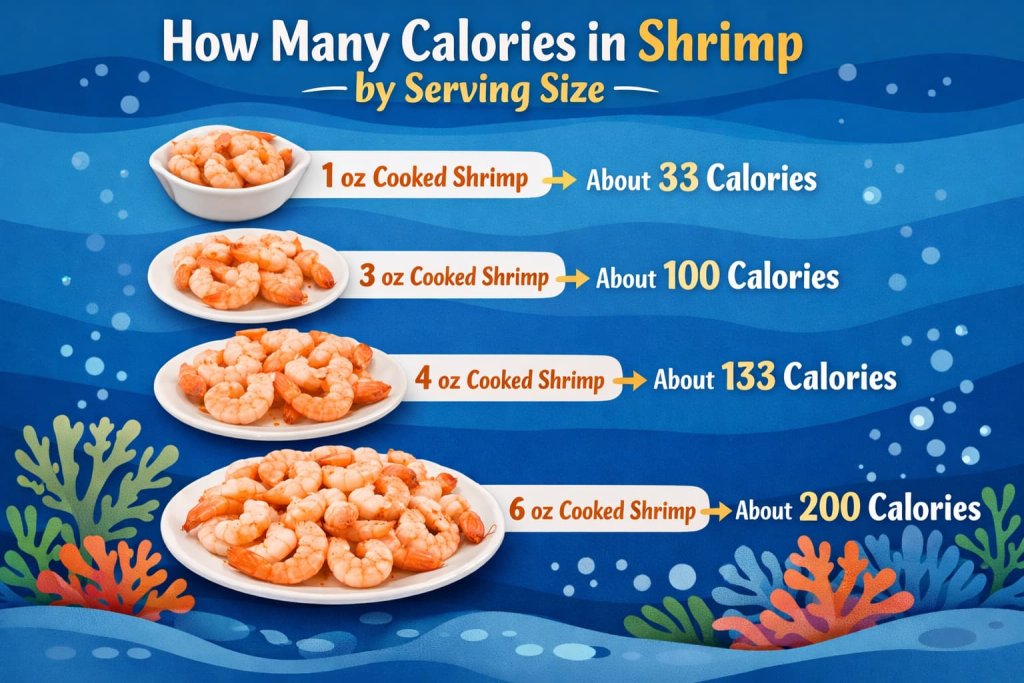
Here is the most practical way to think about shrimp calories for plain cooked shrimp:
- 1 ounce cooked shrimp: about 33 calories
- 3 ounces cooked shrimp: about 100 calories
- 4 ounces cooked shrimp: about 133 calories
- 6 ounces cooked shrimp: about 200 calories
Keep in mind that shrimp loses some water as it cooks, so 3 ounces cooked shrimp is not exactly the same as 3 ounces raw shrimp. Most official seafood nutrition references use the cooked serving size, which is the most practical format for everyday meal planning.
A 3-ounce serving is the most common reference point in official seafood nutrition data. That is roughly a palm-sized portion for many adults.
Shrimp Nutrition Profile
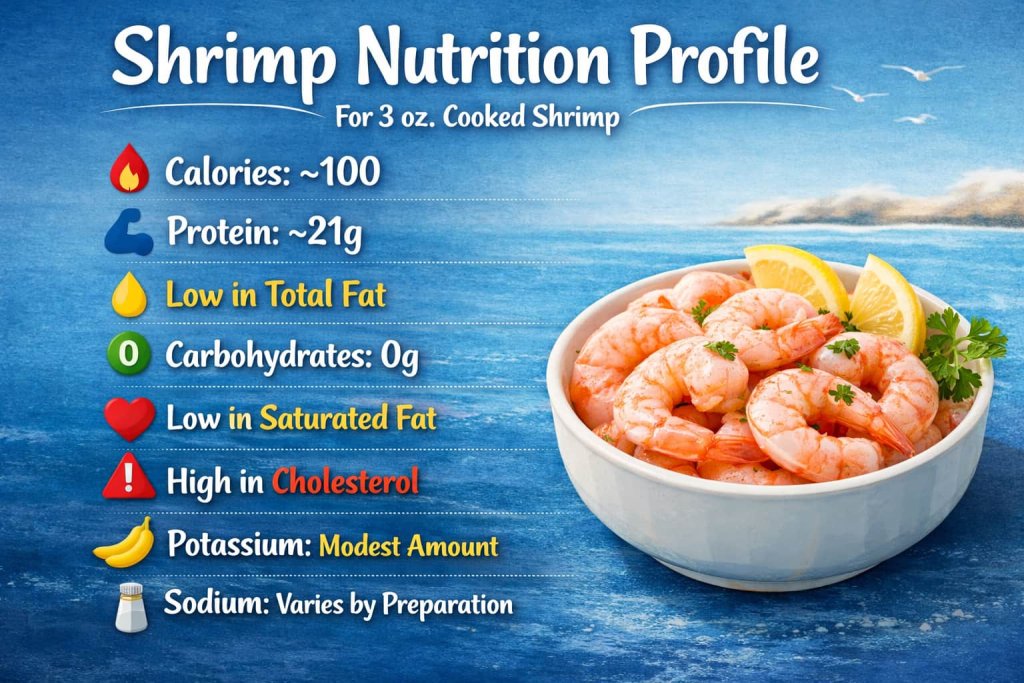
Here is a realistic nutrition profile for 3 ounces of plain cooked shrimp:
- Calories: about 100
- Protein: about 21 g
- Total fat: low
- Carbohydrates: 0 g
- Saturated fat: low
- Cholesterol: relatively high compared with many other lean proteins
- Potassium: modest amount
- Sodium: depends on whether the shrimp is plain or processed
Shrimp stands out more for its high protein and low calorie content than for carbohydrates or fiber. That makes it very different from foods like rice, pasta, or breaded seafood dishes.
Key Nutrients in Shrimp
Shrimp provides more than just protein. It can also contribute several useful nutrients in a healthy diet.
Protein
Shrimp is a lean protein food. According to USDA MyPlate, seafood is part of the Protein Foods Group and can help support a balanced eating pattern.
Selenium
Shrimp is a meaningful source of selenium. The National Institutes of Health Office of Dietary Supplements notes that seafood is among the richest food sources of selenium. Selenium helps support normal body processes, including antioxidant defense and thyroid function.
Vitamin B12 and Other Minerals
Seafood can also provide vitamin B12 and minerals such as phosphorus and iodine, though exact amounts vary by species and preparation. Shrimp can be a practical way to add nutrient-dense protein to meals without a large calorie load.
Is Shrimp Good for Weight Management?
Shrimp can be a very good option for weight management because it gives you a lot of protein for relatively few calories.
That matters because protein can help meals feel more satisfying. A serving of plain shrimp can fit well into calorie-conscious meals such as:
- shrimp with vegetables
- shrimp salad with a light dressing
- shrimp stir-fry with minimal oil
- shrimp with rice and roasted vegetables in a balanced portion
Shrimp is usually most helpful for weight management when it is:
- boiled
- steamed
- grilled
- baked
- sautéed lightly
It becomes less weight-friendly when it is breaded, deep-fried, coated in creamy sauces, or served in oversized restaurant portions.
How Cooking Method Changes Shrimp Calories
The shrimp itself is fairly light. The bigger calorie changes usually come from what is added during cooking.
Quick Calorie Comparison by Shrimp Type
Here is a practical way to think about how preparation changes shrimp calories:
- Plain cooked shrimp, 3 ounces: about 100 calories
- Breaded shrimp, 3 ounces: usually higher because of the coating
- Fried shrimp, 3 ounces: usually significantly higher because of both breading and oil
- Shrimp in butter or creamy sauce: can rise quickly depending on how much sauce is used
The key point is that plain shrimp stays relatively low in calories, while breading, frying, and heavy sauces can turn it into a much higher-calorie meal.
Plain Boiled, Steamed, or Grilled Shrimp
These are usually the lowest-calorie choices because they add little or no extra fat.
Breaded or Fried Shrimp
Breaded or fried shrimp can be much higher in calories because the coating and oil add extra energy quickly.
Shrimp in Butter, Garlic Sauce, or Cream Sauce
These versions may still provide protein, but the butter, oil, cream, or sugar in the sauce can raise the calorie count more than many people expect.
Is Shrimp a Healthy Seafood Choice?
For most people, shrimp can be part of a healthy eating pattern. It is low in calories, rich in protein, and lower in mercury than many larger fish.
According to the FDA’s fish advice, shrimp is on the Best Choices list for lower-mercury seafood. The FDA says adults should aim for at least 8 ounces of seafood a week, and those who are pregnant or breastfeeding are advised to eat 8 to 12 ounces a week of lower-mercury seafood choices.
That makes shrimp a practical option for people who want seafood regularly but want to keep mercury exposure lower.
Who Should Be a Little More Careful
Shrimp is a nutritious choice for many people, but it is not ideal for everyone.
People With a Shellfish Allergy
This is the most important caution. The U.S. Food and Drug Administration identifies crustacean shellfish, including shrimp, as a major food allergen. Anyone with a known shellfish allergy should avoid shrimp unless a qualified clinician has advised otherwise.
People Watching Cholesterol Intake
Shrimp is low in calories and fat, but it is relatively high in dietary cholesterol compared with many other lean protein foods. For many people, the overall eating pattern matters more than one food alone, but it is still something to keep in mind if you have been told to monitor cholesterol intake closely.
People Sensitive to Sodium
Plain shrimp is different from heavily seasoned frozen shrimp, breaded shrimp, or restaurant shrimp. Some packaged or prepared shrimp products can contain much more sodium than plain cooked shrimp, so checking the label is smart.
Shrimp Safety Tips
Shrimp should be cooked and handled safely, especially because seafood is highly perishable. Raw shrimp should be kept cold, cooked promptly, and not left at room temperature for long periods. Cooked shrimp should look opaque and firm rather than translucent.
If you are buying prepared shrimp dishes, it is also worth watching for added sodium, heavy breading, or rich sauces, since those can change the nutrition profile more than the shrimp itself.
How Much Shrimp Is a Reasonable Serving?
A practical serving for many adults is 3 to 4 ounces cooked shrimp.
That gives you a solid amount of protein without pushing calories too high. If shrimp is part of a larger meal with rice, pasta, sauce, or fried sides, the total calorie load can climb quickly, even if the shrimp itself is fairly light.
Does Frozen or Pre-Cooked Shrimp Have Different Calories?
Frozen shrimp and plain pre-cooked shrimp usually have calorie numbers similar to fresh plain shrimp if nothing extra has been added. The bigger difference is often sodium, especially in packaged seasoned shrimp, fully cooked shrimp with added salt, or pre-marinated shrimp products.
If you are comparing options at the store, check:
- serving size
- calories per serving
- sodium per serving
- whether the shrimp is plain, seasoned, breaded, or sauced
This helps you compare shrimp more accurately than judging by the front of the package alone.
Best Ways to Eat Shrimp for a Lighter Meal
If your goal is to keep the meal lighter, shrimp works best with simple preparation.
Good options include:
- grilled shrimp with roasted vegetables
- shrimp tacos with cabbage slaw and a light sauce
- shrimp over salad with olive oil and lemon
- shrimp with quinoa or brown rice in a moderate portion
- shrimp and vegetable stir-fry with limited oil
Frequently Asked Questions
How many calories are in 10 shrimp?
It depends on the size. For medium to large plain cooked shrimp, 10 pieces often land somewhere around 70 to 100 calories. The most accurate estimate comes from weighing the cooked portion.
Is shrimp lower in calories than chicken?
Shrimp and skinless chicken breast are both lean protein options. Shrimp is often slightly lower in calories per serving, while both are high in protein.
Is fried shrimp high in calories?
Yes. Fried shrimp can be much higher in calories than plain shrimp because of the breading and oil used during cooking.
Can shrimp fit into a high-protein diet?
Yes. Plain shrimp is naturally high in protein and low in carbs, so it can fit well into many high-protein meal patterns.
Final Thoughts on How Many Calories in Shrimp
Shrimp is one of the lighter protein choices you can eat. A plain 3-ounce serving has about 100 calories and 21 grams of protein, which makes it useful for people who want a filling, protein-rich food without a heavy calorie load.
The main thing to watch is preparation. Plain shrimp stays relatively low in calories, while fried shrimp or shrimp in rich sauces can change the picture fast. If you want the healthiest approach, choose simple cooking methods, reasonable portions, and balanced sides.
Sources/References
- U.S. Food and Drug Administration — Nutrition Information for Cooked Seafood (Purchased Raw)
- USDA MyPlate — Protein Foods Group
- U.S. Food and Drug Administration — Advice About Eating Fish
- U.S. Food and Drug Administration — Food Allergies
- National Institutes of Health Office of Dietary Supplements — Selenium Fact Sheet for Health Professionals